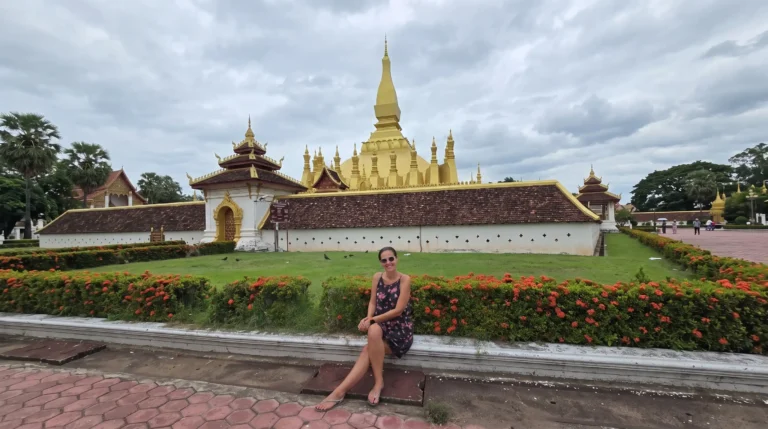
Vang Vieng Travel Guide 2026: Tubing, Karst Views & the Nam Xay Climb
🌄 Introduction & Why Go
I stepped off the fast train from Luang Prabang expecting another sleepy Lao town, and instead got karst cliffs pushing straight up out of rice paddies on both sides of the Nam Song River. It had been raining on and off since the border crossing, and my first honest thought wasn’t “paradise,” it was “I hope this clears up.” It didn’t, not for most of my five days. But Vang Vieng works even half-soaked.
This isn’t the Vang Vieng of a decade ago, when the town was infamous for reckless riverside bars and a body count to match. Local authorities shut most of that down years back, leaving something calmer: still adventurous, still built around the river and the limestone, but with fewer regrets the next morning. I came for the tubing everyone talks about and left thinking more about a viewpoint climb I attempted in the wrong shoes.
Quick Picks: Where to Stay in Vang Vieng
- 💰 Budget: Vang Vieng Rock Backpackers Hostel – dorms and socials near the river
- 🏨 Mid-Range: Inthira Hotel VangVieng – comfortable rooms a short walk from the center
- 🛎️ Luxury: Tmark Resort Vang Vieng – full-service spa resort with pool bars
🧭 Practical Info: When & How to Go
Quick Facts
- Visa / Entry: Most nationalities need a visa. The eVisa costs roughly $45–50 and takes 3–5 working days; Visa on Arrival costs about $30–45 in cash plus a passport photo and is available at major airports and land borders.
- 📌 Bring exact USD cash for Visa on Arrival — other currencies aren’t reliably accepted at the counter, and you’ll need a passport-size photo (or pay a small extra fee without one).
- Language: Lao, with English spoken in most tourist-facing businesses.
- Currency: Lao Kip (LAK); USD and Thai Baht are widely accepted in town, but small vendors and tuk-tuks expect Kip.
- Plugs: Type A, B, C, E and F sockets, 230V/50Hz. Pack an adapter regardless of where you’re from.
- Mobile & Internet: A data eSIM (Airalo) is the easiest way to land already connected; local SIMs from Lao Telecom or Unitel are cheap if you’d rather buy on arrival.
- Transport tickets: Book Laos-China Railway seats a few days ahead through 12Go. The official booking window opens locally only three days before departure, and weekend trains sell out fast.
- Drone Usage & Rules: Laos requires a permit for any drone over 200g; Vang Vieng’s karst scenery makes it a spot people often want one for.
- ✈️ Register with Laos’s Department of Civil Aviation before flying — even casual recreational footage risks a fine without a permit.
Getting There & Around
Most travelers reach Vang Vieng from either Vientiane or Luang Prabang, and both are now painless thanks to the Laos-China Railway. I did the Luang Prabang leg on the way in: the high-speed train covers the route in under an hour for around $12–18, compared to a rough six-hour minivan over mountain roads on the old road route.
I left the same way I’d tell anyone to leave, by train, this time south toward Vientiane, which takes about an hour and a half and costs roughly $12. Search flights into Vientiane’s Wattay International on Skyscanner if that’s where your trip starts or ends.
One catch: Vang Vieng’s railway station sits several kilometers outside town, so budget for a short ride into the center. I used Grab to get from the station to my hotel, and it turned out noticeably cheaper than flagging down a tuk-tuk at the exit, where drivers quote a flat (and higher) fare.
Once you’re in town, everything worth seeing is either walkable or a short scooter ride away; renting a motorbike (many guesthouses, including where I stayed, rent them directly) is the easiest way to reach the lagoons and viewpoints.
Best Time to Visit & Trip Length
Dry season, November to April, is the busiest and most predictable stretch: clear skies, full river activities, higher prices. I went in July, deep in the rainy season, and while the rain didn’t cancel a single plan, it did mean overcast sunrises and a stronger river current for tubing. If sunshine matters more to you than lower prices and thinner crowds, aim for the dry months. Three to five days is enough to cover the highlights without rushing; I used my five days at an easy pace.
🗓️ Day-by-Day Itinerary
Day 1: Arrival and Settling In
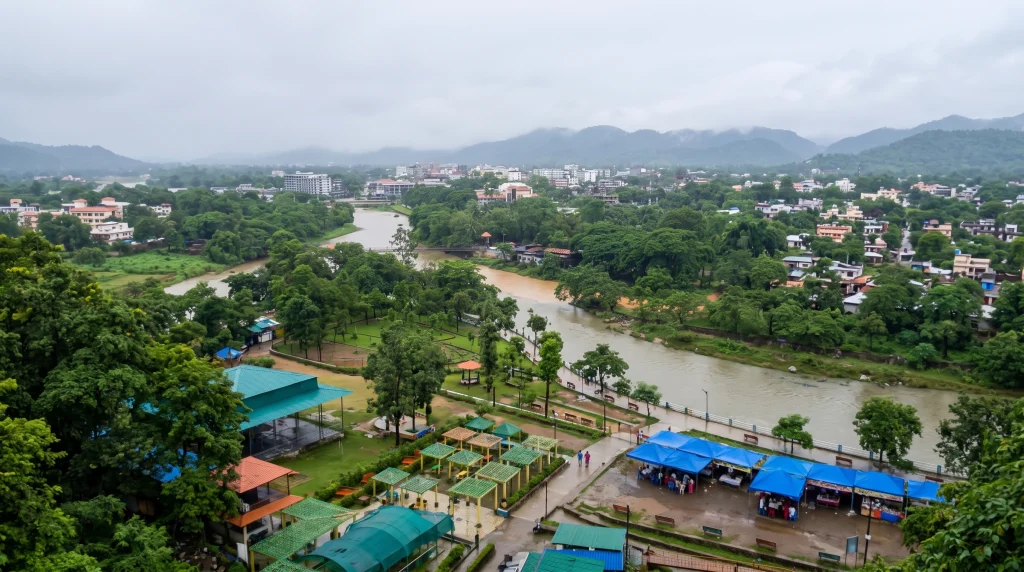
Arriving by train from Luang Prabang, I called a Grab into town (cheaper than the tuk-tuks waiting outside, as mentioned above) and checked into a centrally located hotel. Mine had rooftop views over the karsts I could actually enjoy once the clouds briefly broke. I spent the rest of the day walking the main strip, getting my bearings, and eating early, still thinking tubing would happen the next morning.
Day 2: Rain Reroutes the Plan
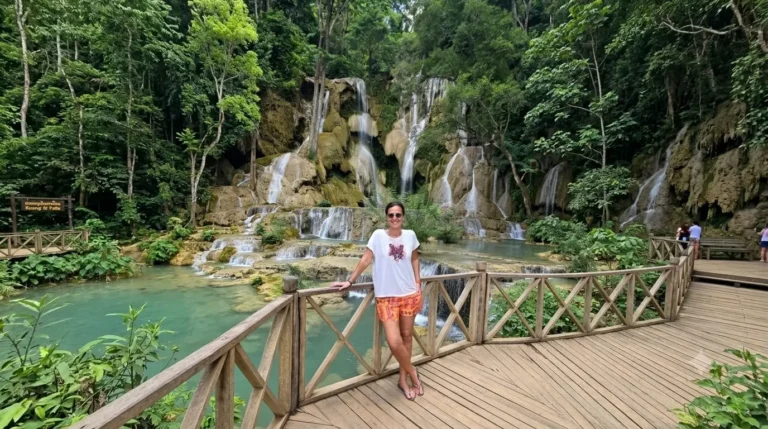
It didn’t. The rain that had followed me from Luang Prabang settled in properly, and tubing was off the table for the day. Instead, I spent time swimming at the lagoons around town, rain or not. The turquoise water against the limestone backdrop is the postcard shot everyone takes for a reason, and a little drizzle barely changes the experience once you’re already in.
🌧️ Weather callout: If you’re visiting outside the dry season, check conditions before heading to any lagoon, cave, or the river itself — heavy rain upstream can raise water levels fast and turn what should be a lazy swim or float into a stronger current than you bargained for.
Day 3: Nam Xay Viewpoint
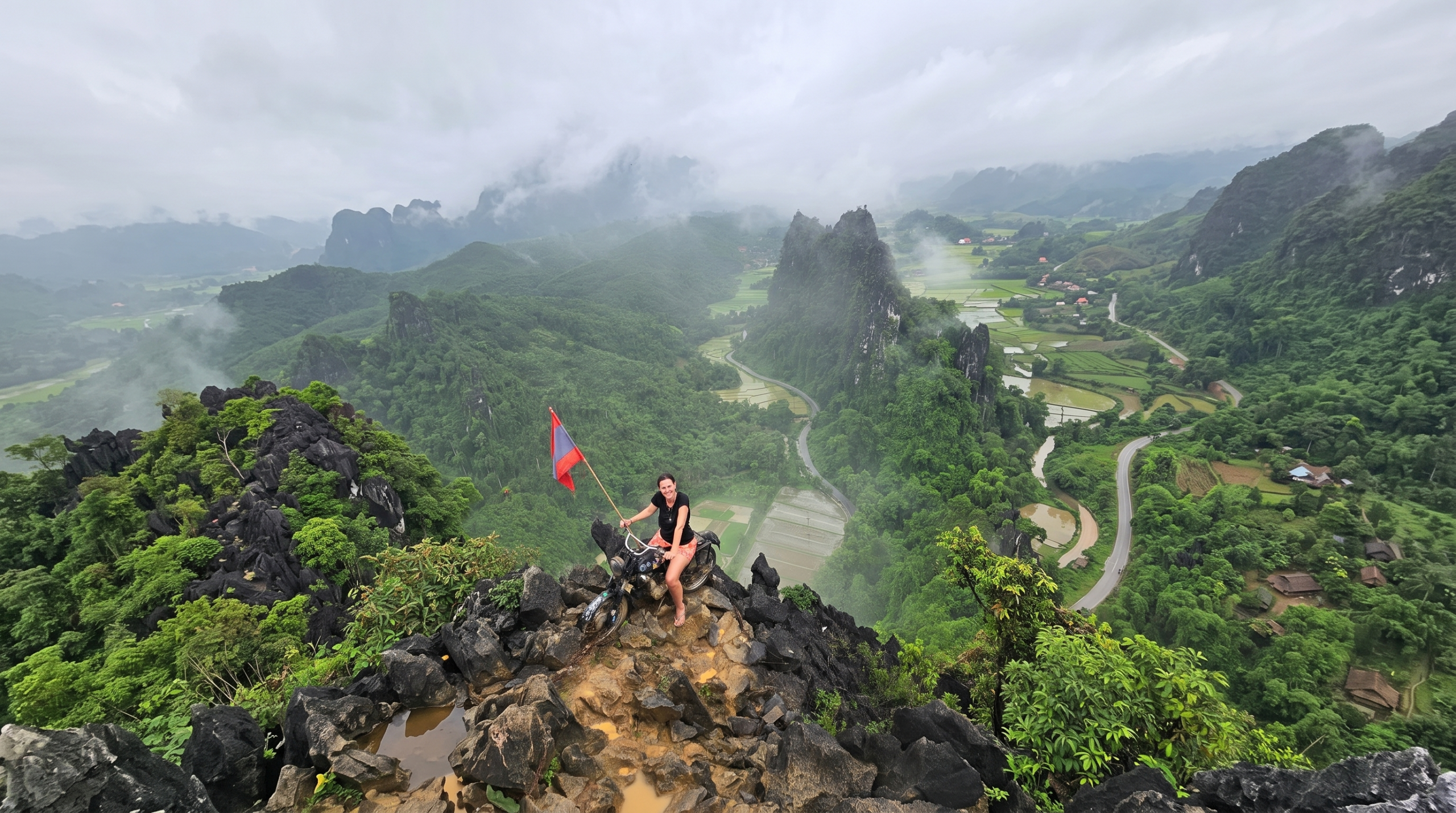
Still no tubing, so I used the second rainy day for the Nam Xay Viewpoint climb instead. I’ll admit this one was partly a self-inflicted problem: I set out wearing flip-flops, which in hindsight was not a decision built on any actual logic. The trail is steep, loose, and rope-assisted in places.
I struggled on the way up and struggled even more on the way down, sliding more than I’d like to admit. To make matters worse, the mosquitoes at the top were relentless, swarming the second I stopped moving to take in the view. But the 360-degree view over the rice paddies and the river once I reached the top made the whole ordeal worth it. If you take one thing from this section, let it be: wear real shoes and pack repellent.
Day 4: Tubing on the Nam Song, Finally
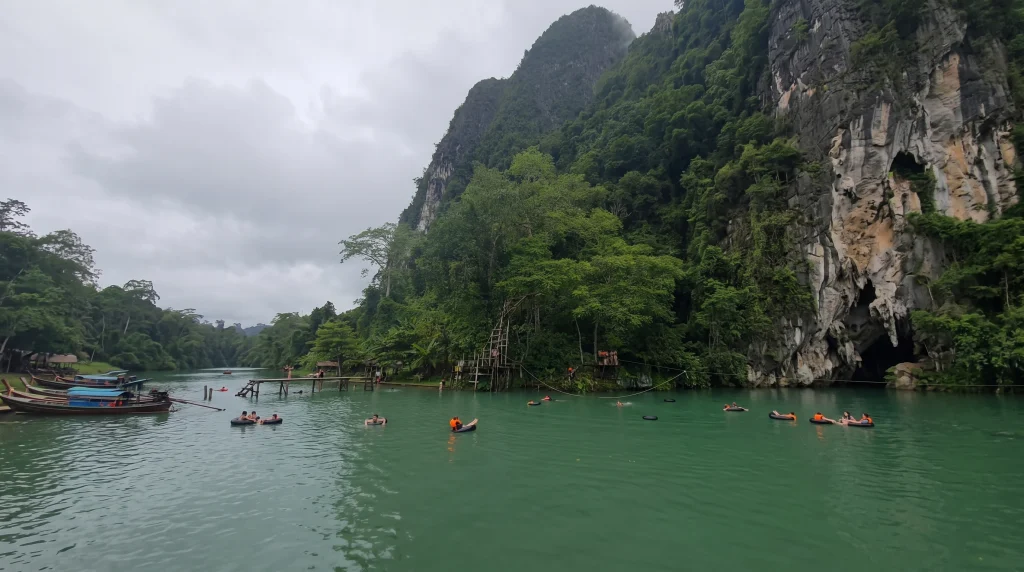
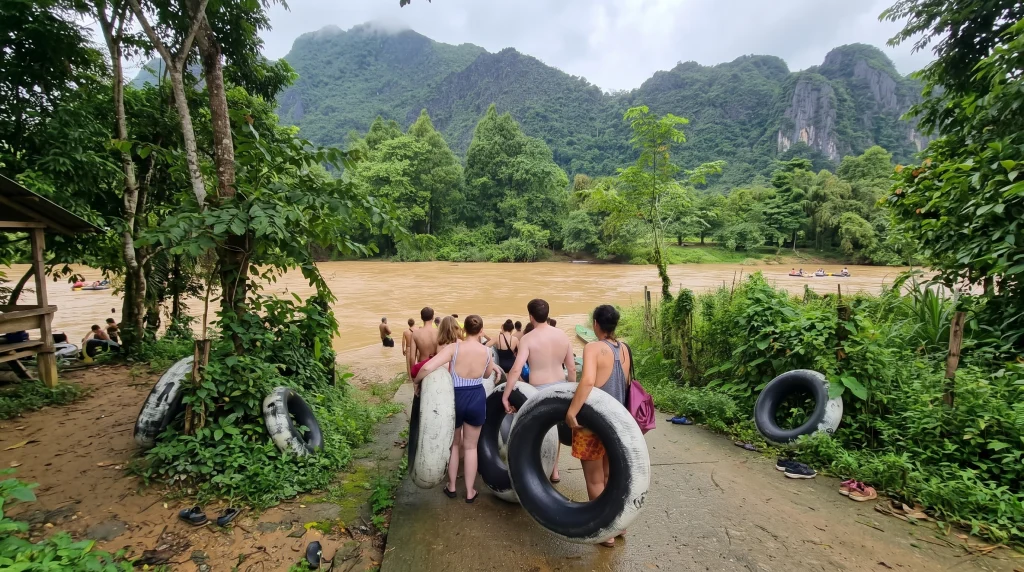
Three days of waiting out the rain, and this was worth every bit of the delay. Tubing here means renting an inner tube, getting driven upriver, and floating back down toward town at your own pace, stopping at the riverside bars that are still open along the way.
It’s slow, it’s social, and it’s a lot more fun than it sounds on paper: just drifting with the current, chatting with whoever’s tubing next to you, climbing out at a bar for a Beerlao, then back in the water. The river was still running a bit stronger than usual from all that rain, which made parts of the float faster than expected, but nothing that felt unsafe with a life jacket on.
Day 5: Departure
A slower final morning, one more coffee overlooking the river, before heading to the station for the train south to Vientiane.
🏞️ Top Experiences & Best Places to Visit
1. Tubing the Nam Song River
The activity Vang Vieng is still best known for, and still worth doing in its calmer, post-crackdown form. Expect a mellow float, a handful of open riverside bars, and a properly social afternoon.
2. Nam Xay Viewpoint
A steep, sweaty climb rewarded with one of the best panoramas in town — karst peaks in every direction and the Nam Song River cutting through the valley below. Go in proper shoes, not sandals.
3. Blue Lagoons
Several lagoons ring the town, each with rope swings and turquoise water fed by underground springs. Blue Lagoon 1 is the most accessible, roughly 20 minutes from the center.
4. Tham Phu Kham Cave
Usually paired with a lagoon visit, this cave holds a reclining Buddha shrine reached via a short, steep trail. Bring a flashlight and sturdy shoes; it’s dark and the ground is uneven.
5. Sunrise Hot Air Balloon
A pricier splurge (around $120 for 45 minutes) but a completely different perspective on the karst landscape, drifting silently over the valley as the sun comes up.
🏨 Where to Stay & Eat
Where to Stay
I stayed at the Vang Vieng Sky Mountain View Hotel, and its central location made it easy to walk to restaurants and the tubing put-in point without needing a scooter every day.
- 💰 Budget: Vang Vieng Freedom Backpackers and Riverside Garden hostel both get consistent praise for their riverside karst views and solid dorm setups.
- 🏨 Mid-Range: Vang Vieng Sky Mountain View Hotel offers a rooftop terrace, an outdoor pool, and a properly central spot near the post office.
- 🛎️ Luxury: Riverside Boutique Resort sits right on the Nam Song with a pool overlooking the water and gardens that make it hard to leave; Amari Vang Vieng is the polished, full-resort alternative if you want air-conditioned comfort after a day of hiking.
Where to Eat
- Golden Bamboo Restaurant: fresh, additive-free Lao-French fusion with a Buddha bowl and homemade falafel that regulars rave about; slightly pricier than average, worth it.
- Restaurant du Crabe d’Or: set inside Riverside Boutique Resort, French cooking technique applied to Lao ingredients, best booked ahead for dinner.
- Bamboo Bistro Garden: riverside, relaxed, a good lunch stop with vegetarian options after a morning on the water.
- Sanaxay Restaurant: straightforward, authentic Lao cooking for travelers who want the real thing without the resort prices.
💸 Budget: Cost & Money-Saving Tips
Cost of Traveling
- 💰 Budget: Roughly $25–35/day covers a hostel dorm, street food and local restaurants, and one paid activity like tubing.
- 🧍 Mid-Range: Around $60–90/day for a private mid-range room, restaurant meals, and a couple of guided activities such as kayaking or a cave tour.
- 🛎️ Luxury: $150+/day for a riverside resort, degustation dinners, and splurges like the sunrise balloon ride.
Money-Saving Tips
- Book the Laos-China Railway tickets through 12Go a few days ahead; walking up at the station on the day rarely works during busy periods.
- Rent a motorbike through your guesthouse rather than a separate shop; prices are comparable and it saves a trip across town.
- Pack your own snacks for train journeys; onboard options are limited to chips and instant coffee.
- Go to the lagoons first thing in the morning to beat both the crowds and the midday price surge on transport.
- Use Grab rather than the tuk-tuks waiting at the station exit for the ride into town; noticeably lower fare, same trip.
🎒 What to Pack & Good to Know
What to Pack
- Proper closed-toe shoes for the Nam Xay Viewpoint climb; learn from my flip-flop mistake.
- Insect repellent; the mosquitoes at the top of Nam Xay Viewpoint were relentless the moment I stopped moving.
- A dry bag or waterproof phone pouch for tubing and the lagoons.
- Quick-dry clothing; between the river activities and the rain, nothing stays dry for long.
- Travel insurance through SafetyWing, given how much of the itinerary here involves water and unpaved trails.
Safety, Accessibility & Etiquette
Vang Vieng today is far safer than its old reputation suggests, but it’s still a river town: wear a life jacket while tubing, don’t drink and swim, and watch current speed during the rainy season. Dress modestly at Tham Phu Kham Cave and any temple, and remove your shoes before entering shrine areas. Emergency numbers in Laos are 191 (police) and 1195 (ambulance); response times outside major towns can be slow, so medical evacuation coverage is worth having. Laos’s official tourism board is a useful resource for province-level updates and closures before you go.
⚠️ Local warning: Some restaurants quietly advertise “happy” pizzas or shakes laced with unspecified drugs. They’re illegal and unregulated, and dosing is unpredictable, so it’s not worth the risk.
❓ FAQ
Is the fast train from Luang Prabang to Vang Vieng worth booking in advance, or can I buy on arrival?
Book ahead if you can. Same-day tickets sell out fast, especially on weekends, and the online booking window only opens three days before departure.
Is tubing still as wild as its old reputation, or has that really changed?
It’s calmer now. Life jackets and regulated stops are standard, and the free-for-all bar-hopping of the old days is mostly gone, though it’s still a fun, social afternoon.
Do I need a motorbike, or can I get around Vang Vieng on foot?
The town center is walkable, but the lagoons, caves, and viewpoints are spread out enough that a rented motorbike makes the days far less tiring. For single trips, like the ride in from the train station, Grab is available and worth checking before you settle for a tuk-tuk quote.
What should I wear for the Nam Xay Viewpoint hike?
Closed, sturdy shoes with grip. The trail is steep and loose underfoot, and sandals, as I learned the hard way, make both the ascent and descent much harder than they need to be.
✨ Wrap-Up: Vang Vieng Travel Guide Summary
Quick Summary If you only take one thing from this Vang Vieng travel guide, take these:
- Best time to visit: November–April (dry season) for reliable weather; July–October for lush scenery and thinner crowds, with rain to expect
- Average daily budget: $25–90 depending on style
- Ideal trip length: 3–5 days
- Good for: adventure travelers, river lovers, viewpoint hikers, and anyone doing the classic Vientiane–Vang Vieng–Luang Prabang route
Vang Vieng surprised me. I went in expecting a party town running on fumes from its old reputation, and found instead a scenic base for a few physical, memorable days, rain included. The tubing lived up to the hype, and the viewpoint climb became the story I’ve told most since getting home, mostly because of how unprepared I was for it.
Still figuring out your Vang Vieng itinerary, or have a question about the train, the tubing, or the hike that I didn’t cover here? Drop it in the comments — I try to reply to every one.
For more real trip notes and city guides, visit gotravelica.com.