Arusha Safari Guide 2026: Bush Planes & Big Cat Sightings
🌍 Introduction & Why Go
I nearly turned back boarding that first bush plane — eleven seats, a propeller, and my nerves not fully on board with either. Ninety minutes later I was watching a lion doze on a tree branch in the wild, and every ounce of that nervousness felt worth it.
Arusha sits at the doorstep of Tanzania’s northern safari circuit, which made it an easy choice once I decided to go. Lake Manyara, Tarangire, and Ngorongoro Crater are all within a few hours of the town, so a short trip covers forest, savanna, and crater floor without long transfer days eating into game-viewing time. Add in the town’s easy pace, and Arusha turns out to be less a destination in itself and more a launchpad for the days that follow.
Quick Picks:
- 🧍 Budget: Lionsgate Hostel – pool, budget-friendly
- 💰 Mid-Range: Kibo Palace Hotel Arusha – central, well-rated breakfast
- 🛎️ Luxury: Arusha Coffee Lodge – set on a coffee plantation, a favorite before heading out on safari
📋 Quick Facts Before You Go
- Visa: Most nationalities need a Tanzania e-Visa, which travelers apply for online before arrival; on-arrival visas at the border are no longer issued.
- Language: Swahili and English (English is widely spoken in tourism).
- Currency: Tanzanian Shilling (TZS); US dollars are accepted at lodges and tour operators.
- Plugs: Type D and G, 230V.
- Mobile & Internet: A local eSIM (Airalo or Holafly both cover Tanzania) is the easiest way to stay connected in Arusha town; coverage thins out fast once you’re in the bush.
- Transport tickets: Domestic flights and safari vehicle transfers are usually pre-booked as part of a tour package.
- Drone Usage & Rules: Flying a drone inside Ngorongoro, Tarangire, or any TANAPA-run park is banned without prior written permission from the Tanzania Civil Aviation Authority and TANAPA; bringing one in unauthorized risks confiscation.
⚠️ Visa note: As of 2025, Tanzania no longer issues visas at the airport or land borders. Apply for the official Tanzania e-Visa at least a few days before departure, and keep your accommodation and flight details on hand for the application.
🚁 Drone callout: Leave the drone at home unless you’ve secured permits weeks in advance from the Tanzania Civil Aviation Authority and TANAPA — rangers actively enforce the ban, and unauthorized flights near wildlife can trigger stampedes as well as fines.
✈️ Getting There & Getting Around
Most international flights land at Kilimanjaro International Airport (JRO) or, for those routing through the coast first, Julius Nyerere International Airport (DAR) in Dar es Salaam. Comparing routes on Skyscanner before booking is worth the extra few minutes, since fares into JRO and DAR can swing noticeably by season and airline alliance.
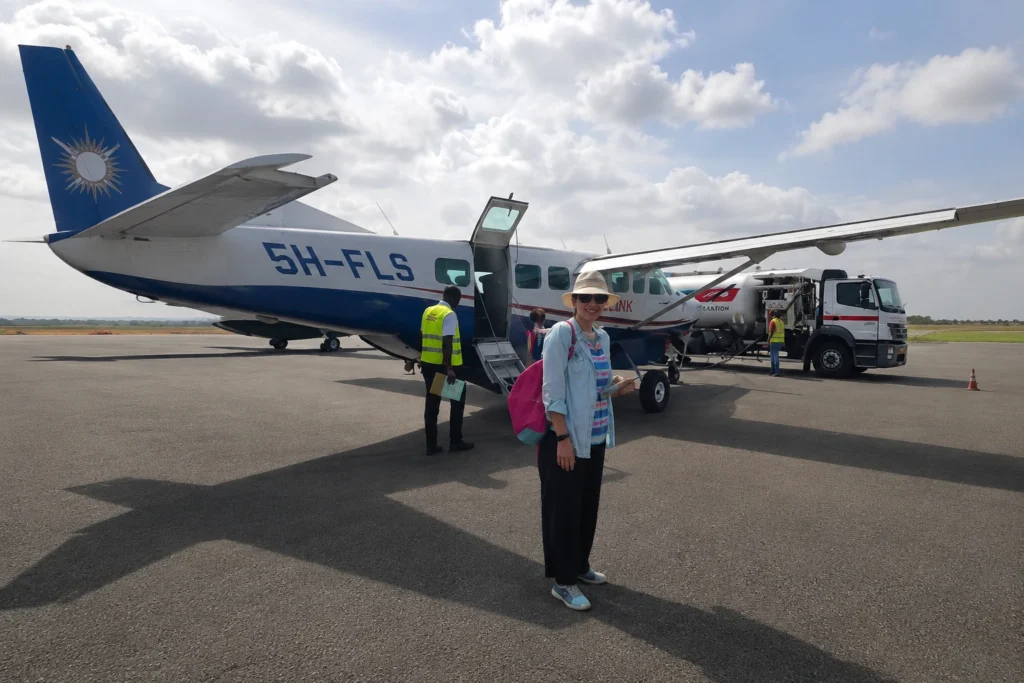
I flew the second way, connecting onward to Arusha on a small propeller plane — my first time on that kind of aircraft, and I will admit the size of it caught me off guard as we boarded. Airlines like Coastal Aviation and Auric Air run this route several times a day, and the flight itself takes a little over an hour, cutting across farmland and hills before Mount Meru comes into view.
Once you land at Arusha Airport (ARK), most safari operators include airport transfers in the package price, so a driver is usually waiting with a name board. If yours doesn’t, a taxi into town runs a short distance and is easy to negotiate on the spot. Within Arusha, distances are walkable in the central area, though tuk-tuks and taxis cover longer hops cheaply.
For the safari itself, virtually every operator provides a 4×4 Land Cruiser with a pop-up roof and driver-guide, so there’s no need to arrange separate car rental — unless you’re extending the trip with independent travel, in which case Discover Cars is worth checking for self-drive rates around Arusha town.
When the safari wrapped, I didn’t fly home right away — a short domestic flight took me straight from Arusha to Zanzibar for the beach half of the trip. If you’re planning the same combination, my Zanzibar Travel Guide covers that connecting flight and what to do once you land.
🌤️ Best Time to Visit & Trip Length
January sits inside Tanzania’s dry, warm season, and it happens to overlap with calving season on the southern plains near Ngorongoro and Ndutu, when thousands of wildebeest calves are born within a few weeks. That timing meant predator activity was high, and the grass was still short enough for easy sightings across the crater floor.
For a first safari, three to five days is a comfortable length: enough to cover two or three parks without rushing the drives, but not so long that the days start to blur together. Four days, as I did, is close to the sweet spot for combining Lake Manyara, Tarangire, and Ngorongoro without feeling packed.
🐾 Migration timing: If witnessing the Great Migration’s river crossings is the goal, plan instead for July through October, when the herds push toward the Mara River in northern Serengeti — a different itinerary from the Manyara-Tarangire-Ngorongoro route in this guide.
🗺️ Day-by-Day Itinerary
My four days followed a route close to the “Arusha: 4-Days Safari to Lake Manyara, Serengeti & Ngorongoro” package listed on GetYourGuide, which covers this same Manyara–Tarangire–Ngorongoro combination despite the Serengeti mention in its title.
Day 1: Arusha to Lake Manyara
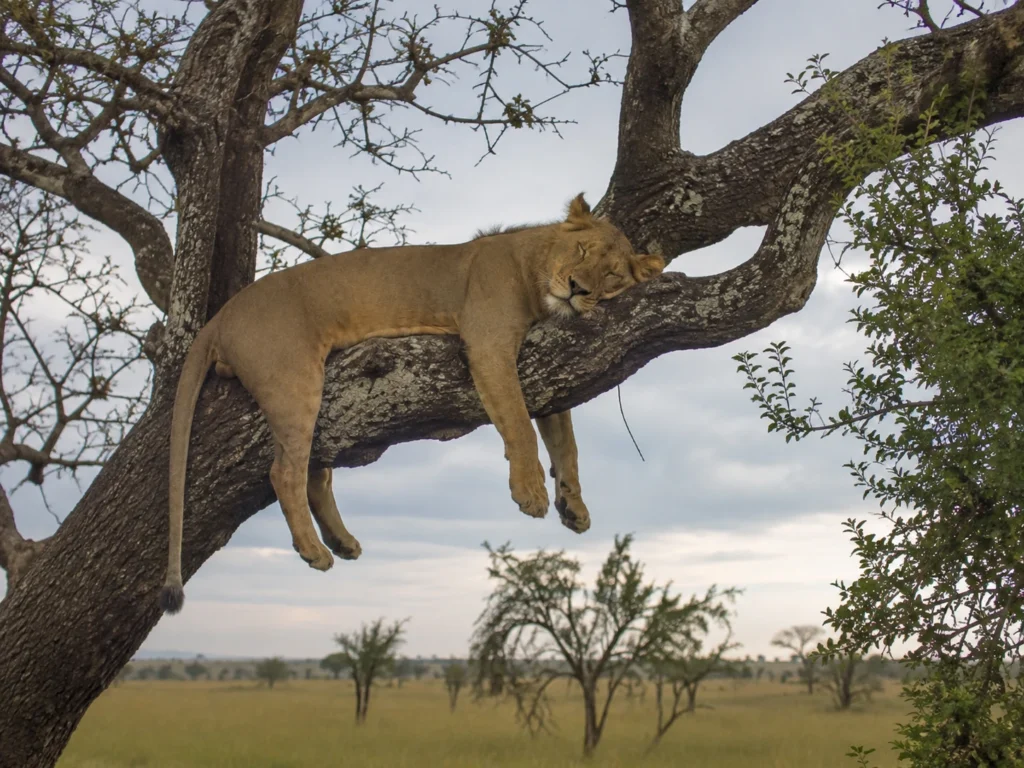
The tour begins with pickup from your Arusha hotel and a drive west toward Lake Manyara National Park, a compact reserve squeezed between the Rift Valley wall and the lake itself. The park is famous for its tree-climbing lions, and I saw one draped across a low branch not long after entering — an image so unexpected that I nearly missed the elephants crossing the road behind us.
Day 2: Lake Manyara to Tarangire
The route continues to Tarangire National Park, known for its baobab trees and some of the largest elephant herds in the country. Game drives here move slower than in the crater, giving more time to watch behavior rather than just spot animals. Overnight stays for this leg are typically arranged in Karatu or near the park gate.
Day 3: Tarangire to Ngorongoro Crater Rim
Day three heads toward the Ngorongoro Conservation Area, climbing up to the crater rim as farmland gives way to highland forest. The drive alone offers sweeping views over the caldera below, and most itineraries overnight at a lodge or campsite perched right on the rim, ready for an early descent the next morning.
Day 4: Ngorongoro Crater and Return to Arusha
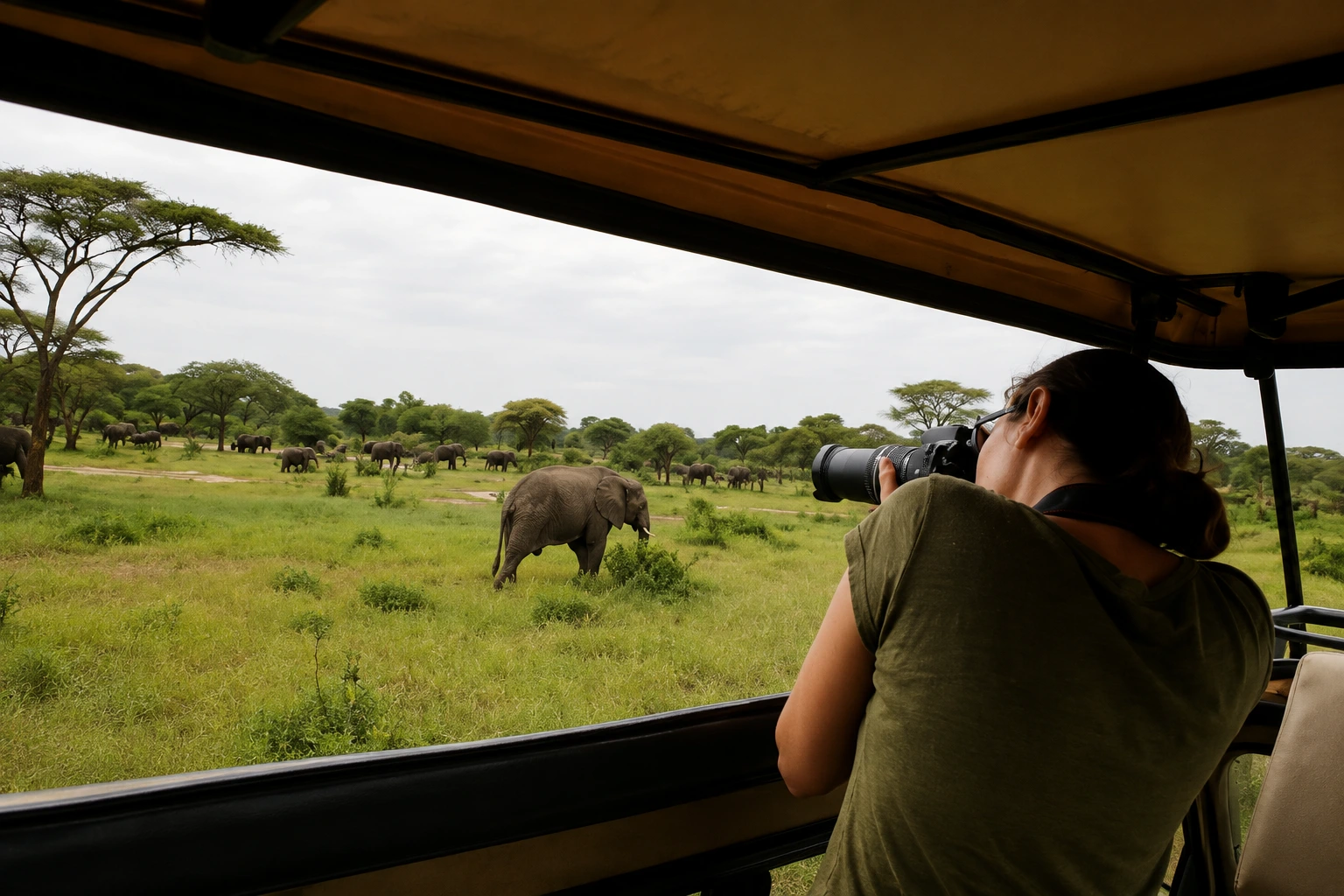
This was the day I had been anticipating most, chasing a personal wish list of the Big Five. The vehicle descends roughly 600 meters from the rim onto the crater floor at first light, and lions, elephants, buffalo, and rhino all appeared over the course of the morning — the leopard stayed hidden, which somehow made the other four feel more earned.
Midday brought a stop by the crater’s hippo pool, and this is where the trip’s sharpest memory happened: leaning in for a closer photo of a hippo swimming nearby, our guide called me back immediately, explaining how fast and how aggressive hippos can be at close range despite their slow appearance on land. It reset how I looked at every animal for the rest of the trip.
🚨 Safety callout: Hippos cause more human fatalities in Africa than any other large mammal. Even a calm-looking hippo in water can charge without warning — always keep a guide-approved distance and never approach on foot.
🦁 Top Experiences & Best Places to Visit
1. Ngorongoro Crater
A UNESCO World Heritage Site and the single best place on this route to attempt the Big Five in one day, thanks to the wildlife density packed inside its walls.
2. Lake Manyara’s tree-climbing lions
Not every pride in East Africa climbs trees, which makes a sighting here feel closer to a private show than a routine game drive.
3. Tarangire’s baobab-dotted plains
The elephant herds move through ancient baobabs that look almost sculpted, giving this park a visual identity distinct from the crater or the lake.
4. A Maasai village stop
Several itineraries build in a stop at a Maasai boma en route between parks, offering a short but genuine look at a way of life that predates the surrounding conservation areas by generations.
Solo tip: game drive vehicles are often shared, which makes solo travel on this route both affordable and social — you’ll likely swap sightings and stories with strangers by day two.
🏨 Where to Stay
For the safari nights themselves, most tours book you into fixed lodges near each park gate, but Arusha town is where you’ll likely spend your first and last night. I stayed at MasaiLand Safari Lodge, a four-star property in the Sakina area with a pool, garden, and a buffet dinner that felt like a proper welcome after a long travel day — a comfortable, mid-range base close to the airport.
Budget: Arusha Backpackers Hotel sits close to the town center and bus terminals, with simple private rooms and dorms that suit travelers keeping costs low before or after the safari leg; Hostelworld is a good place to compare dorm rates against other hostels in town.
Mid-Range: MasaiLand Safari Lodge offers air-conditioned rooms, two pools, and a restaurant that turns out generous local and international plates — a solid pick for a first or last night in Arusha.
Luxury: Gran Meliá Arusha, set among coffee and tea plantations on the slopes of Mount Meru, delivers full five-star comfort with spa facilities and mountain views for those wanting to bookend the safari in style.
🍽️ Where to Eat
Arusha’s food scene mixes Tanzanian staples with international options built around decades of safari tourism. Khan’s BBQ, technically an auto-spares shop by day, turns into one of the town’s most loved grill spots by night, serving skewered meat straight off the coals.
For something more polished, Machweo Fine Dining at Onsea House offers a refined, multi-course menu in a garden setting that suits a celebratory last night. George’s Tavern, run by a locally based Greek family, is a favorite for travelers heading to a late flight out of Kilimanjaro, with hearty European plates and a relaxed, family-meal feel.
💰 Cost of Traveling
Budget: Around $150–200 per day covers a shared group safari, budget lodge or hostel nights in Arusha, and TANAPA park fees on a group vehicle.
Mid-Range: Expect $250–400 per day for a private 4×4 with driver-guide, mid-range lodges like MasaiLand, and standard park and crater service fees.
Luxury: $500 and up per day brings tented camps or five-star properties, private guiding, and flexibility to add extras like a Ngorongoro balloon safari.
Park fees add up quickly on this route: Tarangire and Lake Manyara run roughly $50–60 per adult per day, while the Ngorongoro Conservation Area charges its own entry fee plus a separate $295 crater service fee per vehicle, not per person.
💡 Money-Saving Tips
- Join a shared group safari instead of a private vehicle; the per-person cost drops substantially and the parks remain just as impressive.
- Travel outside the July–September peak, since a January safari during calving season is both cheaper and less crowded at the gates.
- Withdraw Tanzanian shillings in Arusha before heading into the bush, since ATMs vanish once you leave town and card surcharges of 3–5% apply almost everywhere.
- Book the Ngorongoro leg as a single overnight rather than two, since the $295 vehicle fee applies per descent, not per day.
- Pack snacks and a refillable water bottle, since lodge and campsite prices for extras run high given their remote locations.
🎒 What to Pack
- Neutral-colored clothing (khaki, olive, tan) for game drives
- A warm layer for early morning starts, especially at the Ngorongoro rim
- A wide-brim hat and high-SPF sunscreen
- Binoculars and a zoom lens if photography matters to you
- A basic first-aid kit and any personal medication
🩺 Good to Know: Safety, Accessibility & Etiquette
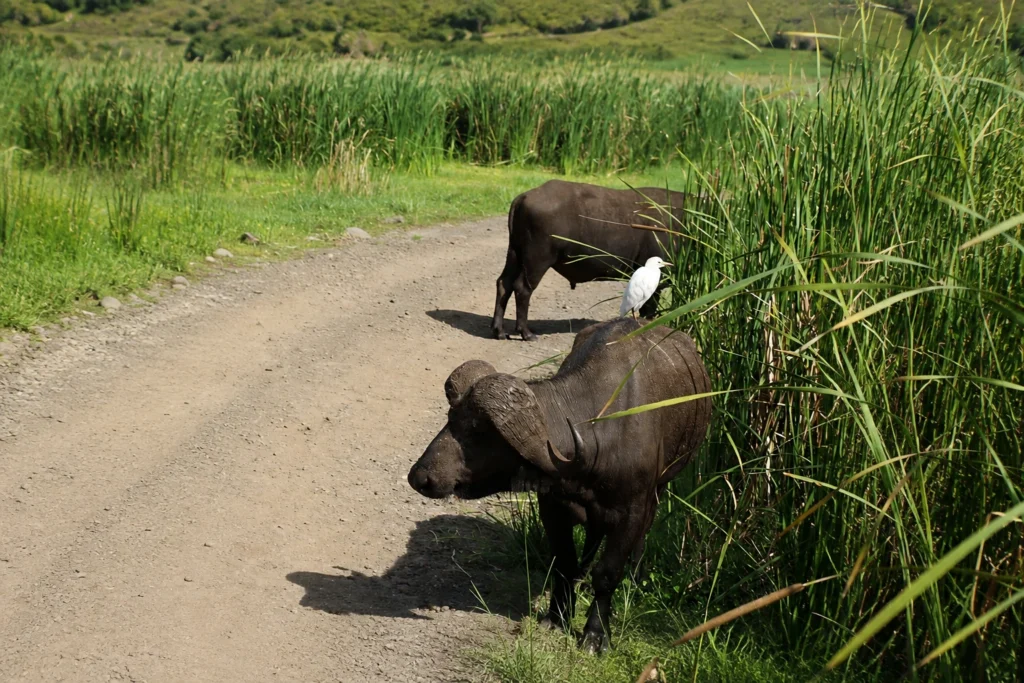
Tanzania’s safari parks are generally safe for travelers, provided the basics are respected. The single biggest lesson from this trip: distance from wildlife is not optional, and a guide’s instructions override any urge for a closer photo. Buffalo and elephants injure far more visitors each year than the more feared predators, precisely because people underestimate them.
💊 Health callout: Malaria risk is present across northern Tanzania, so antimalarial medication, repellent, and long sleeves in the evening are worth discussing with a travel clinic before departure. Tap water isn’t safe to drink; stick to bottled or filtered water throughout the trip.
For emergencies, dial 112 or 999 within Tanzania, though response times in remote park areas can be long and cell coverage can be unreliable outside major towns — this is another reason a travel insurance plan with medical evacuation coverage matters before heading into the parks.
Accessibility varies by lodge; most safari vehicles require some mobility to climb in and out through the pop-up roof, so travelers with mobility needs should flag this when booking. On etiquette, always ask before photographing Maasai community members, and tip guides and lodge staff in cash, since card tipping isn’t standard practice here.
❓ FAQ
❓ Is Arusha a safe base for a first safari?
Yes. Arusha functions as the main gateway town for the northern circuit, with established tour operators, hotels, and airport connections geared toward first-time safari travelers.
❓ Do I need a visa to visit Tanzania for a safari?
Most nationalities need to apply for a Tanzania e-Visa online before travel, since on-arrival visas were phased out at the border in 2025.
❓ How many days do I need for Lake Manyara, Tarangire, and Ngorongoro?
Four days covers all three comfortably, giving each park at least a half-day of dedicated game viewing without excessive driving.
❓ Will I see the Big Five on a 4-day Arusha safari?
It’s possible, especially with a Ngorongoro Crater day, though leopard sightings remain the least reliable of the five given their elusive, mostly nocturnal habits.
❓ Is it safe to get close to hippos for photos?
No. Hippos are among the most dangerous animals in Africa and can move surprisingly fast on land or in water — always follow your guide’s distance instructions.
📊 Arusha Safari Guide: Quick Summary
- Best time: June to October (dry season) or January to February (calving season, fewer crowds)
- Average daily budget: $150–400 depending on travel style
- Ideal trip length: 4–5 days for the northern circuit
- Good for: First-time safari travelers, wildlife photographers, solo and couple trips
🌅 Final Words
Four days on this route left more of a mark than I expected going in — not because everything went according to plan, but because of the one moment it didn’t.
Getting called back from that hippo pool by a guide who clearly knew better taught me more about respecting wildlife than any of the dozens of documentaries I’d watched beforehand. That mix of wonder and a sharp reality check is, I think, what a real safari is supposed to deliver.
Next, I want to plan a trip around the Serengeti’s Mara River crossings, timing it for the peak of the great migration rather than the calving season I caught this time. For now, this Arusha safari guide reflects a first taste of northern Tanzania that left me already planning the second one. Have you done a safari in this part of Tanzania, or is one on your list? 💬
Next, I want to plan a trip around the Serengeti’s Mara River crossings, timing it for the peak of the great migration rather than the calving season I caught this time. For now, this Arusha safari guide reflects a first taste of northern Tanzania that left me already planning the second one. If you’re combining safari with beach time like I did, don’t miss my Zanzibar Travel Guide for the second half of the trip. Have you done a safari in this part of Tanzania, or is one on your list? 💬