
Hoi An Travel Guide 2026: Lantern Streets, Coconut Boats & the Old Town
🏮 Introduction & Why Go
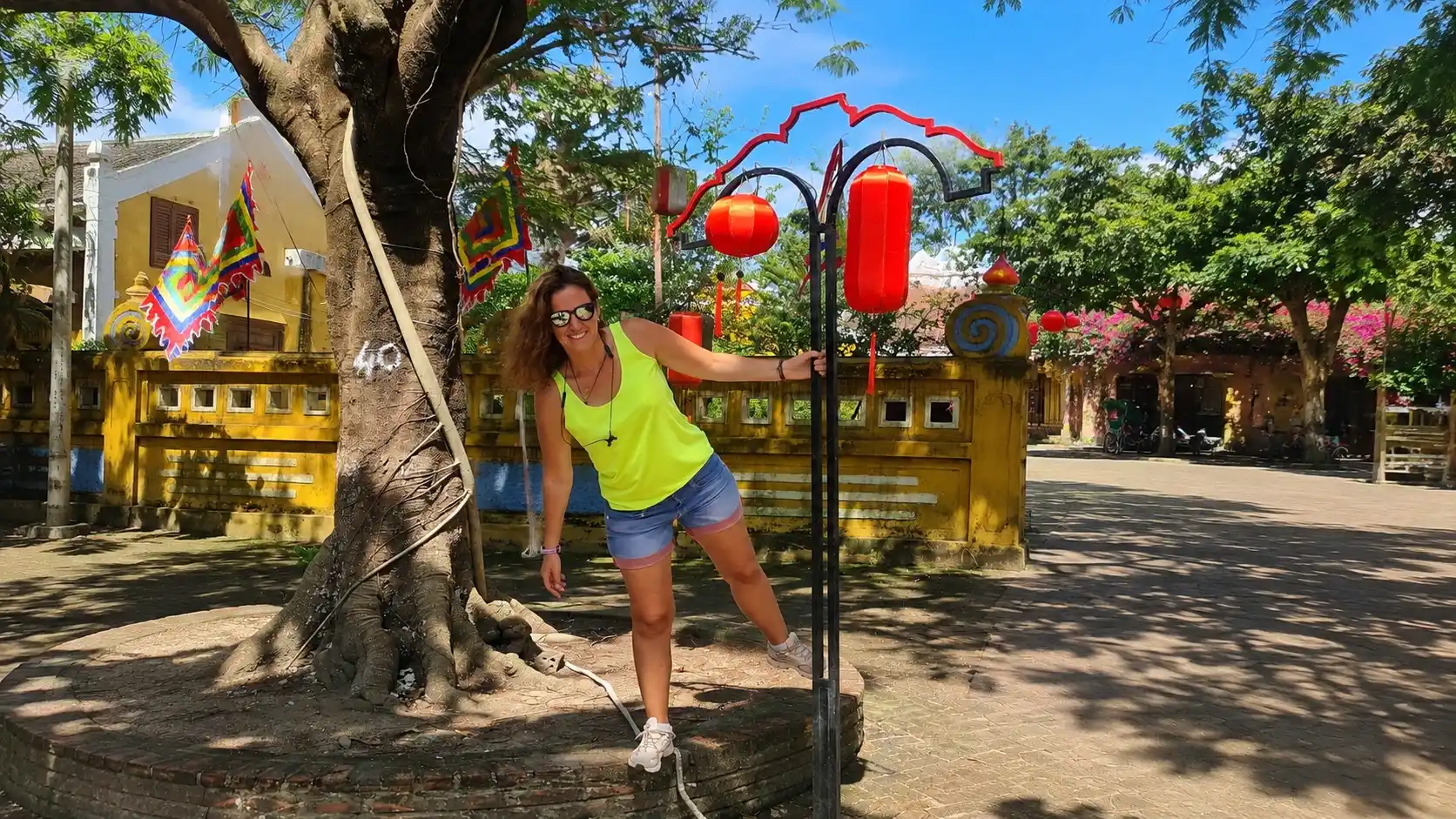
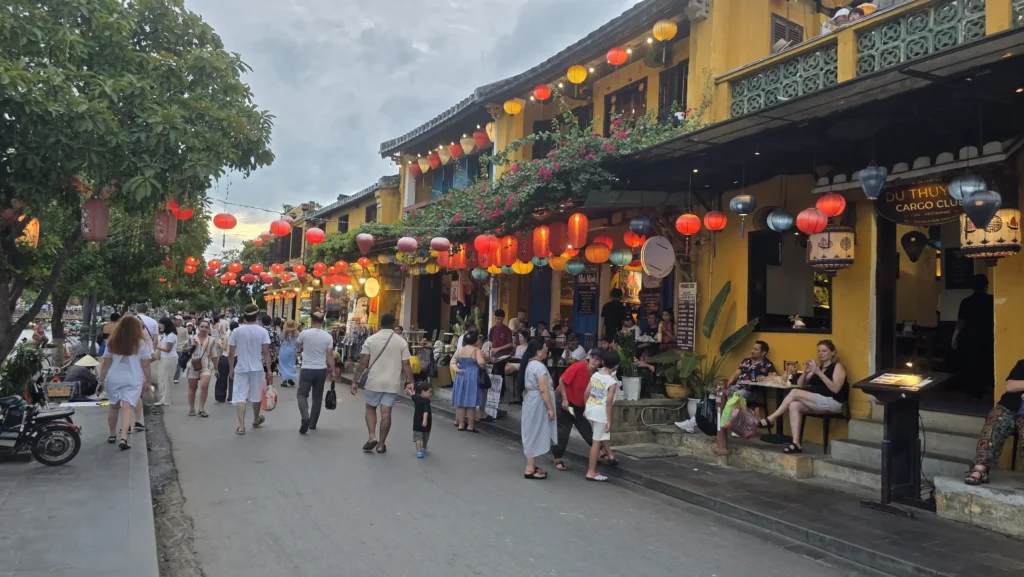
I’ve been chasing Hoi An’s architecture in photos for years before finally getting there myself, and the streets still managed to surprise me. Narrow yellow houses, tiled roofs gone soft with age, red lanterns strung block after block, it’s the kind of place where you stop mid-step to photograph a doorway you’d otherwise walk past. My Hoi An travel guide starts here because no photo I’d seen beforehand actually captured it.
I went in November, which lands right in central Vietnam’s monsoon season. Hoi An’s Old Town sits low enough that the Thu Bon River can spill onto Bach Dang Street in the wettest weeks, and it’s usually the first thing people ask when I mention the trip. Worth knowing upfront if you’re weighing the same months: my own three days went smoothly, but I’ll get into what the actual risk looks like later in this guide.
Quick Picks — Where to Stay in Hoi An
- Budget: Vietnam Backpacker Hostels Hoi An – dorms and pool, near the beach road
- Mid-Range: Lantana Riverside Hoi An Hotel – walking distance to the Old Town, river views
- Luxury: Almanity Hoi An Resort & Spa – spa-inclusive resort in the town center
🛂 Practical Info: When & How to Go
Quick Facts
- Visa: Vietnam’s e-visa is open to all nationalities, costs USD 25 for single entry (USD 50 multiple), and is valid for up to 90 days. Apply online 5-7 working days ahead through the official portal.
Apply early. Standard e-visa processing runs 4-7 working days, and weekend submissions queue until the next business day, so don’t leave it for the week before your flight.
- Language: Vietnamese, though English is common in tourist-facing shops and hotels
- Currency: Vietnamese Dong (VND); carry small notes for street food and market stalls
- Plugs: Type A/C, 220V — a universal adapter covers it
- Mobile & Internet: An Airalo or Holafly eSIM lands you connected the moment you land, no SIM-shop hunting required
- Old Town ticket: 120,000 VND covers entry to five of the roughly twenty-two heritage houses and halls (you don’t need one just to walk the streets, eat, or shop)
- Drone Usage & Rules: Vietnam’s drone laws are among the strictest in Southeast Asia. On paper, drones under 250g flown outside restricted zones can skip the formal permit, but enforcement on the ground doesn’t always respect that distinction, and Hoi An specifically gets flagged as a spot where tourists get stopped and asked for paperwork they don’t have. Anything 250g and up needs a Ministry of Defense flight permit, applied for at least a week ahead with a local guarantor. If aerial shots matter to you, sort the permit before you land, don’t count on flying casually over the Old Town or the lantern streets.
Getting There & Around
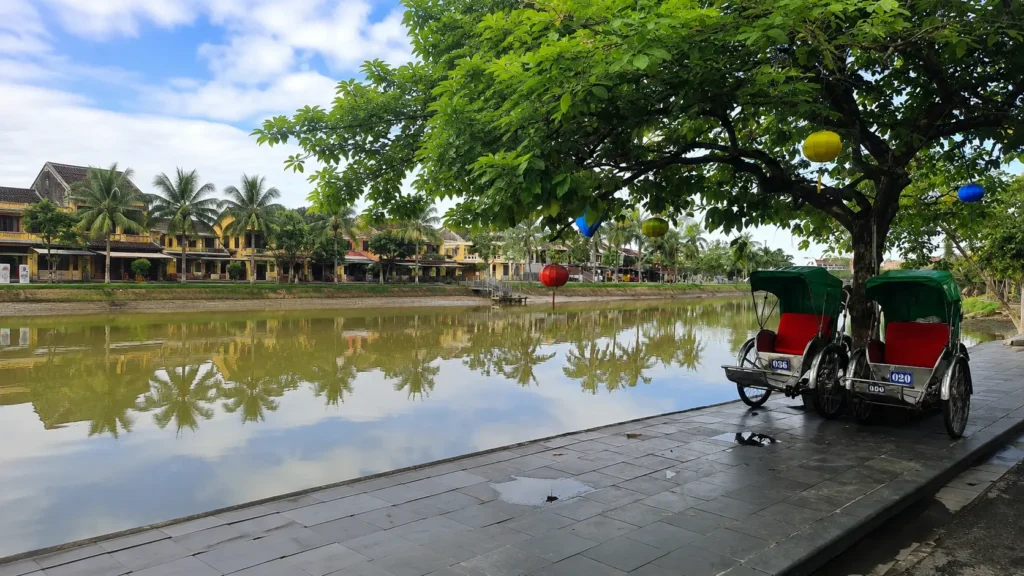
Da Nang International Airport (DAD) is the gateway, about 30 km north of Hoi An. A Skyscanner search from most Southeast Asian hubs turns up direct flights. From the airport, a Grab car runs 250,000-350,000 VND and takes 30-45 minutes on the coastal road; official Mai Linh or Vinasun taxis cost slightly more. Skip anyone approaching you inside arrivals before the taxi rank, they’re not running a meter. Once in town, Hoi An itself is flat and walkable, and most hotels rent bicycles for free or a few dollars a day; cyclo rickshaws along the riverside are another slow, scenic way to cover ground. For side trips, I’d look at Discover Cars if you want a self-drive option, or 12Go for booking onward buses and trains.
Best Time to Visit & Trip Length
February to April is the postcard version: dry, warm, minimal rain. May through August is hot and better suited to the beach than the Old Town. September through November is monsoon season, heavier in October, with real flood risk in the lowest streets near the river. I still think three days is the right length for Hoi An regardless of season, one day to just wander, one for a countryside or boat excursion, and one to slow down and eat.
🗓️ Day-by-Day Itinerary
Day 1: Settling In & the Old Town
I spent the first afternoon just walking, no itinerary, which turned out to be the right call. Hoi An’s Old Town architecture is a mix of Chinese merchant houses, Japanese-influenced bridges, and French colonial fronts, and it rewards slow looking more than checklist sightseeing. I kept stopping to photograph roof tiles and shopfronts that weren’t even labeled as attractions.
Day 2: Coconut Village & Countryside
This was my favorite day. I booked a Cam Thanh coconut village tour, a short drive out to the Bay Mau water coconut forest, where a local boatman spins you around in a round basket boat while dodging low-hanging palms. On the same countryside stop I ended up feeding a duck at one of the small farms along the route, an unplanned, slightly ridiculous highlight I hadn’t expected to enjoy as much as I did.
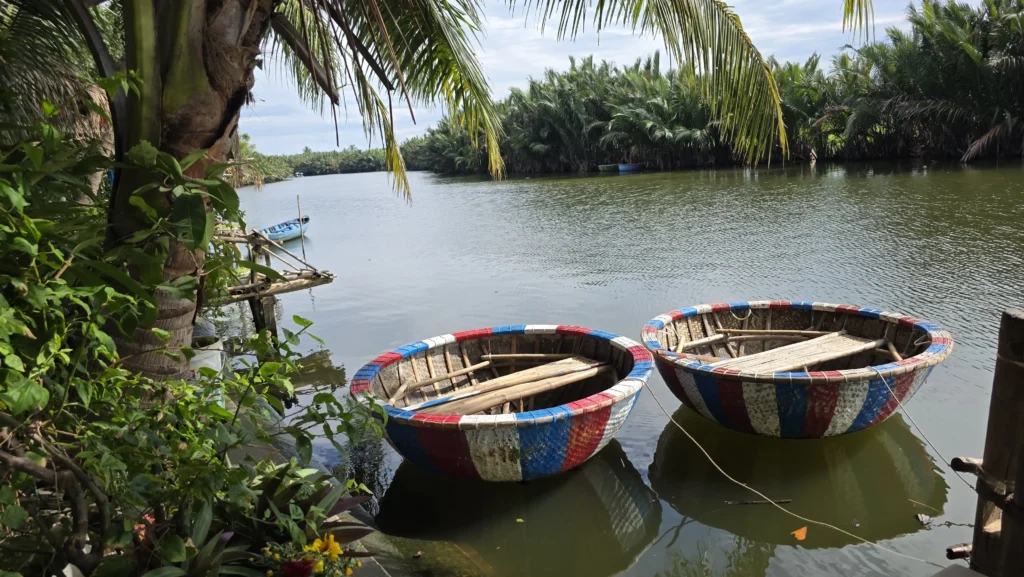
Book directly with the coconut village operator rather than through a random street tout at the entrance. Prices are fixed and low (well under $5), and going direct avoids the inflated “package” rates some hotels quote.
Day 3: Lanterns, Wishes & Night Market
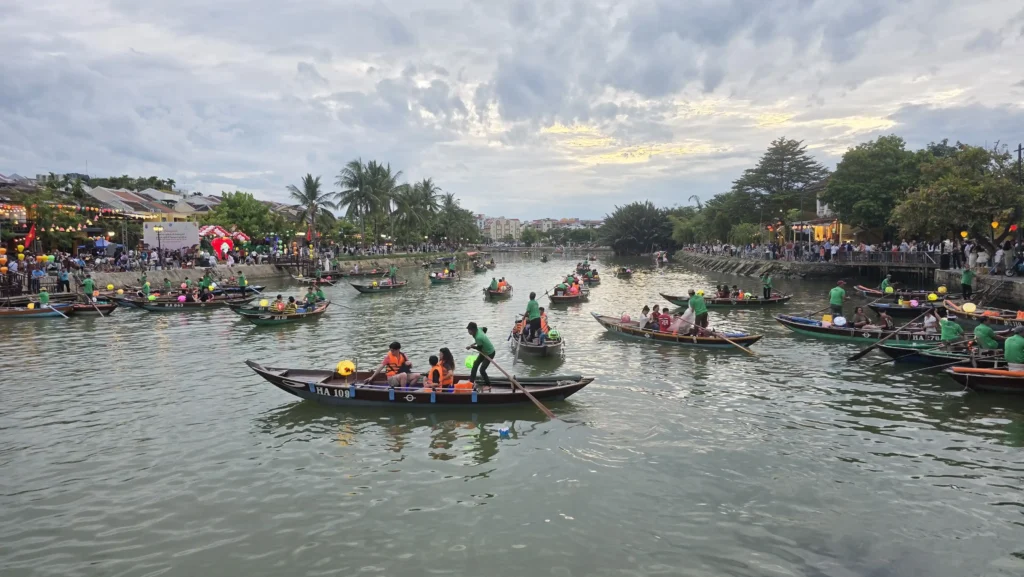
Save your evening energy for this one. Once the sun drops, the Old Town’s streets fill with paper lanterns, and vendors along the Hoai River rent out small wish boats, candlelit paper lanterns you float downstream while making a wish. I did it, felt a little sentimental about it, and don’t regret a single dong spent. Afterward the night market opens up along the riverbank, packed with stalls, and that’s where I found dinner.

✨ Top Experiences & Best Places to Visit
- Walk the Old Town for its architecture, not just its shops. Tan Ky House, the Japanese Covered Bridge, and the assembly halls along Tran Phu Street show three different building traditions layered on top of each other, and honestly the streets between them are just as photogenic as the ticketed sites.
- Don’t skip the countryside stop that comes with the coconut boat tour. The basket-boat ride through Cam Thanh gets all the attention, and it’s fun, but the roadside farms and rice paddies on the way there are just as worth the trip, that’s where I ended up feeding a duck, completely unplanned.
- Walk the lantern-lit streets after dark. Hoi An by day and Hoi An by night are two different towns; the lanterns aren’t just decoration, they change the whole mood of the place.
- Float a wish boat on the Hoai River, but go right as the lanterns switch on. Show up too late and you’re queuing behind tour groups; early evening gets you a boat closer to yourself.
- Eat your way through the night market. Skewers, sweet soups, and banh mi stalls line the riverside strip, and it’s the best place to actually talk to vendors rather than just point at a menu.
🏨 Where to Stay & Eat
Where to Stay
- Budget: Under The Coconut Tree, a well-rated homestay-hostel near the beach road, good for solo travelers who want a social atmosphere without the party-hostel noise
- Mid-Range: I stayed at Hoi An Golden Holiday Elite, right between the Old Town and the beach, with an outdoor pool and free bicycles. My room was clean and quiet, and the location meant I could walk to the lantern streets in under fifteen minutes
- Luxury: Anantara Hoi An Resort, a riverside boutique property inside the Ancient Town itself, about as central as luxury gets here
Where to Eat
Morning Glory, tucked into a restored yellow shophouse, does the best plate of cao lau I had in town, and the white rose dumplings are worth ordering even if you’re not that hungry. For something more low-key and romantic, The Secret Garden hides down a small alley and serves its banana blossom salad in a genuinely pretty courtyard setting. For street food, Banh Mi Phuong is the famous name (expect a short queue), but I got mine from a small stall in the night market instead and it was, without exaggeration, one of the best sandwiches of the whole trip. Crunchy bread, some kind of sauce I still can’t identify, and just the right amount of chili.
Stick to stalls with a steady line of locals, not just tourists. High turnover means the food’s fresh and it’s usually the best sign of quality at a night market.
💰 Budget: Cost & Money-Saving Tips
Cost of Traveling
Budget travelers can get by on roughly $20-30 a day: hostel dorm, street food, bicycle rental, and free wandering. Mid-range travelers should budget $50-90 a day for a hotel like Golden Holiday Elite, sit-down meals, and a tour or two. Luxury travelers looking at riverside resorts and private tours should plan for $200+ a day. These are rough bands, not fixed numbers, since prices shift with season and how many tours you stack on.
Money-Saving Tips
- Rent a bicycle instead of relying on Grab for short in-town trips
- Skip the Old Town ticket if you only care about the streets and lanterns, not the ticketed houses
- Book the coconut boat tour directly with the operator rather than through your hotel’s markup
- Eat where the queue is mostly local, not mostly tourists
- Travel in the shoulder months (September, or December) for lower hotel rates without full monsoon risk
- Use 12Go to compare bus and train fares before booking the first option that comes up
🎒 What to Pack & Good to Know
What to Pack
- A light rain jacket and a pair of shoes you don’t mind getting wet, especially if traveling September through November
- Comfortable walking shoes for uneven, sometimes cobbled streets
- A portable charger, since long days of walking eat through phone batteries fast on photo duty
- Modest shoulder-and-knee coverage for the assembly halls and temples inside the Old Town
Safety, Accessibility & Etiquette
Hoi An is a genuinely easy, low-crime town to walk around, day or night. The one real risk factor is seasonal: from late October into November, low-lying streets near the river can flood, sometimes for a few days at a time. It’s not a disaster scenario, life and business continue, but it’s worth checking the forecast a few days out if you’re traveling in that window, and leaning toward a hotel that isn’t right on the lowest riverside streets.
Emergency numbers in Vietnam: 113 (police), 114 (fire), 115 (ambulance). Travel insurance that covers weather disruption is worth having if you’re visiting in the wet season; I’d look at SafetyWing before the trip.
❓ Hoi An Travel Guide FAQ
Is Hoi An worth visiting in November, given the flood risk?
Yes. My own three days went smoothly, and the risk is manageable if you go in with realistic expectations: keep an eye on the forecast in the days before you fly, and don’t book a room right on the lowest riverside streets if you can help it. If a typhoon is actively tracking toward the coast, that’s a different situation, watch the news closer to your dates.
Do I need the Old Town ticket just to walk around and take photos?
No, walking the streets, crossing the bridges, and sitting by the river is free. Here’s the part that trips people up: the ticket prints a 24-hour validity, but in practice its five tear-off coupons get used across your whole stay, one per heritage site, whenever you actually decide to go inside.
How many days should I actually spend in Hoi An?
Three worked well for me, one to wander, one for the coconut village and countryside, one to slow down at night. Two is workable if you’re tight on time; more than four and you’ll likely want to add a beach day or a Marble Mountains side trip to keep it interesting.
Is Da Nang or Hoi An the better base if I’m also seeing central Vietnam?
Da Nang has the airport and more nightlife; Hoi An has the atmosphere. I’d base in Hoi An and day-trip into Da Nang rather than the other way around.
Can I visit Cam Thanh coconut village without booking a formal tour?
Yes. Grab a taxi or bicycle out there, pay the boatman directly (well under $5), and skip the agency markup entirely.
🎁 Wrap-Up
Quick Summary
- Best time to visit: February-April for dry weather, September or December for fewer crowds with lower flood risk
- Average daily budget: $20-30 (budget) to $200+ (luxury)
- Ideal trip length: 3 days
- Good for: architecture lovers, food travelers, slow-paced trips, couples
Final Words
Hoi An gave me one of those trips where the schedule mattered less than just letting myself wander. The coconut boats and the lantern streets get all the postcard attention, and they earn it, but the small stuff, a stray duck, a night-market sandwich, sticks just as hard. That’s the honest version this Hoi An travel guide is built on: go if the lantern streets and coconut boats pull you in, just build in a little flexibility for the November rain. If you’re building out a longer Vietnam route, my Hanoi travel guide covers the other end of the country, from egg coffee on Train Street to a night on Halong Bay. Have you been to Hoi An in the rainy season, or are you planning your first trip during the dry months? I’d genuinely like to know which version you’re chasing.
More travel guides at gotravelica.com.