Hue Travel Guide 2026: Imperial City, Royal Tombs & the Incense Village
📍 Introduction & Why Go
The train from Da Nang to Hue sells itself as nostalgic, and for once the reputation undersold it: two hours of green mountains sliding past the window, my hands still smelling of sesame oil from a snack vendor three seats over. Stepping onto the platform, incense and diesel hit before any palace did. This Hue travel guide covers Vietnam’s ancient imperial capital, and it’s true to its reputation, but nobody really warns you how quiet the city feels after the honking chaos of Da Nang. That contrast is a big part of why it’s worth the trip.

Quick Picks — Where to Stay in Hue
- 🧍 Budget: Vietnam Backpacker Hostels – lively colonial building on the main walking street, free breakfast included
- 💰 Mid-Range: Century Riverside Hue – riverside comfort, a short walk from the Citadel
- 🛎️ Luxury: Meliá Vinpearl Hue – five-star tower with skyline pool and city views
🚂 Practical Info: When & How to Go
Quick Facts
- Visa: Most nationalities need Vietnam’s e-visa (up to 90 days, USD 25 for single entry). Apply at least a week ahead through the official portal and skip the third-party sites that charge extra. Some passports qualify for visa-free entry of 30-45 days, so check your specific nationality before assuming you need the e-visa.
- Language: Vietnamese. English is spoken at hotels and tourist sites, less so at street-food stalls, and a few phrases go a long way.
- Currency: Vietnamese Dong (VND). Cash rules at markets and small eateries; cards work fine at hotels and larger restaurants.
- Plugs: Type A/C/G, 220V. Bring an adapter if you’re coming from the US or UK.
- Mobile & Internet: An Airalo or Holafly eSIM has you connected the moment you land, no SIM-card hunting required.
- Transport tickets: 12Go is the easiest way to book the train or bus between Hue and other Vietnamese cities in advance, and it’s what I used to book my seat up from Da Nang.
- Drone Usage & Rules: This one matters here specifically. Drones are banned outright over the Imperial City and the royal tombs, and flying anywhere else in Vietnam with anything over 250g requires a permit arranged through a local guarantor, applied for weeks ahead. Unless you’ve sorted that paperwork before your trip, leave it packed.
Getting There & Around
Hue has its own airport, Phu Bai (HUI), with domestic connections from Hanoi and Ho Chi Minh City; check Skyscanner for fares. But if you’re already in central Vietnam, do what I did and take the train up from Da Nang instead. It’s the Reunification Express line, and the stretch over Hai Van Pass is one of the prettiest rail rides I’ve done anywhere. The track hugs cliffs above the South China Sea for almost an hour, with the coastline dropping away on one side and jungle rising on the other. Book it through 12Go or directly at the station; a hard-seat or soft-seat ticket runs just a few dollars.
From Hue’s train station, the center is a short taxi or Grab ride away. Inside the city, I mostly got around on foot and by taxi. A rental scooter through Discover Cars or a local shop is another option if you’re comfortable with Vietnamese traffic, and honestly it’s the easiest way to reach the tombs scattered in the hills outside town, since they’re spread out enough that walking between them isn’t realistic.
Best Time to Visit & Trip Length
March to May is the sweet spot: dry, warm, and ahead of the summer heat. I went in July, which meant proper heat and the occasional downpour, but the crowds were manageable and everything I wanted to see was still doable without much of a wait. Two full days is enough to hit the highlights without rushing; three lets you slow down and add a cooking class or a longer boat ride.
🗓️ Day-by-Day Itinerary
Day 1: Arrival & the Citadel
I rolled into Hue by early afternoon and checked into Park View Hotel, a straightforward, well-located place close to the center that made the rest of the trip easy logistically. No frills, but exactly what I needed after the train.
After dropping my bag, I headed straight for the Imperial City, Hue’s walled Citadel modeled loosely on Beijing’s Forbidden City. Give yourself a solid two to three hours here; it’s bigger than photos suggest, and a fair amount of it is still being restored gate by gate, section by section, decades after wartime damage. I wandered until the light went gold over the moat, then found dinner near the Perfume River and called it a night early, still a little worn out from the train.
Day 2: Tombs, Pagoda & the Incense Village
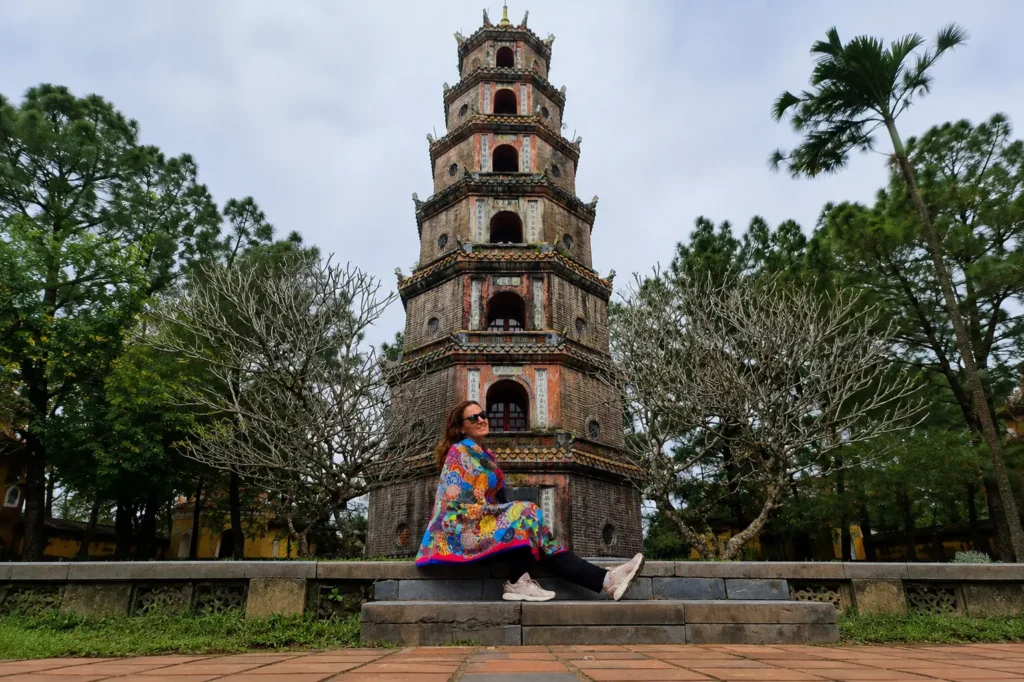
This was the full day, and I’d plan it the same way again if I went back. Morning: the royal tombs, spread across the hills south of the city. Tu Duc’s tomb in particular felt more like a garden retreat than a grave site, with a small lake and pavilions rather than anything somber. From there I continued to Thien Mu Pagoda on the riverbank, which was, without exaggeration, one of the most striking things I saw in central Vietnam. The seven-tiered tower is the unofficial symbol of the city, and standing at its base, it genuinely earns that reputation.
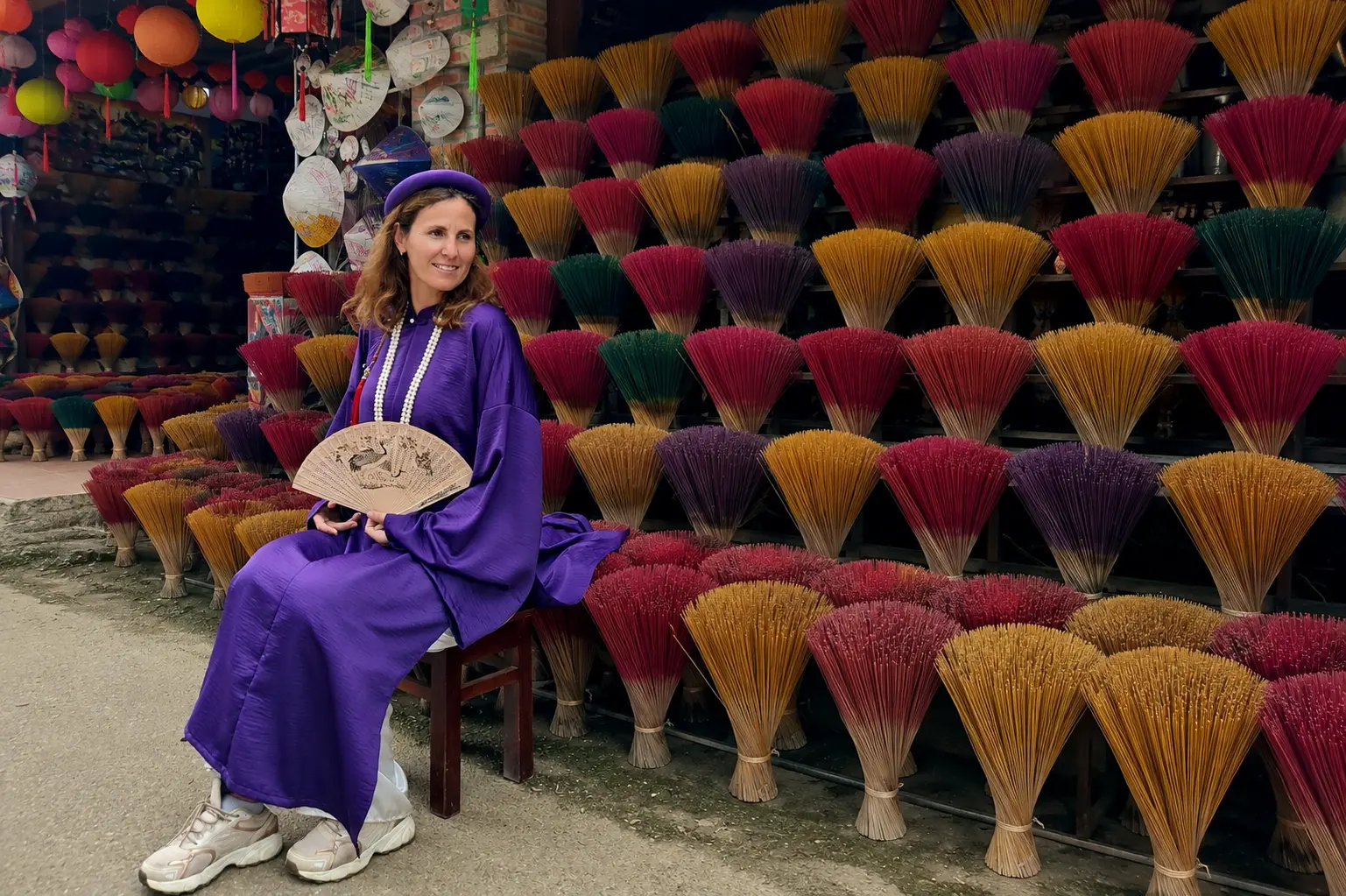
In the afternoon I went out to Thuy Xuan, the incense village just outside town, and this turned into my favorite unplanned moment of the whole Vietnam trip. Dressing in traditional Vietnamese clothing and taking photos surrounded by fans of incense sticks in every color, wet ends still drying in the sun, was just genuinely fun. It’s touristy, sure. It didn’t feel staged in a bad way, though, more like a village leaning into what it’s known for.
Small warning from experience: I bought a good amount of incense at one of the village’s shops, and by the time I got home, the scent had faded almost completely. If a strong, lasting fragrance is the whole point for you, smell-test carefully before buying rather than trusting it’ll travel well.
🏯 Top Experiences & Best Places to Visit
1. The Imperial City (Hue Citadel)
The heart of the old Nguyen Dynasty capital, walled and moated, with the Ngo Mon Gate as its dramatic front door. Some sections are war-scarred and still under restoration, which somehow makes it feel more real than a fully polished museum piece would.
2. The Royal Tombs
Tu Duc, Minh Mang, and Khai Dinh each have a completely different personality: one a lakeside garden, one formal and symmetrical, one an eclectic mash-up of European and Vietnamese styles. Pick two or three rather than trying to see all seven in one trip.
A combo ticket covering the Imperial City and several tombs works out cheaper than paying per site, and saves you from queuing at every gate.
3. Thien Mu Pagoda
Perched above the Perfume River, this seven-story tower is Hue’s most photographed landmark, and for good reason. Go in the morning before the tour buses arrive if you want the grounds mostly to yourself.
4. Thuy Xuan Incense Village
Rows of incense sticks fanned out in rainbow colors, with the option to dress in traditional clothing for photos among them. A genuinely fun, low-key afternoon stop that doesn’t take much planning.
5. Perfume River Dragon Boat
A slow boat ride past the Citadel walls and Thien Mu Pagoda, especially atmospheric near sunset. Boats leave from the docks near Trang Tien Bridge and generally don’t need to be booked far in advance.
🛏️ Where to Stay & Eat
Where to Stay
- 💰 Budget: Rubis Hostel, a quiet, family-run place with free bicycles and a countryside-view garden that makes it feel far from the traffic despite being close to everything.
- 🏨 Mid-Range: TTC Imperial Hotel, with a riverside pool and a walkable distance to the Citadel, at a very fair price for the location.
- ✨ Luxury: Indochine Palace, colonial elegance with a proper spa and a restaurant that does excellent Vietnamese and French plates.
Where to Eat
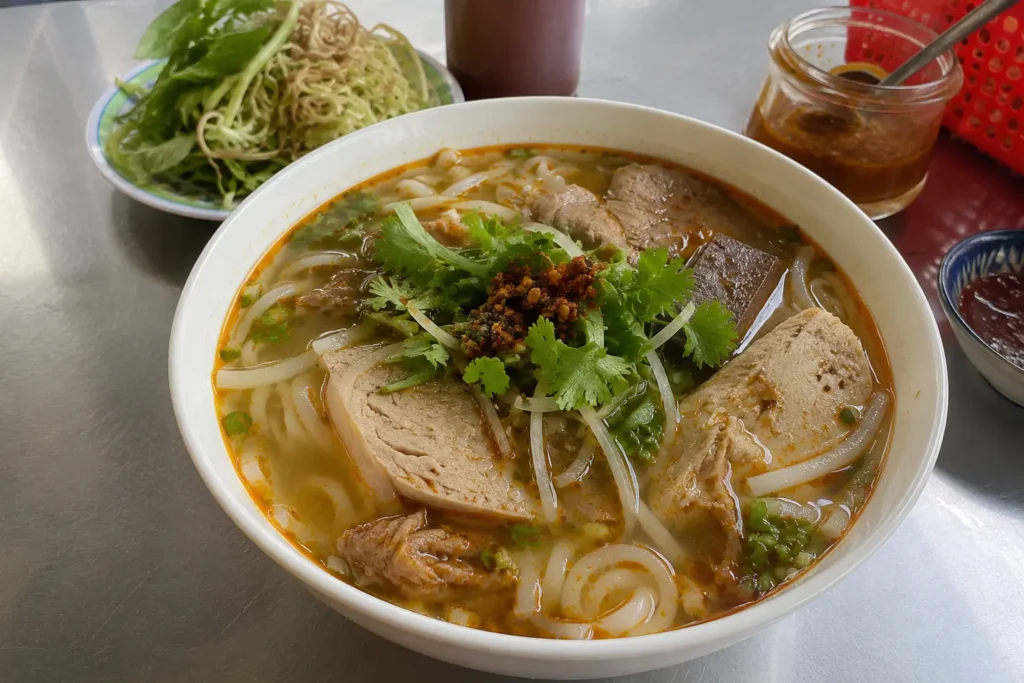
Hue’s signature dish is bun bo hue, a spicier, richer cousin of pho, and you genuinely can’t leave without trying it at least once.
- 💰 Budget: Bun Bo Hue Mu Roi, an institution for the bowl the city is named after: thick broth, tender beef, no frills, and worth the wait.
- 🍽️ Mid-Range: Madam Thu Restaurant – Taste of Hue, a set-menu tasting spread that’s the easiest way to sample banh khoai, banh beo, and com hen in one sitting.
- ✨ Upscale: Les Jardins de la Carambole, a colonial villa near the Citadel serving French-Vietnamese fine dining, worth it for one nicer dinner.
💸 Budget: Cost & Money-Saving Tips
Cost of Traveling
- Budget: Roughly $25-35 a day covers a hostel bed, street food, and entrance to one or two sites.
- Mid-Range: Around $70-100 a day with a comfortable hotel, sit-down meals, and a tomb tour or two included.
- Luxury: $150 and up a day for a riverside suite, private guided tours, and fine dining most nights.
Money-Saving Tips
- Buy a combo ticket covering the Imperial City and several royal tombs together instead of paying per site.
- Eat where locals eat. Dong Ba Market’s food stalls are cheaper, and often better, than restaurant versions of the same dishes.
- Rent a bicycle instead of a taxi for short hops around the center; Hue is flat and easy to manage on two wheels.
- Skip bottled water and carry a refillable bottle. Most mid-range hotels have a filtered station in the lobby.
🎒 What to Pack & Good to Know
What to Pack
- Light, breathable clothing, since Hue is hot and humid most of the year.
- A modest outfit or scarf for temple and pagoda visits.
- A dry bag or poncho if you’re visiting outside the dry season.
- Comfortable walking shoes for the Citadel’s uneven stone paths.
Safety, Accessibility & Etiquette
Hue felt calm and safe to walk around, day or night, though normal city-travel caution still applies around bags and valuables in crowded market areas. Dress modestly at pagodas and tombs, and ask before photographing monks or people at prayer. The emergency number nationwide is 113 for police and 115 for ambulance.
Travel insurance through SafetyWing is worth having for any Vietnam trip, given how spread out the sites are and how long some travel days can get.
❓ FAQ
Is the train from Da Nang to Hue actually worth it, or is that just hype?
For the Hai Van Pass stretch specifically, yes. That hour of coastline views is the reason people recommend it, and it’s a far calmer way to arrive than a bus transfer over the same road.
How many royal tombs should I realistically try to see in one day?
Two to three. Each one takes 45 minutes to an hour if you actually walk the grounds, and past the third they start to blur together.
Is Thuy Xuan incense village worth a special trip, or only if I’m nearby anyway?
Worth building the afternoon around if that kind of photo stop appeals to you. It’s inexpensive and doesn’t take long (see the callout above on buying incense there).
Can I do Hue as a day trip from Da Nang or Hoi An?
Technically, yes, by private car, but it’s a long day for what the city deserves. An overnight, even just one, gives you time for the tombs and the pagoda without feeling rushed.
Do I need a guide for the Imperial City and tombs, or is it fine solo?
Fine solo. Signage is decent in English, and I explored independently the whole time; a guide adds context but isn’t necessary to enjoy the sites.
🎁 Wrap-Up
This Hue travel guide comes down to two ideas: slow down for the tombs and the pagoda, and leave room for the unplanned stuff.
Quick Summary
- Best time to visit: March-May (dry season)
- Average daily budget: $25-100 depending on style
- Ideal trip length: 2 full days
- Good for: history lovers, slower travel, a break from Vietnam’s bigger cities
Hue isn’t the loudest stop on a Vietnam itinerary, and that’s exactly why I’d send people there. It’s the tombs in the hills, the pagoda on the river, and, unexpectedly, an afternoon in a village full of incense sticks that stuck with me longest, even if the scent itself didn’t make it home. For my other stops in Vietnam, take a look at my Hanoi, Da Nang, and Hoi An guides.
Still figuring out your Hue itinerary, or have a question about the train, the tombs, or where to base yourself? Drop it in the comments. I try to reply to every one.