
Phnom Penh Travel Guide 2026: Royal Palace, the Killing Fields & Riverside Walks
🛬 Introduction & Why Go
I hadn’t planned much for Phnom Penh. It was simply the airport I landed at after flying in from Vientiane, a stopover on the way to Siem Reap and the temples everyone actually talks about. I stepped out of the terminal into a wall of heat that felt heavier than Laos, and within the first hour I noticed something that stuck with me the whole stay: the traffic didn’t slow down after dark, but the streetlights did.
That contrast, a loud, busy capital that goes strangely dim once the sun sets, turned out to be the theme of my few days there. I’m not going to pretend Phnom Penh charmed me. It didn’t, not fully. But it’s Cambodia’s capital, it sits on the way to almost everywhere else in the country, and it holds two of the most important (and hardest) history lessons in Southeast Asia. That combination alone makes this Phnom Penh travel guide worth reading closely before you land, even if you’re only staying a couple of nights.
This isn’t a polished, everything-is-wonderful account. I want to be upfront: I didn’t love this city the way I’ve loved some other stops on this trip, and I’ll tell you why alongside what’s genuinely worth your time here.
Quick Picks: Where to Stay in Phnom Penh
- 💰 Budget: Phnom Penh Le Vincent Hotel – simple, well-rated 2-star pick close to the riverside area
- 🏨 Mid-Range: Blue Lime Hotel – boutique 3-star tucked in a quiet alley, short walk to the Royal Palace, small pool
- 🛎️ Luxury: Rosewood Phnom Penh – high-rise five-star with sweeping river and city views
🧳 Phnom Penh Travel Guide: Practical Info
Quick Facts
- Visa/Entry: Most nationalities need a visa. The official Cambodia e-Visa costs $30, takes about 3 business days, and allows a single entry for a 30-day stay. Apply only through that official portal (see callout below).
- Language: Khmer; English is common in tourist areas, less so elsewhere.
- Currency: Cambodian Riel (KHR), though US Dollars are used everywhere for transport, hotels, and most restaurants. Carry small USD bills.
- Plugs: Type A/C/G sockets, 230V.
- Mobile & Internet: Local eSIMs or physical SIMs from Cellcard or Smart are cheap and cover the city well. An Airalo eSIM is the easiest option to set up before you land. Grab one at the airport or a shop downtown if you’d rather buy locally.
- Transport tickets: Tuk-tuks and ride-hailing apps (Grab, PassApp) are the main way to get around. There’s no metro or train.
📋 Visa callout: Apply for the e-Visa online before you fly through evisa.gov.kh, and complete the separate, mandatory Cambodia e-Arrival Card within 7 days of your flight. It’s free and different from the visa itself, and it’s replaced the old paper arrival forms.
Getting There & Around
I flew in from Vientiane, and that’s a common route. Phnom Penh connects well with Laos, Vietnam, and Thailand by short regional flights, alongside longer-haul international routes. Once you land at Techo International Airport, a tuk-tuk into the city center costs roughly $5-9 USD and takes 45-60 minutes depending on traffic. A Grab car runs $10-20 USD with a fixed, upfront fare, which is what I’d recommend if you’re landing after dark. For flight search, Skyscanner is a solid starting point. If you’re continuing overland to Siem Reap or another city afterward, 12Go is the easiest way to compare and book bus, van, or train tickets in advance.
Inside the city, tuk-tuks and ride-hailing apps cover almost everything, and most central sights are close enough together that you won’t spend much on transport day to day. Walking after dark isn’t something I’d recommend on quieter streets though; more on that below.
🚗 Getting around callout: Agree on a tuk-tuk fare before you get in, or open Grab first to see the going rate. It saves the haggling and the small daily frustration of guessing whether you overpaid.
Best Time to Visit & Trip Length
July, when I went, sits in the middle of the wet season. Expect heat and the chance of short, heavy downpours that clear up fast. The cooler, dry months from November to February are more comfortable if you have flexibility, with lower humidity and a better chance of clear evenings on the riverside. Two to three days is enough to see the main sights and move on, which is roughly how most travelers use Phnom Penh: as a stop on a wider Cambodia route rather than a final destination in itself. I’d say this Phnom Penh travel guide is really built around that two-to-three-day rhythm, and it’s the pacing I’d recommend to anyone doing a similar Laos-to-Cambodia route.
🗺️ Day-by-Day Itinerary
Day 1: Arrival and the Riverside
After landing and settling into the hotel, I spent the first evening close to the Sisowath Quay riverside promenade. Walking along the Tonle Sap and Mekong confluence as the light faded was genuinely one of the better moments of the stay: boats drifting past, food stalls setting up, a breeze finally cutting the heat. It’s an easy, low-effort way to ease into a new city after a flight, and it gave me a much better first impression than the traffic-choked ride in from the airport had.
Day 2: Royal Palace and the Weight of History
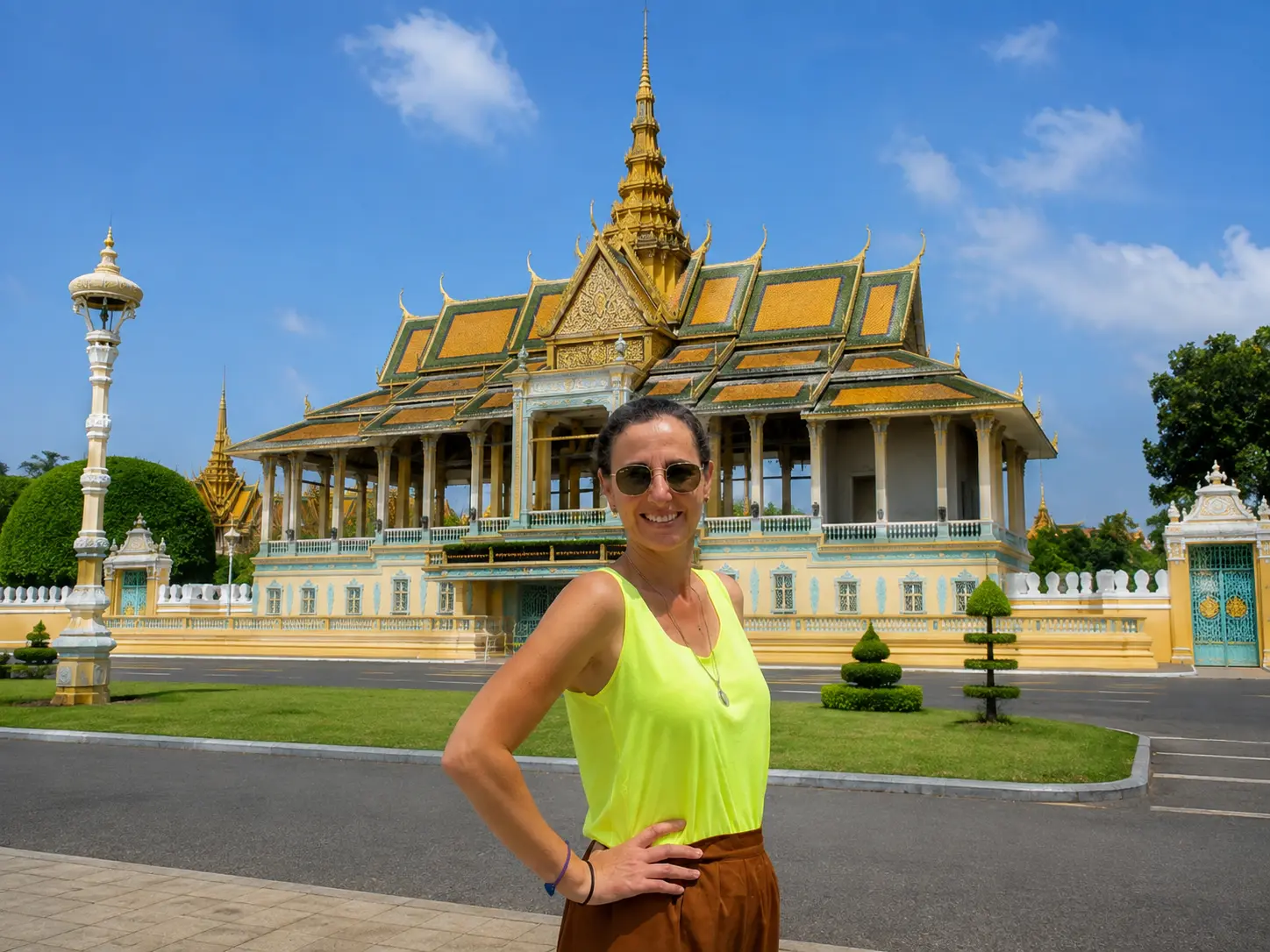
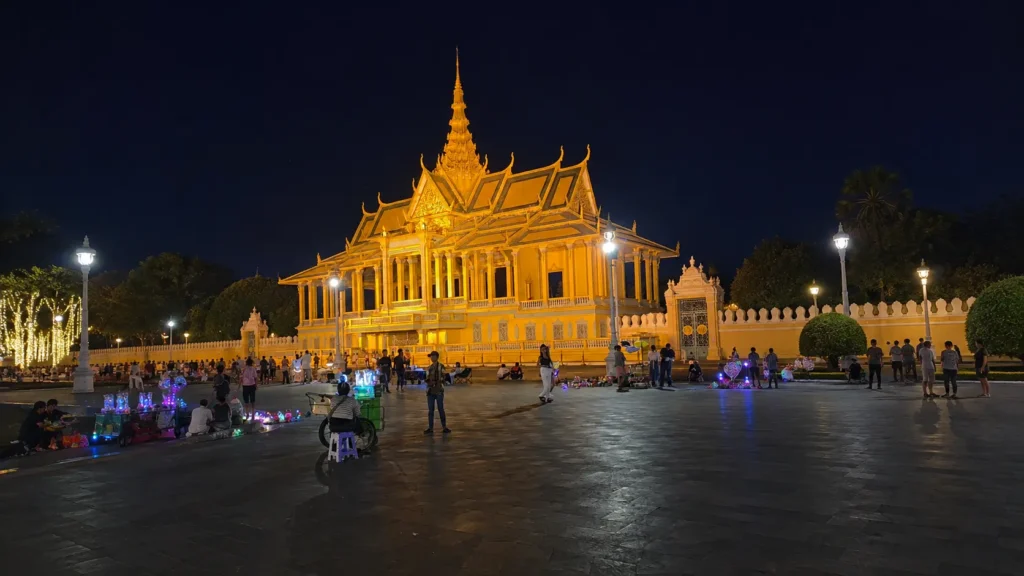
The morning was for the Royal Palace, with its gold-tipped roofs and the Silver Pagoda inside the grounds. It’s worth the entry fee and a respectful outfit (shoulders and knees covered), and it’s easily the most photographed spot in the city for good reason. In the afternoon, I visited the Tuol Sleng Genocide Museum, and later the Choeung Ek Killing Fields memorial outside the city. I won’t dress this up: it’s heavy. Walking through the former prison cells and reading survivor accounts left me quieter than I’d been all trip. It’s not a “highlight” in the usual sense, but skipping it would mean missing a huge part of understanding modern Cambodia, and I’d genuinely tell anyone writing off this stop to reconsider on that basis alone.
Day 3: Boat Tour and Local Market
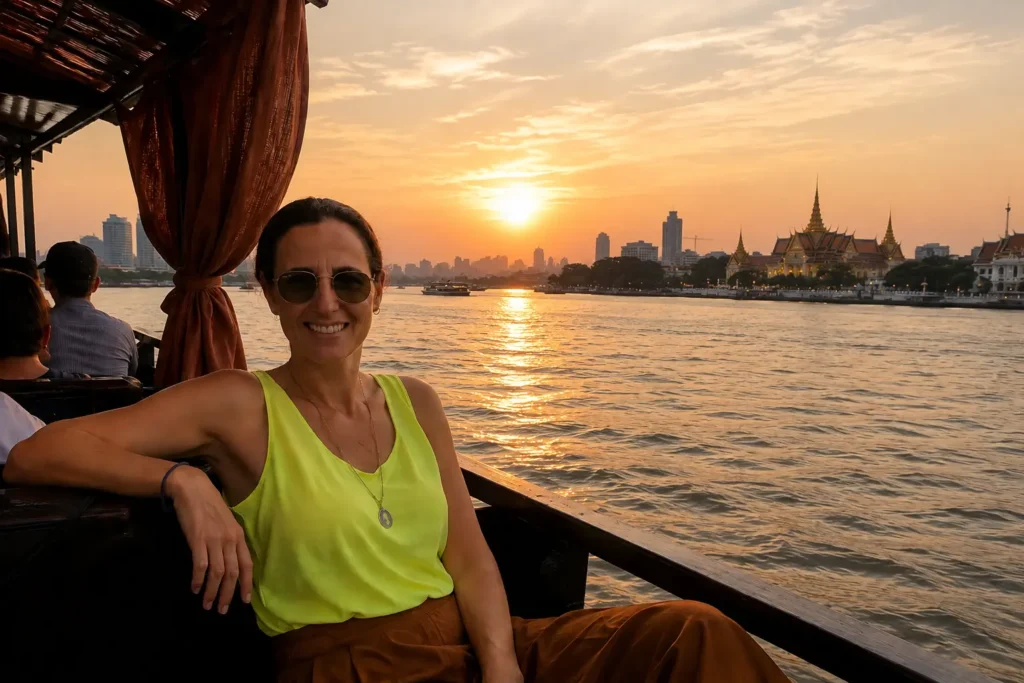
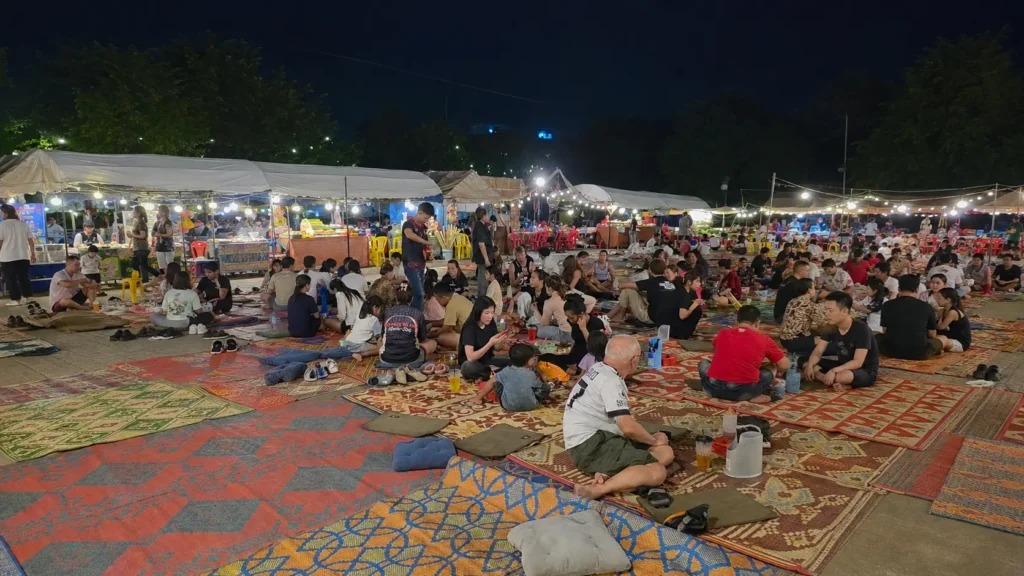
I booked a short boat tour on the river, which was a nice, low-key way to see the city from the water and get a break from tuk-tuk traffic. For dinner, I skipped restaurants entirely and ate at a local night market instead, which turned out to be one of the most memorable meals of the whole trip (more on that below).
⚠️ Safety note: I didn’t feel particularly safe walking around at night. Several streets away from the riverside had very little lighting. Stick to well-lit main roads or take a tuk-tuk after dark, especially if you’re on your own.
🏛️ Top Experiences & Best Places to Visit
- Royal Palace & Silver Pagoda, the city’s most photogenic complex, and still an active royal residence in parts.
- Tuol Sleng Genocide Museum (S-21), a former school turned Khmer Rouge prison, now a sobering museum with an audio guide that’s worth the small extra cost.
- Choeung Ek Killing Fields, a memorial site a short drive from the center, with audio guides included and worth using; most tuk-tuk drivers will wait for you and combine this with Tuol Sleng in one trip.
- Sisowath Quay Riverside Walk, free, easy, and best at sunset, when the promenade fills with vendors, joggers, and families out for the evening.
- A Sunset Boat Tour on the Tonle Sap and Mekong, a different, calmer angle on the same skyline, and a good way to end a heavier day.
🏨 Where to Stay & Eat
Where to Stay
- Budget: Mad Monkey Phnom Penh, a well-known backpacker hostel close to the riverside with a social atmosphere and pool.
- Mid-Range: Rambutan Resort Phnom Penh, a small boutique hotel with a courtyard pool, tucked into a quieter residential street.
- Luxury: Raffles Hotel Le Royal, the city’s historic 1929 Art Deco landmark, with two pools and a famous Elephant Bar.
I personally stayed at Mecon Hotel, which was centrally located and made getting to the riverside and the Royal Palace easy on foot.
Where to Eat
- ARTillery Café, set in an old wooden house full of antiques, good for Khmer and Thai dishes in a relaxed, garden-adjacent setting.
- Chiang Mai Riverside, riverside seating with a mix of Thai and Khmer plates and a good view of the boats going by.
- Malis, upscale Khmer fine dining if you want a step up for one night, with a menu built around traditional recipes done well.
- For something rawer and cheaper, skip the restaurants entirely one evening and eat at a local night market. Expect plastic stools, shared mats, and food cooked right in front of you, which ended up being my most memorable meal in the city.
💸 Budget: Cost & Money-Saving Tips
Cost of Traveling
- Budget: Around $25-35/day covers a hostel bed, street food and market meals, and tuk-tuk rides.
- Mid-Range: $60-100/day for a boutique hotel, restaurant meals, and a couple of paid activities like the boat tour.
- Luxury: $200+/day for a five-star riverside stay, private drivers, and fine dining.
Money-Saving Tips
- Eat where locals eat. A market meal costs a fraction of a riverside restaurant bill, and it’s usually fresher.
- Negotiate tuk-tuk fares before you get in, or use Grab or PassApp for a fixed price instead.
- Combine the Royal Palace and National Museum in one morning to save on separate transport legs.
- Carry small USD bills; getting change for a $20 in a market or from a tuk-tuk driver is often a hassle.
- Book the Killing Fields and Tuol Sleng as a half-day combo with one driver rather than two separate trips, which usually costs less than arranging them individually.
🎒 What to Pack & Good to Know
What to Pack
- Lightweight, breathable clothing for the heat and humidity
- A modest outfit (shoulders and knees covered) for the Royal Palace and Silver Pagoda
- A portable charger, useful for long tuk-tuk rides and museum audio guides
- A dry bag or poncho if you’re visiting in the wet season, like I did in July
- Comfortable, closed shoes for walking around the Killing Fields site, which has uneven dirt paths
Safety, Accessibility & Etiquette
Phnom Penh isn’t the most reassuring city to wander at night. Stick to well-lit, busier streets, and take transport after dark rather than walking, especially if you’re on your own like I was for part of this trip. Sidewalks and streets outside the main tourist areas aren’t always well maintained, so this isn’t the easiest city for wheelchair users or anyone with mobility needs. At the Killing Fields and Tuol Sleng, dress and behave respectfully; these are memorial sites, not tourist photo backdrops. The emergency number for police is 117, and travel insurance through SafetyWing is worth arranging before you land, given how unpredictable road traffic can be here.
🛡️ Insurance callout: Cambodian roads mix tuk-tuks, motorbikes, and cars with few enforced lane rules. A basic travel insurance policy covering medical evacuation is worth the small cost, especially if you’re renting a scooter anywhere outside the city.
❓ FAQ
Is Phnom Penh worth visiting if I’m short on time in Cambodia?
Two to three days is enough to see the Royal Palace, the riverside, and the Killing Fields and Tuol Sleng without feeling rushed. Most travelers treat it as a stop before Siem Reap rather than a long stay, and I’d agree with that approach.
Is it safe to walk around Phnom Penh at night?
Stick to the riverside promenade or well-lit main roads (see the safety note above); for anywhere else after dark, a tuk-tuk is the better call.
Do I need cash or card in Phnom Penh?
Both US Dollars and Cambodian Riel are used, but USD is preferred for tuk-tuks, hotels, and most restaurants. Carry small bills, and keep some Riel on hand for markets.
How do I get from the airport to the city center?
Tuk-tuks cost roughly $5-9 and take 45-60 minutes; Grab offers a fixed fare car for $10-20. There’s no train or metro link.
Is the Killing Fields visit appropriate for all travelers?
It’s an emotionally heavy site with graphic historical content. It’s not geared toward young children, and it’s worth going in prepared for a somber couple of hours.
📝 Wrap-Up
Quick Summary
- Best time to visit: November-February (dry season)
- Average daily budget: $25-100 depending on style
- Ideal trip length: 2-3 days
- Good for: history, a capital-city stopover, riverside walks
Final Words Phnom Penh isn’t a city I’d rush back to. It gave me some of the most affecting hours of the whole trip at Tuol Sleng and the Killing Fields, and some of the simplest, most memorable ones sitting on a mat at a night market, but between the traffic, the dim streets, and a persistent unease after dark, it felt more like a place to pass through than to linger in. That’s not a knock on Cambodia as a whole; it’s specific to how this one capital felt to me over a few days in July. Still figuring out your Phnom Penh stop, or wondering whether to spend two days here or just one before Siem Reap? Drop your question in the comments, I try to reply to every one.
For more real trip notes and city guides, browse the rest of the site at gotravelica.com.