Siem Reap Travel Guide 2026: Angkor Wat, Bayon & the Tonle Sap Floating Villages
🌤️ Introduction & Why Go
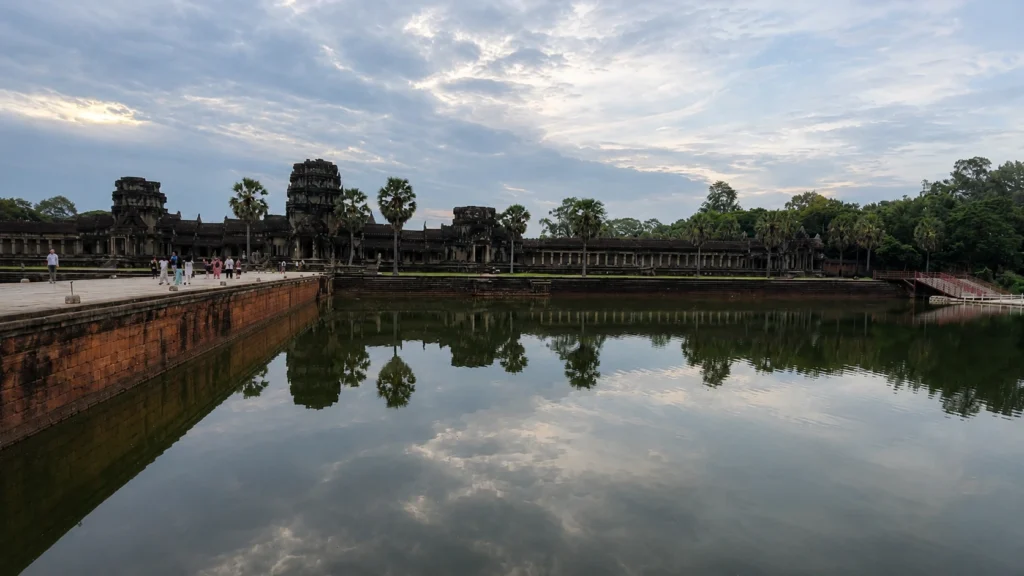
I stood at Angkor Wat at 5:40 AM with a thick grey sky overhead, and the sun I’d set an alarm for never really showed up. That’s the honest start to this Siem Reap travel guide: I went in September, rain was never far off, and the postcard sunrise didn’t happen for me. I still don’t regret a single day of it.
Cambodia’s temple capital has a way of humbling you like that. You plan around the light, the ticket office hours, the tuk-tuk driver’s schedule, and then the weather does its own thing anyway. What stayed with me wasn’t the sky, it was the Bayon’s stone faces staring back at me from every angle, a broken-down motorbike that turned into the friendliest afternoon of the whole trip, and duck skewers from a night market stall that changed how I think about street food entirely.
🏨 Quick Picks — Where to Sleep in Siem Reap
- Budget: Onederz Siem Reap – hostel with three pools, a short walk to Pub Street
- Mid-Range: Viroth’s Hotel – design-forward boutique stay, 400m from the Old Market
- Luxury: Sofitel Angkor Phokeethra Golf & Spa Resort – lotus lake views and French-Khmer polish
🎫 Practical Info: When & How to Go
Siem Reap Travel Guide Quick Facts
- Visa: Most nationalities need an e-visa before arrival (single entry, 30 days, valid 90 days from issue). Apply only through the official portal.
- Language: Khmer; English is widely spoken in the tourist areas around Pub Street.
- Currency: US dollars are used everywhere alongside Cambodian riel, which mostly shows up as small change.
- Plugs: Type A/C/G, 230V, so check your adapter before you land.
- Mobile & Internet: A local Airalo or Holafly eSIM covers the city and temples well; hotel wifi in the center is generally solid.
- Transport Tickets: The Angkor Pass is a separate purchase from your flight or hotel; see the callout below.
- Drone Usage & Rules: Drones are effectively banned inside the Angkor Archaeological Park without a permit from the APSARA Authority, which is rarely granted to tourists.
🚁 Drone note: Leave the drone at the hotel for temple days. Flying without a permit at Angkor Wat or Bayon can get your equipment confiscated on the spot.
⚠️ Visa note: Apply for your Cambodia e-visa exclusively at evisa.gov.kh. Third-party sites often charge double for the same document.
Getting There & Around
Siem Reap–Angkor International Airport sits about a 20–30 minute tuk-tuk ride from the town center, and most hotels can arrange pickup if you book ahead. For flights in, I’d check Skyscanner for routes through Bangkok, Ho Chi Minh City, or Phnom Penh, since direct long-haul options into Siem Reap are limited. If you’re coming overland from Bangkok or Phnom Penh instead, 12Go is a straightforward way to compare and book bus tickets in advance. Once you’re there, tuk-tuks are the default way to move around town and to the temples: a full day touring the temples typically starts around $20 and is very much negotiable, so agree on the price and the route (Small Circuit or Grand Circuit) with your driver before you set off. If you’d rather have your own wheels, renting a motorbike and riding yourself is another common option; Discover Cars is worth checking if you’d prefer a self-drive car instead.
Best Time to Visit & Trip Length
I went in September, which sits inside the wet season: expect short, heavy downpours rather than all-day rain, plus green rice paddies and fewer crowds at the temples. The dry season (November to March) is more predictable but busier and noticeably hotter by March. Three to four days is enough to cover the main temples, a floating village, and the town itself without rushing.
🗺️ Day-by-Day Itinerary
Day 1: Arrival, Old Town & Evening Sunset
Settle into your hotel, then ease into the city with a walk around the Old Market and Pub Street before dinner. Late that afternoon, head to a ticket counter after 4:45 PM: buy your $37 one-day Angkor Pass then, and you get a free bonus entry to watch the sunset over the temples that same evening, even though your official pass day hasn’t technically started yet.
🛺 Extra day idea: If you think you might want to add the Grand Circuit, the quieter, more spread-out temples further from the center (Preah Khan, Neak Pean, and Banteay Srei among them), decide before you buy: the 3-day Angkor Pass ($62) covers any 3 days within a month and works out cheaper than buying two separate 1-day passes.
I’ll be upfront: my sunset was fully clouded over, so the light show I’d built up in my head didn’t happen. If you’re traveling in the wetter months, treat a clear sunset or sunrise as a bonus, not a guarantee.
Day 2: Sunrise & the Small Circuit
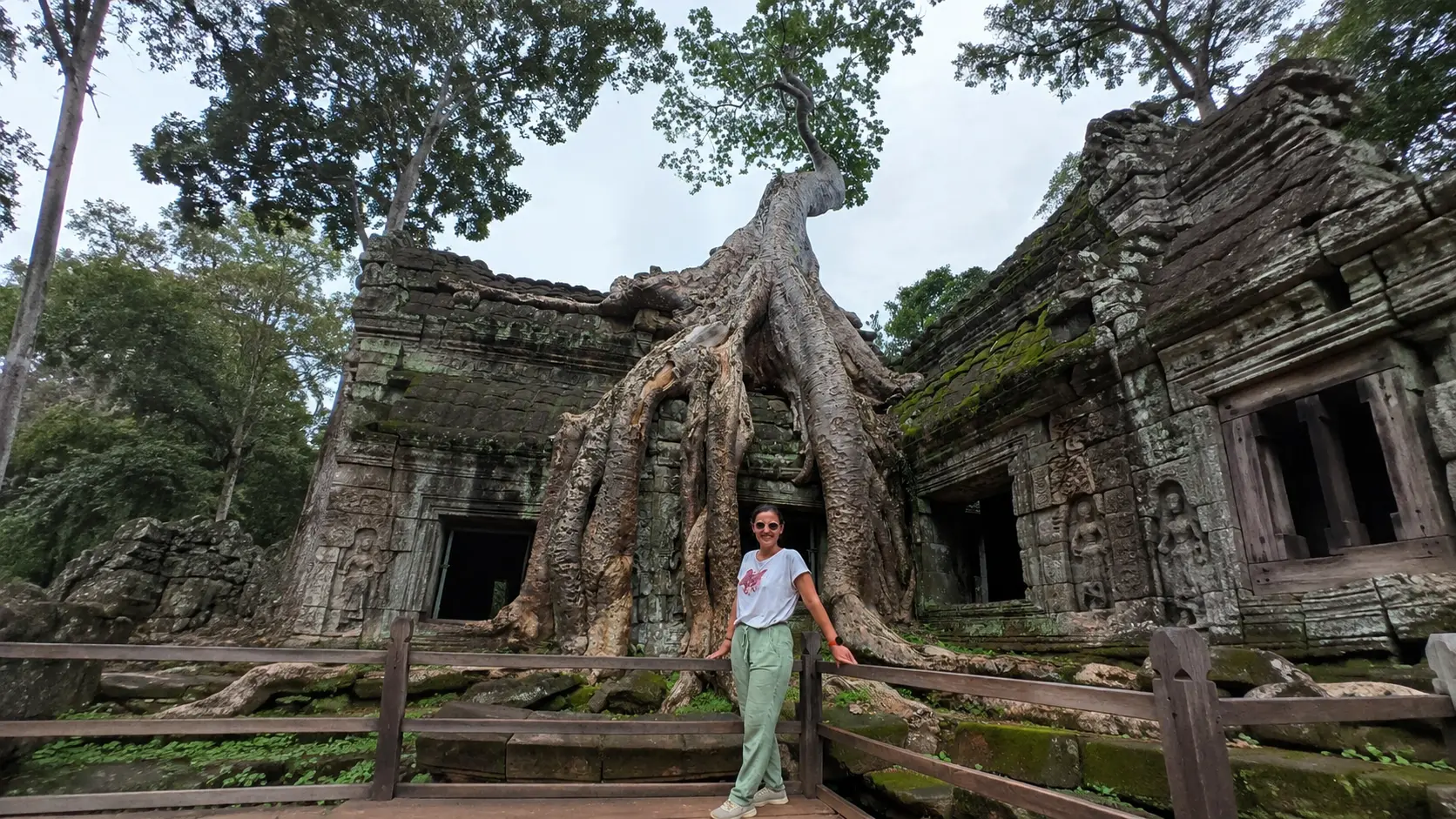
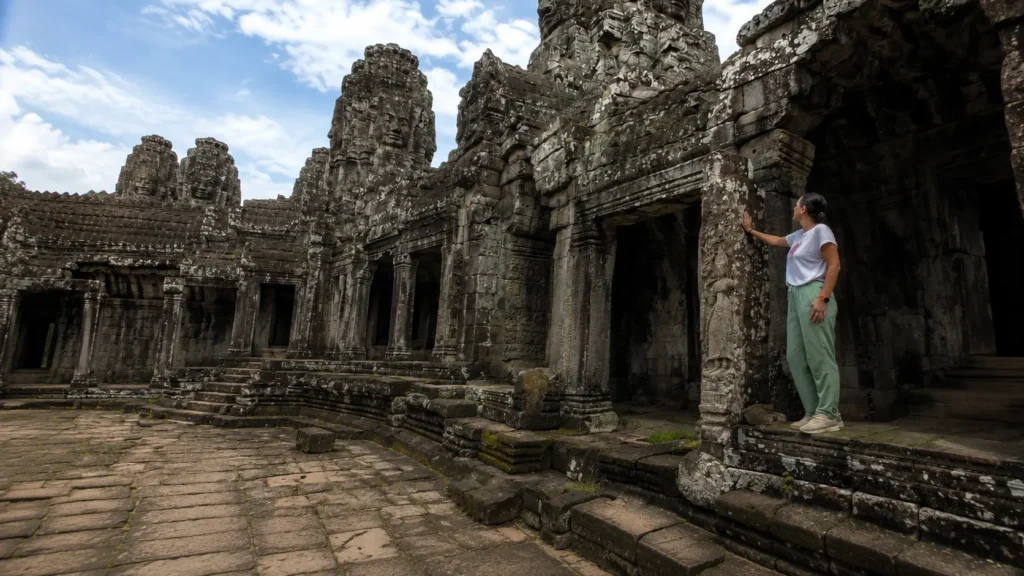
Use the same pass again the next morning for sunrise, no new ticket needed. From there, Angkor Wat itself, Bayon, and Ta Prohm form what’s officially called the Small Circuit, the compact loop that covers Angkor’s must-sees, and a tuk-tuk driver can easily string all three together with time to spare for lunch. Bayon was the one that actually stopped me in my tracks — dozens of enormous carved faces looking down from every tower, and no two angles look quite the same, so give it more time than the map suggests. Ta Prohm’s tree roots swallowing the stonework are worth the crowds they attract, and going mid-morning rather than first thing gave us a bit more breathing room than the sunrise crowd.
Day 3: Floating Village by Motorbike
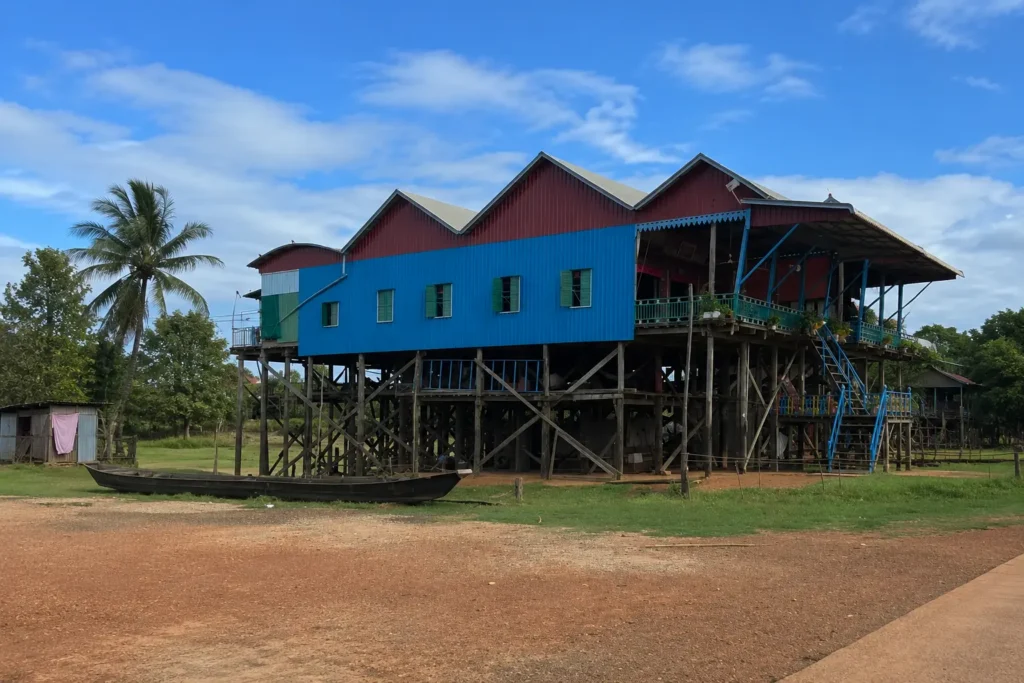
We rented a motorbike and rode out to a floating village on the Tonle Sap. The bike broke down partway there, and despite the language barrier, people from the village came straight over to help, pushed it to a mechanic, and had us back on the road within the hour, all with genuine warmth and not a hint of frustration at the delay. It’s the kind of afternoon that ends up mattering more than the itinerary item itself.
💡 Good to know: If self-driving a motorbike feels like more risk than you want, a private floating village boat tour with a driver included covers the same route with less to worry about. Check the “More Things to Do” widget further down for current options.
🌅 Top Experiences & Best Places to Visit
- Angkor Wat at sunrise or sunset: the headline temple, and worth seeing in both lights if your pass allows it, even if the sky doesn’t always cooperate.
- Bayon Temple: genuinely the highlight of my whole Angkor circuit; the carved faces are worth spending real time with rather than rushing through.
- Ta Prohm: the “jungle temple,” with tree roots wrapped around the ruins.
- A Tonle Sap floating village: stilted or literally floating houses, and a different side of daily Cambodian life outside the temples.
- Pub Street & the Night Market at night: grilled and fried street food stalls, live music spilling out of the bars, and a much livelier scene than the temples during the day.
🛌 Where to Stay & Eat
Where to Stay
- Budget: Siem Reap Pub Hostel, tucked right behind the Angkor Night Market, gets consistent praise for its pool and helpful staff; it’s easy to find and book on Hostelworld.
- Mid-Range: I stayed at The Urban, on Angkor Night Market Street, and the location made everything walkable: Pub Street, the night market, and the Old Market were all a short stroll away.
- Luxury: Raffles Grand Hotel d’Angkor is the colonial-era classic if you want the full splurge, with a pool, spa, and a genuinely storied history in town.
Where to Eat
My biggest food surprise was the night market itself. I bought fried chicken and roasted duck from a street stall and it completely changed how I think about street food — I went in a little cautious and came out converted, and I’d genuinely put that plate up against any sit-down meal I had in Cambodia.
For sit-down meals, here’s where I’d point you:
- Mesa: Right on Pub Street, doing Khmer classics with attentive service and a lively people-watching terrace.
- Old Maison Eatery: Tucked into the quieter Wat Damnak area, a favorite for rice crackers and lok lak away from the main strip.
- Mealea Watbo: Along the river, with beautifully presented Khmer dishes at fair prices and an easy walk from most mid-range hotels.
- Golden Pumpkin Restaurant: A garden spot near Taphul Road with generous portions of Khmer and Western comfort food, good for groups.
- HAVEN: A social-enterprise restaurant training disadvantaged young adults, set in a lovely garden, worth it for the food and the cause.
- Embassy by Chef Kimsan: The splurge option, a multi-course tasting menu for a special night out; worth booking ahead.
💶 Booking tip: Book your Siem Reap stay through platforms like Booking.com or Agoda for free-cancellation options, useful if the wet-season forecast shifts your temple-day plans.
💰 Budget: Cost & Money-Saving Tips
Cost of Traveling
- Budget: Hostel dorm beds, street food, and tuk-tuk rides can keep a day comfortably under $30–40.
- Mid-Range: Boutique hotels, sit-down restaurant meals, and a private tuk-tuk driver for temple days land most travelers around $60–100 a day.
- Luxury: Colonial-era hotels, spa treatments, and private guided tours push daily spend well past $200.
Money-Saving Tips
- Buy your Angkor Pass after 4:45 PM the evening before your first temple day (see Day 1) to get a sunset entry folded into your ticket for free.
- Street food from the night market stalls is a fraction of the price of Pub Street restaurants and, in my experience, just as good.
- Splitting a full-day tuk-tuk between two or more people brings the per-person cost down fast, since the $20-ish day rate covers the tuk-tuk, not each seat in it.
- If you’re comfortable riding, renting a motorbike is far cheaper than hiring a driver, though keep the callout above in mind about backup plans.
- Traveling in the wetter shoulder months like September generally means lower hotel rates in exchange for a higher chance of rain.
🎒 What to Pack & Good to Know
What to Pack
Lightweight, quick-dry clothing works best given the humidity. Temples require covered shoulders and knees, so pack accordingly. A dry bag for your phone and passport is genuinely useful on a motorbike day trip, and a portable charger goes a long way on long temple days.
🌧️ Rainy season tip: Pack a compact umbrella or poncho you can grab fast. Downpours in the wet season tend to arrive suddenly and pass within the hour rather than settling in for the day.
Safety, Accessibility & Etiquette
Siem Reap felt safe and easygoing to walk around, day or night, though normal city precautions still apply around Pub Street late at night. Dress modestly at temples: cover shoulders and knees. National emergency numbers are 117 (police), 119 (ambulance), and 118 (fire) — see Tourism Cambodia’s official contacts page for provincial numbers. Travel insurance is worth having for any Southeast Asia trip; SafetyWing is a straightforward option for that kind of coverage.
❓ FAQ
Do I need to buy my Angkor Pass online, or can I get it at the gate?
You can buy it either way, but the timing trick (purchasing after 4:45 PM the evening before for a free sunset entry) only works if you buy it in person at a ticket counter, not through the app.
Is a motorbike really a good idea for the floating village trip?
It worked out for us, and the breakdown turned into one of the best parts of the trip thanks to how helpful the locals were, but if you’d rather not risk a mechanical issue mid-route, hire a driver instead.
Is September a bad time to see Angkor Wat?
Not bad, just less predictable: rain comes and goes, and a clear sunrise or sunset isn’t guaranteed the way it might be in the dry season. I’d still pick the same season again for how easygoing the pace felt without peak-season crowds.
How many days do I actually need in Siem Reap?
Three to four days covers the main temple circuit, a floating village, and time in town without feeling rushed.
Is the food from night market stalls safe to eat?
Stick to stalls with visible turnover and hot, freshly cooked food, and you’re generally fine. It was one of the best food experiences of my trip.
🌇 Wrap-Up
If this Siem Reap travel guide leaves you with one takeaway, let it be this: build in slack for the weather and let the small detours happen.
Quick Summary
- Best time to visit: November–March for reliable weather; September for fewer crowds and lower prices, with rain trade-offs
- Average daily budget: $30–100 depending on travel style
- Ideal trip length: 3–4 days
- Good for: temple history, food lovers, and travelers who don’t mind a little rain
Siem Reap gave me a temple I didn’t expect to love more than Angkor Wat itself, a roadside breakdown that turned into a genuinely warm afternoon, and a plate of street-market duck that reset my whole opinion on street food. The clouds didn’t clear for my sunrise, and honestly, that’s fine — it’s not the only reason to go.
Still figuring out your Siem Reap itinerary, or have a question about the floating villages or the ticket timing I didn’t cover? Drop it in the comments — I try to reply to every one. 💬
For more real trip notes and city guides, visit gotravelica.com.