Luxor Travel Guide 2026: Karnak, Balloons & the Valley of the Kings
🎈 Introduction & Why Go
I landed in Luxor in the middle of August, which in hindsight was not the smartest scheduling decision I’ve ever made. The heat outside was the kind that makes you rethink every plan involving daylight, and walking more than a few blocks felt like a small feat of endurance, sunscreen and all. And yet I still climbed into a hot air balloon before sunrise, because Luxor’s skyline of temples and desert cliffs is simply too good to skip, heat or no heat.
This Luxor travel guide leans on that trip: the good calls, the slightly reckless ones, and everything I’d do differently next time. Luxor earns its nickname as the world’s largest open-air museum. Karnak, the Valley of the Kings, and the Temple of Hatshepsut sit within a short drive of each other, and even a rushed visit leaves you with more ancient history than most cities offer in a lifetime.
Quick Picks: Where to Stay
- 🏷️ Budget: El Nakhil Hotel, a small West Bank guesthouse with a garden pool and a genuinely helpful host.
- 🏷️ Mid-Range: Iberotel Luxor by JAZ, Nile-front rooms a short walk from Luxor Temple.
- 🏷️ Luxury: Hilton Luxor Resort & Spa, quiet gardens right on the river, away from the market bustle.
🧭 Practical Info: When & How to Go
Quick Facts
- Visa/entry: Most nationalities can get an Egypt e-visa online through the official e-visa portal or a visa on arrival at the airport.
📋 Visa note: Prices crept up in 2026, so expect around $30 for a single-entry e-visa or visa on arrival. Apply in advance to skip the arrival queue.
- Language: Arabic, though English is widely understood around the temples and hotels.
- Currency: Egyptian Pound (EGP). Most attractions now require card payment, so don’t rely on cash alone.
- Plugs: Type C/F, 220V.
- Mobile & Internet: A local eSIM before arrival saves time — Yesim or Airalo both cover Egypt; hotel Wi-Fi in central Luxor is generally reliable.
- Transport tickets: Ferries across the Nile cost pennies; taxis and tuk-tuks should be agreed on before you get in.
- Drone Usage & Rules: Don’t bring one, full stop.
⚠️ Drones are effectively banned in Egypt without military authorization, and airport security actively confiscates them at check-in. It’s not worth the risk for a few aerial shots.
Getting There & Around
Luxor International Airport connects to Cairo (about an hour’s flight) and several European hubs directly; Skyscanner is a solid place to compare fares before you commit to a route. If Cairo is part of your route too, I’ve covered it separately in my Cairo travel guide. The airport itself sits roughly 20 minutes by taxi from central Luxor, and most hotels can arrange a pickup in advance. I did the trip in reverse toward the end, heading overland to Hurghada on the Red Sea, roughly a four-hour drive across open desert. A shared or private car through getrentacar, or a pre-booked transfer via gettransfer, both work well for that stretch.
Within Luxor itself, the East Bank (temples, most hotels, the market) and West Bank (the royal tombs and mortuary temples) are separated by the Nile, so budget in either a public ferry crossing or a bridge taxi ride depending on where your day takes you. Klook also covers train and bus bookings if you’re continuing on by rail rather than road.
Best Time to Visit for This Luxor Travel Guide
October through April is far more forgiving heat-wise, with daytime temperatures that actually allow for unhurried sightseeing. My August visit meant early starts, long midday breaks indoors, and evening plans instead of afternoon ones. Three to four days is enough to cover the main sites without rushing, longer if you’re adding a Nile cruise onward toward Aswan.
🐫 Day-by-Day Itinerary
Day 1: Sunrise Balloon, Valley of the Kings & Hatshepsut
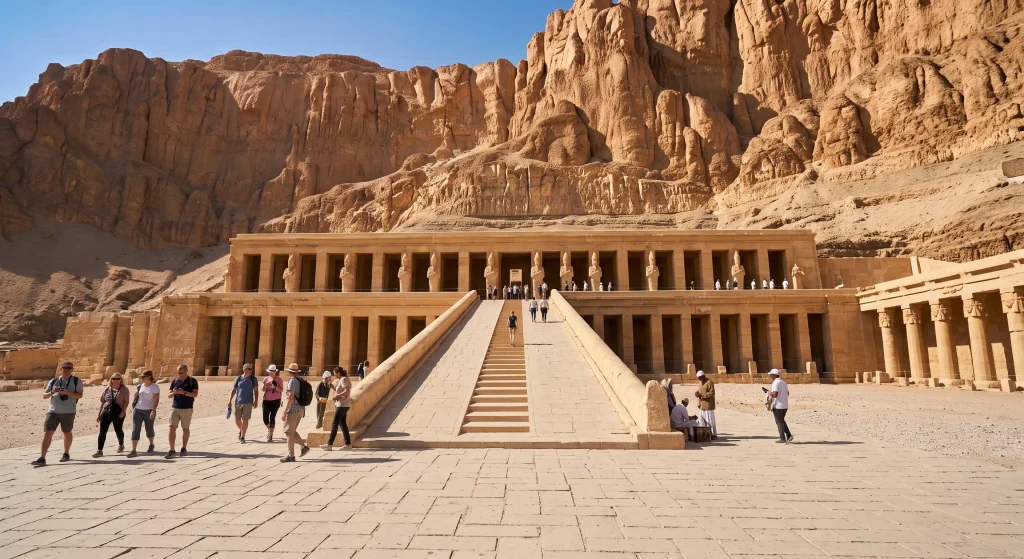
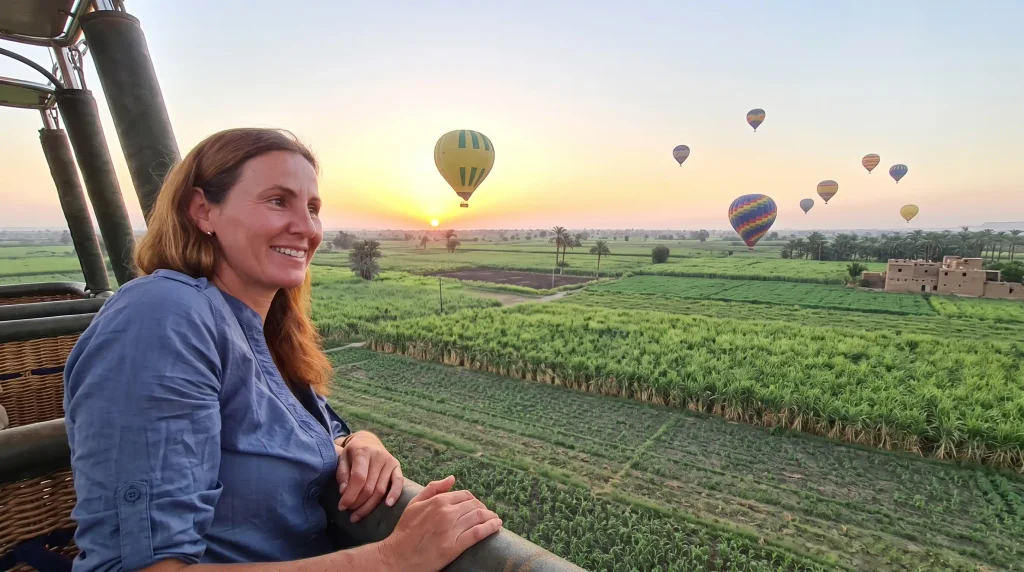
I was picked up while it was still dark for the hot air balloon launch on the West Bank. Going up mid-August, when the heat hadn’t even properly broken yet, wasn’t a particularly logical move on paper, but watching the sun rise over the Nile and the temples below from a basket floating over the desert made up for the early alarm completely. Back on the ground by mid-morning, I headed straight into the Valley of the Kings before the heat became properly unbearable, ducking into a handful of tombs before the sun climbed too high. From there it was a short drive to the Temple of Hatshepsut, its terraces cut dramatically into the cliffside and photogenic even in the flattest midday light.
🎈 Balloon tip: Standard sunrise flights run roughly $60-90 per person and last 45 to 60 minutes in the air. Book directly with an operator or through Klook rather than accepting the first offer from a street tout.
Day 2: Karnak & Luxor Temple
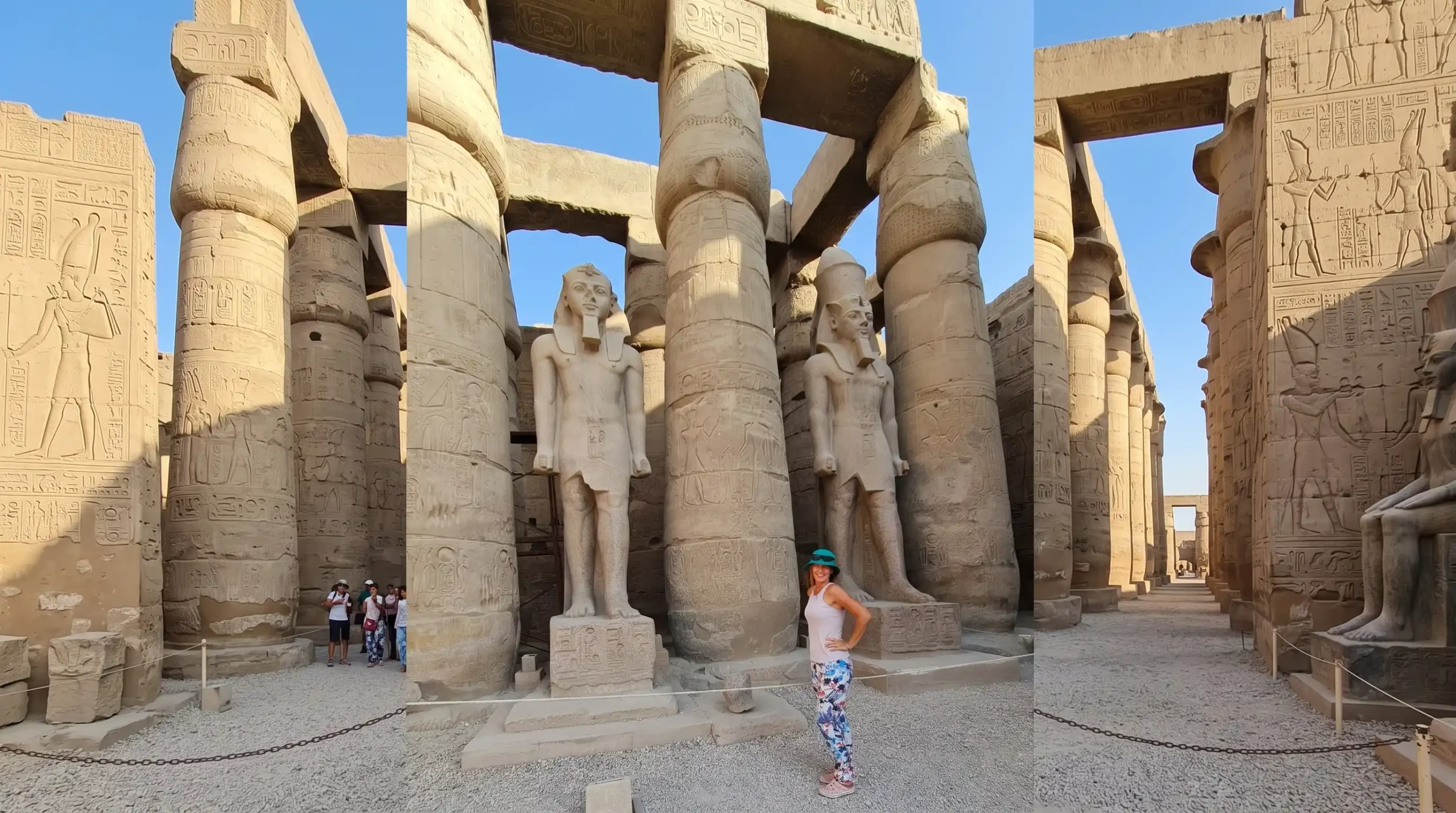
Karnak deserves a full morning; it’s less a single temple than an entire complex built up over centuries by successive pharaohs, and I badly underestimated how long I’d want to linger under the columns of the Great Hypostyle Hall. By early afternoon the heat had become the kind that makes museum lobbies and hotel rooms feel like the only reasonable option, so I retreated indoors for a few hours. I walked to Luxor Temple in the early evening instead, when the stone finally cools down and the crowds thin out enough to actually appreciate the Avenue of Sphinxes connecting it to Karnak.
Day 3: Local Pace & Onward to Hurghada
I kept the last day deliberately light, mostly wandering near the hotel and the Nile Corniche before heading out by road to Hurghada in the afternoon. Evenings in central Luxor didn’t feel particularly unsafe around the main hotels and the temple, but the streets a few blocks off the tourist strip weren’t well lit, so I stuck to busier, more populated routes after dark rather than cutting through quieter side streets.
🏛️ Top Experiences & Best Places to Visit
1. Sunrise Hot Air Balloon
Worth the pre-dawn wake-up even in brutal heat. You get a bird’s-eye view of Hatshepsut’s Temple, the Valley of the Kings, and the patchwork of green farmland along the Nile that no ground tour comes close to matching.
2. Karnak Temple
The scale is the whole point here. Don’t skip the Sacred Lake and the smaller precincts tucked away from the main hall — most visitors stop at the Great Hypostyle and miss them entirely.
3. Valley of the Kings
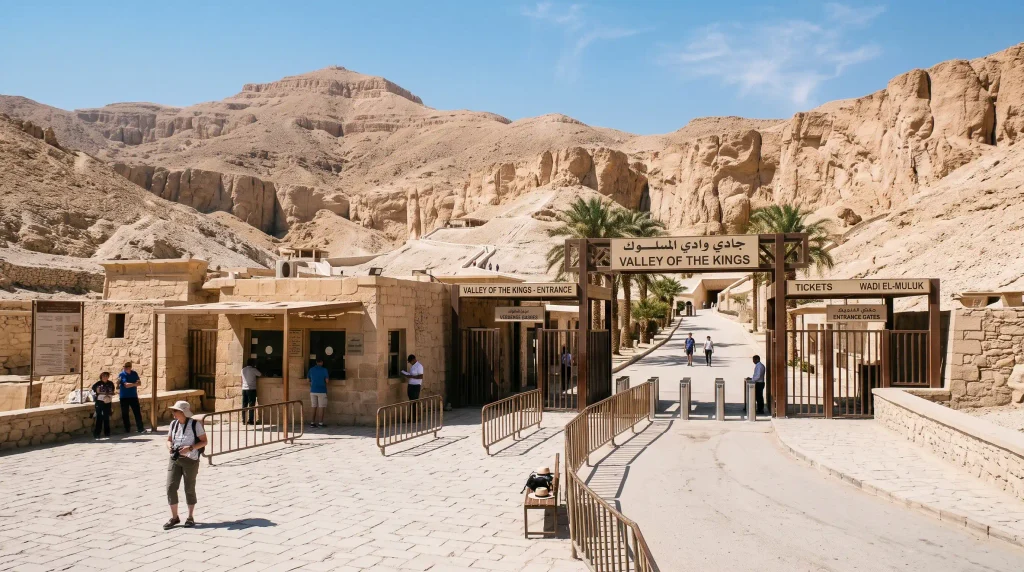
Standard tickets cover a handful of tombs on rotation; special add-on tickets exist for the more famous ones like Tutankhamun’s, so decide in advance which you care most about seeing rather than paying for everything.
4. Temple of Hatshepsut
One of the most photogenic sites on the West Bank, especially with the morning light hitting the cliffs behind its three tiered terraces.
5. Luxor Temple at Dusk
Illuminated after sunset and a short walk from most East Bank hotels, making it an easy, low-effort add-on to an evening stroll along the Corniche.
🏨 Where to Stay & Eat
Where to Stay
I stayed at Nefertiti Hotel, a family-run place right by Luxor Temple with a rooftop restaurant that turned out to be one of my favorite meals of the whole trip. It’s small, and the stairs take some getting used to in the heat, but the location is hard to beat and the staff genuinely went out of their way to help arrange tours and sort out logistics.
- 🏷️ Budget: Nefertiti Hotel, central and walkable to Luxor Temple, with a rooftop terrace overlooking the Nile.
- 🏷️ Mid-Range: Mercure Luxor Karnak, spacious rooms with an outdoor pool and a location closer to the Karnak complex.
- 🏷️ Luxury: Steigenberger Nile Palace Luxor – Convention Center, Nile-front rooms, several restaurants on site, and a full spa.
Where to Eat
- The rooftop restaurant at my hotel, Al-Sahaby Lane, has been serving Egyptian classics since the 1930s and looks out over the Nile and the Avenue of Sphinxes. I ended up eating there more than once, purely because the sunset view made every meal feel like an event.
- For another solid option nearby, Sofra Restaurant & Café serves traditional dishes like molokhia and Om Ali in a colorfully decorated, laid-back courtyard setting that’s worth a stop even if you’re just after the coffee.
- If you want something more casual, small street-side spots around the market sell grilled meats and koshari for a fraction of restaurant prices.
💰 Budget: Cost & Money-Saving Tips
Cost of Traveling
Luxor is affordable by most standards. A budget stay runs $25-40 a night, mid-range hotels $60-100, and luxury properties $150 and up. Combined West Bank tickets (Valley of the Kings, Hatshepsut, and other sites) add up to roughly $50-60 per person, while Karnak and Luxor Temple together run another $15-20; exact figures shift often enough in 2026 that it’s worth double-checking current rates before you go. Street food and casual restaurant meals cost $3-8, while a full dinner with drinks at a nicer spot lands closer to $15-25.
💳 Payment note: Most Luxor attractions now require card payment at the gate, and cash is no longer accepted at many major sites. Bring at least one working card with you every day, not just at the hotel.
Money-Saving Tips
- Visit temples early morning or right before closing for both cooler weather and thinner crowds.
- Buy a multi-site West Bank ticket rather than paying per tomb if you’re planning to see more than two or three.
- Agree on taxi and tuk-tuk fares before getting in, since nothing runs on a meter.
- Balloon rides vary a lot in price by operator, so compare a few before booking rather than taking the first offer from your hotel.
🎒 What to Pack & Good to Know
What to Pack
- Lightweight, loose, long-sleeved clothing for sun protection and temple dress codes.
- A refillable water bottle, since you’ll go through far more than you’d expect in August heat.
- A wide-brim hat and high-SPF sunscreen.
- Comfortable closed shoes for uneven temple floors and desert paths.
- A portable charger for the balloon flight’s inevitable photo marathon.
Safety, Accessibility & Etiquette
Daytime around the temples felt entirely manageable safety-wise, with the heat being the bigger concern than anything else. That said, I didn’t love wandering the quieter side streets after dark, so I kept evening walks to the main Corniche and better-lit, busier routes. Save Egypt’s emergency numbers before you land: Police 122, Tourist Police 126, Ambulance 123.
🩺 Travel insurance callout: SafetyWing covers most short trips and is worth having given the heat, the walking, and the general unpredictability of desert touring.
❓ FAQ
Is it worth doing a hot air balloon ride if it’s already extremely hot outside?
Yes. Flights launch before sunrise, so the worst of the heat hasn’t hit yet, and the view over the West Bank temples is unlike anything you’ll see from the ground.
Do I need more than one day for Karnak?
One focused visit is enough for most people, but go in the morning rather than the afternoon; the site has almost no shade, and by early afternoon in warmer months it’s too hot to explore comfortably.
Is walking around Luxor safe at night?
The main tourist areas near the Corniche and Luxor Temple felt fine, but side streets away from the main strip weren’t well lit, so it’s worth sticking to busier routes after dark.
Can I bring a drone to photograph the temples?
No. Drones are essentially banned in Egypt for tourists and are routinely confiscated at the airport, so leave it at home rather than risk losing it at customs.
Is August a bad time to visit Luxor?
Not impossible, but it’s tough. If you do go in summer, plan around the heat with early starts, indoor midday breaks, and evening activities rather than fighting the schedule.
🌅 Wrap-Up
Quick Summary
- Best time to visit: October-April (or brace for serious heat in summer)
- Average daily budget: $50-80 mid-range
- Ideal trip length: 3-4 days
- Good for: history lovers, photographers, first-time Egypt visitors
Final Words Luxor rewards patience more than any city I’ve written about recently: patience with the heat, patience with slow mornings before the sun climbs too high, and patience to really sit with sites that took decades to build. This Luxor travel guide only scratches the surface of what a longer, cooler-season trip could cover. If you’re stringing together a wider Egypt trip, my Sharm El Sheikh travel guide covers the Red Sea side for anyone pairing temples with reef time. If you’re mapping out a Nile-focused itinerary, how are you planning to split your time between Luxor’s East and West Banks?
For more real trip notes and city guides, browse the rest of the site at gotravelica.com.