Hurghada Travel Guide 2026: Red Sea Reefs, Sand City & El Gouna
🌅 Hurghada Travel Guide: Introduction & Why Go
I rolled into Hurghada by road straight from Luxor, still half-sunburnt from a hot air balloon ride over the Valley of the Kings. My only plan was to stop moving for a few days. That’s exactly what this Hurghada travel guide is built around: not a checklist of every dive site on the Red Sea, but what actually happens when you land here tired, salty, and ready to float. Hurghada rewards that kind of trip. The water off the coast is startlingly clear, the pace is slower than Luxor’s temple circuit, and even a resort that’s inconveniently far from town can turn out to be the best decision you made.
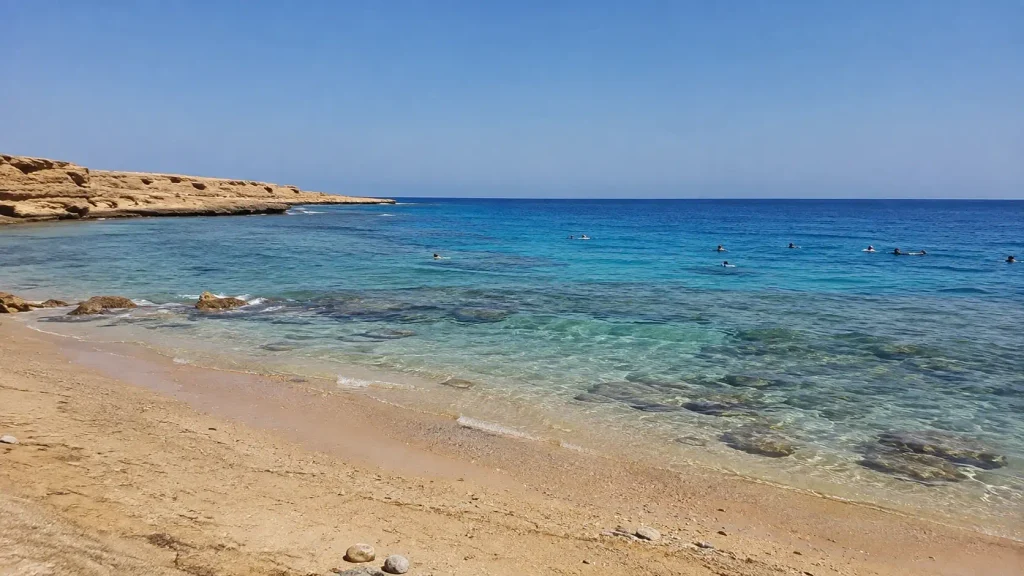
Three reasons this stretch of coast works so well after inland Egypt: the diving and snorkeling rival anywhere in the world without the crowds of Sharm El Sheikh, the desert-meets-sea scenery gives you something to look at even when you’re doing nothing, and a direct flight or a few hours on the road from Luxor makes it an easy add-on rather than a whole separate trip.
Quick Picks: Where to Stay
- 🧍 Budget: Sea Shell Hotel Hurghada, a simple central option close to Sakkala’s restaurants and the beach path.
- 🛎️ Mid-Range: Sunrise Tucana Resort, a family-friendly all-inclusive with a proper reef in front of it.
- 💎 Luxury: Baron Palace Sahl Hasheesh, private beach and villa-style suites south of the city.
🧭 Practical Info: When & How to Go
Quick Facts
- Visa: Turkish citizens (and most nationalities) need a visa for Hurghada. It’s not covered by the free Sinai entry stamp that applies to Sharm El Sheikh. The easiest route is the visa on arrival at Hurghada International Airport, currently around $25 USD in cash, valid for 30 days.
Bring exact USD cash for the visa-on-arrival counter; card payment isn’t reliably available at the booth.
- Language: Arabic, but English is widely spoken in hotels, dive centers, and restaurants.
- Currency: Egyptian Pound (EGP). Card acceptance is patchy outside hotels, so carry cash for taxis, small restaurants, and tips.
- Plugs: Type C/F, 220V, the same plug shape as Turkey, so no adapter needed for Turkish travelers.
- Mobile & Internet: Hotel wifi is fine for basics but slows down in the evenings. An eSIM from Airalo or Yesim is worth setting up before landing.
- Transport tickets: Taxis don’t run on meters; agree on a price before getting in, or use a ride app if you have signal.
Getting There & Around
Turkish Airlines and Pegasus both run direct flights from Istanbul to Hurghada, around 2 hours 45 minutes in the air. Check current schedules on Skyscanner. Hurghada International Airport sits about 5 km from the city center.
Skip the taxi scrum at arrivals if you can: agree a fare before you get in, or book a private transfer in advance so the price is settled before you land.
If you’re coming from Luxor like I did, it’s a road transfer of roughly 3 to 3.5 hours across desert highway; most hotels or tour operators can arrange the car. For getting around once you’re there, a rental through getrentacar gives you flexibility if your hotel is spread out along the coast, otherwise taxis and hotel shuttles cover everything.
Best Time to Visit & Trip Length
I went in August, and it was hot: properly hot, closer to swimming-between-every-activity hot than sightseeing hot. October to April is the more comfortable stretch for exploring on land, but summer’s warm water and calm seas are genuinely good for diving, you just plan your day around the beach rather than the streets. Three to four nights is enough if you’re combining Hurghada with Luxor or another stop; a full week makes sense if diving is the main event.
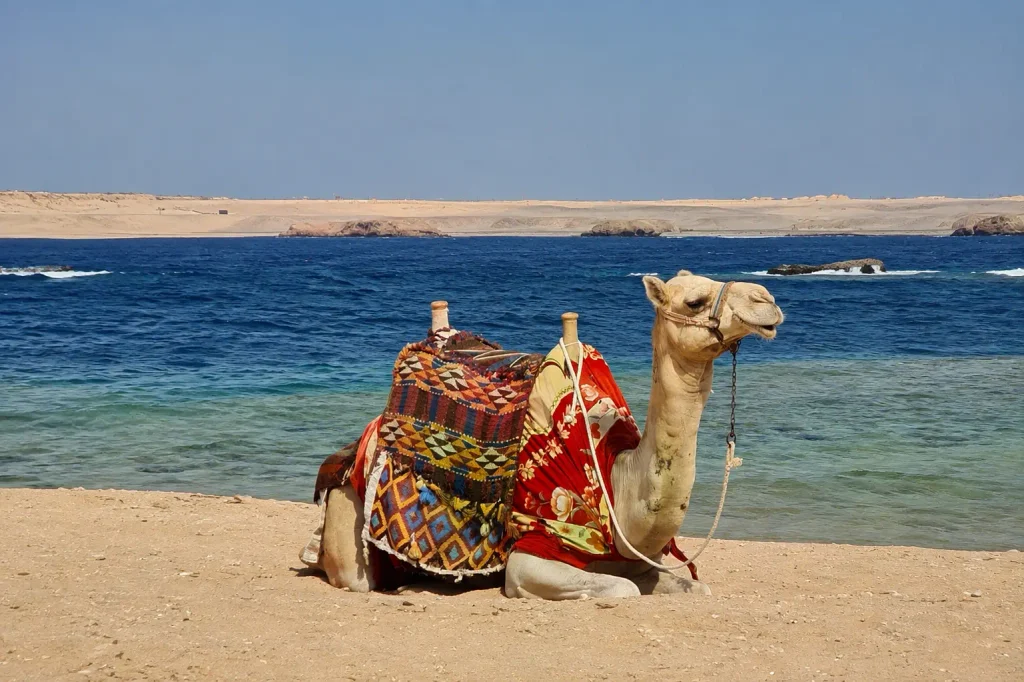
🗓️ Day-by-Day Itinerary
Day 1: Luxor to the Red Sea
The road from Luxor to Hurghada cuts through open desert, and it’s a strange, quiet transition after days of temples and crowds. By the time I checked into Sharm El Naga Resort and Diving Center, south of the city, all I wanted was to drop my bag and sit by the water. No excursions, no plan, just the sound of the sea after a week of tour buses.
Day 2: Beach and Reef Day
This was the day the resort’s remote location made sense. I waded straight off the beach into a house reef, no boat, no tour, just fins and a mask, and spent hours drifting over coral with parrotfish, clownfish, and more color than I expected this close to shore. If you’re not diving, this kind of shore snorkeling is the best value experience on this coast, hands down.
Day 3: Sand City and El Gouna
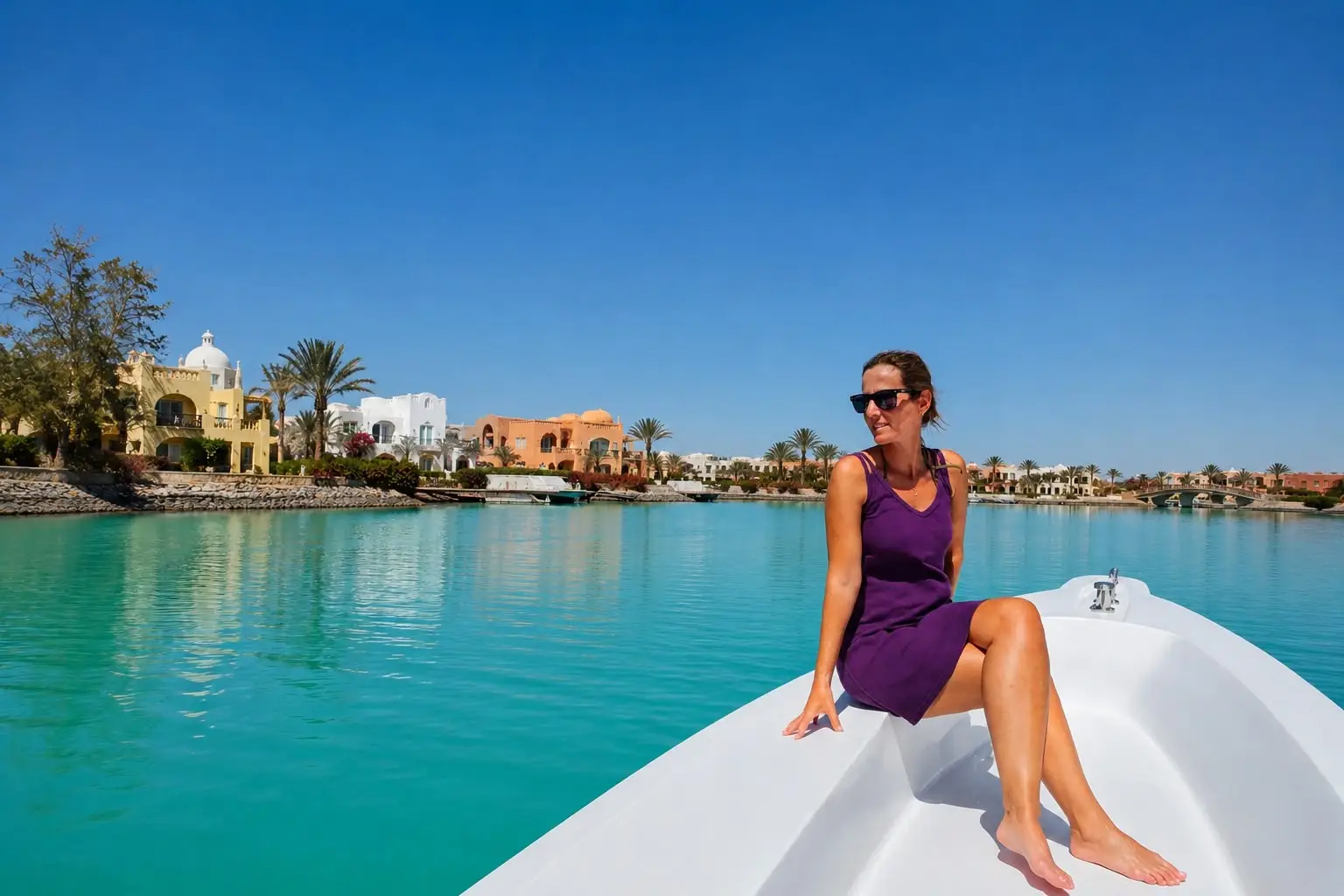
I spent the morning at Sand City, an open-air museum of sand sculptures just off the Safaga road: pharaohs, mythical creatures, and a fair number of cartoon characters, all carved from sand and water and somehow still standing in the heat. From there I continued up to El Gouna, the lagoon town north of Hurghada built from scratch around man-made canals. It’s a different pace entirely, with marina cafés and quiet waterways that feel far more polished and planned-out than central Hurghada.
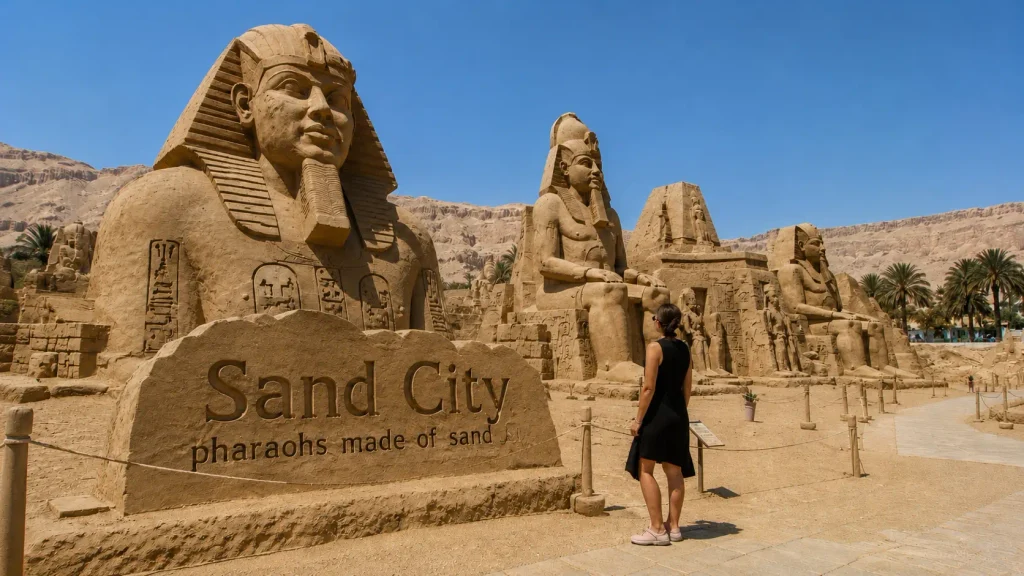
Day 4: Slow Morning, Departure
I skipped a desert safari here since I’d already done one out of Sharm El Sheikh on an earlier trip, and I don’t think Hurghada’s version would have added much on top of it. Instead, the last morning was just breakfast on the beach and one more swim before heading to the airport.
🐠 Top Experiences & Best Places to Visit
1. Snorkeling the House Reef at Sharm El Naga
No boat required, just walk in from the sand and the coral starts almost immediately. This is the kind of reef access that usually needs a day trip; here it’s outside your room.
2. Sand City: Go Early, Not Midday
The sculptures hold up much better in photos before the midday sun flattens the shadows, and going first thing means beating the tour groups that arrive from the big resorts mid-morning. It’s worth building into an early start rather than an afternoon filler.
3. El Gouna Is a Half-Day Trip, Not a Full One
Between the drive up, a walk around the marina, and lunch by the lagoon, El Gouna fits neatly into an afternoon paired with Sand City on the way back. Trying to fit both this coast and Hurghada’s own Sakkala district into the same day usually means rushing one of them.
4. Giftun Islands Boat Trip
I didn’t make it out here myself this time, but it’s the classic Hurghada day trip: a boat ride to protected islands with some of the clearest water on this stretch of coast, popular for snorkeling stops at Orange Bay and Paradise Island.
5. Doing Absolutely Nothing on the Beach
After a week of temples and early alarms in Luxor, the most memorable part of Hurghada was simply not having anywhere to be. If your trip is stacked with history beforehand, build in at least one full day with no plan.
🏨 Where to Stay & Eat
Where to Stay
🧍 Budget: Mashrabiya Hotel, on the El Mamsha promenade: simple rooms, walkable to restaurants and beach access, a solid base if you don’t need a private reef outside your door.
🤿 For Divers/Snorkelers: Sharm El Naga Resort and Diving Center, where I stayed, roughly 55 km south of the city near Soma Bay. It’s isolated, with no shops or nightlife nearby, but the private beach and house reef are the real draw. Worth it if snorkeling or diving is your priority and you don’t mind being disconnected from central Hurghada.
💎 Luxury: Steigenberger ALDAU Beach Hotel, with its own golf course, marina, and a private beach that’s consistently rated among the better ones in town. A good pick if you want resort comfort without leaving the property.
Where to Eat
🧍 Budget: Grab feteer (Egyptian pizza) or koshary from the street stalls around El Mamsha, a full meal for a couple of euros, and genuinely good.
💰 Mid-Range: Head to Hurghada Marina for waterfront tables. Che Guevara and Stone are both solid picks for grilled seafood and a sunset view without the price jump of a hotel restaurant.
🛎️ Splurge: If you make it to El Gouna, El Sayadin is worth the detour for fresh seafood by the lagoon, a calmer counterpoint to the marina scene in central Hurghada.
💰 Budget: Cost & Money-Saving Tips
Cost of Traveling
Street food and local restaurants run about €1-10 per meal, while a mid-range sit-down dinner lands closer to €15-25, and hotel restaurants push €20-40. Budget hotels in the city center start around €20-30 per person per night, mid-range all-inclusive resorts run higher but still undercut comparable stays in Spain or Greece, and a place like Sharm El Naga sits toward the budget end precisely because it trades convenience for a private reef.
Money-Saving Tips
- Eat where locals eat in El Dahar (the old town) rather than exclusively at hotel restaurants.
- Negotiate taxi fares before getting in; nobody uses the meter.
- Book snorkeling or diving trips directly through your hotel’s dive center rather than a street tout.
- If you’re combining this with Luxor, ask about a shared road transfer instead of a private car for a meaningful price difference on the same 3+ hour drive.
Withdraw cash from ATMs at bank branches rather than standalone airport machines: the exchange rate and fees are noticeably better, and you’ll avoid running short of EGP outside hotel zones.
🎒 What to Pack & Good to Know
What to Bring
Reef-safe sunscreen matters here: the coral is close enough to shore that regular sunscreen genuinely does damage. Pack your own snorkel mask if you’re picky about fit, a light long-sleeve layer for sun protection during the hottest hours, and a dry bag for the beach-to-room walk if, like me, your hotel is right on the sand. A Klook tour/activity pass is worth checking if you want to pre-book snorkeling or a Luxor day trip from Hurghada without arranging it locally.
Safety, Accessibility & Etiquette
Hurghada felt considerably more relaxed and tourist-oriented than Luxor after dark, but the usual Red Sea resort caution still applies: stick to reputable dive operators, don’t wander isolated stretches of beach alone at night, and keep some modesty in mind once you’re off resort grounds. Emergency number in Egypt is 122 for police and 123 for ambulance.
Never stand on or touch coral, even to steady yourself: it’s slow-growing, easily damaged, and most resorts along this coast will fine divers and snorkelers caught doing it.
Travel insurance that covers water sports is worth having if diving is on the agenda. SafetyWing covers this for most itineraries, and Klook also offers trip insurance add-ons.
❓ FAQ
Is Sharm El Naga worth staying at if it’s far from central Hurghada?
If snorkeling or diving straight off the beach is your priority, yes. The trade-off is no walkable nightlife or shopping nearby, so it suits a slower, beach-focused stay more than a city-based trip.
Do I need a separate visa if I’m coming from Luxor rather than flying directly into Hurghada?
No difference: the same Egypt entry visa applies no matter which airport or land border you use. See the Quick Facts section above for the current cost and process.
Is a desert safari worth doing in Hurghada if I already did one in Sharm El Sheikh?
Probably not. The desert landscape and safari format are broadly similar across Egypt’s Red Sea coast, so it’s an easy one to skip on a repeat trip.
Is August too hot to visit Hurghada?
It’s hot, but the sea stays warm and calm, which makes it a good month for diving and snorkeling as long as you plan land activities like Sand City for morning or late afternoon.
Can you snorkel without a diving certification?
Yes. Most of what I did at Sharm El Naga was surface snorkeling with just a mask and fins, no certification needed, though scheduled dives with an instructor do require one.
✅ Quick Summary & Final Words
Quick Summary:
- Best time to visit: October–April for comfort, June–August for warm, calm diving conditions
- Average daily budget: €30-60 mid-range, less if staying central and eating local
- Ideal trip length: 3-4 nights as a Luxor add-on, up to a week for diving-focused trips
- Good for: divers and snorkelers, post-Luxor decompression, couples wanting a slower Red Sea stop
Hurghada isn’t a place that demands much from you, and after a week of early starts in Luxor, that was exactly the point. If you’re weighing up whether to make the trip north from the Nile Valley, the honest answer is: only if you actually want to stop moving for a few days. Are you planning to pair Hurghada with a Luxor stop, or come here as a standalone Red Sea trip?
For more real trip notes and city guides, browse the rest of the site at gotravelica.com.