Hammamet Travel Guide 2026: Beaches, Resorts & the Medina
🏖️ Introduction & Why Go
I landed in Tunisia straight from a few weeks in Algeria, not sure what to expect after the short flight over. Instead I got a resort strip with turquoise pools and a beach that didn’t ask anything of me for three days straight. This Hammamet travel guide covers exactly that: a genuine all-inclusive reset on Tunisia’s coast, not a rushed checklist of sights. Hammamet isn’t trying to be culturally dense, and that’s precisely its appeal after weeks of harder travel.
Three reasons I’d go back: the shoulder-season prices make a proper resort stay affordable, the Medina still has real character behind the tourist shops, and the beach access at a place like the Radisson Blu genuinely delivers on the brochure photos.
Quick Picks: Where to Stay
- 💰 Budget: Dar Aicha Marina Hammamet Sud, well-reviewed and close to the marina
- 🧍 Mid-Range: Royal Nozha, near Nabeul market with a short walk to the coast
- 🛎️ Luxury: La Badira – Adult Only, a 5-star right on the Hammamet coastline
🧭 Practical Info: When & How to Go
Quick Facts
- Visa/entry: Citizens of the EU, UK, Turkey, and many other countries can enter Tunisia visa-free for tourism, typically for stays of up to 90 days; US and Canadian passport holders get up to four months. Check your own nationality’s requirements before you fly.
- Language: Arabic and French; English is widely understood at hotels and tourist restaurants.
- Currency: Tunisian Dinar (TND), a closed currency you can’t buy before arrival or take home. Exchange on landing and keep your receipts if you want to convert leftovers back at departure.
- Plugs: Type C and E, 230V, the same shape as continental Europe.
- Mobile & Internet: A local SIM covers you cheaply, or grab an eSIM before you land with Airalo or Yesim.
📋 Visa-free entry for most Western passport holders covers a typical two-week Tunisia trip with room to spare, no paperwork needed before you fly.
Getting There & Around
Tunis-Carthage Airport has direct flights from most major European hubs, including Istanbul, Paris, Frankfurt, London, and Rome, on a mix of Tunisair, Nouvelair, and regional carriers. Turkish Airlines’ Istanbul-Tunis route, for example, runs nonstop in around 2 hours 45 minutes with multiple flights daily. Compare fares on Skyscanner. I flew in directly from Algeria rather than routing through Istanbul, which is worth checking if you’re already doing a wider North Africa trip.
Tunis-Carthage Airport sits roughly 70-80km from Hammamet, and that distance shapes your first decision on arrival. I booked a shuttle the night before through an app called Suntransfer, and it worked out cheaper than InDrive or Yassir, which both quoted inflated fares for the same route, and cheaper than the hotel’s own transfer desk. If you’d rather sort it in advance, gettransfer is a solid airport-to-hotel option. For getting around once you’re settled, a rental car from getrentacar gives the most flexibility if you want to explore beyond the resort strip, and 12Go covers bus and louage tickets if you’re heading to other towns along the coast.
🎫 Lock in your airport transfer the night before you land rather than shopping around on arrival; ride-hailing fares at the terminal run noticeably higher than a pre-booked shuttle.
Best Time to Visit & Trip Length
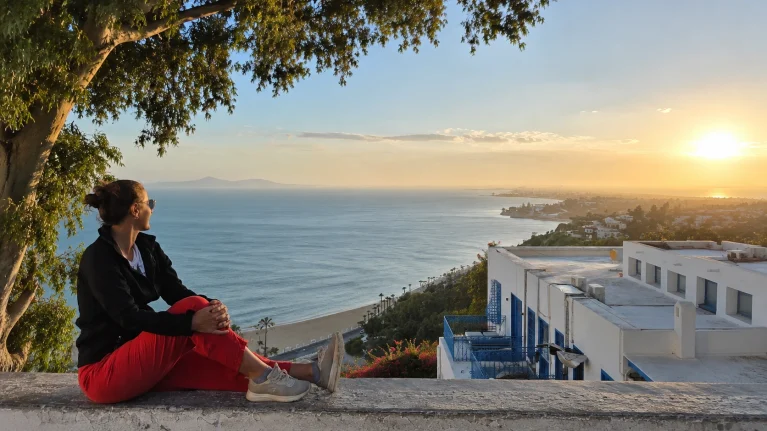
I went in November, and it’s a genuine mixed bag for a beach town like Hammamet: quiet, cheap, and easy to book, but the sea is too cool for real swimming by the end of the month and evenings pull in early with a chilly breeze. If beach time matters more to you than empty pool loungers, aim for May, June, September, or October instead. Three to four days is enough for a proper Hammamet reset; stretch to five or six if you want to add the Medina and a day trip out to Sidi Bou Said.
Peak summer (July-August) brings the warmest sea and the busiest resorts, so if you’re chasing sun rather than solitude, book well ahead for that window. Shoulder months on either side of summer tend to offer the best balance between weather and price for most travelers.
🗓️ July and August resort rooms sell out early in Hammamet. If you want peak-season sea temperatures without the scramble, book your room three to four months out.
🗺️ Day-by-Day Itinerary
Days 1-2: Arrival & Resort Time
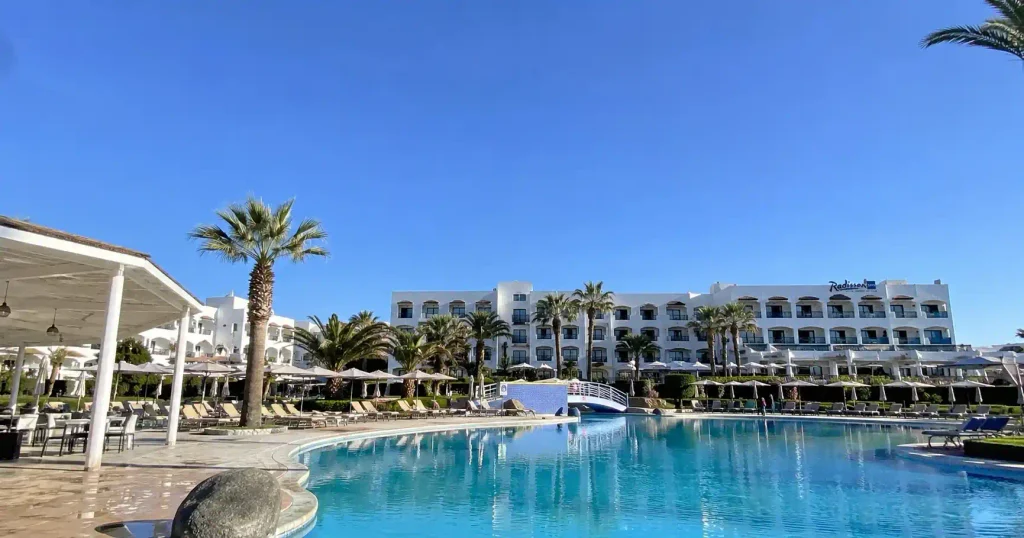
After the shuttle ride in from the airport, the first couple of days were pure decompression: beach, pool, buffet, repeat. The all-inclusive setup meant I didn’t think about a single dinar until I wanted to leave the resort grounds, which after weeks of budget travel in Algeria was exactly the reset I needed. Mornings meant claiming a lounger early and reading through breakfast; afternoons drifted between the pool and the sea, with the resort’s own beach stretch quiet enough on weekdays that I never had to fight for space. By evening, the buffet rotated through Tunisian and international dishes, and I mostly stuck to an early dinner followed by a slow walk along the lit-up beachfront path before bed.
Day 3: Hammamet Medina & Kasbah
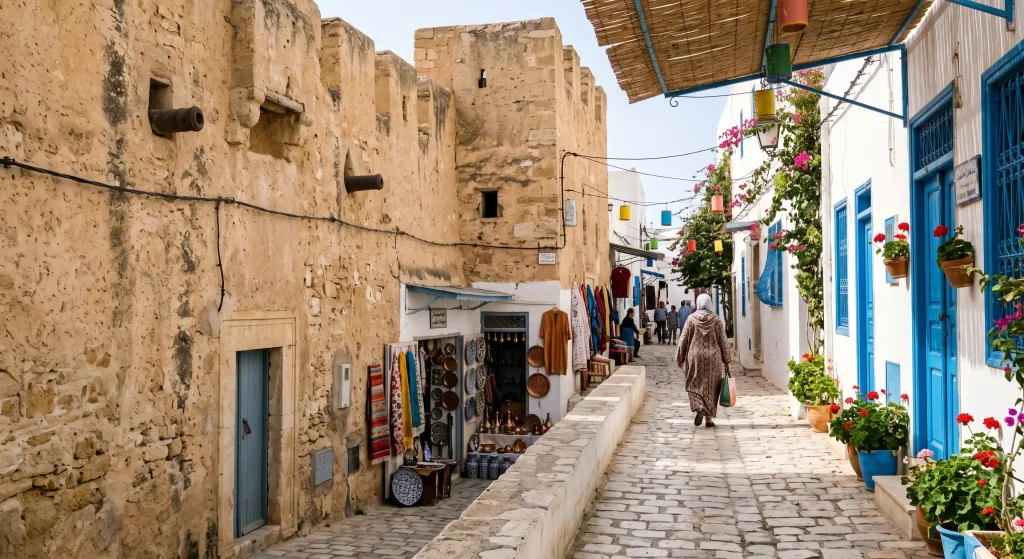
I finally pulled myself off the sun lounger to walk the old town. The Medina’s alleys are narrower and less polished than I expected, still genuinely used by locals rather than staged purely for tourists, with the 13th-century Kasbah walls giving the best view back over the bay. I spent the late morning wandering without a fixed route, ducking into the handicraft stalls tucked away from the main tourist strip, and climbed the Kasbah walls just before midday for the clearest light over the harbor. It’s a compact enough old town that half a day covers it comfortably, which is exactly why it pairs so well with an otherwise resort-heavy trip.
Day 4: Beach, Seafood & a Slow Wind-Down
My last full day was another beach day, but I made a point of eating outside the resort for once. Walking down to the Medina’s restaurant row for a proper seafood dinner, with the old town walls lit up behind the table, was a good note to end the trip on before flying out. It also broke up what could easily have been four straight days of the same buffet, and gave the trip a genuine bookend: resort decompression on one side, one real evening out on the other.
🍽️ Skip the buffet at least one night if you’re staying all-inclusive. The Medina’s seafood restaurants are worth the short walk even if you’ve already paid for dinner back at the hotel.
⭐ Top Experiences & Best Places to Visit
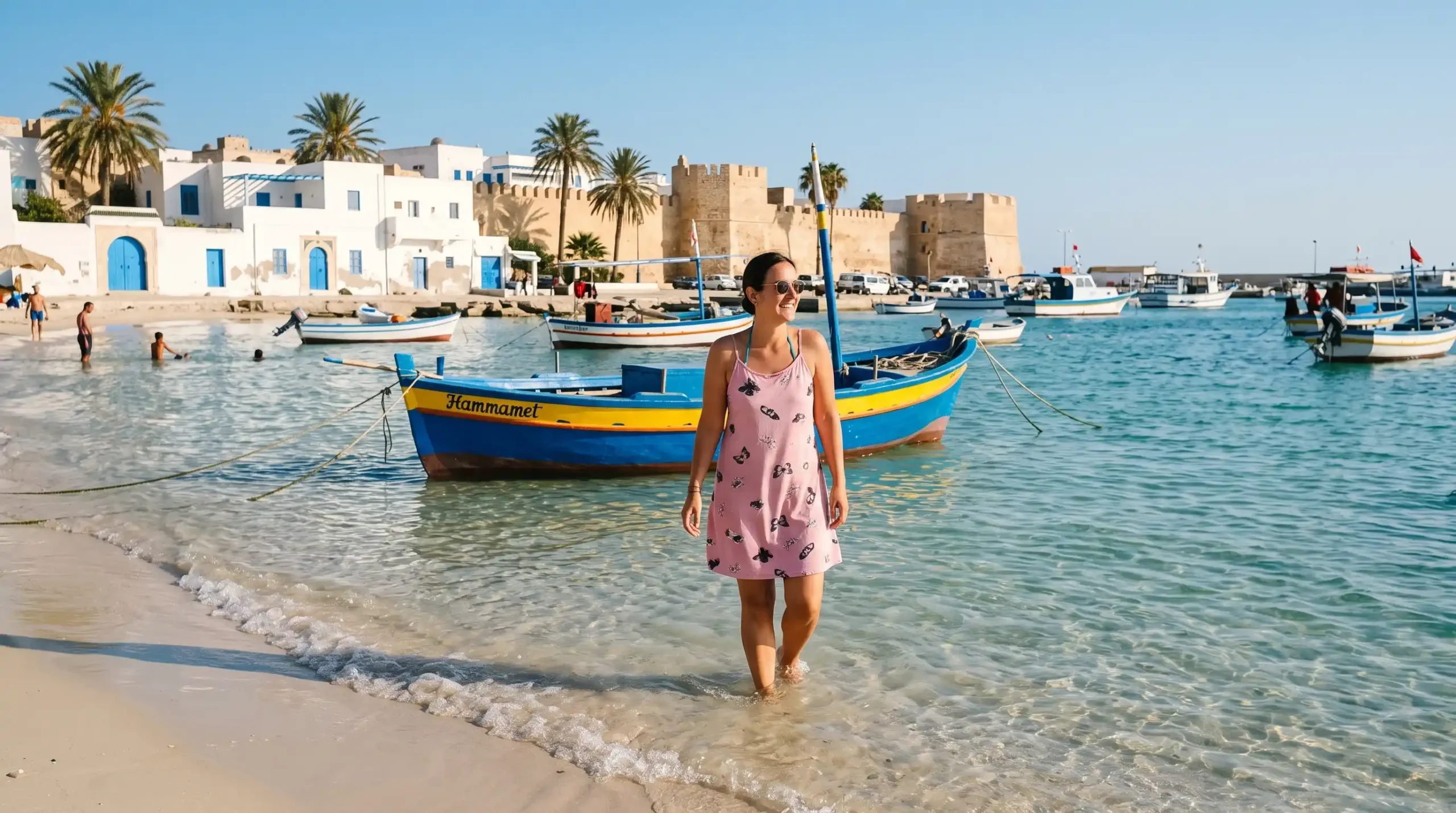
1. Hammamet Beach.The main reason most people book Hammamet in the first place, and the resort strip delivers clean, wide sand with calm water for most of the year, which makes it one of the more forgiving beaches on the Tunisian coast for weaker swimmers or families with young kids.
2. Hammamet Medina.Smaller and less overwhelming than Tunis’s medina, with narrow lanes, the old Kasbah walls, and a decent handicraft market if you’re after souvenirs that aren’t mass-produced. It’s easy to cover in two to three hours without feeling rushed.
3. Kasbah of Hammamet. The 13th-century fortress walls sit right at the edge of the Medina and give the best rooftop view of the harbor and coastline in town. Go close to midday for the clearest light over the water.
4. Pupput Roman Ruins.A quieter alternative to the bigger archaeological sites elsewhere in Tunisia, with the remains of what’s believed to be Roman Africa’s largest necropolis a short drive from the resort strip. Worth the detour if you want one non-beach, non-Medina stop.
5. A proper seafood dinner in the Medina. Even on an all-inclusive trip, one night out at a restaurant overlooking the old town walls is worth the extra spend.
🏨 Where to Stay & Eat
I stayed at the Radisson Blu Resort & Thalasso, Hammamet: beachfront, all-inclusive, about 72km from the airport, which matched what the shuttle app quoted me. It’s a solid luxury pick if you want the full resort experience without leaving the grounds.
Where to Stay
- 💰 Budget: Dar Sonia, two minutes from the beach and close to the Kasbah, a straightforward option if you’d rather spend on excursions than the room.
- 🧍 Mid-Range: Hotel Bel Azur Thalasso & Bungalows, close to both the beach and the Medina with solid reviews on cleanliness and location.
- 🛎️ Luxury: Radisson Blu Resort & Thalasso, Hammamet, my own pick for a full beachfront, all-inclusive stay.
Where to Eat
- Le Barberousse in the Medina does Tunisian and seafood with a proper sea view.
- Restaurant La Belle Vue overlooks both the water and the old town walls if you want the postcard version of dinner.
💰 Budget: Cost & Money-Saving Tips
Cost of Traveling
- 🧍 Budget: Guesthouse and budget hotel rooms run roughly €25-35/night; a simple café meal is around €5-8.
- 💰 Mid-Range: Expect €60-100/night for a solid 3-4 star hotel, with a Medina seafood dinner landing around €15-25 per person.
- 🛎️ Luxury: All-inclusive resorts like the Radisson Blu or La Badira run from roughly €120/night upward in the November low season, considerably more in summer.
Money-Saving Tips
- Travel in the November-February low season for noticeably lower resort and flight prices, if you can live with cooler evenings and a cold sea.
- Book your airport shuttle ahead rather than on arrival (see Getting There & Around above).
- If you’re on all-inclusive, still budget for one or two Medina meals; the food and atmosphere are worth stepping outside the resort.
- Change only what you need into dinars at a time, since you can’t take the currency home or reconvert large sums easily.
- Stick to the handicraft stalls further from the main Medina entrance for better prices than the shops right at the gate.
🎒 What to Pack & Good to Know
What to Pack
- Layers, since November days were mild but evenings turned genuinely cold along the coast.
- A light rain jacket, since shoulder-season showers aren’t rare.
- A swimsuit regardless of season if your hotel has a pool or spa.
- Comfortable sandals for the beach and flatter shoes for the Medina’s uneven stone lanes.
- Modest clothing (shoulders and knees covered) if you plan to visit the Kasbah or any mosque exteriors.
Safety, Accessibility & Etiquette
Tunisia’s main resort towns, Hammamet included, are considered low-risk by most Western foreign ministries, and petty theft around the Medina’s shopping streets is the main thing to watch for rather than anything more serious. The Medina’s cobbled lanes aren’t easy going with mobility issues or a stroller, so plan accordingly if that applies to your group. It’s worth having travel insurance sorted before you land; SafetyWing covers the basics for a trip like this, and Klook has insurance add-ons too if you’re booking tours through them anyway.
💵 Even on an all-inclusive package, keep some dinars on hand. The resort covers meals and drinks, but taxis, Medina shopping, and excursions all run on cash.
Emergency numbers in Tunisia: 197 (police), 190 (ambulance), 198 (fire).
❓ FAQ
Do you need a visa to visit Hammamet or the rest of Tunisia?
Most travelers don’t. Citizens of the EU, UK, Turkey, and many other countries can enter visa-free for tourism, usually for up to 90 days, and US and Canadian passport holders get up to four months. Confirm your own nationality’s rules before booking.
Is Hammamet better for a beach holiday or a cultural trip?
Beach holiday, plain and simple. The resorts and coastline are the draw, and the Medina is a good half-day addition rather than the main event; if culture is your priority, Sidi Bou Said or Tunis will give you more to work with.
How far is Hammamet from Tunis-Carthage Airport?
Roughly 70-80km, which usually means about an hour by car depending on traffic.
Is it worth booking an airport shuttle in advance for Hammamet?
Yes, and by a noticeable margin on price — see the Getting There & Around section above for how that played out on my own route.
Is Hammamet all-inclusive or do you need cash for extras?
Most resorts are genuinely all-inclusive for food and drink, but you’ll want dinar cash for the Medina, taxis, and any excursions outside the hotel grounds.
Is November a good time to visit Hammamet?
It’s a good time for a quiet, budget-friendly resort stay, less good if beach swimming is the priority, since the sea cools fast and evenings get chilly.
📌 Wrap-Up: Hammamet Travel Guide Summary
Quick Summary (Hammamet travel guide at a glance):
- Best time: April-June or September-October for warm-sea beach weather; November for low prices and quiet resorts
- Average daily budget: €40-70 mid-range, all-inclusive resorts higher
- Ideal trip length: 3-4 days for a pure resort stay, 5-6 if adding the Medina
- Good for: couples, resort-first travelers, a coastal reset after harder travel elsewhere in North Africa
Final Words: Hammamet did exactly what I needed it to after weeks on the road in Algeria: nothing much, and it did it well. If you’re deciding whether to stay resort-only or add a Medina day, I’d say add it; a single afternoon is enough to see a different side of the town without cutting into your beach time. Are you planning Hammamet as a standalone break or pairing it with somewhere else in Tunisia, like Sidi Bou Said, on the same trip?
For more real trip notes and city guides, browse the rest of the site at gotravelica.com.