
Beijing Travel Guide 2026: The Great Wall & a Cashless City
🏮 Introduction & Why Go
Every guide I read before this trip said the same thing: don’t bother bringing cash or cards to Beijing. I didn’t fully believe it until I landed and tried anyway — WeChat Pay and Alipay turned out to be non-negotiable, not just good advice.
Landing in Beijing confirmed everything I’d read. Exchanging money and swiping a foreign card turned out to be genuinely difficult, exactly as the forums warned. Chinese culture had pulled at my curiosity for years, and the Great Wall specifically was the reason I finally booked the trip, so I joined a guided tour to see it properly. Beyond the prep work, the city rewarded the effort — imperial architecture sits a few subway stops from hutong alleys, and the contrast never gets old.
Quick Picks:
- 🧍 Budget: Leo Hostel – central, a long-running favorite among backpackers
- 💰 Mid-Range: Kelly’s Courtyard Hotel Beijing – set in a hutong, traditional courtyard style
- 🛎️ Luxury: The Peninsula Beijing – in Wangfujing, an iconic luxury chain

📋 Quick Facts Before You Go
- Visa: Citizens of 50+ countries get 30-day visa-free entry through 2026 for tourism — check the National Immigration Administration’s official list for your nationality; everyone else needs an L visa arranged in advance.
- Language: Mandarin only in most places; English signage is rare outside major hotels, so a translation app earns its keep.
- Currency: Chinese Yuan (RMB/¥). Mobile payments dominate — more on that below.
- Plugs: Type A/C/I, 220V — pack a universal adapter since outlet types vary even within the same hotel.
- Mobile & Internet: Google, WhatsApp, Instagram, and most Western apps sit behind the Great Firewall. A foreign eSIM through Airalo or Holafly roams on international data and reaches social media without a VPN — I used one and had zero issues logging in.
- Transport tickets: Beijing’s subway takes a rechargeable transit card or mobile payment; single-ride paper tickets work too but queue longer.
- Drone rules: Beijing has prohibited travelers from bringing drones into the city since May 2026, and flying is already banned outright around the Forbidden City, Tiananmen Square, and the main Great Wall sections. Leave it at home for this trip.
Payment note: Since 2023 reforms, foreigners can link an international Visa or Mastercard to WeChat Pay or Alipay without a Chinese bank account. Set both up before you fly — I installed mine weeks ahead, and it made every purchase, from subway fares to street snacks, painless once I landed.
✈️ Getting There & Getting Around
Beijing has two international airports: Capital Airport (PEK), the long-established hub northeast of the city for Air China and Star Alliance carriers, and Daxing (PKX), the newer hub to the south that anchors China Southern, China Eastern, and SkyTeam routes. Skyscanner is worth a scan across both before booking, since fares and layover convenience can differ noticeably by terminal.
From PEK, the Capital Airport Express train reaches Dongzhimen station in about 20 minutes for ¥25, connecting onward to the subway. Daxing has its own express line into the city center. Either way, don’t count on paying with a foreign card or leftover cash at the airport counters — you’ll want WeChat Pay or Alipay working from the moment you land.
Inside the city, the subway is extensive, cheap, and easy to navigate once you’re tapping in with a transit card or phone. Didi, China’s ride-hailing app, works similarly to Grab or Uber for longer hops, though it’s worth having your hotel’s Chinese address saved and ready to show a driver.
🗓️ Best Time to Visit & Trip Length
May is one of Beijing’s most pleasant stretches — daytime temperatures sit between 18–27°C, humidity stays low, and skies tend to be clear rather than smoggy. The one exception is the Labor Day holiday at the start of the month, when the Great Wall and Forbidden City get considerably busier; booking tickets and tours well ahead helps if your trip overlaps with it. Three to four days covers the major sights at a comfortable pace, including a full day out at the Great Wall.
🧭 Day-by-Day Itinerary
Day 1: Arrival and Getting Set Up
Clear immigration, ride the airport express or a Didi into the city, and check into a hotel near the Forbidden City if you can — a hutong location like the one I stayed at meant everything worth seeing was within walking distance. Spend the afternoon testing your WeChat Pay or Alipay setup on something small, like a coffee, before you need it for anything bigger.
Signage warning: Nearly every street sign, menu, and subway notice is in Chinese only outside the most touristy pockets. Download an offline translation app before you land — reading signage was genuinely my hardest moment in the city.
Day 2: The Great Wall at Mutianyu
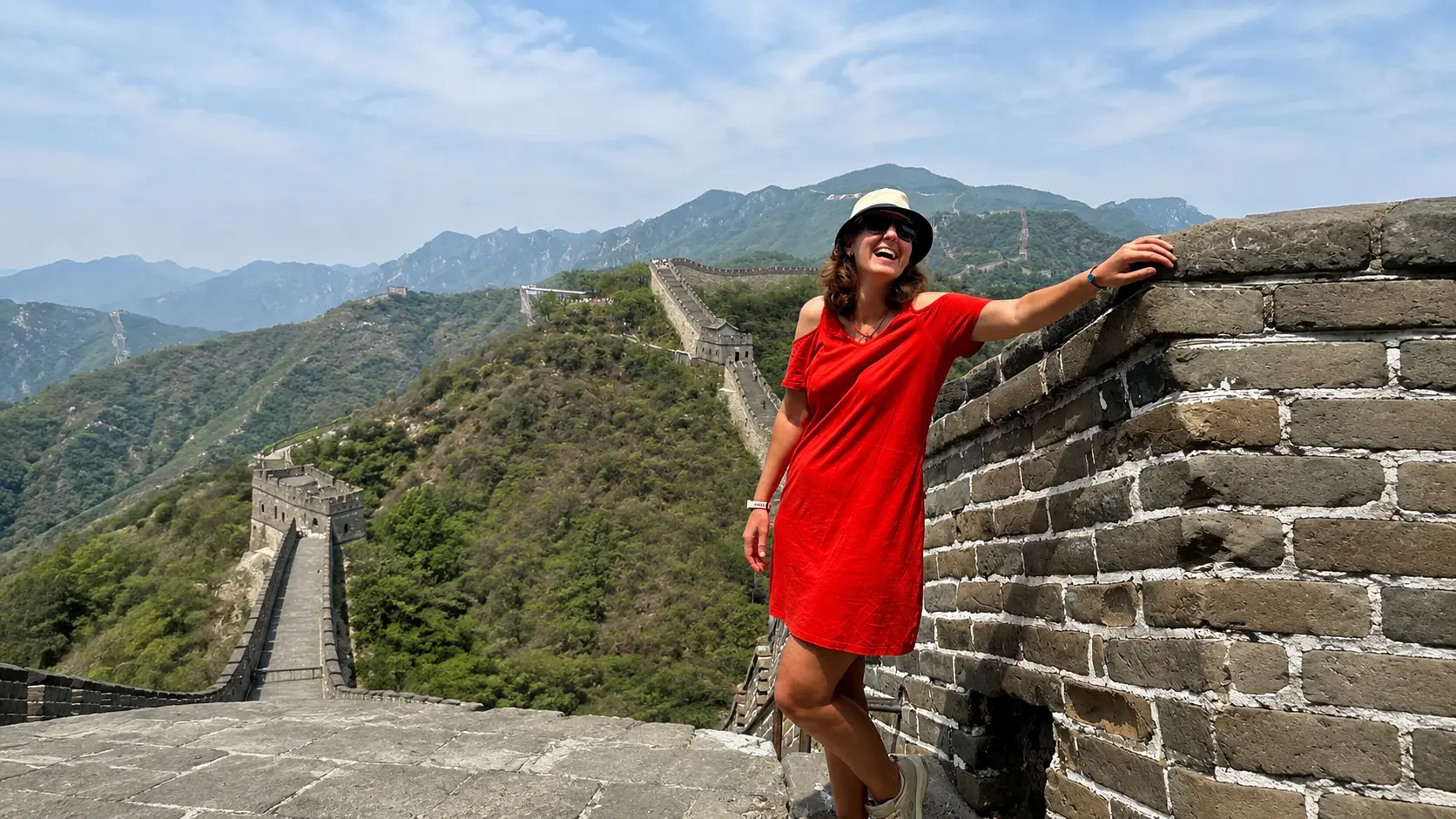
Book the Mutianyu Great Wall Day Tour with Options, which includes hotel pickup — Mutianyu is less crowded than Badaling and the cable car option gets you up to the wall itself without the steepest climb. Budget most of the day for it; between the drive, the climb along the watchtowers, and the ride back, it easily fills six or seven hours.
Day 3: Forbidden City and Peking Duck
Forbidden City tickets release exactly seven days ahead through the official Palace Museum website and require your passport number at booking and entry, so set a reminder rather than leaving it to the day before. Spend the morning working through the halls and courtyards, then walk to Tiananmen Square on your way out. In the evening, book a table at Beijing Dadong Roast Duck Restaurant’s Nanxincang branch — it’s the brand’s flagship location and close to the hutong area if you’re staying nearby.
🏯 Top Experiences & Best Places to Visit
The Great Wall at Mutianyu
Restored watchtowers, mountain views in every direction, and a cable car that saves your knees for the walk along the top make Mutianyu the easiest full introduction to the Wall from Beijing.
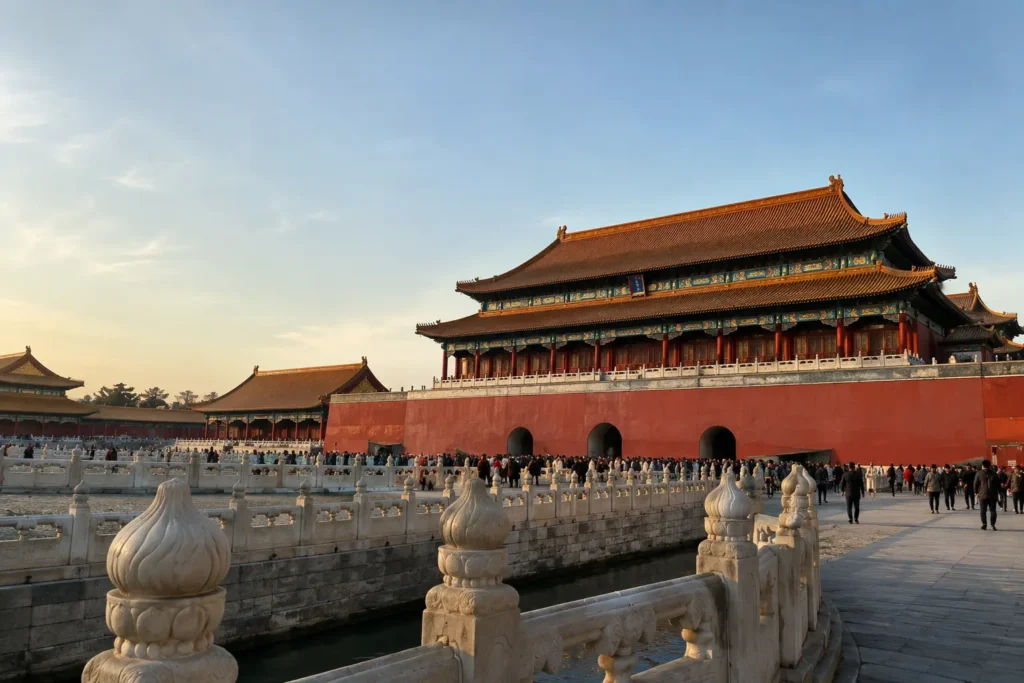
The Forbidden City
Six centuries of imperial history spread across 72 hectares of courtyards and halls — plan at least three hours, and remember the passport-linked ticket only works on the date and with the document you booked it under.
Booking tip: Tickets go on sale at 8pm Beijing time exactly seven days before your visit date, through the official Palace Museum ticketing site or its WeChat mini-program. The museum is closed on Mondays.
Beijing’s Hutongs
Narrow alleyways of courtyard homes that survived the city’s modernization — wandering the lanes near Dongcheng District felt like stepping into an entirely different pace of Beijing than the wide avenues around Tiananmen. Laundry hangs between low brick walls, elderly residents play chess on fold-out tables, and the occasional pedicab driver offers a slower, guided loop through the maze if walking on your own feels disorienting. It’s worth setting aside a couple of hours here rather than rushing through — the contrast with the Forbidden City’s scale, just a short walk away, is part of what makes the area worth the detour.
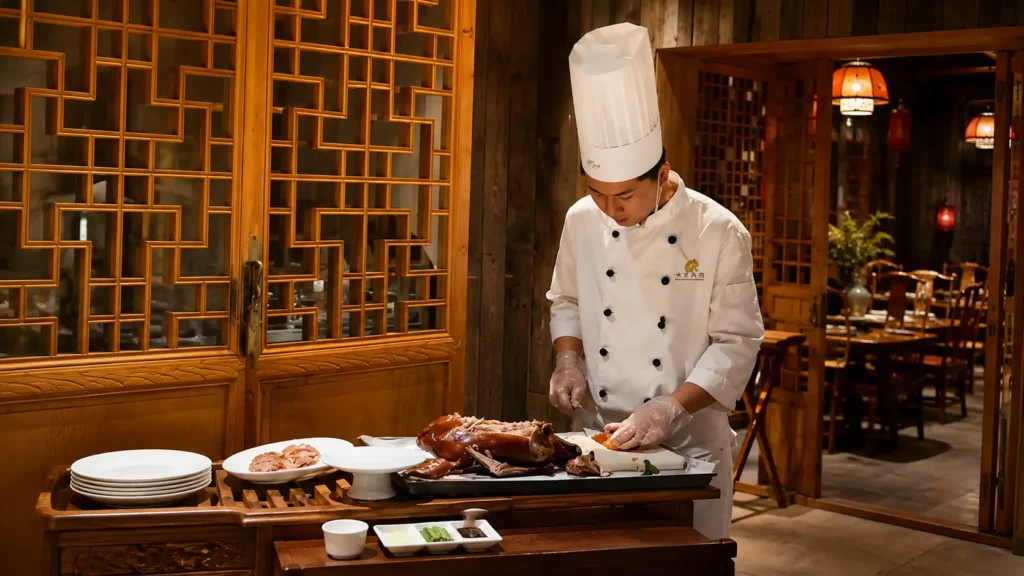
Peking Duck Dinner
Watching the duck get carved tableside at Dadong was one of the best meals of the trip — crisp skin, thin pancakes, and a level of ceremony that makes it worth booking rather than walking in.
Tiananmen Square
The sheer scale of the square is worth the walk from the Forbidden City’s front gate, even if you only pass through on your way elsewhere.
🏨 Where to Stay
Budget: Dorm beds at well-reviewed hostels like Peking International Youth Hostel run around $20 a night through Hostelworld and put you within reach of the subway network.
Mid-Range: I stayed at Happy Dragon Alley Hotel, tucked into a hutong in Dongcheng District a short walk from the Forbidden City, Tiananmen Square, and the Zhangzizhonglu subway station — the location made every day easier than I expected going in. Hilton Garden Inn Beijing Haidian is another solid mid-range option if you’d rather stay near the university district.
Luxury: Grand Hyatt Beijing sits close to Wangfujing’s shopping streets and houses Made in China, one of the city’s best-known upscale Peking duck restaurants, right on site.
🥟 Where to Eat
Budget: Huguosi Snacks in Xicheng serves traditional Beijing breakfast dishes for a few dollars a plate — a genuinely local starting point for the day.
Mid-Range: Beijing Dadong Roast Duck Restaurant’s Nanxincang branch, the brand’s largest and most central location, turns out a modern take on Peking duck with noticeably less grease than the traditional method.
Luxury: Made in China, inside the Grand Hyatt Beijing, plates an elevated version of the same dish with white-tablecloth service.
💰 Cost of Traveling
Budget: Expect around $40–55 per day covering a hostel dorm, street food and hutong snacks, and subway fares.
Mid-Range: A comfortable middle ground lands near $95–135 per day, covering a hotel like Happy Dragon Alley, a mix of hutong meals and one proper roast duck dinner, plus Didi rides.
Luxury: Five-star stays, fine dining, and private drivers push daily spending past $275, though Beijing still undercuts equivalent luxury in Tokyo or Hong Kong.
💡 Money-Saving Tips
- Set up WeChat Pay and Alipay before you fly — scrambling to link a card after landing wastes time and, occasionally, meals.
- Book Forbidden City tickets the moment they release seven days out; last-minute options are limited and pricier.
- Visit the Great Wall on a weekday if your dates allow — Mutianyu gets noticeably busier on weekends.
- Eat where locals queue, especially around hutong snack stalls — it’s consistently cheaper than restaurants aimed at tourists.
- Ride the subway over Didi whenever your route allows; a cross-town subway fare costs a fraction of a car ride.
🎒 What to Pack
- A Type A/C/I plug adapter
- Your eSIM installed and ready before landing
- WeChat Pay and Alipay set up with an international card linked in advance
- An offline translation app downloaded before arrival
- Comfortable walking shoes for the Great Wall’s steps and the Forbidden City’s courtyards
- A portable battery — you’ll rely on your phone constantly for payments and maps
🛡️ Good to Know: Safety, Accessibility & Etiquette
Beijing felt remarkably safe throughout the trip — cameras cover most public spaces, and violent crime against visitors is rare. The more realistic risks are scams like the “tea ceremony” invitation near tourist sites and ordinary pickpocketing in packed subway cars. Travel insurance is worth arranging before you fly; SafetyWing is a straightforward option that covers most short trips without much paperwork.
Emergency numbers: Dial 110 for police, 119 for fire, or 120 for ambulance. All three are free calls from any phone.
Bottled water is the safer default over tap water. Sidewalks and subway stations in the newer parts of the city are generally accessible, though older hutong lanes can have uneven paving. Tipping isn’t expected or customary in most restaurants. Hotel check-in requires passport registration with local police, which is standard practice rather than anything to worry about.
❓ FAQ
Do I need a visa for Beijing?
It comes down to your passport rather than a single yes-or-no answer — over 50 nationalities currently skip the visa entirely for stays under 30 days, while everyone else applies for an L visa before departure.
Can I use my credit card in Beijing?
Rarely outside international hotels and upscale malls. WeChat Pay or Alipay, linked to a foreign card in advance, covers nearly everything else.
Will my phone work for social media in Beijing?
Not through a local SIM or hotel wifi — the Great Firewall blocks Google, WhatsApp, and Instagram without a VPN. Roaming on a foreign eSIM sidesteps the block entirely, since your traffic never routes through China’s domestic network.
How many days do I need in Beijing?
Three to four days covers the Great Wall, Forbidden City, and a hutong wander without feeling rushed.
Is Beijing safe for solo travelers?
Yes — heavy surveillance and low violent crime make it one of the more reassuring big cities to explore alone, though normal city awareness still applies.
📊 Beijing Travel Guide: Quick Summary
- Best time to visit: May or September–October for mild, dry weather
- Average daily budget: $95–135 (mid-range) covering stay, food, and local transport
- Ideal trip length: 3–4 days
- Good for: History lovers, first-time China travelers, food-focused trips
🌇 Final Words
Beijing rewarded every bit of prep work I put in before landing — the payment apps, the eSIM, even the translation app I downloaded almost as an afterthought. None of that homework dulled the trip; if anything, it cleared the way to actually stand on the Great Wall and inside the Forbidden City without logistics getting in the way. What part of the prep would worry you most — the language, the payments, or something else entirely?
More travel guides at gotravelica.com.