Kuala Lumpur Travel Guide 2026: Petronas Towers, Batu Caves & Rooftop Pools
🌆 Introduction & Why Go
I only booked Kuala Lumpur because AirAsia was running a cheap fare sale, and the city happened to sit close to half a dozen other countries I wanted to see. I treated it like a layover with a hotel attached, nothing more.
Then I landed in February, stepped out into air so humid it felt like walking through a warm towel, and realized the plan needed rewriting. By day, Kuala Lumpur moves fast — glass towers, packed sidewalks, the kind of heat that makes you duck into any air-conditioned mall you pass. By night, the same streets soften. Lights come up on the Petronas Towers, the crowds slow down, and the city feels almost theatrical. That contrast is what pulled me in. If you’re weighing whether Kuala Lumpur deserves more than a layover, this is your answer: it does, and a few days is enough to feel both sides of it.
Quick Picks:
- 🧍 Budget: Lloyd’s Inn Kuala Lumpur – in Bukit Bintang, compact design
- 💰 Mid-Range: Hotel Indigo Kuala Lumpur on the Park by IHG – overlooking KLCC Park
- 🛎️ Luxury: Banyan Tree Kuala Lumpur – inside a skyscraper, infinity pool
📋 Quick Facts Before You Go
Most Western, EU, and many other passport holders enter Malaysia visa-free for up to 90 days, though this varies by nationality and changes periodically, so check your specific requirement before booking.
Visa note: Nearly every visitor, visa-exempt or not, must complete the free Malaysia Digital Arrival Card (MDAC) online within three days of arrival. Only use the official government portal — copycat sites exist.
- Language: Malay is official, but English is spoken widely enough that ordering food or asking directions is rarely a problem.
- Currency: Malaysian Ringgit (MYR/RM).
- Plugs: Type G, 240V — the same shape as the UK, so North American travelers need an adapter.
- Mobile & Internet: A local eSIM through Airalo or Holafly gets you connected before you even land, which beats hunting for a SIM counter at arrivals.
- Transport tickets: the MyRapid or Touch ‘n Go card covers trains, buses, and tolls across the city.
✈️ Getting There & Getting Around
If your flight lands at klia2, the low-cost terminal used by AirAsia, budget an extra few minutes versus the main KLIA building — they’re connected by a short shuttle. For flight searches, Skyscanner is worth checking regularly, since fare sales on routes into Kuala Lumpur pop up often.
From the airport, the KLIA Ekspres train reaches KL Sentral in about 28 minutes for roughly RM55, running every 15–20 minutes through the day. I skipped the train and took Grab straight from arrivals to my hotel instead — it landed somewhere around RM80–100 depending on traffic, cost more than the train, but meant no transfers with luggage at 11pm. Both are reasonable choices depending on how tired you are.
Inside the city, the LRT and MRT lines cover the main tourist areas cheaply and avoid the traffic that clogs KLCC and Bukit Bintang most afternoons. Grab remains the easiest option after dark or when you’re carrying shopping bags, and fares stay reasonable by international standards.
🗓️ Best Time to Visit & Trip Length
Kuala Lumpur runs hot and humid year-round, so “best time” is really about rain rather than temperature. February, when I went, sits in a comparatively drier stretch, though short downpours can still roll through without warning — pack a compact umbrella rather than relying on forecasts. Three to four days is enough to cover the city’s landmarks, a day trip to Batu Caves, and one proper night out at a food street without rushing. Longer stays make sense mainly if you’re using KL as a base for day trips into the wider peninsula.
🧭 Day-by-Day Itinerary
Day 1: Arrival and First Impressions
Land, clear immigration, and grab a Grab straight to your hotel rather than fighting with public transport on the first afternoon. If you’re staying anywhere in the KLCC area, check in, then head straight to the rooftop for golden hour — this is where the city’s evening personality first shows itself, towers lighting up as the sky goes orange.
Day 2: Batu Caves and Petronas by Night
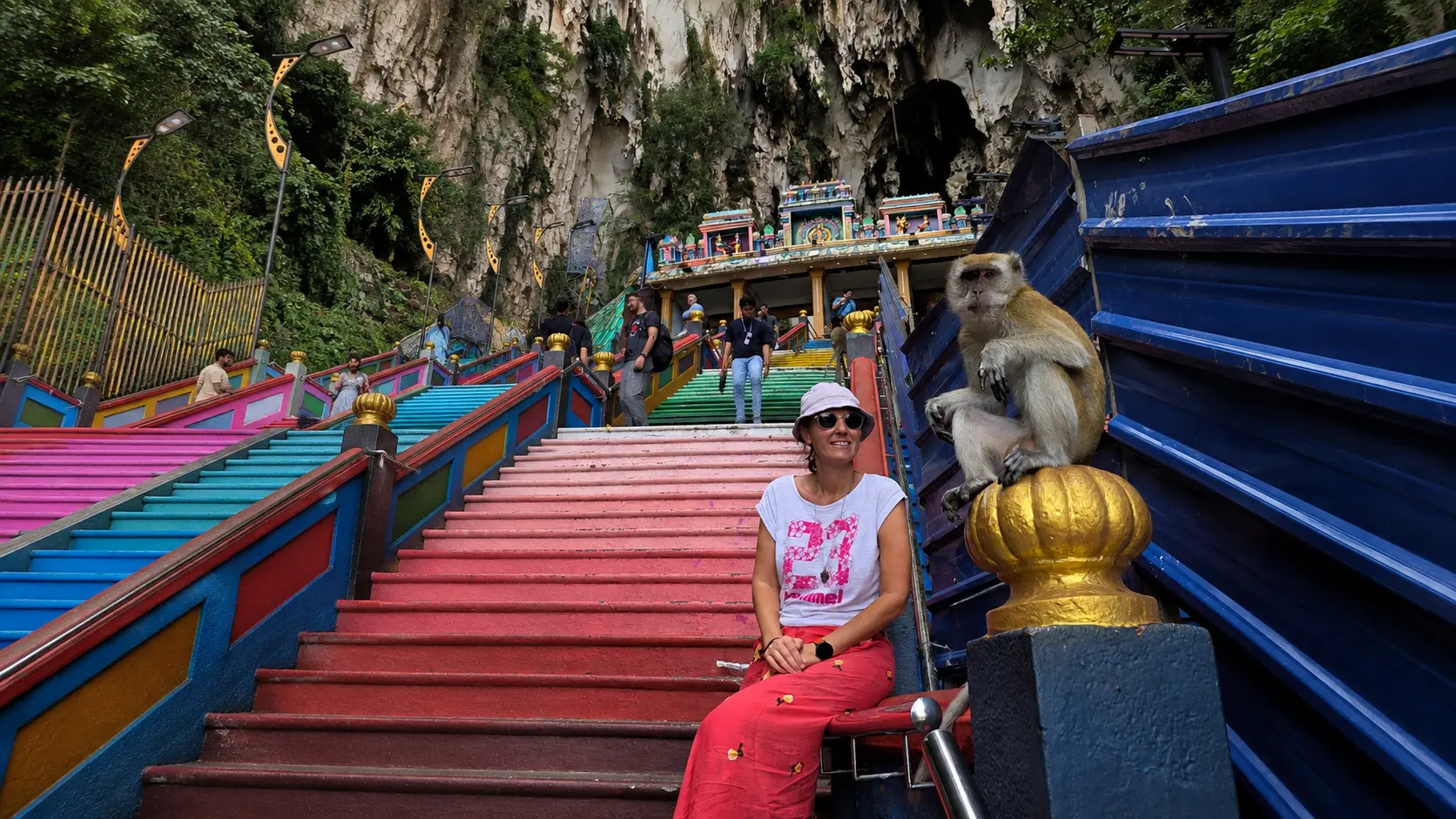
Book the Batu Caves Half-Day Tour with Pick-Up Option for the morning, before the midday heat sets in — it includes hotel pickup, so there’s no need to sort out transport yourself. The climb up the 272 rainbow-painted steps to the cave shrine is manageable, but keep any food out of sight on the way up.
Monkey warning: The macaques on the staircase are used to tourists and will grab food directly out of your hands or bags without warning. Zip away snacks before you start climbing — I learned this one the startling way.
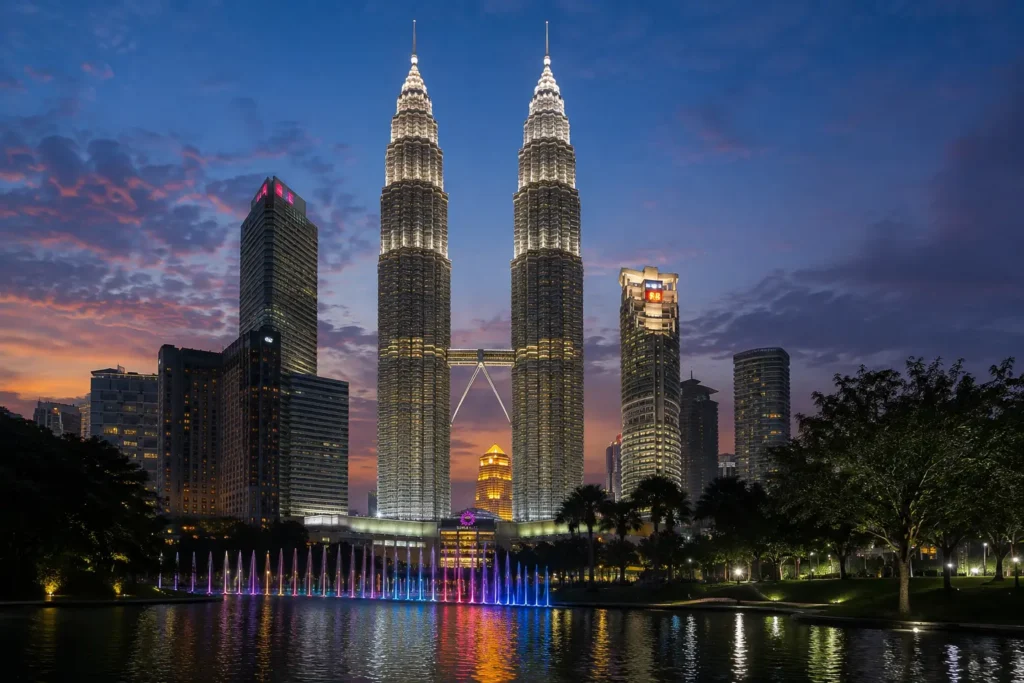
Back in the city by afternoon, rest through the heat, then find a table at one of the cafés facing the towers before dusk. That’s where I ended up watching the Lake Symphony fountain show — sound, light, and jets of water choreographed against the illuminated skyline — over a slow dinner instead of standing in the crowd.
Day 3: Night Market and Local Flavors
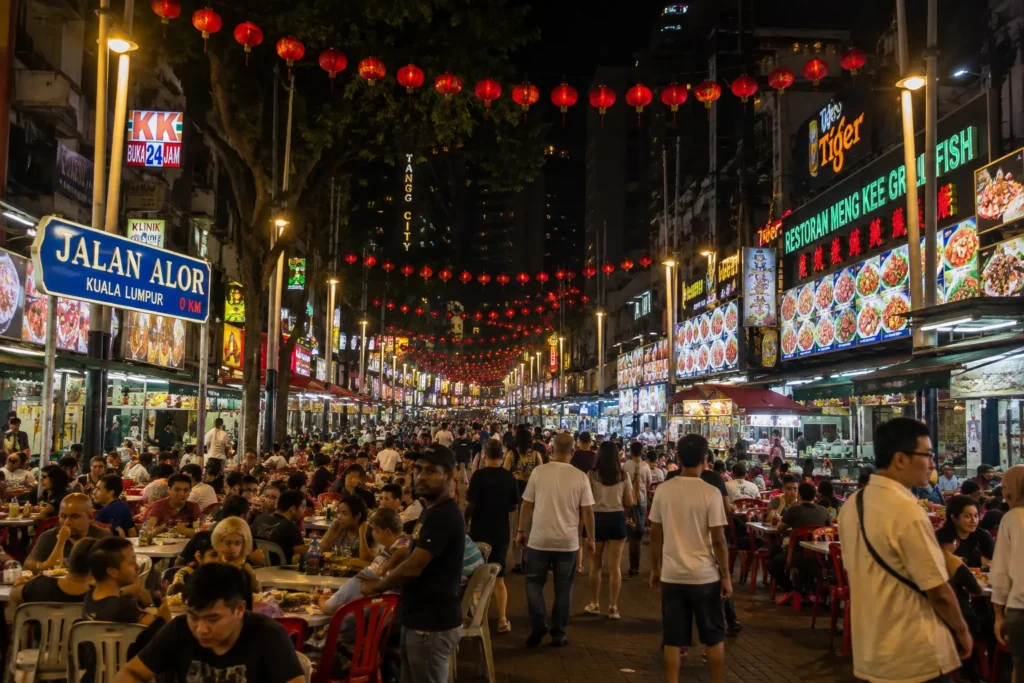
Spend the day exploring at your own pace — Suria KLCC, the Petronas Skybridge if you’ve booked tickets in advance, or simply the park. As evening falls, head to Jalan Alor in Bukit Bintang for dinner among the stalls, grilled skewers, and fresh tropical fruit stands that keep the street lit and loud until well past midnight.
🏙️ Top Experiences & Best Places to Visit
Petronas Twin Towers and Lake Symphony
The towers are photogenic from almost any angle, but the free nightly Lake Symphony fountain show at KLCC Park, timed to music and shifting light, is the better use of an evening than the paid Skybridge for most visitors.
Booking tip: Skybridge and observation deck tickets sell out on short notice, especially around weekends. Book a timed slot a few days ahead through the official Petronas Twin Towers website if you want to go up.
Batu Caves
A 272-step climb past a towering gold Lord Murugan statue leads to a Hindu shrine inside a limestone cavern. Entry to the main cave is free; smaller attractions like the Dark Cave charge separately.
Rooftop Infinity Pools with a Petronas View
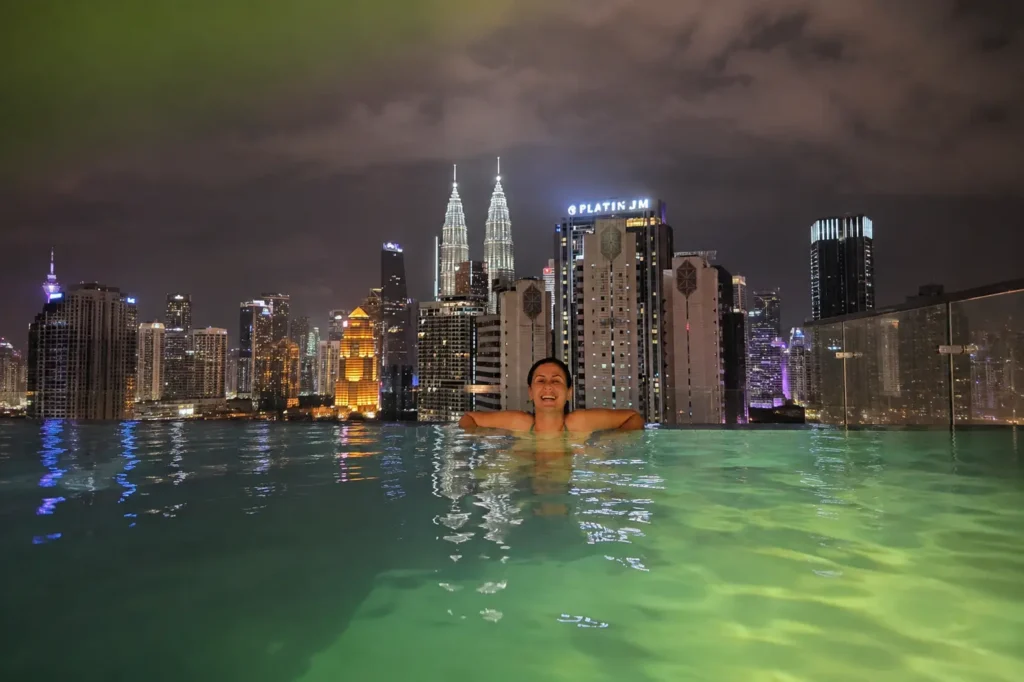
Several serviced apartments in the KLCC area built their entire pitch around this one view. I spent more evenings than I planned floating in my hotel’s rooftop infinity pool, watching the towers change color as the light show ran below.
Jalan Alor Night Market
A half-kilometer strip in Bukit Bintang lined with roughly 200 stalls and open-air restaurants, loudest and best after 7pm. Expect grilled satay, whole seafood, and vendors calling you over to sit.
KLCC Park
Fifty free acres of green space wedged between the towers and the surrounding streets, with a 1.3km jogging loop that’s genuinely pleasant before the heat builds in the morning.
🏨 Where to Stay
Budget: Bukit Bintang and Chinatown carry most of the city’s hostels and guesthouses, putting you within walking distance of Jalan Alor and the MRT — dorm beds through Hostelworld typically run $12–20 a night. If you’d rather skip shared rooms, Agile Residence Bukit Bintang offers private, family-friendly units a step up in price but still well under the KLCC luxury tier.
Mid-Range: I stayed at Kampung Marsa at Majestic Residence, a serviced apartment with a direct Petronas view and a rooftop infinity pool, and its location turned out to be closer to everything than I expected when I booked it as an afterthought. Traders Hotel is another strong mid-to-upper option with direct access into Suria KLCC.
Luxury: Grand Hyatt Kuala Lumpur and Mandarin Oriental both sit close enough to KLCC Park to watch the fountain show from the room, with the polish and service you’d expect from either brand.
🍜 Where to Eat
Budget: Jalan Alor’s stalls, including the well-known Wong Ah Wah for grilled chicken wings, keep a full dinner with drinks comfortably under RM30 per person.
Mid-Range: Madam Kwan’s at Suria KLCC serves polished versions of Malaysian comfort food — nasi lemak, curry laksa — in an easy sit-down setting a few minutes from the towers.
Luxury: Marini’s on 57, on the 57th floor of Menara 3 Petronas, pairs Italian fine dining with an unobstructed towers view — worth booking ahead for a proper night out.
💰 Cost of Traveling
Budget: Expect around $35–45 (RM150–190) per day covering hostel beds, street food, and public transport, assuming you skip paid attractions beyond Batu Caves.
Mid-Range: A comfortable middle ground lands near $80–115 (RM340–485) per day, covering a serviced apartment like Majestic Residence, a mix of hawker and sit-down meals, and occasional Grab rides.
Luxury: Five-star stays at properties like Grand Hyatt Kuala Lumpur or Mandarin Oriental, fine dining, and private transfers push daily spending to roughly $220–350 (RM930–1,470), though even KL’s top hotels tend to undercut equivalent properties in Singapore or Bangkok.
💡 Money-Saving Tips
- Skip the paid Petronas Skybridge and watch the free Lake Symphony show instead — the towers look just as impressive from the park.
- On a tight budget, take the KTM Komuter train from KL Sentral to Batu Caves station instead of a pickup tour — it costs around RM2.60 and takes about 30 minutes, though you’ll explore without a guide.
- Buy a MyRapid day pass if you’re covering more than two or three train rides, since single tickets add up fast.
- Eat where the queues of locals form, not where the menus have photos and five languages — it’s almost always cheaper and better.
- Grab rides surge sharply around the 8–10pm fountain show hours, so walk or book slightly before or after if you’re price-sensitive.
- Street food stalls are cash-only more often than not, so carry small ringgit notes rather than relying on cards.
🎒 What to Pack
- Light, breathable clothing — the humidity doesn’t ease up, even in February
- A compact umbrella for sudden downpours
- Closed-toe shoes for the Batu Caves climb
- A Type G plug adapter
- Reef-safe sunscreen and mosquito repellent
- A dry bag or zippered pouch to keep snacks away from Batu Caves macaques
🛡️ Good to Know: Safety, Accessibility & Etiquette
Kuala Lumpur is generally safe for tourists, and violent crime against visitors is uncommon. The main risks are petty ones — bag-snatching and pickpocketing in crowded spots like night markets and train platforms.
Emergency numbers:
- Dial 999 for police, ambulance, or fire from any phone, or 112 from a mobile without a SIM card. Kuala Lumpur also runs a dedicated Tourist Police unit stationed around KLCC, Bukit Bintang, and Chinatown.
Travel insurance is worth arranging before you fly; SafetyWing is a straightforward option that covers most short trips without much paperwork. Sidewalks in older districts can be uneven or missing curb cuts, so accessibility varies more than in newer KLCC developments. Malaysia is a majority-Muslim country, so modest dress is appreciated at mosques and religious sites — a scarf or light layer for shoulders and knees is enough. Tipping isn’t expected, though most people appreciate a little extra for exceptional service.
❓ FAQ
Do I need a visa for Kuala Lumpur?
Most Western and EU passport holders don’t, but the requirement depends on nationality — either way, everyone still needs to submit the free MDAC online before landing.
Is Kuala Lumpur safe for solo travelers?
Yes, broadly. Stick to well-lit, busy areas at night, watch your bag in crowds, and the city is straightforward to navigate solo.
How many days do I need in Kuala Lumpur?
Three to four days covers the main sights, Batu Caves, and one solid night market visit without feeling rushed.
Are the monkeys at Batu Caves dangerous?
They’re not typically aggressive toward people, but they will snatch visible food or plastic bags without hesitation, so keep snacks zipped away during the climb.
What’s the best time of day to see the Petronas Towers?
Just before and during the Lake Symphony fountain show at 8, 9, or 10pm, when the towers are fully lit against the dark sky.
📊 Kuala Lumpur Travel Guide: Quick Summary
- Best time to visit: Year-round tropical climate; February sits in a relatively drier stretch
- Average daily budget: $80–115 (mid-range) covering stay, food, and local transport
- Ideal trip length: 3–4 days
- Good for: First-time Southeast Asia travelers, stopovers, food lovers, skyline chasers
🌇 Final Words
Kuala Lumpur snuck up on me. I’d planned around it, not for it, and ended up rearranging free evenings just to get back to that rooftop pool one more time. If you’re passing through on your way somewhere else, give the city more than a layover’s worth of attention — the day version and the night version are worth seeing separately. Have you been to KL, or is it still just a connection point on your map? I’d like to know what pulled you in, if anything did.
More travel guides at gotravelica.com.