Bangkok Travel Guide 2026: Wat Pho & Floating Markets
Introduction & Why Go
Welcome to my complete Bangkok travel guide for 2026. I landed in June — the heat was manageable, honestly milder than I expected for Southeast Asia. What I hadn’t planned for was the rain — monsoon showers rolled in most afternoons, fast and heavy, then vanished within the hour. I’d tucked myself under a 7-Eleven awning more times than I can count
Two things sat at the top of my list before I even booked a flight: the floating markets on the canals outside the city, and the railway market where vendors fold their stalls back from an active train track. Everything else — the temples, the food, the nightlife in the Old Town — filled in around those two anchors. Bangkok rewards that kind of loose planning; it’s a city that works whether you arrive with a spreadsheet or just a rough shape of a week.
Quick Picks:Where To Stay
- 🧍 Budget: NapPark Hostel – right off Khao San, clean dorms
- 💰 Mid-Range: Riva Surya Bangkok – riverside, colonial style
- 🛎️ Luxury: The Siam Hotel – on the Chao Phraya, art-deco luxury
📋 Quick Facts Before You Go
- Visa/Entry: Many nationalities can enter without a pre-arranged visa, though the permitted stay has been under active review through 2026. Every foreign traveler must complete the Thailand Digital Arrival Card (TDAC) within 72 hours of arrival.
- Language: Thai; English is common in tourist areas, less so outside them.
- Currency: Thai Baht (THB). Cards are widely accepted in Bangkok proper; carry small cash for markets and street food.
- Plugs: Type A/C/O sockets, 220V — a universal adapter covers all of them.
- Mobile & Internet: A local eSIM (Airalo or Holafly both cover Thailand) is the easiest way to get data the moment you land, without hunting for a SIM counter.
- Transport Tickets: BTS Skytrain and MRT both run rechargeable stored-value cards; single-trip tickets work fine for short stays.
- Drone Usage & Rules: Drone photography is popular around the temples and canals, but Thailand has strict registration requirements — see the callout below before you pack one.
🛸 Drone Callout: Camera drones must be registered with both the Civil Aviation Authority of Thailand (CAAT) and the National Broadcasting and Telecommunications Commission (NBTC), and flights are banned outright over the Grand Palace and other government buildings. Start the CAAT registration process at least two weeks before you travel.
⚠️ Visa Callout: Thailand’s visa-exemption rules were under revision as this guide was written, with a possible drop from a longer stay window back to a shorter one. Confirm the current rule for your passport on the official Thai e-Visa portal before booking anything longer than a couple of weeks.
✈️ Getting There & Getting Around
Most international flights land at Suvarnabhumi Airport (BKK), with some budget carriers using Don Mueang (DMK) instead — worth checking before you book ground transport, since they sit on opposite sides of the city. Searching routes on Skyscanner is the fastest way to compare both airports at once.
From either airport, a metered taxi or the Airport Rail Link into central Bangkok is straightforward and inexpensive. Skip the touts offering “private transfer” outside arrivals; the official taxi queue is cheaper and just as fast.
Inside the city, the BTS Skytrain and MRT subway cover most tourist areas efficiently and dodge Bangkok’s notorious traffic. The Old Town sits slightly apart from both lines, so a Chao Phraya river boat or a short taxi/tuk-tuk hop usually fills that gap. For day trips out to the floating markets, a rental car from Discover Cars works if you’d rather drive yourself, though most visitors find a guided tour with pickup simpler given the rural roads and limited signage.
🌤️ Best Time to Visit & Trip Length
Bangkok runs on three loose seasons: a cooler, drier stretch from November through February (the most comfortable window), a hot buildup from March to May, and the southwest monsoon from roughly June through October. I traveled in June and found the heat itself easy to handle — it was the sudden, heavy afternoon downpours that shaped my days, pushing indoor stops and markets earlier in the morning. Four to five days gives you enough time for the Old Town, a floating-market day trip, and one evening free for nightlife or a river cruise without feeling rushed.
🗺️ Day-by-Day Itinerary
Day 1: Old Town & the Grand Palace
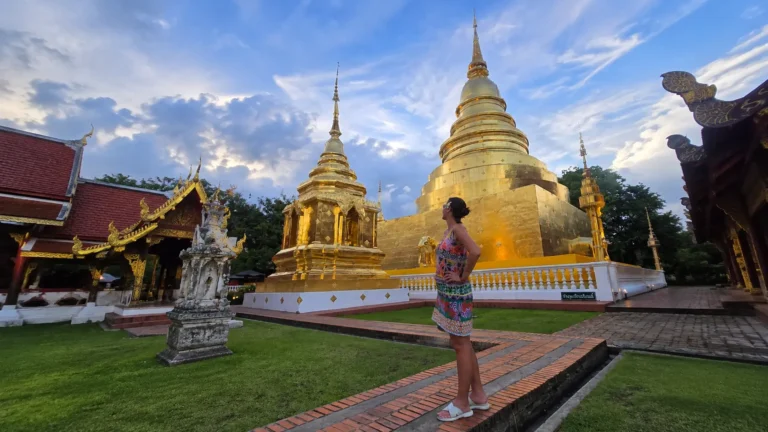
Start early at Wat Pho, home to the reclining Buddha and one of Bangkok’s oldest temple complexes. Late afternoon, walk over to the Grand Palace grounds before the light softens. In the evening, head into the Old Town’s cluster of bars and restaurants — I spent mine parked at a table listening to a live band, working through plates of Thai food after a long day on foot.
Day 2: Floating Market & Railway Market
This was the day I’d built the whole trip around. A half-day tour (the Damnoen Saduak Floating Market and Maeklong Railway Market Tour, listed on GetYourGuide with hotel pickup included, is the most common version) covers both: a longtail boat weaving between vendor boats piled with produce, followed by the surreal sight of stallholders yanking their awnings back seconds before a train rolls through. Go with a morning departure — both markets get considerably busier, and hotter, by midday.
🚂 Timing Callout: Trains pass through Maeklong Railway Market on a fixed schedule several times a day. Stand back behind the vendors’ lead and never step onto the tracks for a photo — the stalls fold away in seconds for a reason.
Day 3: Wat Pho by Night & Chatuchak Weekend Market
If your schedule allows a return visit to Wat Pho after dark, take it — the temple’s night illumination gives the chedis a completely different mood from the daytime crowds. Save this day for a weekend if you can, since Chatuchak, Bangkok’s sprawling weekend market, only opens Saturday and Sunday. I lost a good two hours wandering its narrow, covered aisles without ever finding my way back to where I started, which somehow became the best part of it.
Day 4: Riverside & Chinatown
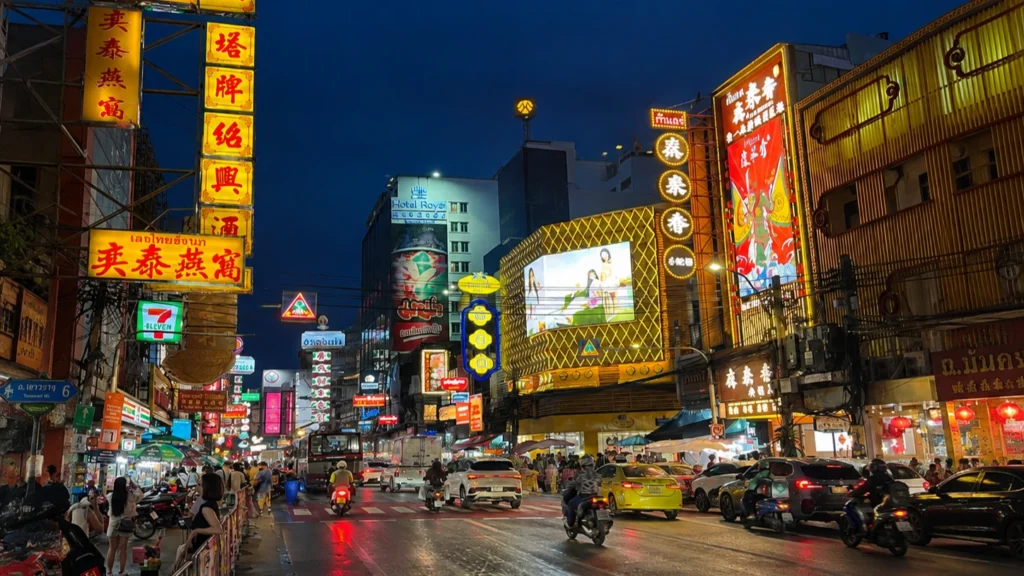
Slow the pace down. A river cruise along the Chao Phraya gives you Wat Arun from the water, and Chinatown (Yaowarat) is worth an evening for street food alone. Use this day as a buffer for anything rained out earlier in the trip.
🕌 Top Experiences & Best Places to Visit
1. Wat Pho, Day and Night
The reclining Buddha alone is worth the entry fee, but I’d genuinely recommend seeing the grounds twice if your itinerary allows — daylight for detail, after dark for atmosphere. The complex lights up in a way that makes the golden spires look almost theatrical.
2. Damnoen Saduak Floating Market & Maeklong Railway Market
Best paired as a half-day trip. The floating market is touristy by now, but it’s still one of the most photogenic mornings you’ll spend in Thailand, and the railway market’s train-clearing routine turns a simple stroll into genuine theater.
3. Chatuchak Weekend Market
One of the largest markets in the world, and genuinely disorienting in the best way. Go with no fixed plan — that’s how you find the good stalls anyway.
4. The Grand Palace and Wat Phra Kaew
Bangkok’s most-photographed complex, and deservedly so. Dress modestly — shoulders and knees covered — or you’ll be turned away at the gate.
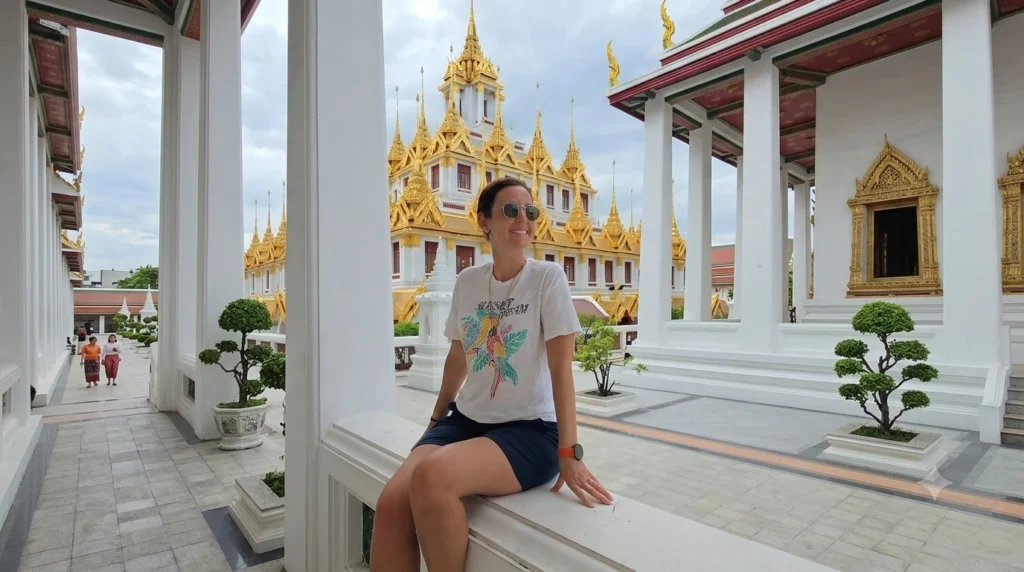
5. Chao Phraya River & Wat Arun
A sunset boat ride past the Temple of Dawn is an easy, low-effort way to see the city from a different angle, and it costs a fraction of what a formal river cruise runs.
🏨 Where to Stay
The Old Town (Phra Nakhon district) puts you within walking distance of Wat Pho, the Grand Palace, and Khao San Road’s nightlife — it’s where I based myself, and I’d do it again.
Budget : Suneta Hostel Khaosan — clean air-conditioned dorms, a short walk off the noisiest stretch of Khao San Road
Mid-Range : Chillax Resort — a boutique property tucked down a quiet Old Town street, with a rooftop pool and an easy walk to the main sights (where I stayed, precisely for that proximity)
Luxury : Casa Vimaya — colonial-inspired four-star rooms on Phra Sumen Road, minutes from the Grand Palace
Booking.com and Agoda both list all three widely, and TripAdvisor is a solid place to cross-check recent reviews before you commit. If you’d rather go the hostel route further into your trip, Hostelworld covers Bangkok’s Old Town extensively too.
🍜 Where to Eat
Old Town evenings are where Bangkok’s food and nightlife overlap, and this is where I spent most of mine — working through Thai dishes with a live band playing a few tables away.
- Err Restaurant – Elevated Thai street-food classics in a casual, graffiti-walled space near the Grand Palace. Great for solo diners after no-frills quality.
- Brown Sugar – A long-running jazz and blues club with a full food menu, ideal for an evening out with small groups.
- Tep Bar – Traditional Thai live music paired with herbal cocktails and snacks, perfect for a cultural night out as a couple.
Reservations help on weekends at all three; TripAdvisor listings usually show current hours.
💰 Cost of Travelling
| Category | Budget | Mid-Range | Luxury |
|---|---|---|---|
| Accommodation (per night) | $10–20 | $35–80 | $125+ |
| Food (per day) | $8–15 | $20–35 | $50+ |
| Local transport (per day) | $3–6 | $8–15 | $20+ (private car) |
| Estimated daily total | $25–45 | $65–120 | $180+ |
Figures vary noticeably by source and season, so treat these as a planning range rather than a fixed number — always check current hotel and tour rates before locking in a total.
💡 Money-Saving Tips
- Buy a rechargeable BTS/MRT card instead of single tickets if you’re moving around daily.
- Street food is both the cheapest and often the best meal of the day — don’t save it only for “authenticity” points.
- Book the floating market tour for a weekday morning; weekend departures run pricier and more crowded.
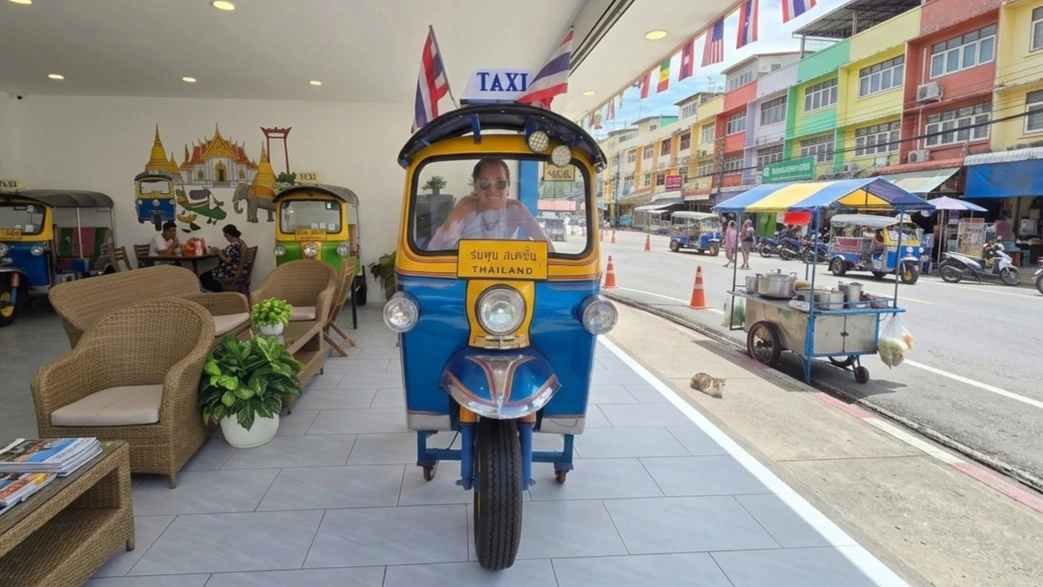
- Confirm tuk-tuk fares before getting in — agree on a number, or use Grab for a fixed, metered-equivalent price instead.
- Many temples, including sections of Wat Pho’s outer grounds, cost nothing to enter.
- Chatuchak’s food stalls are dramatically cheaper than the sit-down restaurants ringing the market’s edges.
🎒 What to Pack
- A lightweight rain jacket or compact umbrella — monsoon showers arrive fast and heavy if you’re visiting outside the dry season.
- Modest clothing (shoulders/knees covered) for temple visits.
- A universal power adapter.
- Breathable, quick-dry clothing — humidity doesn’t let up even after the rain clears.
- Comfortable walking sandals that can handle both temple floors and sudden puddles.
- A dry bag or waterproof phone pouch for market and boat excursions.
🛡️ Good to Know: Safety, Accessibility & Etiquette
Bangkok is generally safe for tourists, with petty theft and common scams (overpriced gem tours, rigged tuk-tuk detours) posing more risk than violent crime. Keep valuables zipped away in crowded markets like Chatuchak, and be skeptical of anyone insisting a major attraction is “closed today” — it’s a common lead-in to a shopping detour.
🚨 Emergency Numbers: Tourist Police: 1155 · General Emergency: 191 · Ambulance: 1669
🩹 Insurance Callout: Arrange travel insurance before departure rather than after something happens. SafetyWing is a common choice among long-term travelers for its simplicity and month-to-month flexibility.
Accessibility varies widely — modern BTS stations have elevators, but Old Town sidewalks and many temple entrances involve steps and uneven surfaces, so travelers with mobility needs should research specific sites in advance. On etiquette: remove shoes before entering temples and most homes, avoid pointing your feet at Buddha images, and dress modestly at religious sites regardless of the weather. For sustainability, refillable water bottles and reef-safe sunscreen (if you’re combining Bangkok with a coastal stop) go a long way in a country dealing with heavy tourist volume.
❓ FAQ
Is Bangkok safe for solo travelers?
Yes, broadly. The usual precautions apply — watch your belongings in crowds, avoid unlicensed taxis late at night, and stick to well-reviewed tour operators for day trips.
How many days do you need in Bangkok?
Four to five days covers the major sights, a floating-market day trip, and some downtime, without feeling rushed.
Is June a bad time to visit because of the monsoon?
Not necessarily — the rain tends to arrive in short, heavy afternoon bursts rather than settling in all day, so mornings are usually clear.
Do I need a visa to visit Thailand?
It depends on your nationality and the current rules in effect, which have been changing through 2026 — check the official Thai e-Visa portal before booking.
Is Khao San Road worth staying near if I don’t want to party?
Yes — the surrounding sois (side streets) and nearby properties like Chillax Resort sit close enough to walk everywhere but far enough to sleep undisturbed.
📊 Bangkok Travel Guide: Quick Summary
This Bangkok travel guide, boiled down:
- Best time: November–February ·
- Average daily budget: $65–120 (mid-range)
- · Ideal trip length: 4–5 days ·
- Good for: solo travelers, couples, first-time Southeast Asia visitors
👋 Final Words
Bangkok doesn’t need a packed itinerary to leave an impression — it does most of the work itself, between the temples, the markets, and the food carts on every corner. Between the floating market at dawn and a live band in the Old Town at night, I left with a rough version of the city rather than a checklist, and that felt like the right way to see it. What’s the one thing at the top of your Bangkok list — the markets, the temples, or the food?
💬 Tell me in the comments what you’re most looking forward to.
If Bangkok’s got you thinking about where to go next, take a look at our other city guides — there’s a good chance your next stop is already on there.