Porto Travel Guide 2026: The Douro’s Other Face After Lisbon
🌅 Introduction & Why Go
This Porto travel guide picks up right where my Lisbon trip left off. I took the bus north instead of flying, and it turned out to be the better call: the coach drops you almost in the city, no airport transfer needed, and you watch the landscape shift from Lisbon’s flat riverfront to Porto’s steep, granite hills along the way.
Porto feels rougher around the edges than Lisbon, in a good way. It’s smaller, denser, and the river runs right through the middle of everything, with the port wine houses of Vila Nova de Gaia staring back across the water. I stayed on Rua do Almada, a few minutes’ walk from Aliados, and everything worth walking to was within twenty minutes.
Quick Picks: Where to Stay
- 🧍 Budget: Gallery Hostel, a boutique hostel-gallery hybrid on artsy Rua Miguel Bombarda.
- 🛎️ Mid-Range: Torel 1884 Suites & Apartments, a design-forward stay in central Baixa.
- 💎 Luxury: InterContinental Porto – Palácio das Cardosas, a converted palace right on Praça da Liberdade.
🧭 Practical Info: When & How to Go
Quick Facts
- Visa/entry: Portugal follows the Schengen rules, so anything true for Lisbon holds here too; Turkish citizens need a Schengen short-stay visa, not visa-free entry.
- 🛂 If you’re routing through Lisbon first, one Schengen visa covers both cities; there’s no separate Porto entry requirement.
- Language: Portuguese, with less English on the street than in Lisbon, especially outside the center.
- Currency: Euro (€), same as the rest of Portugal.
- Plugs: Type C/F, 230V, identical to Lisbon and to Turkey, so no adapter needed either way.
- Mobile & Internet: If you already have an Airalo eSIM running from Lisbon, it covers Porto too; no need to switch anything.
- Transport tickets: Porto runs on the Andante card system, separate from Lisbon’s Navegante. Pick one up at any metro station.
Getting There & Around
The bus from Lisbon is genuinely the easiest way to cover the roughly 300 km north. FlixBus and Rede Expressos both run frequent direct services from Lisbon’s Gare do Oriente or Sete Rios terminal to Porto’s Campanhã terminal, taking around 3 hours 15 minutes to 3 hours 30 minutes, with fares that can start well under €25 if booked ahead. Compare exact times and prices on Skyscanner or your preferred booking app before locking in a date.
Once you’re in the city, the Andante card costs €0.60 and gets loaded with zone tickets or a day pass; a first-timer arriving by air pays around €2.85 total for the airport metro line into the center, if you’re flying in separately rather than busing up from Lisbon. Porto’s center is compact enough to walk most of it, but the hills between Aliados and the riverside are steep, so budget extra time if you’re not used to that kind of climbing.
🚇 Porto’s Andante card and Lisbon’s Navegante card are not interchangeable. Buy a fresh one when you arrive, even if you’ve got Lisbon credit left over.
For rental cars if you’re continuing on from Porto, economybookings is worth a look, and gettransfer covers airport pickups if you fly out instead of busing back.
Best Time to Visit & Trip Length
September carries straight over from a Lisbon trip: still warm, still dry, and the Douro looks its best in the late afternoon light. Two full days is enough to see the historic center and cross into Vila Nova de Gaia; add a third if you want a proper port wine cellar tour rather than a quick tasting.
🗓️ Day-by-Day Itinerary
Day 1: Arrival and the Riverfront
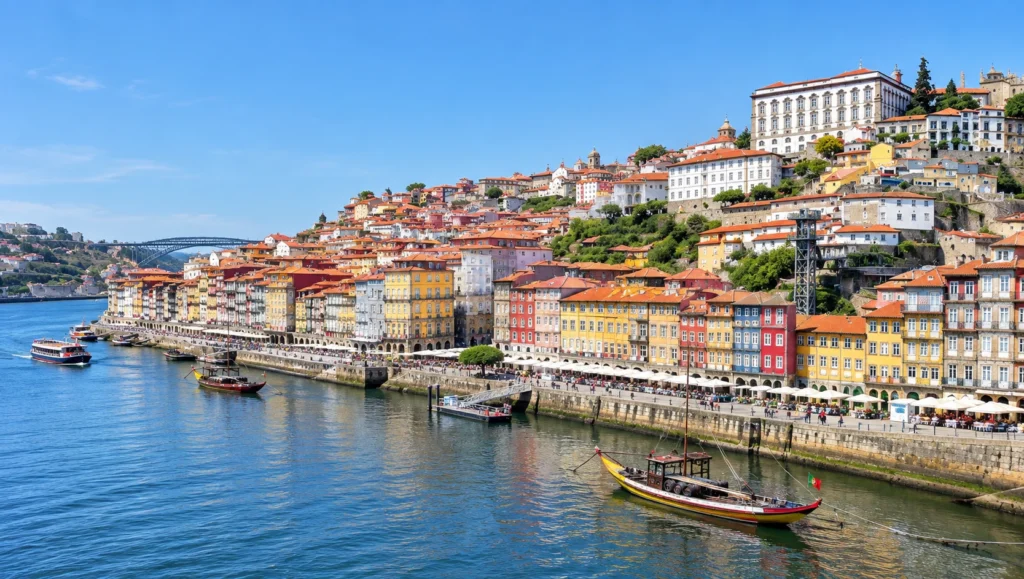
I checked into PortoSense Almada, on Rua do Almada just off Aliados, after the bus ride up from Lisbon, dropped my bag, and headed straight down toward the river. Cais da Ribeira is Porto’s riverside promenade, a strip of tall, narrow, brightly painted houses facing the Douro, and it’s the kind of place you don’t need a plan for; you just walk it slowly and let the boats and the noise from the outdoor tables carry the afternoon.
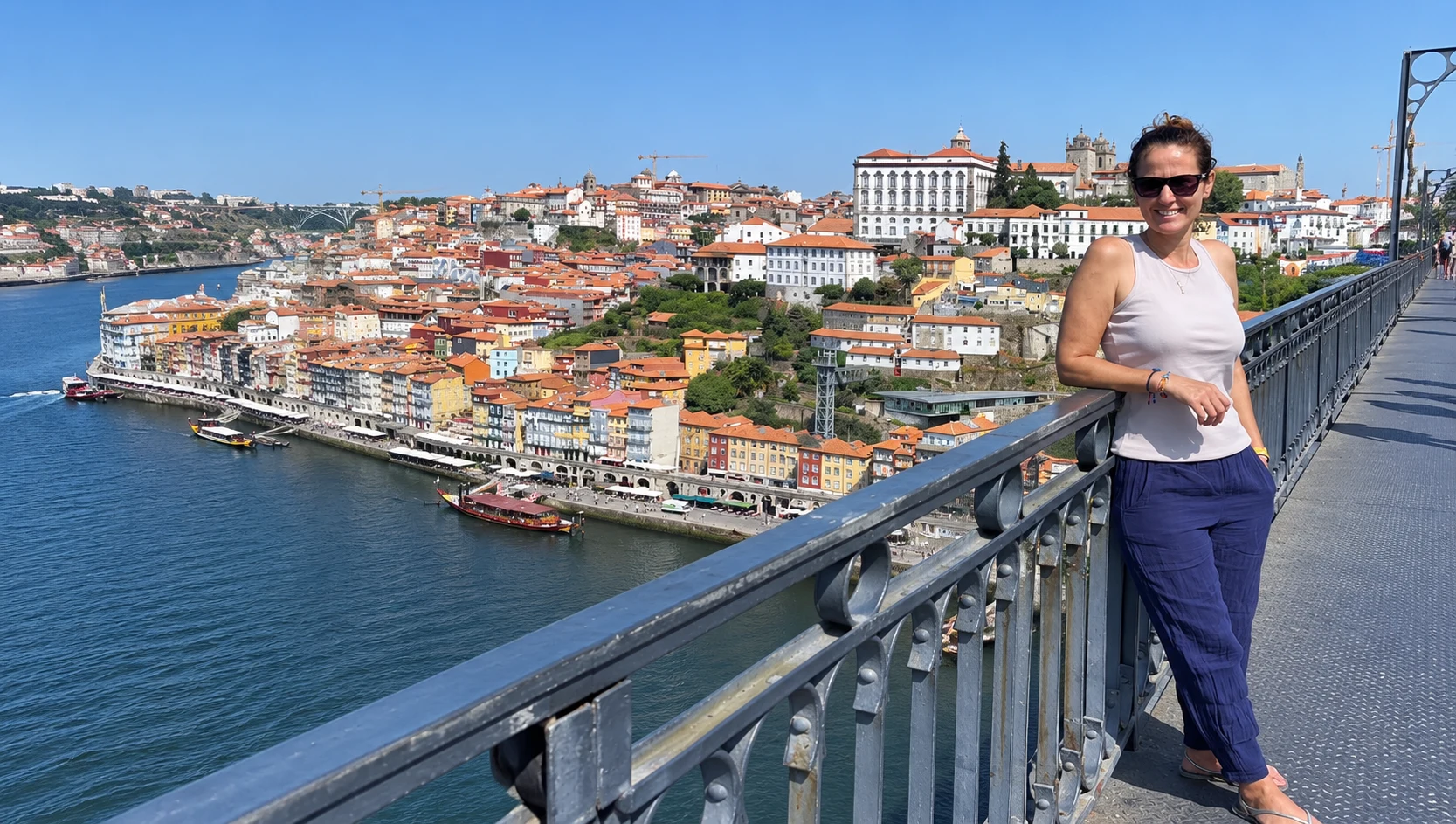
From there I crossed the Dom Luís I Bridge on foot. The upper deck, shared with the metro, gives you the better view: the whole Ribeira skyline on one side, the port wine warehouses of Vila Nova de Gaia climbing the opposite bank on the other.
⚠️ The upper deck of Dom Luís I Bridge has minimal railing by modern standards and a real drop below. It’s safe if you stay aware, but not the place to be distracted by your phone.
Day 2: Aliados, Sé and the Bells
The next morning started at Porto Cathedral (Sé do Porto), a fortress-like Romanesque building with a quiet cloister that’s easy to have almost to yourself before the tour buses arrive. From there I walked up toward Torre dos Clérigos, and the timing worked out by accident: I got there right at noon and stood outside for the three minutes or so while the tower’s bells rang out over the rooftops. It’s a small thing, but it’s stuck with me more than most of the planned sightseeing.
🔔 Clérigos’ bells mark the hour daily, and midday is one of the more atmospheric times to be standing in the square below, whether or not you’re climbing the tower itself.
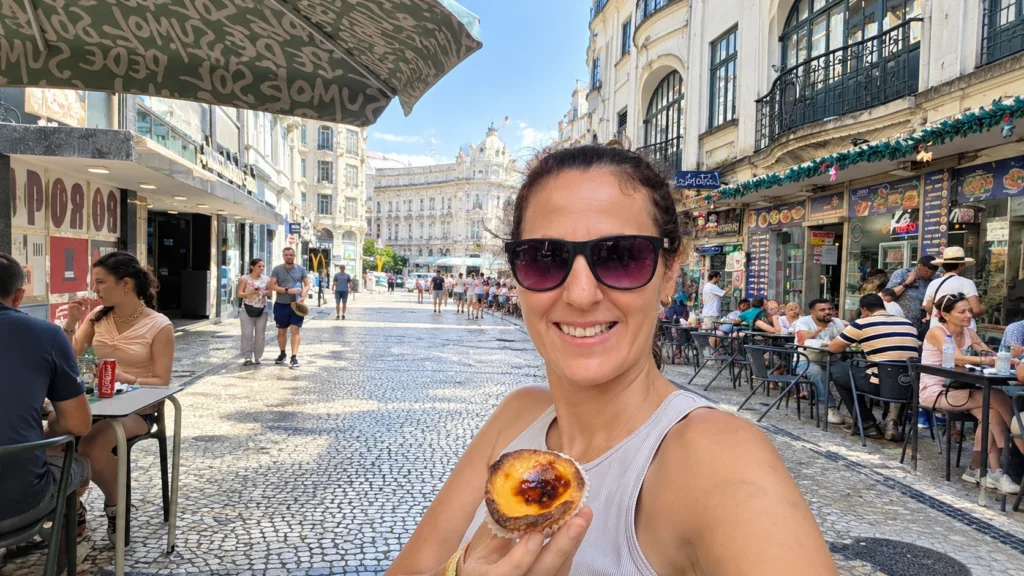
I finished the day back across the river in Vila Nova de Gaia, wandering past the port wine lodges before heading back into the center and finding a spot for a proper pastel de nata, still warm from the oven, on one of the busy pedestrian streets near Aliados.
🏛️ Top Experiences & Best Places to Visit
1. Dom Luís I Bridge
A double-decker iron bridge connecting Porto to Vila Nova de Gaia, with pedestrian access on both levels. The upper deck delivers the classic postcard view of the Ribeira; the lower one gets you closer to the water and the boats.
2. Torre dos Clérigos
Climb the roughly 225 steps for a 360-degree view over Porto’s terracotta rooftops, or just stand in the square at noon and let the bells do the work instead.
3. Cais da Ribeira
The riverside promenade below the old town, lined with tiled townhouses, bars and restaurants. Best in the late afternoon, when the light hits the Vila Nova de Gaia side across the water.
4. Vila Nova de Gaia Port Wine Cellars
Cross the bridge for a tasting at one of the historic port houses, such as Cálem or Sandeman, most of which run short guided cellar tours ending in a glass or two.
5. Porto Cathedral (Sé do Porto)
A Romanesque fortress-church with a 14th-century Gothic cloister covered in azulejo tiles. Less crowded than Clérigos, and free to enter the main nave.
🏨 Where to Stay & Eat
Where to Stay
- 🧍 Budget: Bluesock Hostel, set in a tiled historic townhouse right in the Ribeira district, close to the river.
- 🛎️ Mid-Range: PortoSense Almada, on Rua do Almada, minutes from both Aliados and Clérigos Tower. This is where I stayed, and the central location made it an easy base for both the bridge and the Sé.
- 💎 Luxury: The Yeatman, across the river in Vila Nova de Gaia, with wine-themed rooms and views straight back over Porto’s skyline.
Where to Eat
- 🧍 Budget: Bufete Fase, a tiny, no-frills counter on Rua de Santa Catarina serving some of the city’s most fiercely defended francesinhas.
- 🛎️ Mid-Range: Café Santiago, open since 1959 and still the name most locals mention first when the francesinha debate comes up.
- 💎 Splurge: A cellar dinner at one of the Vila Nova de Gaia port houses, several of which pair a tasting menu with their own vintage ports.
🍞 As in Lisbon, unrequested bread, olives or cheese on the table (the “couvert”) aren’t free. Wave it away if you don’t want it, or expect it added to the bill.
💶 Budget: Cost & Money-Saving Tips
Cost of Traveling
Porto runs a little cheaper than Lisbon across the board: hotels, meals and transit all shave off roughly 10 to 15 percent compared to the capital. A backpacker can get by on €40 to €60 a day here. Mid-range travelers, in a hotel like PortoSense Almada with a mix of casual and sit-down meals, should plan for €80 to €130 a day. Luxury stays at somewhere like The Yeatman, with tasting menus included, push €280 and up.
Money-Saving Tips
- Take the bus from Lisbon instead of flying; it’s consistently cheaper than a short domestic flight and skips two airport transfers.
- Load the Andante card with multiple trips at once; buying ten identical single trips makes the eleventh free.
- Skip the paid Clérigos Tower climb if you’re on a tight budget; standing in the square for the noon bells costs nothing.
- Port wine tastings at the smaller Vila Nova de Gaia lodges tend to run cheaper than the big-name houses, for a similar pour.
- Unlike Belém Tower, Clérigos doesn’t require advance booking, but it does get long midday lines in high season; arriving right when it opens at 9:00 avoids most of the wait.
- Francesinha is a full meal on its own; splitting one between two people is common practice and keeps lunch costs down.
🎒 What to Pack & Good to Know
What to Pack
- Sturdy walking shoes with real grip; Porto’s hills and wet cobblestones are steeper than Lisbon’s in several places.
- A light rain layer; the north of Portugal sees more rain than Lisbon even in September.
- A reusable water bottle for the climb up to Clérigos and the Sé.
- Travel insurance in place before you go; SafetyWing covers short multi-city trips like a Lisbon-to-Porto run.
Safety, Accessibility & Etiquette
Porto is generally safe for walking around at most hours, with the same caution around crowded transit and tourist queues as anywhere else in Europe. The steep, cobbled streets between Aliados and the Ribeira are genuinely difficult for wheelchairs or strollers; the riverside path itself is flatter and more manageable.
Emergency number: 112, the same as the rest of the EU.
❓ Porto Travel Guide FAQ
Is the bus from Lisbon to Porto comfortable for a long trip?
Yes. FlixBus and Rede Expressos both run modern coaches with Wi-Fi and power outlets, and the direct route takes roughly 3 hours 15 minutes, which is a manageable single sitting.
Do I need a separate visa for Porto if I already have one for Lisbon?
No. A Schengen visa covers travel anywhere within the Schengen Area, Portugal included, so one visa is enough for both cities on the same trip.
Is Porto walkable, or is the terrain really that different from Lisbon?
Porto is smaller and more compact than Lisbon, but the hills between the center and the river are steeper in places. Comfortable shoes matter here even more than in Lisbon.
What’s the difference between visiting the Clérigos Tower and just hearing the bells?
Climbing costs around €8 and takes maybe 30 minutes with the queue; standing below for the noon bells takes three minutes and costs nothing. If you’re short on time or budget, the bells alone are a fair substitute for the climb.
📋 Wrap-Up
Quick Summary
- Best time to visit: September, mild and dry, straight after a Lisbon leg
- Average daily budget: €80–130 (mid-range)
- Ideal trip length: 2–3 days
- Good for: a Lisbon add-on, wine lovers, walkers
Final Words This Porto travel guide comes out of a trip that started as a simple bus ride north and turned into one of the better stretches of the whole Portugal leg. Between the bridge, the bells at Clérigos, and a warm pastel de nata eaten on a busy Aliados street, Porto earns its reputation as Lisbon’s quieter, steeper sibling. If you’re planning your own route, would you rather spend a spare afternoon crossing into Vila Nova de Gaia for a wine tasting, or staying on the Ribeira side to watch the bridge from below?
For more real trip notes and city guides, browse the rest of the site at gotravelica.com.