Salzburg Travel Guide 2026: Mozart, a Mountaintop Fortress and Baroque Gardens
🎻 Introduction & Why Go
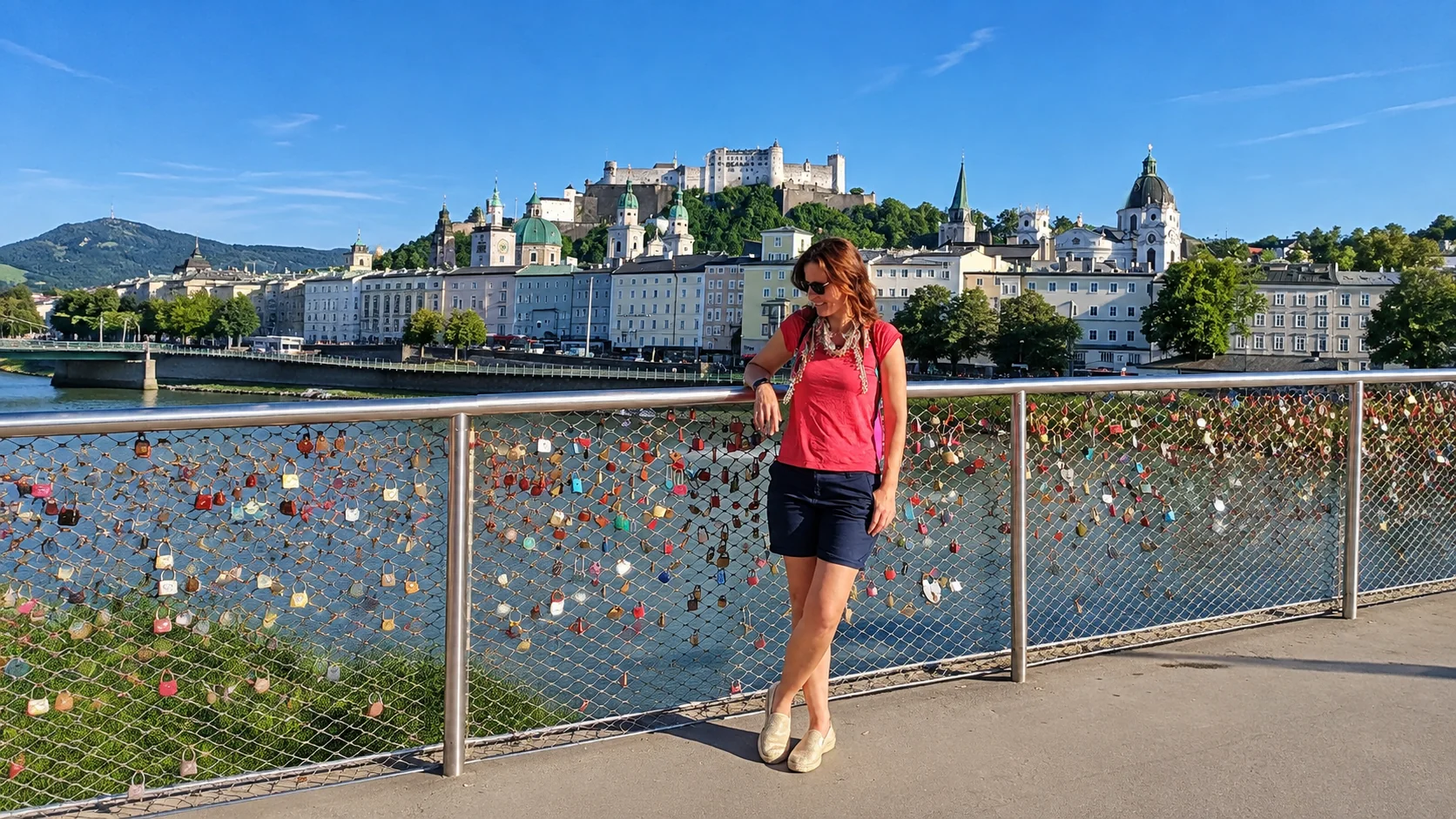
This Salzburg travel guide starts the way the city itself does: a cliff-top fortress on one side, a river bending through pastel façades on the other, and church bells that seem to compete with each other every hour. I arrived in June as part of a longer Austria road trip, and my first afternoon was spent simply looking up, wondering how long the queue for the funicular to Hohensalzburg Fortress would be.
It turned out to be short, and that set the tone for the whole stay: a city that’s genuinely built for walking, with almost everything worth seeing packed inside the Altstadt.
Three reasons to put Salzburg on your list: the Mozart connections run deeper than souvenir chocolates, the Sound of Music filming locations are still recognizable and free to wander, and the fortress views over the Alps are some of the best city panoramas in Europe.
Quick Picks: Where to Stay
- 🧍 Gästehaus im Priesterseminar: simple, budget-friendly rooms five minutes from Mirabell Gardens.
- 🛎️ Radisson Blu Hotel Altstadt: reliable mid-range comfort right on the Rudolfskai, steps from the river.
- 💎 Small Luxury Hotel Goldgasse: a boutique property tucked into a medieval Altstadt lane.
🧭 Practical Info: When & How to Go
Salzburg Travel Guide Quick Facts
- Visa/Entry: Austria is in the Schengen Area. EU/EEA citizens need only an ID card; many other nationalities need a Schengen visa, so check your passport’s requirements before booking flights.
- Language: German (Austrian dialect); English is widely understood in the tourist center.
- Currency: Euro (€); cards are accepted almost everywhere, though small cafés sometimes prefer cash.
- Plugs: Type C/F, 230V; bring an adapter if you’re coming from outside continental Europe.
- Mobile & Internet: An eSIM covering the EU saves you from hunting for a local SIM shop; Airalo and Yesim both cover Austria.
The Salzburg Festival (late July to August) pushes hotel prices up sharply. If your dates overlap, book your room several weeks earlier than you would for any other month.
Getting There & Around
Salzburg W.A. Mozart Airport sits just a few kilometers from the Altstadt, and a taxi or private transfer into town takes 10–15 minutes. Compare flight options on Skyscanner, and if you’d rather have a driver waiting, gettransfer covers airport pickups.
Trains connect Salzburg Hauptbahnhof to Munich in around 1.5 hours and to Vienna in about 2.5, which makes it an easy stop on a wider Austria–Germany route. Inside the city, the Altstadt is entirely walkable, so a car is more of a liability than a help once you’ve arrived. If you’re picking one up for the rest of your trip, economybookings is worth a look, and Klook covers regional bus and rail tickets if you’re continuing onward without a car.
Best Time to Visit & Trip Length
June sits right in the sweet spot: long daylight, the Hohensalzburg funicular running until 7pm, and gardens in full bloom. July and August bring the Salzburg Festival crowds and higher prices, while shoulder months (May, September) trade a little warmth for thinner queues. Two full days cover the essentials comfortably; three lets you add a day trip to Hallstatt or the Salzkammergut lakes.
🗺️ Day-by-Day Itinerary
Day 1: Old Town on Foot
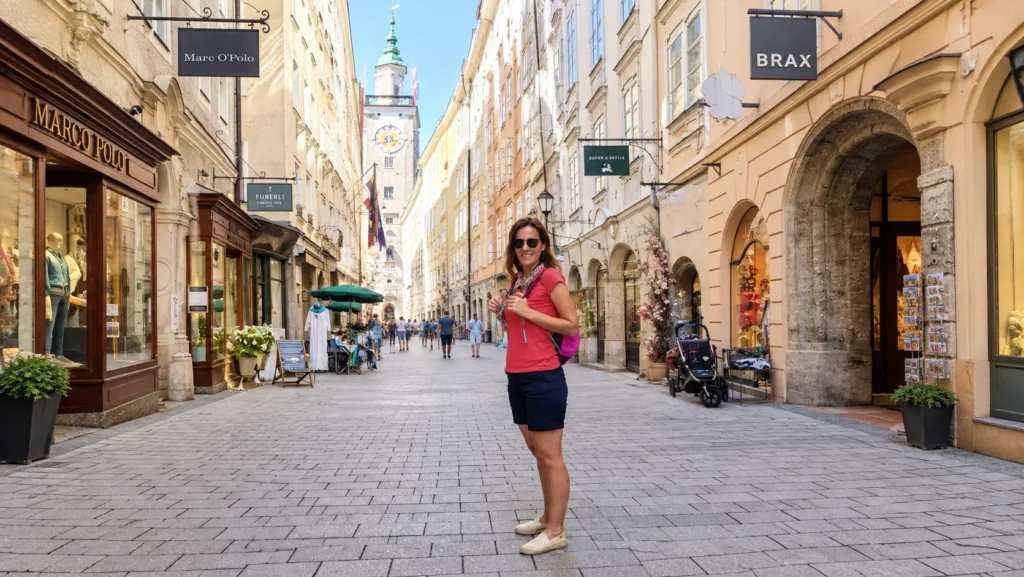
I started in the Altstadt itself, threading through Getreidegasse before the shops filled with the midday crowd. The wrought-iron signs still hang over every doorway here, even outside the international brands that have since moved in, and it’s easy to lose an hour just looking up.
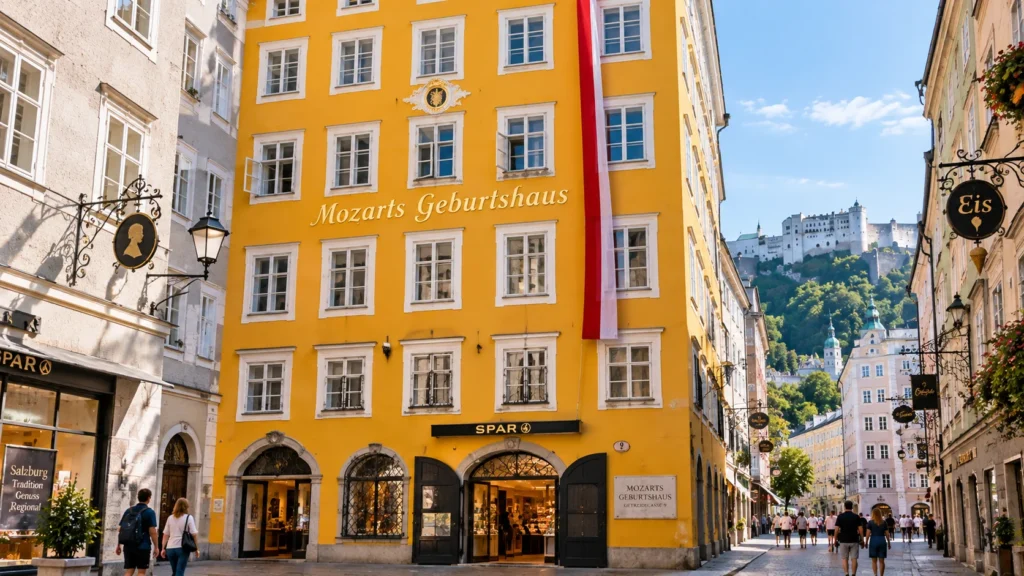
Getreidegasse 9 is where Mozart was born in 1756, and the museum inside walks you through three floors of the family’s actual apartment. I went in expecting a quick look and stayed closer to an hour; the childhood violin and the cramped, low-ceilinged rooms make the history feel oddly domestic rather than monumental.
From there it’s a short walk to Salzburg Cathedral, whose interior is worth ducking into even between the timed Mozart concerts that sometimes fill the square outside.
Day 2: Fortress and Gardens
The FestungsBahn funicular up to Hohensalzburg Fortress runs every ten minutes and takes about a minute to reach the top. In June the ride operates from 8:30am to 7pm, and I’d suggest going earlier rather than later: by midday the viewing terrace gets crowded, and the light for photos over the city and the Alps is better in softer morning sun.
Book the funicular-and-fortress combo ticket rather than paying separately at the top; it’s a small saving and skips a second queue.
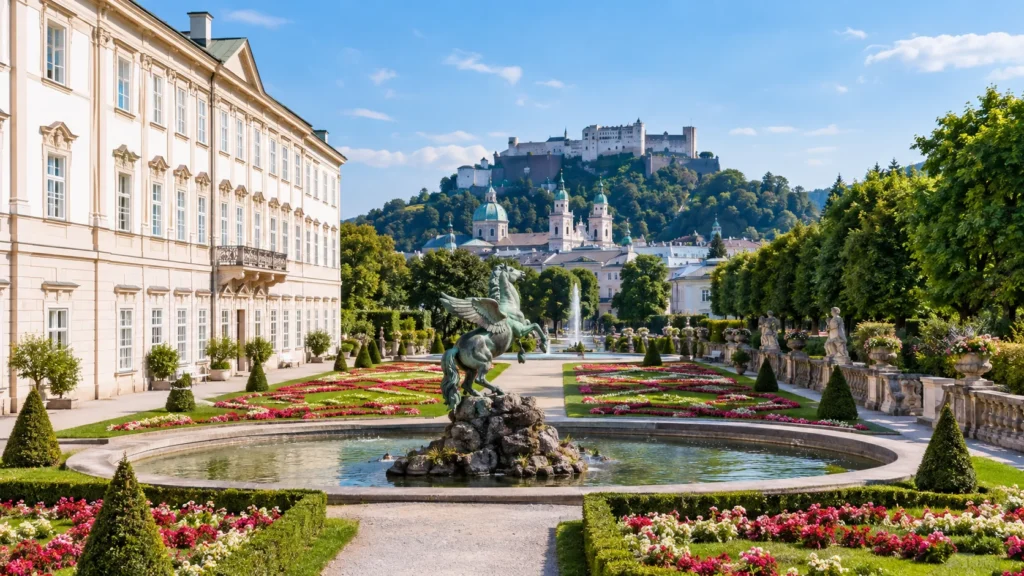
The afternoon is a slower pace: Mirabell Gardens, a short walk across the Salzach River, is where several Sound of Music scenes were filmed. I recognized the Pegasus fountain immediately from the “Do-Re-Mi” sequence, and the Dwarf Garden nearby, Europe’s oldest surviving one, is a strange little detour worth five minutes.
⭐ Top Experiences & Best Places to Visit
1. Hohensalzburg Fortress
Europe’s largest fully preserved medieval castle complex, and the view alone justifies the funicular ride. The Prince’s Chambers inside are some of the best-preserved Gothic secular rooms on the continent.
2. Mozart’s Birthplace
The yellow townhouse at Getreidegasse 9 where Wolfgang Amadeus Mozart lived until age 17. Combine it with the Mozart Residence across the river for a discounted combo ticket if you want the fuller family story.
3. Mirabell Palace and Gardens
Free to enter, endlessly photogenic, and the setting for one of the most-recognized musical sequences in film history. The Marble Hall inside occasionally hosts concerts if you want to see the palace’s interior too.
4. Getreidegasse
Beyond the shopfronts, look for the through-houses: several buildings here connect Getreidegasse to the streets behind it via arcaded passageways. The Schatz House at No. 3 leads through to Universitätsplatz, and a small Madonna relief hides in its darker corner if you slow down enough to notice it.
5. Salzburg Cathedral
The Baroque Dom anchors Domplatz, and its combined DomQuartier ticket (cathedral, Residence and gallery) is a good rainy-afternoon backup plan.
🏨 Where to Stay & Eat
Where to Stay
- 🧍 Altstadt Hotel Hofwirt Salzburg: a solid budget base still within easy walking distance of the center.
- 🛎️ Hotel Elefant: where I stayed, in a 13th-century building on Sigmund-Haffner-Gasse, literally steps from Getreidegasse and Mozart’s Birthplace. The breakfast spread was more modest than I expected for a hotel this central, but the rooms and the location more than made up for it.
- 💎 Hotel Sacher Salzburg: the city’s grand historic address since 1866, with river views and the famous Sacher-Torte in-house.
Altstadt hotels sell out fast for June through August. Book at least a few weeks ahead if your dates fall in that window.
Where to Eat
- 🧍 Wilder Mann: an old-world Altstadt tavern where the schnitzels come boot-sized and the goulash is properly hearty.
- 🛎️ Die Weisse: traditional Austrian classics paired with beer from the city’s oldest wheat-beer brewery, always lively.
- 💎 Blaue Gans: Salzburg’s oldest inn, now serving organic, traceable Austrian cooking inside a boutique hotel.
💶 Budget: Cost & Money-Saving Tips
Cost of Traveling
A mid-range daily budget of roughly €180–220 per person covers a 4-star hotel room like Hotel Elefant, two proper sit-down meals, and one or two paid attractions. Budget travelers in simpler guesthouses who self-cater some meals can get closer to €90–110 a day; a luxury stay at a 5-star address like Sacher, with fine dining added in, pushes well past €400.
The Salzburg Card only pays for itself if you’re visiting four or more paid sights within its validity window. For a lighter, slower itinerary, paying per attraction usually works out cheaper.
Money-Saving Tips
- The Salzburg Card (48-hour version, roughly €45 for adults in high season) bundles the funicular, several museums and public transport into one pass.
- Mirabell Gardens and Getreidegasse cost nothing to enjoy, and both are genuine highlights.
- Visit the fortress right at opening to avoid both the queue and the midday heat on the exposed terrace.
- Traditional lunch specials (Mittagsmenü) at Altstadt taverns are noticeably cheaper than the same dishes at dinner.
🎒 What to Pack & Good to Know
What to Pack
Comfortable walking shoes are non-negotiable given the cobblestones, and a light rain layer is smart even in June since Alpine weather shifts quickly. A Klook travel insurance option is worth adding before you go, alongside your eSIM.
Safety, Accessibility & Etiquette
Salzburg is very safe by any measure, and the emergency number across Austria is 112. Cobblestones get slippery after rain, so watch your footing around the fortress paths. Churches expect covered shoulders, and a travel insurance plan through SafetyWing is a sensible backstop for any European trip.
❓ FAQ
Do I need to book the Hohensalzburg funicular ticket in advance in June?
It’s not strictly required, but booking online saves time at the ticket counter during peak summer hours.
Is Mirabell Garden actually free to visit?
Yes, it’s a public park with no entrance fee, open year-round.
How many days do I need in Salzburg?
Two full days cover the Altstadt, the fortress and Mirabell comfortably; add a third for a Hallstatt or Salzkammergut day trip.
Can I see Salzburg without a car?
Easily. The Altstadt is compact and walkable, and trains connect well to Munich and Vienna if you’re continuing your Austria route.
Is Hotel Elefant a good base for first-time visitors?
Yes, especially for early starts. Its location next to Getreidegasse means you can be at Mozart’s Birthplace or the fortress funicular before the day-trip crowds arrive.
📋 Wrap-Up
Quick Summary This Salzburg travel guide at a glance:
- Best time: May–June or September for good weather without festival crowds
- Average daily budget: €180–220 (mid-range)
- Ideal trip length: 2–3 days
- Good for: music and history lovers, couples, families
Final Words Salzburg rewards slow mornings and a willingness to just look up at the fortress on the hill. Whether you’re pairing it with Vienna and Hallstatt on a longer Austria route or treating it as a stand-alone city break, the compact Altstadt makes it easy to see the highlights without rushing. Are you planning Salzburg as part of a bigger Austria loop, or on its own?
For more real trip notes and city guides, browse the rest of the site at gotravelica.com.