
Samarkand Travel Guide 2026: Silk Road Domes & Registan Square
🕌 Introduction & Why Go
The heat hit me before the view did. It was June, and by the time I stepped out of my taxi near Registan Square, the air felt like it was radiating off the tiled facades themselves. I’d planned this Samarkand travel guide trip around two things: the Silk Road history I’d read about for years, and the food I’d heard so much about from other travelers. Neither disappointed, though the sun quickly taught me to rearrange my days.
Samarkand is not a place you rush through at noon. Between roughly 11 a.m. and 4 p.m. in summer, the light is flat and the heat is relentless, so I learned to move like the locals do — out early, back for a long midday break, out again as the sun dropped. That rhythm ended up shaping some of my best memories here, from a quiet sunrise at the Registan to the square’s transformation after dark.
Three reasons this city earns a spot on any Central Asia itinerary: the architecture is genuinely unlike anywhere else on earth, the food scene (plov, shashlik, manti) is reason enough on its own, and it feels remarkably safe and walkable for a first-time visitor to the region.
Quick Picks:
- 🧍 Budget: ANTICA Family Guest House – close to Registan, family-run
- 💰 Mid-Range: Sangzor Boutique Hotel – garden, airport transfer
- 🛎️ Luxury: Mövenpick Samarkand – indoor pool, international chain
🧭 Practical Info: When & How to Go
Samarkand Travel Guide Quick Facts
- Visa/entry: Uzbekistan has opened visa-free entry to citizens of 90+ countries for stays of up to 30 days as of 2026, a policy shift that removed the earlier e-visa requirement for many nationalities, including US citizens (see callout below). Travelers from countries not on the visa-free list can apply through the official e-visa.gov.uz portal.
- Language: Uzbek (official), Russian widely understood, English limited outside hotels and tourist sites.
- Currency: Uzbekistani som (UZS); cards are accepted in hotels and larger restaurants, but bazaars and small eateries are cash-only.
- Plugs: Type C/F, 220V — bring an adapter if you’re coming from a non-European socket.
- Mobile & Internet: I’d recommend grabbing an Airalo eSIM before you land — sorting connectivity out in your first hour makes the rest of the trip run smoother, whether you land in Tashkent or fly direct into Samarkand.
- Transport tickets: Book Afrosiyob train tickets in advance on 12Go — they sell out fast in high season. You can also check official schedules directly on Uzbekistan Railways if you want to cross-reference times.
⚠️ Visa note: Requirements change quickly in Uzbekistan. Double-check your nationality’s status on the official e-visa portal before booking flights — don’t rely on older blog posts (including this one, over time).
Getting There & Around
Most travelers fly into Tashkent, then continue on to Samarkand — I’d compare flight options on Skyscanner well ahead of time, since fares into Central Asia can swing a lot by season. From Tashkent, the Afrosiyob high-speed train is the way to go: it covers the roughly 300 km route in about 2 to 2.5 hours, with economy tickets running around $15, business around $22, and VIP around $30. Book ahead on 12Go if you can — seats on popular departures can sell out well over a month in advance during peak months. A private transfer is the alternative if you’d rather skip the station-to-hotel transfers on both ends, though it takes closer to five hours door-to-door.
Within Samarkand itself, I mostly walked — the historic core is compact and genuinely enjoyable on foot once the sun starts to drop. For anything farther, I used Yandex Go, the main ride-hailing app across Uzbekistan. It’s genuinely useful most of the time, but be warned: I had more than one ride simply not show up, or get canceled at the last minute, right when I needed it most. This seems to be a known quirk of the app rather than bad luck on my part — build in extra time if you’re heading somewhere on a schedule, and have a backup plan ready before early train departures.
If you’d rather not deal with ride-hailing uncertainty at all, a rental car booked through Discover Cars is worth pricing out, especially if you’re planning day trips beyond the city center.
🚕 Life-saving tip: Never rely on a single Yandex Go request if you’re racing a train departure. Request the ride with real buffer time, and keep the front desk’s phone number handy as backup — most hotels can call a driver directly.
Best Time to Visit & Trip Length
Spring (April–May) and autumn (September–October) bring milder daytime temperatures and are generally considered the most comfortable months to explore on foot. If you’re visiting in summer like I did, plan your days around the heat rather than fighting it — early mornings and evenings are when the city genuinely comes alive anyway, and the light on the tilework is better besides. Two to three full days is enough to see Samarkand’s highlights without rushing.
🗺️ Day-by-Day Itinerary
Day 1: Registan Square & the Old City
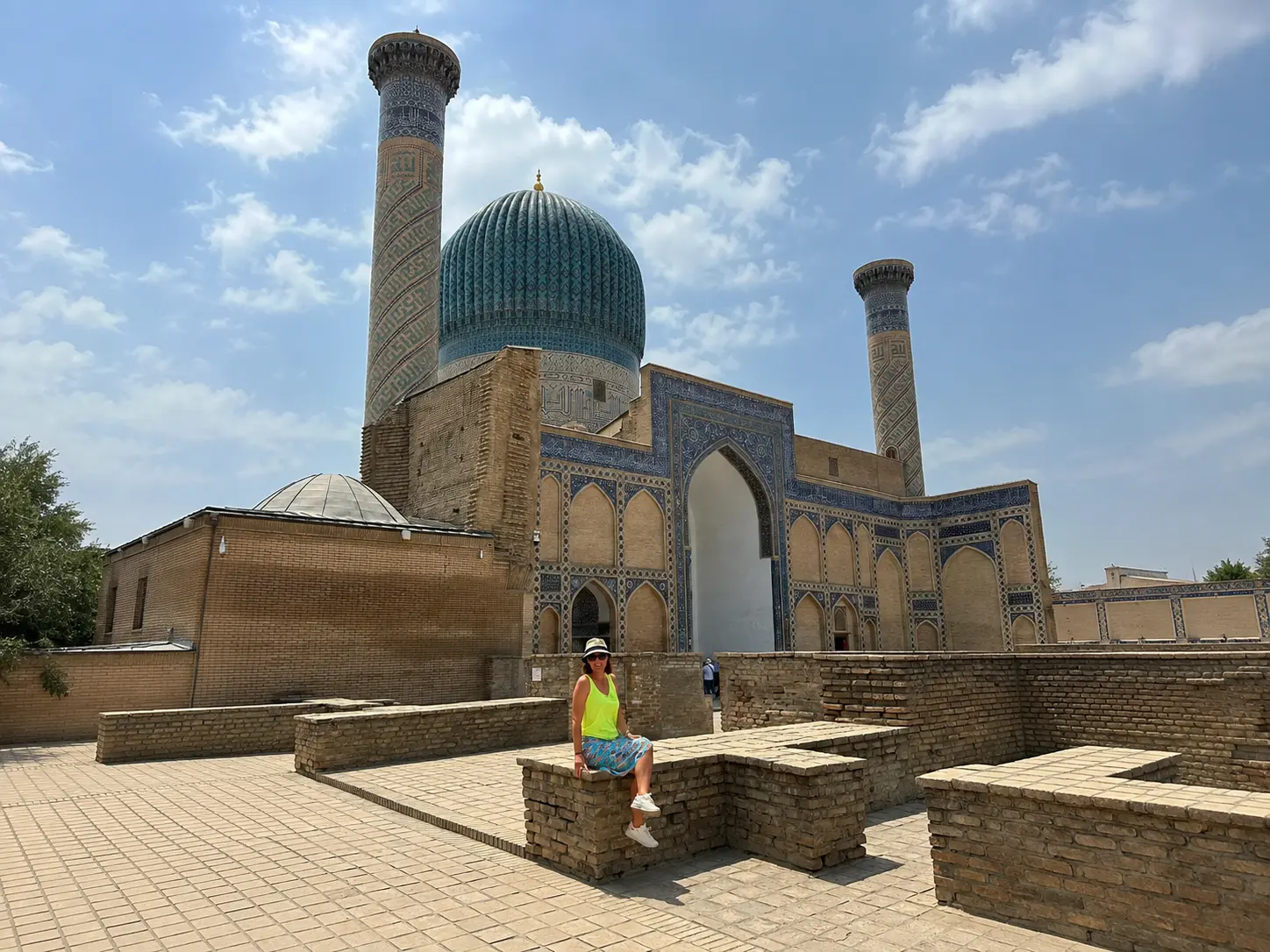
Start at Registan Square before the crowds and heat arrive — the low morning light on the three madrasahs (Ulugh Beg, Sher-Dor, Tilla-Kari) is worth the early alarm. I stayed at Safi Plaza, which turned out to be an ideal base — it’s within walking distance of the square, so I could pop back mid-afternoon to escape the sun and head out again in the evening without a taxi. On your way back, the Gur-Emir Mausoleum — Timur’s tomb, with its unmistakable turquoise ribbed dome — is an easy add-on, just a short walk from Registan. Spend the afternoon indoors or resting, then return to Registan after sunset.
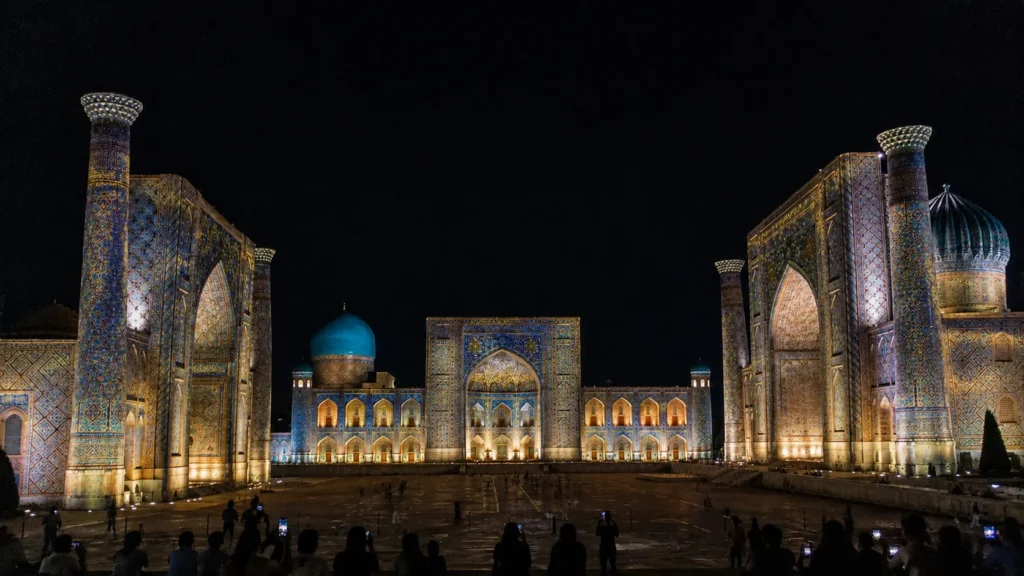
🎆 Can’t-miss tip: The light and sound show runs nightly, but timing shifts with the season. Ask your hotel to confirm that evening’s schedule rather than trusting an online source — mine changed the plan for us by half an hour.
Day 2: Shah-i-Zinda, Bibi-Khanym & Siab Bazaar
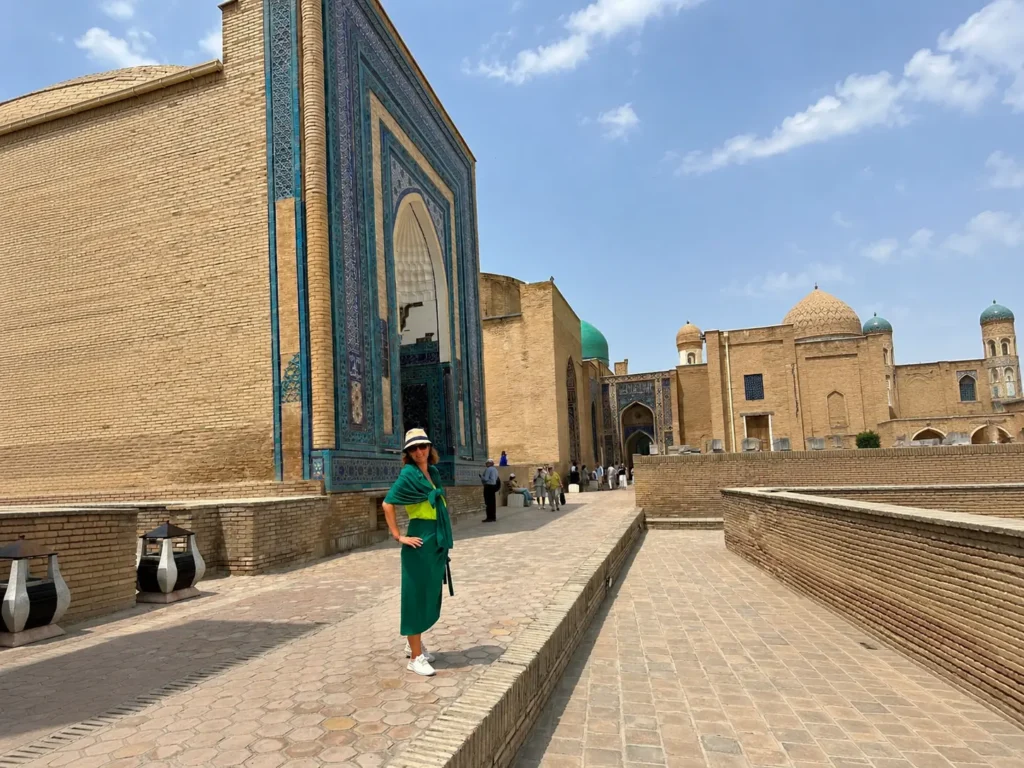
Devote the morning to the Shah-i-Zinda necropolis and the Bibi-Khanym Mosque, both walkable from the center. By late morning, head to Siab Bazaar, right next to Bibi-Khanym — it’s the best place in the city for fresh bread, dried fruit, and people-watching. I went back more than once just for the food stalls.
Day 3 (optional): Ulugbek Observatory & Day Trip
If you have a third day, the Ulugbek Observatory — the remains of the 15th-century site where the astronomer mapped the stars — is a quieter, less crowded stop about 3 km from the Registan. It pairs well with a slower final day before catching the train back to Tashkent.
⭐ Top Experiences & Best Places to Visit
- Registan Square at night. The nightly light and sound show runs roughly from 8 to 9 p.m., projecting color and history onto the madrasah facades. You don’t need a paid ticket to see it — the viewing area outside the fence works just fine, though paying to watch from inside the ensemble gets you closer.
- Shah-i-Zinda necropolis. A corridor of tiled mausoleums that somehow feels more intimate than the grander sites in the city, and part of the wider Samarkand UNESCO World Heritage listing.
- Siab Bazaar. More theater than errand — vendors calling out prices, tea being poured mid-transaction, and the best people-watching in the city. Worth a visit even if you’re not buying anything.
- Bibi-Khanym Mosque. Once one of the largest mosques in the Islamic world — the scale is still obvious even in its restored state.
- Ulugbek Observatory. A calmer contrast to the crowds at Registan, especially rewarding if you’re into astronomy or Timurid-era science.
🛎️ Where to Stay & Eat
Where to Stay
- I stayed at Safi Plaza, and the location was the deciding factor — being able to walk to Registan Square meant I could retreat from the midday heat and still make it back easily for the evening show.
- For budget travelers, Samarkand has a good spread of guesthouses and hostels in the old city (worth checking Hostelworld for options), generally a short walk or cheap taxi ride from the main sites.
- For a luxury stay, look at the international-brand hotels near the historic center, which tend to book up fastest in high season. Whichever option you pick, prioritize proximity to Registan — it saves you from crossing the city twice a day in the heat.
Where to Eat
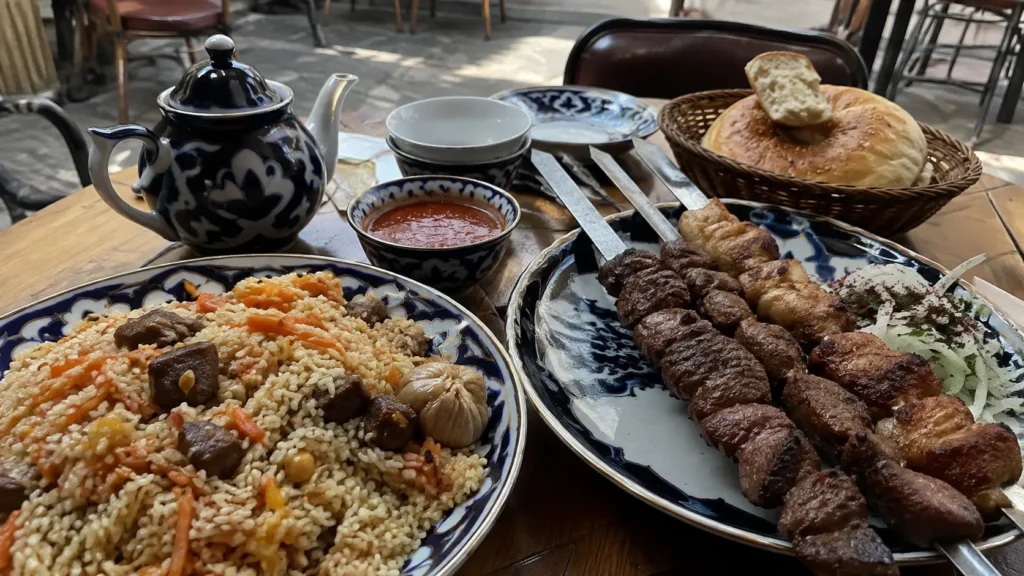
- Plov (Uzbek pilaf) and shashlik were on my table almost daily, and both lived up to the hype — rice cooked in broth and lamb fat, and grilled skewers of marinated meat, are the backbone of Uzbek cuisine. I’d also recommend seeking out manti, the steamed dumplings — they were one of the best surprises of the trip.
- For budget eats, the stalls around Siab Bazaar are hard to beat.
- For a sit-down mid-range meal, look for restaurants near Registan Square serving plov the traditional way, often cooked in giant kazan pots you can watch from the street.
- Luxury diners can find hotel restaurants with more polished takes on the same dishes.
💰 Budget: Cost & Money-Saving Tips
Cost of Traveling
Money-Saving Tips
- Budget travelers can expect to spend comfortably on guesthouse stays, bazaar food, and walking most of the city, with the train ticket and site entry fees as the main line items.
- Mid-range travelers adding a hotel like Safi Plaza, a few sit-down meals, and a private transfer or two will spend noticeably more, though Uzbekistan remains inexpensive by European standards.
- Luxury travelers booking international-brand hotels and private guides can spend significantly more, though even top-tier options are a relative bargain compared to Western Europe.
- Buy Afrosiyob tickets on 12Go as early as possible — last-minute fares and availability get worse closer to your travel date.
- Skip the paid entry ticket for the evening light show — it’s fully visible for free from the viewing area outside the fence, so save that money for the daytime madrasah entry instead.
- Stay within walking distance of Registan Square — it cuts down on taxi trips altogether, which sidesteps the ride-hailing wait times outlined above.
- Carry cash in som for bazaars and small eateries — card surcharges and poor exchange rates can add up.
🎒 What to Pack & Good to Know
What to Pack
Loose, breathable clothing is essential for a June visit — lightweight, modest layers cover both the heat and the dress expectations at religious sites. A refillable water bottle and a portable phone charger both earned their place in my bag daily. If you haven’t set up connectivity yet, an Airalo eSIM is worth installing before you land.
🧕 Dress code reminder: Shoulders and knees covered is the expectation inside madrasahs and mosques, even in June heat. A light scarf doubles as sun protection and a quick cover-up.
Safety, Accessibility & Etiquette
Samarkand felt consistently safe to walk around, including in the evenings near Registan (see dress code note above). It’s worth traveling with insurance — SafetyWing is a straightforward option for trip coverage. Save Uzbekistan’s emergency number (112) in your phone before you land, just in case.
💶 Cash tip: Bazaars and small family-run eateries are cash-only, so carry Uzbekistani som for Siab Bazaar and street food — card readers are mostly limited to hotels and mid-range-and-up restaurants.
❓ FAQ
❓ Do I need a visa to visit Samarkand? It depends on your nationality — Uzbekistan now offers visa-free entry to 90+ countries for stays of up to 30 days, but always confirm on the official e-visa portal before booking.
❓ How do I get from Tashkent to Samarkand? The Afrosiyob high-speed train is the easiest option, taking about 2 to 2.5 hours. Book ahead on 12Go, especially in peak season.
❓ Is Yandex Go reliable in Samarkand? It works, but expect occasional no-shows or last-minute cancellations. Build in buffer time, especially before train departures.
❓ What’s the best time of day to visit Registan Square? Early morning for photos and fewer crowds, and after dark for the light and sound show — both are worth it.
❓ Is Samarkand safe for travelers? Yes, it’s generally considered one of the safer, more tourist-friendly cities in Central Asia.
📋 Wrap-Up
This Samarkand travel guide comes down to a simple rhythm: move early, rest through the heat, and let the evenings do the heavy lifting.
Quick Summary
- Best time to visit: April–May or September–October (avoid the harshest midday heat in summer)
- Average daily budget: varies widely by travel style — bazaar food and guesthouses keep costs low
- Ideal trip length: 2-3 days
- Good for: history lovers, food travelers, first-time Central Asia visitors
Final Words
Samarkand rewards patience — with the heat, with the ride-hailing app, with slowing down enough to actually look at the tilework instead of rushing past it. My own trip had its share of small frustrations, but none of them came close to outweighing that first night at Registan Square, watching the light show with a plate of plov still on my mind from dinner. If you’ve been to Samarkand, what surprised you most? 💬
Drop it in the comments — and for more real, experience-based city guides, head over to gotravelica.com.