Split Travel Guide 2026: Staying Steps From a Roman Emperor’s Palace
🧭 Introduction & Why Go
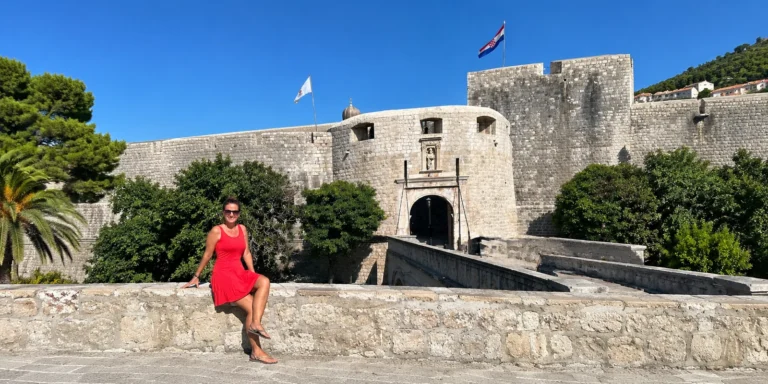
Diocletian’s Palace is not a ruin behind a rope. Cafés, shops and guesthouses fill its Roman walls, and I slept a few steps away at Aborda Rooms in the old town. That is the whole pitch of this Split travel guide: you do not just visit the palace, you live beside it for a few days. I arrived from Dubrovnik in July, walked the Riva, climbed through the Peristyle and swam at Bačvice Beach.
July is peak season, so expect heat, crowds and high prices.
Three reasons make Split worth the detour:
- A UNESCO-listed Roman palace that is also a working neighborhood
- A flat, walkable old town where almost everything sits within 15 minutes of your bed
- A city beach a short walk from the center, so sightseeing and swimming share one day
Quick Picks: Where to Stay
- 💰 Budget: Hotel Slavija, simple rooms inside the palace walls
- 🧍 Mid-Range: Cornaro Hotel, a two-minute walk from the palace
- 🛎️ Luxury: Hotel Vestibul Palace, boutique stay in the heart of the complex
✈️ Practical Info: When & How to Go
Quick Facts
- Visa/entry: Croatia is in the Schengen Area, so your nationality decides what you need. Check the Croatian Ministry of Foreign and European Affairs before booking.
- Language: Croatian. English works fine in hotels, restaurants and ticket offices.
- Currency: Euro. Cards are accepted almost everywhere, but carry small bills for market stalls and bakeries.
- Plugs: Type C and F, 230V.
- Mobile & internet: Install an eSIM before you land. I compare Airalo and Yesim because both cover Croatia without a SIM swap.
- Transport tickets: The old town is pedestrian-only, so you rarely need a ticket. Buses matter mainly for the airport and day trips.
🛂 Entry note: Rules change, so confirm your entry requirements on the official ministry page a few weeks before you travel, not the night before.
Getting There & Around
I reached Split from Dubrovnik. The distance is roughly 195 km, and buses on this route run about every four hours according to route-planning data. FlixBus is the usual operator. The coastal road may brush Bosnia’s short Neum corridor, so keep your passport or ID within reach.
🚌 Bus tip: In July, reserve your seat a day or two ahead rather than counting on the next departure.
You can also check Jadrolinija for current ferry options along the coast. Sailings are seasonal, and the schedule can change, so verify dates on the official site. For flights, search Skyscanner, and for local bus or ferry tickets I use 12Go.
Split Airport sits about a 34-minute drive from the old town. A private transfer through GetTransfer saves you the bus-and-walk combination with luggage. If you plan to drive the coast, EconomyBookings compares rental prices, though parking in the old town is a headache.
Best Time to Visit & Trip Length
July delivers swimming weather and a full calendar of evenings out, but also crowds and the highest prices. Daytime highs sit around 30°C, so I saved the cellars and the cathedral for the cooler hours. June and September are the sweet spot if your dates are flexible.
☀️ Heat tip: Walk the palace before 10 a.m. or after 6 p.m. Midday on the white stone of the Peristyle feels like a reflector oven.
Two full days cover the palace, the Riva and Marjan Hill. Add a third day for Bačvice or a boat trip to the islands.
🗺️ Day-by-Day Itinerary
This plan follows the route I walked, stretched across three days so you are not rushing in July heat.
Day 1: Arrival, Riva and the Old Town Evening
Drop your bags at the guesthouse and head straight to the Riva. The promenade runs along Obala Hrvatskog narodnog preporoda, and it is the easiest way to understand how the palace meets the sea. Palms, cafés and the harbor line the whole stretch.
I recommend arriving before dark. The palace walls glow, and the stone alleys feel calmer once the day-trippers leave.
Day 2: Diocletian’s Palace, Peristyle and the Cathedral
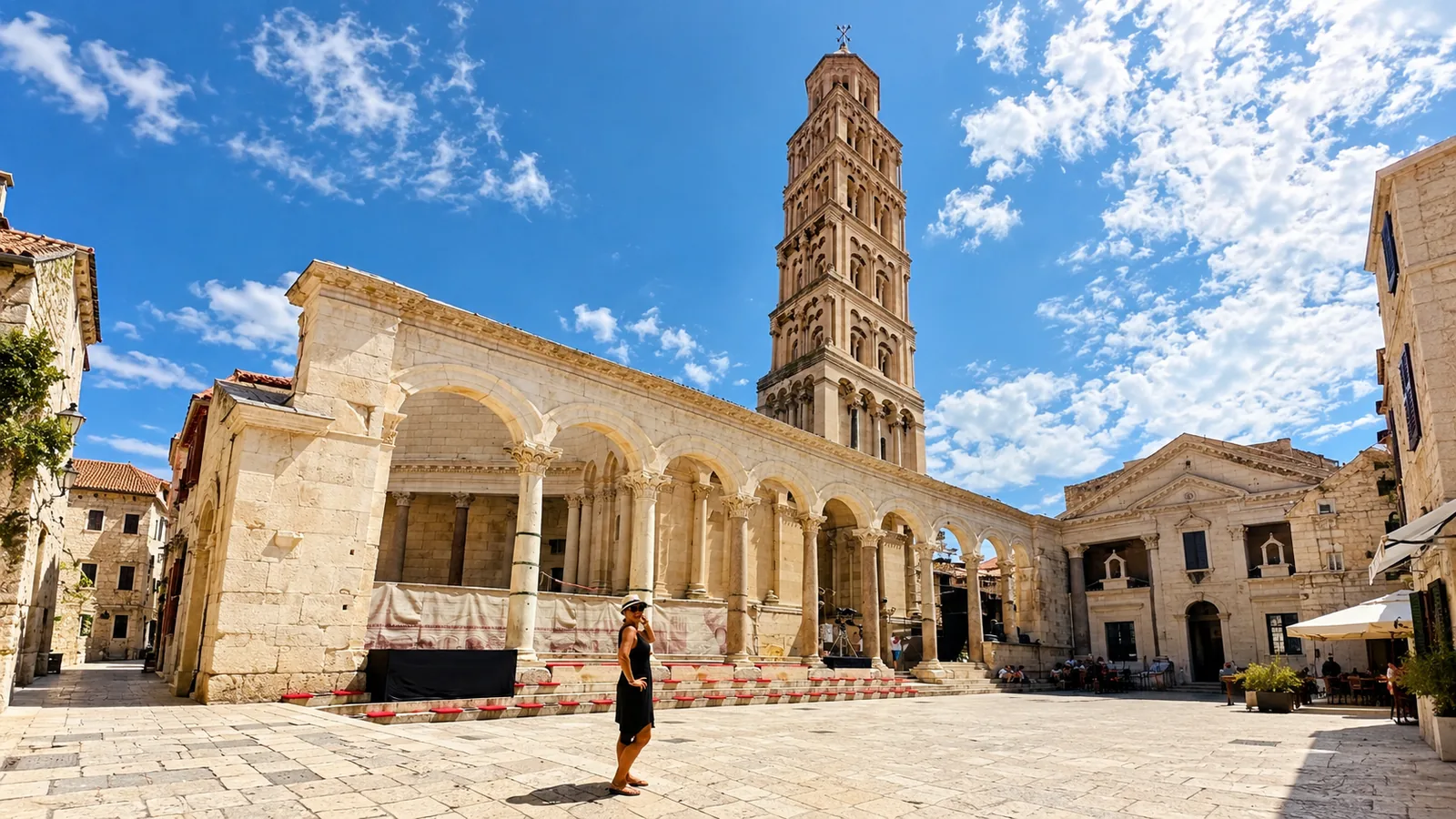
Start at the Peristyle, the ceremonial courtyard at the center of the palace. Walk Peristil ulica, then step into the Temple of Jupiter and the Cathedral of Saint Domnius, which began life as the emperor’s own mausoleum. A Christian cathedral built inside the tomb of an emperor who persecuted Christians is a strange and memorable pairing.
Only the interiors and the bell tower charge entry.
🎟️ Ticket tip: Combined tickets for the cathedral, bell tower and crypt exist, and published prices vary from source to source. Confirm today’s price at the ticket office on the Peristyle.
Day 3: Bačvice Beach and a Slow Afternoon
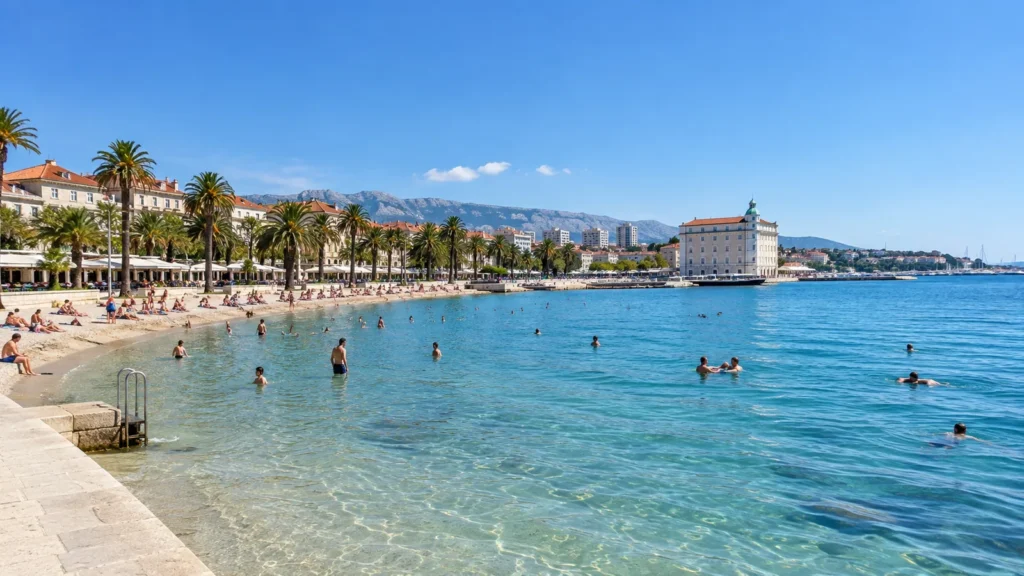
Bačvice is a sandy city beach with shallow water, about a kilometer from the old town. I swam there during my stay. Locals play picigin, a ball game in knee-deep water, so keep an eye out for flying balls.
End the day on the Riva again for sunset. If you have energy left, walk up Marjan Hill for the view over the rooftops.
⭐ Top Experiences & Best Places to Visit
1. Diocletian’s Palace
The best preserved Roman palace in the world, according to the Split Tourist Board, and you can walk it for free. Look up as you enter the narrow lanes. Roman columns hold up medieval balconies.
2. The Peristyle and the Temple of Jupiter
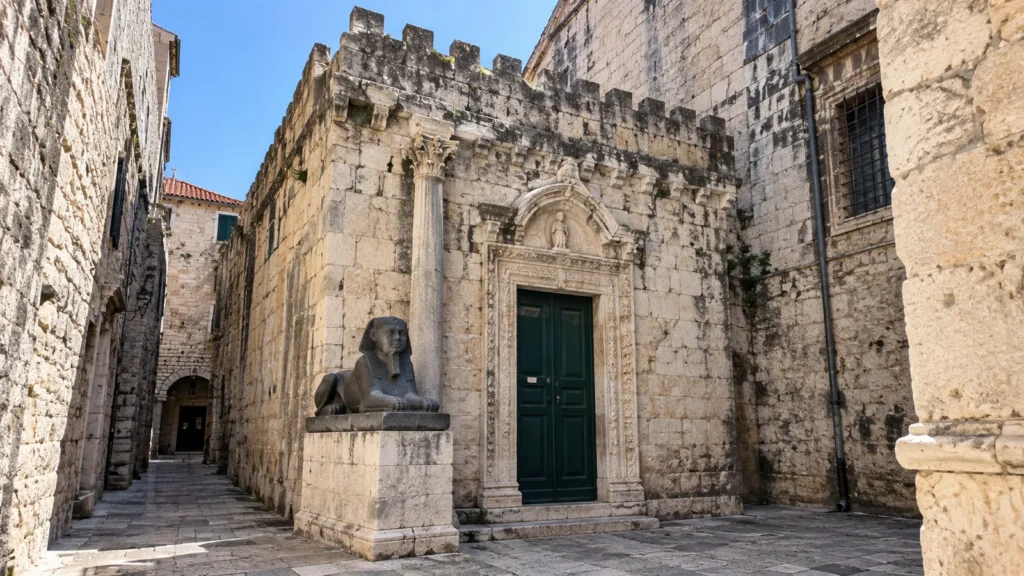
The Peristyle is the palace’s stage set. An Egyptian sphinx guards the courtyard, and cafés spill onto the steps. The Temple of Jupiter sits just off it and takes five minutes, so squeeze it in while you are already here.
3. Cathedral of Saint Domnius
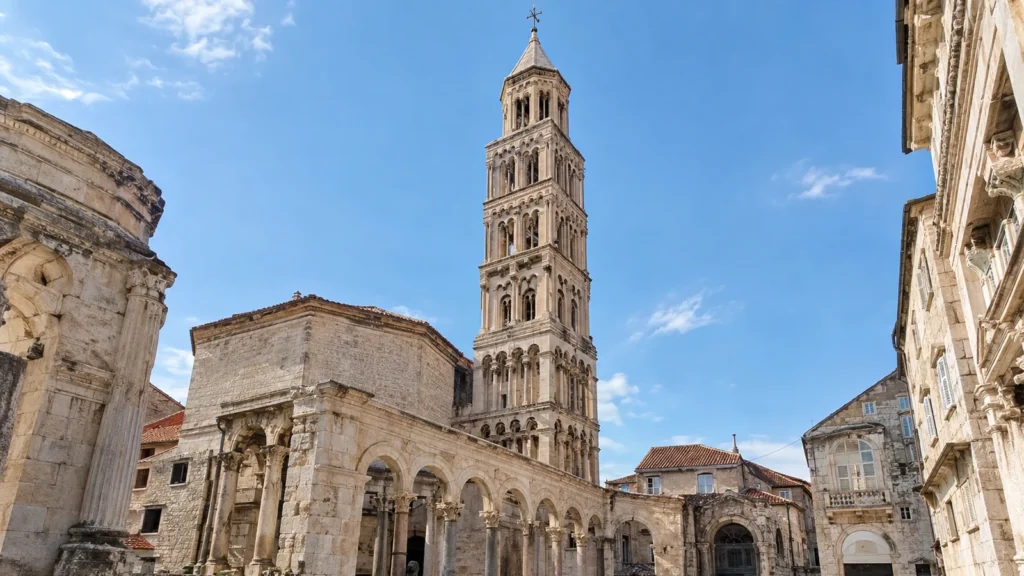
One of the oldest cathedrals still in use anywhere. Climb the bell tower if your knees allow it. The top shows red roofs, the harbor and the islands beyond.
4. The Palace Cellars
The vaulted halls under the palace are cool in July, which makes them the smartest midday stop. Game of Thrones fans will recognize them as the dragon chamber from Meereen. Entry costs around €10, though prices differ by source, so check on arrival.
5. Bačvice Beach
Swimming in the Adriatic after a morning among Roman ruins is the combination that makes Split different from most heritage cities.
For guided options, browse the widget below or compare tours on Klook.
🛏️ Where to Stay & Eat
Where to Stay
🛏️ Booking tip: July rooms in the old town go first, so reserve a refundable rate early and adjust later.
- 💰 Budget: Hostel Dvor sits just outside the old town and earns strong reviews for cleanliness and a social vibe. Check dorm and private-room prices on Hostelworld or Booking.com.
- 🧍 Mid-Range: Aborda Rooms is where I stayed. It occupies a first-floor spot on Poljana Grgura Ninskog, inside the old town walls and a short walk from the Riva. Listings mention air-conditioned rooms, a terrace and soundproofing, which matters in a lively old town. Check current prices on Booking.com.
- 🛎️ Luxury: Judita Palace Heritage Hotel occupies a restored Renaissance palazzo on the main square, steps from Diocletian’s Palace. Expect a rooftop terrace and a polished feel.
Stay in the old town if you can. Walking home past Roman stone after dinner is half the point.
Where to Eat
These picks come from repeated local and guidebook mentions rather than my own meals, so double-check opening hours before you go.
- 💰 Pizzeria Galija: Split’s oldest pizzeria, cheap and popular with locals.
- 🧍 Villa Spiza: A tiny counter in the palace alleys with a handwritten daily board. Arrive early or expect a wait.
- 🧍 Konoba Matejuška: Family-run seafood tavern in Veli Varoš, a short walk from the old town.
- 🛎️ Bokeria Kitchen & Wine: Modern Mediterranean cooking from a wood-fired grill in the old town.
Konoba Korta also shares Poljana Grgura Ninskog with Aborda Rooms, so the square is a handy dinner base.
💶 Budget: Cost & Money-Saving Tips
Cost of Traveling
Prices below are estimates for peak season and move with the calendar, so treat them as a planning range.
- 💰 Budget traveler: Roughly €60 to €90 per day with a hostel bed, bakery breakfasts, a pizza lunch and free sights.
- 🧍 Mid-range traveler: Roughly €120 to €200 per day with a guesthouse in the old town, two restaurant meals and one paid sight.
- 🛎️ Luxury traveler: €300 and up per day with a heritage hotel, fine dining and private tours.
Accommodation takes the biggest bite in July. One retailer listed Aborda Rooms from about £129 a night, which gives you a sense of old-town mid-range pricing.
Money-Saving Tips
- Walk the palace grounds for free. Pay only for the cellars, the cathedral or the bell tower, and pick one or two rather than all three.
- Swim at Bačvice instead of paying for a beach club.
- Eat lunch at a bakery or pizzeria and keep your restaurant budget for dinner.
- Stay outside the walls for a cheaper bed. Hostel Dvor is the budget pick in this guide.
- Book refundable rates on Booking.com and rebook if the price drops.
- Buy bus tickets in advance in July. Popular departures sell out.
🎒 What to Pack & Good to Know
What to Pack
- Sandals you can walk in on smooth, polished stone, since the Peristyle paving gets slippery
- A reusable water bottle and a wide-brimmed hat
- Reef-safe sunscreen and a light cover-up for the cathedral
- A beach towel and a small dry bag for Bačvice
- A small day bag with a zip, because the lanes get crowded
Good to Know
- Safety: Split is generally safe. Watch your pockets on the Riva and in the Peristyle when the crowds peak.
- Etiquette: The cathedral is a working church. Cover shoulders and knees when you go in.
- Accessibility: Cobbled lanes and stairs make wheelchair access hard inside the palace. The Riva is flat and easier.
- Emergency: Dial 112 across Croatia.
- Insurance: Sort travel cover before you go. SafetyWing is the option I compare, and Klook lists insurance too.
❓ FAQ
Is Diocletian’s Palace free to visit?
You can walk the grounds, the Peristyle and the lanes for free. Interiors such as the cellars, cathedral and bell tower charge separate entry.
How do I get from Dubrovnik to Split?
Most visitors take a bus that leaves roughly every four hours. Ferry availability varies by season, so check Jadrolinija for current sailings, and keep ID handy for a possible border stretch near Neum.
Is Bačvice Beach worth it if I am staying in the old town?
Yes. It gives you a swim without a boat trip, and mornings are quieter.
Is July too hot to visit Split?
Yes, if you plan around the heat as described above.
Do I need to book Aborda Rooms in advance?
In July, yes. It has only a handful of rooms, so reserve early and check the cancellation terms.
🌅 Wrap-Up: Split Travel Guide Quick Summary & Final Words
Quick Summary for this Split travel guide:
- Best time: June and September for balance, July for swimming
- Average daily budget: €60 (budget) to €300+ (luxury)
- Ideal trip length: 2 to 3 days
- Good for: History lovers, couples, solo travelers and beach seekers
Split gave me something I did not expect from a heritage city: I could eat dinner near Roman walls, walk home through the old town and wake up a few minutes from the sea. If you only have a short stretch on the Dalmatian coast, give Split two nights in the old town.
Where would you rather spend your extra day, on a boat to the islands or up on Marjan Hill?
For more real trip notes and city guides, browse the rest of the site at gotravelica.com.