Sharm El Sheikh Travel Guide 2026: Reef Snorkeling & Desert Safari Nights
🌴 Introduction & Why Go
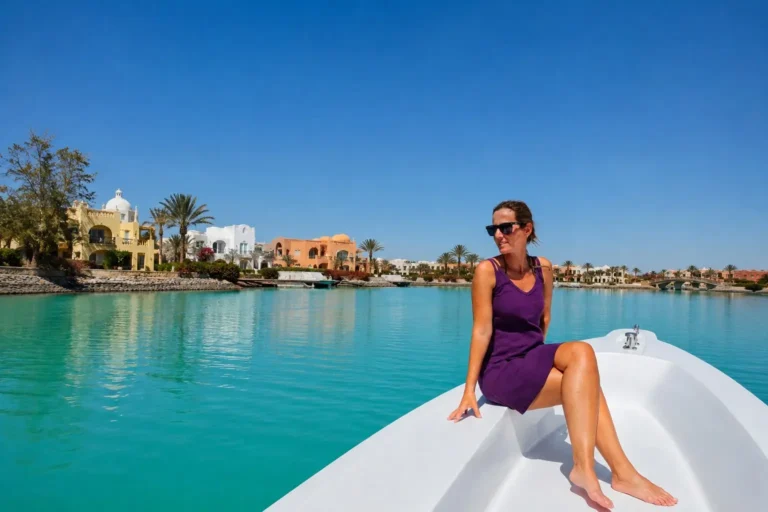
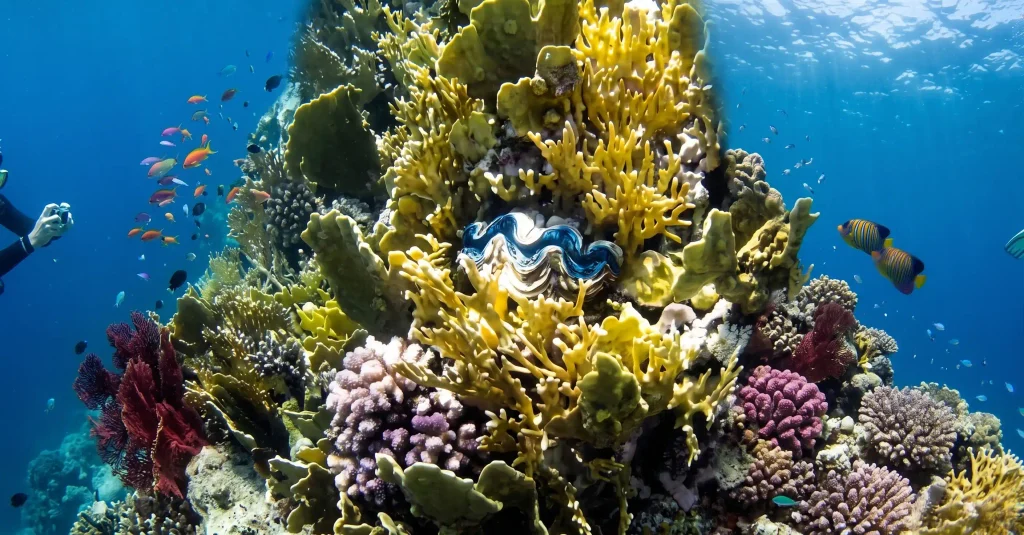
I keep going back to Sharm El Sheikh for the same reason every year: by late January, home is grey and cold, and I want warm sand under my feet again. This Sharm El Sheikh travel guide comes from several winter trips and one sweaty July mistake I won’t repeat. The Red Sea here does something rare for this price range: wade off a regular beach and within a few strokes you’re swimming over living coral, surrounded by fish in colors that look almost fake.
I made the mistake of visiting once in July. The thermometer sat around 45°C, the pool tiles were too hot to walk on barefoot, and I spent most afternoons hiding indoors. I’ve stuck to January and February ever since.
Why go: the reef access, the desert scenery just outside the resort strip, and the fact that a short flight gets you out of a grey winter and into 25°C sunshine.
Quick Picks: Where to Stay
- Budget: Naama Inn Hotel – simple rooms, 400m from Naama Bay Beach
- Mid-Range: Mövenpick Resort Sharm El Sheikh Naama Bay – beachfront, right in the Naama Bay strip
- Luxury: Four Seasons Resort Sharm El Sheikh – a mile of private beachfront and a proper dive center
🧭 Practical Info: Sharm El Sheikh Travel Guide Basics
Quick Facts
- Visa/Entry: Most nationalities get a free 15-day “Sinai Only” stamp on arrival if you’re staying strictly within South Sinai (Sharm, Dahab, Nuweiba, Taba). If you plan to visit Cairo or Luxor, you’ll need the paid visa instead.
Callout: The Sinai stamp does NOT cover Cairo, Luxor, or the Pyramids. If there’s any chance you’ll add a Cairo side trip, get the standard visa on arrival (around $25–30, cash only) or apply in advance at the official Egypt e-Visa portal.
- Language: Arabic, with English widely spoken in hotels, restaurants, and tour offices. Experience Egypt, the official tourism board site, has good notes on dress etiquette for mosques and public areas if you’re planning to leave the resort strip.
- Currency: Egyptian Pound (EGP). Hotels and tour desks often quote in USD or EUR too, but bring some cash in EGP for the Old Market and small taxis.
- Plugs: Type C/F, 220V, the same as most of continental Europe.
- Mobile & Internet: I set up an eSIM before flying rather than dealing with a local SIM queue at the airport. Both Airalo and Yesim cover Egypt.
- Drone Usage & Rules: Leave the drone at home.
Callout: Egypt requires a Ministry of Defense permit for any drone use, which tourists almost never get, and Sharm’s airport sits inside a security zone. Confiscation at customs is common, even for small consumer drones.
Getting There & Around
Sharm El Sheikh International Airport gets direct flights from a wide range of European, Middle Eastern, and Gulf cities, with extra seasonal charter routes running through the winter high season. I usually check Skyscanner a few weeks out to compare airlines and dates.
The airport sits about 18km from the hotel strip. Most resorts, including the one I stayed at, run their own airport shuttle. If yours doesn’t, book a private transfer through gettransfer rather than negotiating with the taxi touts at arrivals, or pre-book through Klook if you’re landing late and don’t want to sort it out half-asleep.
If you want more freedom than the hotel shuttle routes offer, a rental car from getrentacar works well, though most people manage fine with hotel transport and the occasional taxi.
Best Time to Visit & Trip Length
December through February is my personal sweet spot: air temperatures around 22–26°C, warm enough for the beach, cool enough that you’re not miserable walking around at midday. I’d steer clear of June through August, when daytime highs regularly hit the mid-40s. Five to seven days is enough to cover the reef, a boat trip, and one desert evening without feeling rushed.
🗺️ Day-by-Day Itinerary
Day 1: Arrival and the Reef Beach
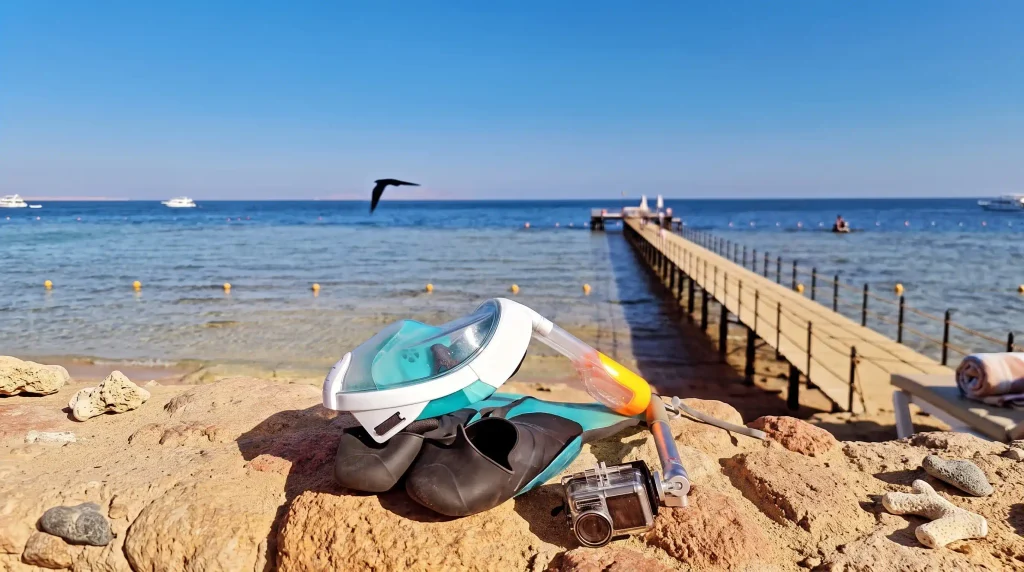
Land, check in, and don’t overplan the first afternoon. My hotel had two beaches on a free morning shuttle: one plain sandy stretch and one with a proper coral reef offshore. I went straight to the reef beach with my own mask. The coral starts close to shore, so you don’t need a boat to see color on day one.
Day 2: Ras Mohammed Boat Trip
A full-day boat trip to Ras Mohammed National Park and White Island is worth building the whole day around. The boat leaves early, stops twice for guided snorkeling among reefs with well over a hundred coral species, and usually includes lunch on board. This was the best snorkeling of the whole trip: better coral, more fish, calmer water than anything closer to the hotel.
Day 3: Desert Safari and Bedouin Dinner
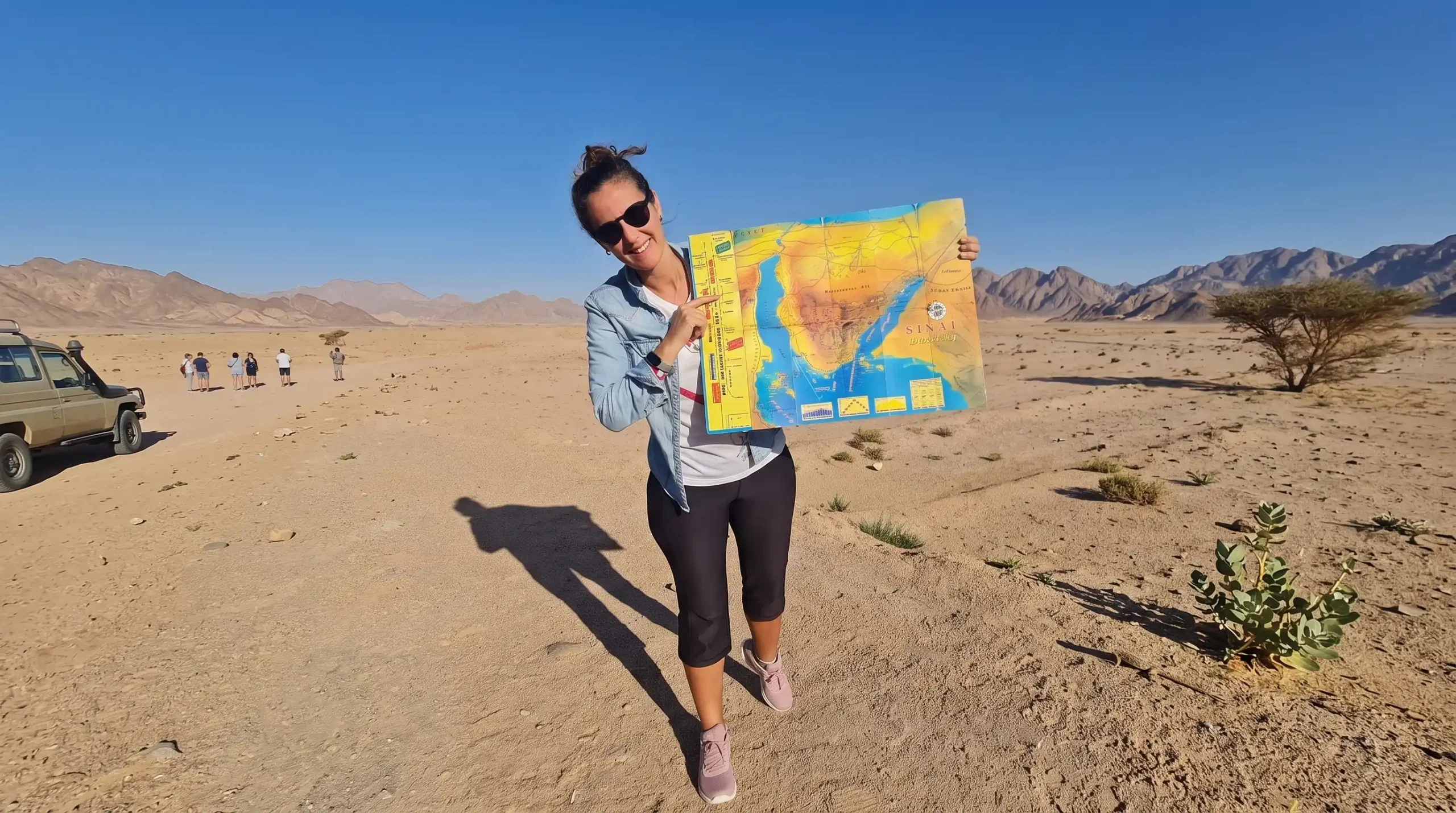
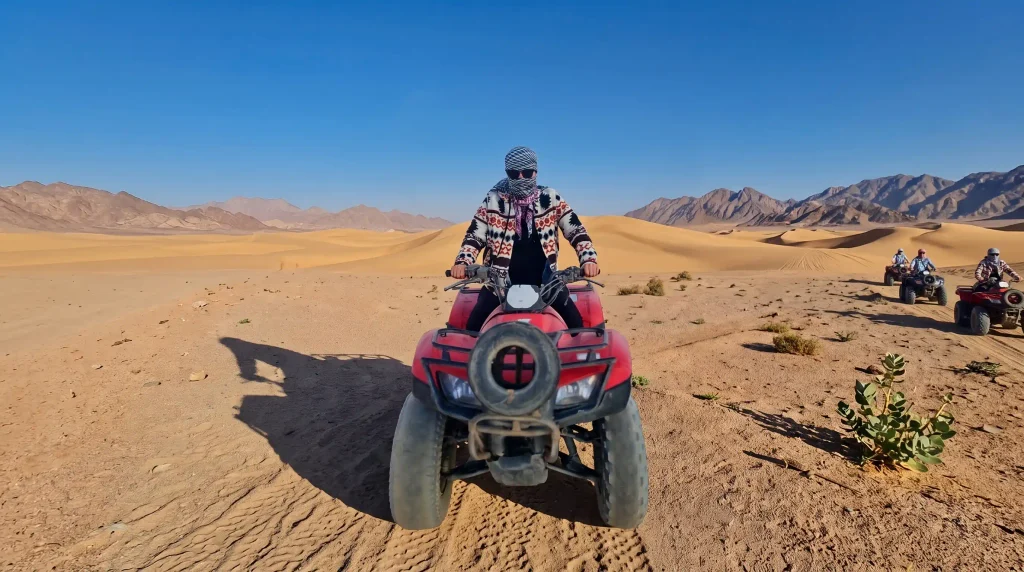
In the late afternoon, a jeep or quad-bike safari heads out into the Sinai desert. I rode a quad for about half an hour, then switched to a camel for the last stretch into a Bedouin camp as the sun went down. Dinner was simple grilled chicken, rice, and flatbread, followed by a Tanoura dance show and a fire performance under a genuinely dark sky. It’s touristy, but the desert itself does the heavy lifting.
Callout: The desert cools down fast once the sun sets, even after a 30°C afternoon. Bring a light jacket or wrap for the evening, whatever the daytime forecast says.
Day 4: Blue Hole & Dahab (Optional)
Dahab is about 90 minutes north by road, and the day trip usually bundles the Colored Canyon, the Blue Hole, and a walk around Dahab town. I did this one, and I’ll be direct: after Ras Mohammed and the desert safari, I wouldn’t repeat it. The snorkeling isn’t noticeably better, and it eats a whole day you could spend on the reef beach instead.
Day 5: Old Town, Naama Bay, and Farsha Cafe
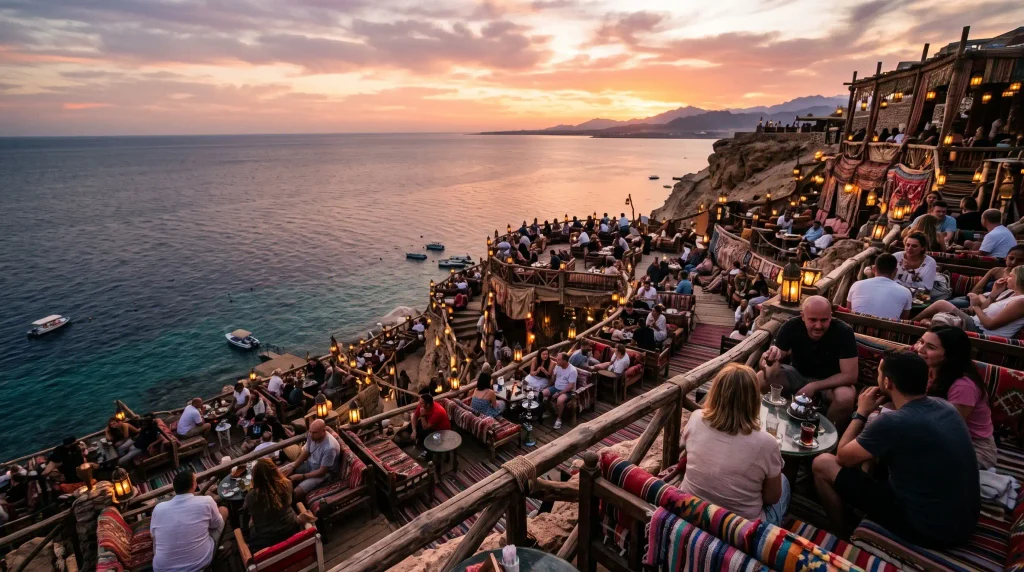
My hotel ran a second free shuttle in the evenings to Old Town and Naama Bay, which turned out to be the better use of that route than the beach one. I’d wander the Old Market for spices and souvenirs, then head up to Farsha Cafe for sunset, built into the cliffs above the sea and lit with hundreds of lanterns after dark.
Callout: Farsha Cafe doesn’t take reservations and fills up fast. Arrive at least an hour before sunset if you want a seat on the cliff edge rather than a corner table further back.
⭐ Top Experiences & Best Places to Visit
1. Snorkeling Straight Off the Reef Beach
Not every hotel in Sharm has direct reef access, so check before you book. Walking into water this clear without a boat is the single biggest reason I keep returning here every winter.
2. Ras Mohammed National Park & White Island
Egypt’s oldest national park, and for good reason: the coral density and fish variety here outclass most other spots along this coast. It’s also on the IUCN Green List, with live coral cover far above areas outside the protected zone. White Island’s sandbar is a nice place to stand in shallow turquoise water afterward.
3. Desert Safari with a Bedouin Dinner
Quad biking through Wadi Meliha, then swapping engine noise for a slow camel walk into camp, is a good contrast to a beach-heavy itinerary. The stargazing afterward, away from hotel lighting, is worth staying for even if the show feels a little rehearsed.
4. Sunset at Farsha Cafe
Perched on the Hadaba cliffs, this place runs on atmosphere rather than food quality. Go for a drink and the view, not a full meal. Traditional Bedouin cushion seating, hundreds of lanterns, and one of the better sunset views in Sharm.
5. Old Market (Old Town)
Narrow lanes, spice stalls, and the kind of bargaining culture you don’t get in the resort strip. It’s touristy but still feels more genuinely Egyptian than anywhere else in town.
More Things to Do in Sharm El Sheikh:
🏨 Where to Stay & Eat
Where to Stay
- Budget: Sharm Inn Amarein, a low-cost option near the Old Market with its own shuttle to Naama Bay beach, plus a pool, sauna, and fitness room on site.
- Mid-Range: Xperience St. George Sharm El Sheikh: where I actually stayed, and I’d book it again. It sits on Um El-Sid hill with two free shuttles, a morning one to the sandy and reef beaches, and an evening one to Old Town and Naama Bay. That second shuttle meant I never needed a paid transfer the whole stay.
- Luxury: Rixos Premium Seagate, a beachfront 5-star with a private beach and an all-inclusive setup, for anyone who’d rather not think about a single meal decision on holiday.
Where to Eat
- Budget: Sinai Star, tucked in the Old Market, has been serving fresh grilled and fried fish since 1996. Pick your fish and they cook it to order.
- Mid-Range: Tam Tam Middle Eastern Specialties, on the rooftop of the Ghazala Hotel in Naama Bay, does grilled lamb and Egyptian classics with a view over the bay in the evening.
- Splurge: Il Frantoio, an Italian spot known for fresh pasta and grouper, with fountain-courtyard seating that’s a nice change of pace from beach-view dining.
For the sunset drink-and-view experience, Farsha Cafe (covered above) is the one to prioritize over a sit-down dinner.
💰 Budget: Cost & Money-Saving Tips
Cost of Traveling
- Budget: Around $40–60/day covers a basic hotel, street food and casual restaurant meals, and local transport.
- Mid-Range: $90–150/day gets you a beachfront resort with breakfast, a couple of paid excursions, and dinners out.
- Luxury: $250+/day for a 5-star all-inclusive with a private beach, spa access, and higher-end dining built in.
Money-Saving Tips
- Book a hotel with a free shuttle to Naama Bay or Old Town; it removes the need for taxis most evenings.
- Skip the Blue Hole/Dahab day trip if you’ve already done Ras Mohammed and the desert safari; put that tour budget toward extra nights instead.
- Bring your own snorkel mask if you already own one. Hotel and boat rental gear works, but it’s rarely a great fit.
- Bargain at the Old Market; opening prices are usually inflated for tourists.
- Travel in the December–February window: flights and hotel rates both dip compared to European summer school holidays.
🎒 What to Pack & Good to Know
What to Pack
- Reef-safe sunscreen — hotel gift shops sell the regular kind, which isn’t great for the coral
- Your own snorkel mask and fins if you have them
- A light jacket or wrap for the desert evening (see the Day 3 callout above)
- Comfortable closed shoes for the uneven cliffside terrain around Farsha Cafe
- A physical or e-copy of your passport and Sinai stamp for hotel check-in and tour pickups
Safety, Accessibility & Etiquette
Sharm El Sheikh’s resort strip felt safe to walk around in the evenings on every visit. Dress modestly away from the beach and pool areas, especially around the Old Market. Tap water isn’t recommended for drinking; bottled water is cheap and everywhere.
For emergencies, Egypt’s general number is 122 for police and 123 for ambulance. I always travel with SafetyWing insurance; for this trip, Klook’s travel insurance is worth comparing too since diving and snorkeling aren’t always covered by default.
❓ FAQ
Do I need a visa to visit Sharm El Sheikh?
Most nationalities don’t, as long as you’re staying only within South Sinai. You’ll get a free 15-day Sinai stamp at passport control. You only need the paid visa if you’re adding Cairo or another mainland city.
Is the reef really accessible right from the beach, or do I need a boat?
It depends entirely on which hotel you pick. Some sit on plain sand with no reef nearby. Check reviews or ask directly before booking if reef access matters to you.
Is the Blue Hole day trip from Sharm worth the 90-minute drive each way?
Not in my experience: see my note on Day 4 above. It’s a long trip for a marginal upgrade if you’ve already covered the reef and the desert.
What’s the best month to avoid the extreme heat?
December through February. My one July trip taught me that lesson the hard way, and I haven’t gone back in the warmer months since.
Can I drink alcohol in Sharm El Sheikh?
Yes, it’s served in hotels, bars, and licensed restaurants throughout the resort area, even though Egypt is a Muslim-majority country.
✨ Wrap-Up
To close out this Sharm El Sheikh travel guide, here’s the quick version:
Quick Summary
- Best time to visit: December–February
- Average daily budget: $90–150 (mid-range)
- Ideal trip length: 5–7 days
- Good for: reef snorkeling, winter sun, desert excursions, couples and solo travelers alike
Final Words
Sharm El Sheikh has become my reliable winter escape: cheap flights, warm water, and a reef you can walk into without a tour booked. Pick a hotel with real reef access and save one evening for the desert, and the rest mostly takes care of itself.
Still working out your own Sharm El Sheikh itinerary, or wondering whether a specific hotel has real reef access? Drop it in the comments; I try to reply to every one.
For more real trip notes and city guides, browse the rest of the site at gotravelica.com.