Florence Travel Guide 2026: Duomo, Uffizi & the Porcellino Ritual
🏛️ Introduction & Why Go
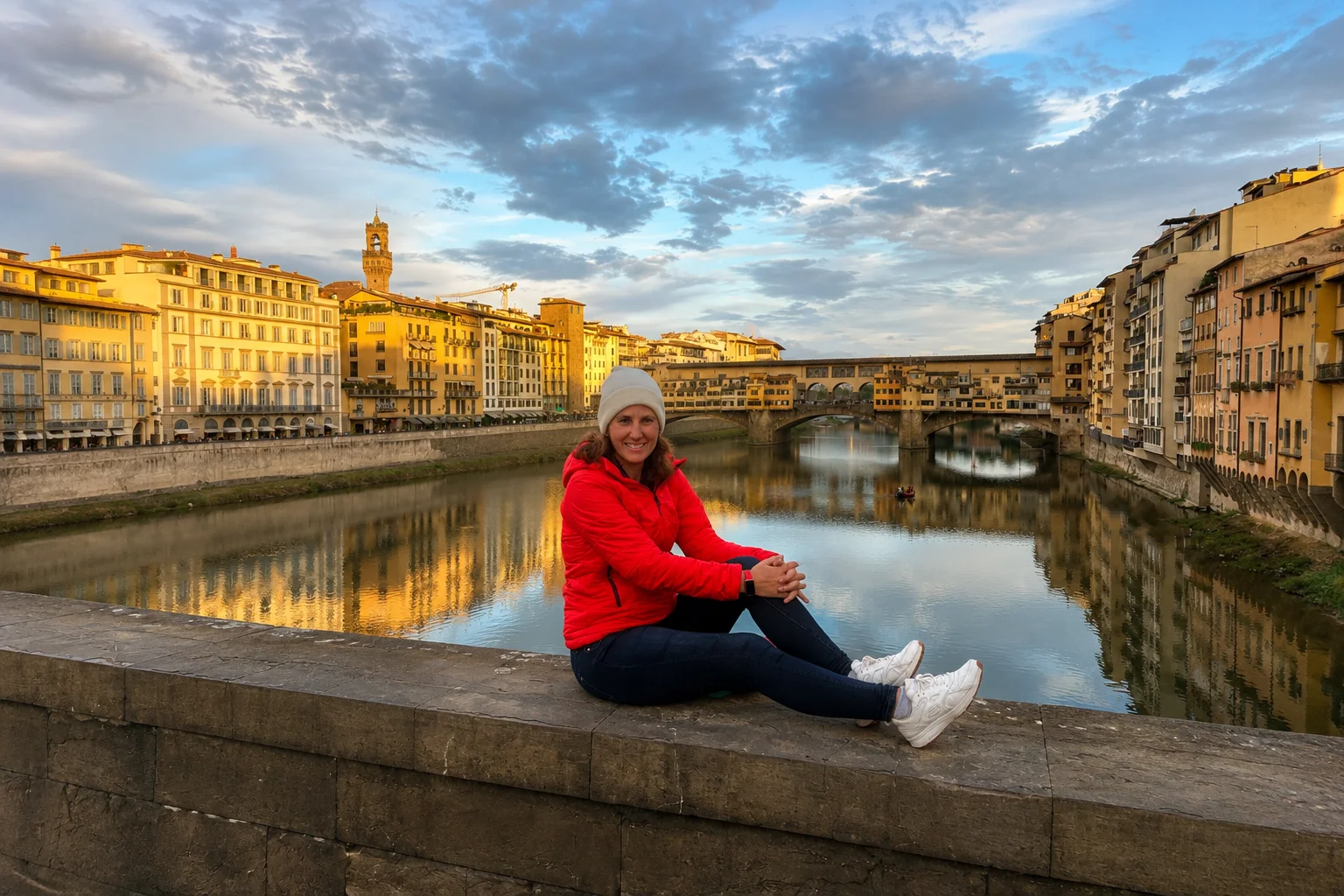
Four days in Florence turned out to be barely enough, and I didn’t realize that until I’d already landed and started walking. This Florence travel guide comes out of that trip. The city packs Michelangelo, Brunelleschi, and half of the Renaissance into a historic center so compact that a person could, in theory, see the Duomo, the Uffizi, and Ponte Vecchio without ever needing a bus ticket. That compactness is exactly why I went in October: the crowds thin out after summer, the light turns gold over the Arno, and walking becomes a genuine pleasure instead of a shuffle through tour groups.
I stayed four nights at Hotel Costantini, a small family-run hotel on Via de’ Calzaiuoli, literally steps from the Duomo. Every attraction I wanted to see was within a ten-minute walk, which meant I spent almost nothing on transport and almost everything on gelato. There’s something about a city where you can leave your hotel, look up, and see Brunelleschi’s dome without checking a map that makes the whole trip feel effortless from the first morning.
Quick Picks: Where to Stay
- 🧍 Plus Florence Hostel, dorms and private rooms near Santa Maria Novella station, great for solo travelers on a budget
- 💰 Hotel Calimala, a 4-star mid-range option a few minutes from the Duomo with a rooftop terrace
- 🛎️ Grand Hotel Cavour, historic 4-star elegance right on Via del Proconsolo, near Piazza della Signoria
🧭 Practical Info: When & How to Go
Quick Facts
- Visa/Entry: Italy is part of the Schengen Area. EU/EEA citizens need only a valid ID. Citizens of the US, UK, Canada, Australia, and many other countries get visa-free entry for up to 90 days within a 180-day period, though a valid passport (3+ months beyond your stay) is required.
- Language: Italian, with English widely spoken in the historic center.
- Currency: Euro (€).
- Plugs: Type C, F, and L, running on 230V.
- Mobile & Internet: An eSIM saves you the hunt for a local SIM card.
- Transport tickets: ATAF/Li-nea buses run on tickets valid for 90 minutes, sold at tobacconists and newsstands. Validate the ticket the moment you board.
🛂 Visa note: Travelers from visa-exempt countries should check the ETIAS authorization requirement before flying, since Italy applies it as part of the Schengen zone.
🚗 ZTL warning: Florence’s historic center is a restricted traffic zone (ZTL). Driving in without a permit risks an automatic fine by camera, even if the street looks open.
Getting There & Around
Florence Airport (Amerigo Vespucci, FLR), also called Peretola, sits just 6 km from the center. The “Vola in Bus” shuttle covers the ride to Santa Maria Novella station in 20–25 minutes and runs from 5:30 AM to 12:30 AM daily. A taxi takes about 15 minutes; check the fare display inside the cab before you pay. For comparing flight prices into Florence, Skyscanner is worth a look before booking.
Once you’re in the historic center, walking is simply the fastest way around. Nothing major sits more than 20 minutes on foot from the Duomo, and the cobblestones make the whole center feel smaller than it looks on a map. If you’re arriving by car instead, or want the freedom to explore the Tuscan countryside beyond the city, book a rental through this link and see the callout below before driving into the center. For an airport or private transfer straight to your hotel door, gettransfer is a simple option that skips the bus and taxi-stand queue entirely.
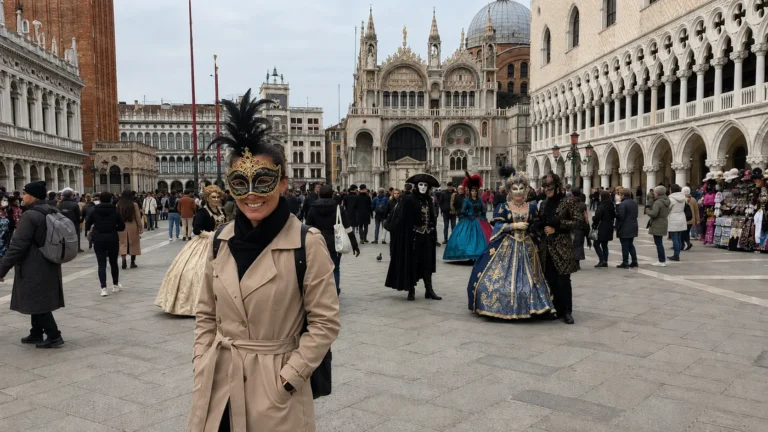
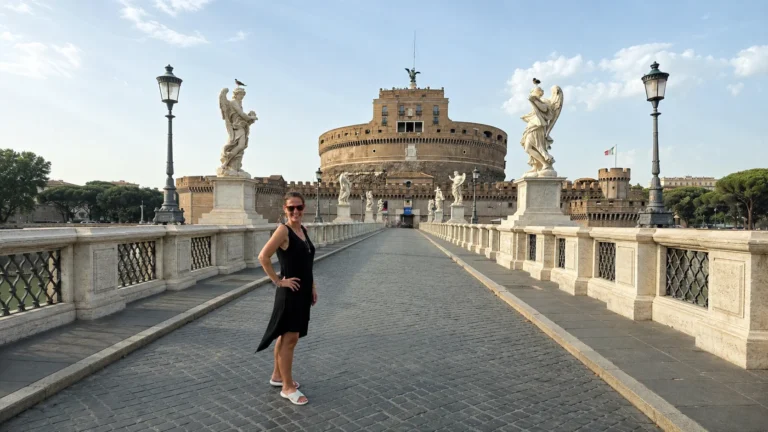
If Florence is one stop on a longer Italy route, it slots naturally between Venice and Rome. My Venice travel guide covers the canal side of the country, and my Rome travel guide picks up right where a Florence-to-Rome drive leaves off.
Best Time to Visit & Trip Length
October hits a sweet spot: mild temperatures, thinner crowds than the June–August peak, and prices on hotels and flights that haven’t spiked yet. Rain becomes more likely from October through spring, so packing a compact umbrella is worth it, but the trade-off in smaller crowds at the Uffizi and around the Duomo makes shoulder season well worth planning around. Four days is a comfortable length for the main sights, though art lovers could easily fill a week between the Uffizi, the Accademia, and the smaller museums scattered through the Oltrarno.
🗓️ Day-by-Day Itinerary
Day 1: Arrival & the Duomo Neighborhood
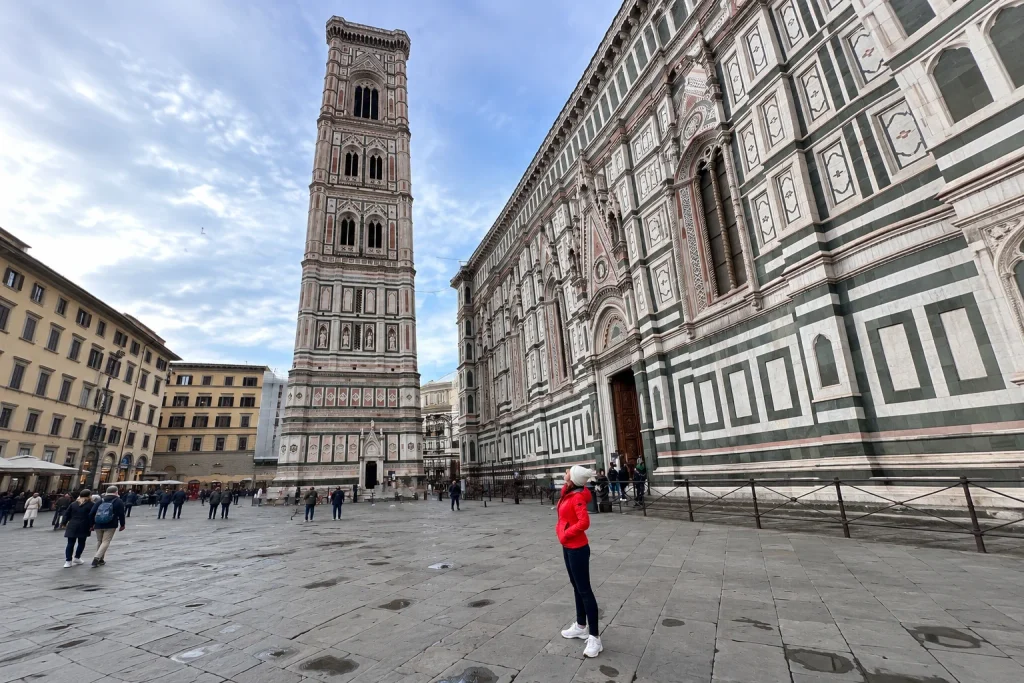
I checked into Hotel Costantini in the early afternoon and stepped straight out onto Via de’ Calzaiuoli. The Duomo, Santa Maria del Fiore, with Brunelleschi’s dome and Giotto’s bell tower, was close enough to see from the hotel’s front door. I spent the rest of the day just walking the surrounding streets, getting oriented before tackling any museums.
Day 2: Museums and the Uffizi
This is the day to book timed-entry tickets in advance for the Uffizi Gallery; lines without a reservation can eat hours of your morning. I paired it with a slow walk along the Arno toward Ponte Vecchio in the late afternoon, when the light softens and the bridge empties out a little.
🎟️ Booking tip: Book Uffizi and Accademia tickets online at least a few days ahead in shoulder season, and further out in summer.
Day 3: The Porcellino and Piazza della Signoria
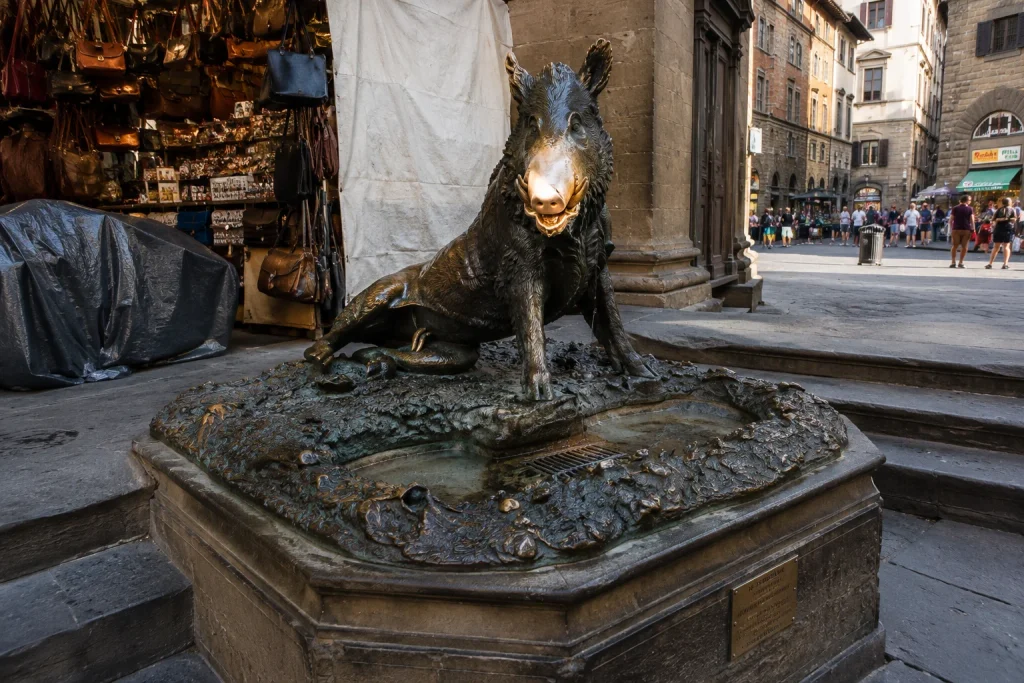
I found the Fontana del Porcellino near the Mercato Nuovo almost by accident. The bronze boar has a local legend attached to it: rub its nose for a promised return trip to Florence, and slip a coin into its mouth. If the coin falls through the grate below and out of sight, your wish is supposed to come true. I did both, treating it half as a joke and half as something worth trying anyway. My coin didn’t make it through the grate, so no wish granted on that front, but I rubbed the nose anyway. A year later I was back in Florence. Coincidence, probably, but I’ll take it.
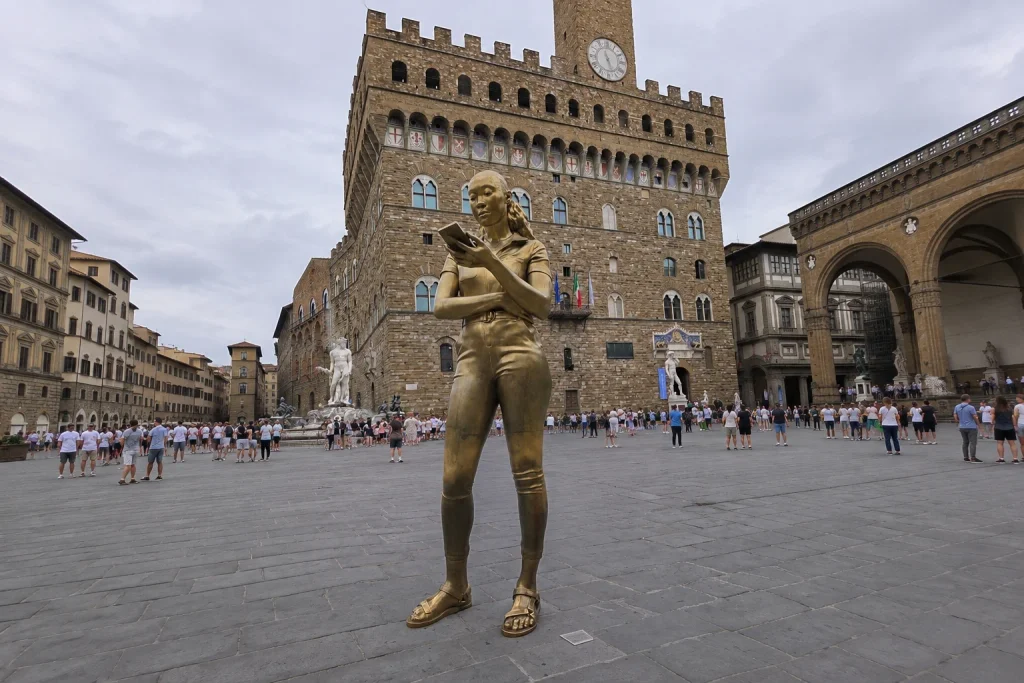
From there I wandered into Piazza della Signoria, where I ran into something I didn’t expect in a square built around Renaissance sculpture: a contemporary bronze statue of a woman looking down at her phone, installed with her back to the Palazzo Vecchio and the Uffizi. It’s part of an exhibition by British sculptor Thomas J Price, and standing next to centuries-old marble and bronze, it felt genuinely strange. Not bad, just a jarring contrast I hadn’t prepared for after three days of Renaissance-only sightseeing.
Day 4: Oltrarno and Farewell
My last day was slower: crossing to the Oltrarno side of the river for quieter streets, artisan workshops, and one final espresso before heading to the airport.
✨ Top Experiences & Best Places to Visit
- Cattedrale di Santa Maria del Fiore (the Duomo), climb Brunelleschi’s dome if your legs are willing; the view over the terracotta rooftops is worth the stairs.
- Fontana del Porcellino, a quick stop near the Mercato Nuovo for the nose-rubbing ritual (full story above).
- Piazza della Signoria, an open-air sculpture gallery where centuries of Florentine art collide, sometimes literally, with contemporary pieces.
- Ponte Vecchio, best seen at golden hour, when the crowds along the Arno thin out.
- Uffizi Gallery, book ahead, and give yourself at least half a day.
For skip-the-line museum access and guided tours, Klook has options that can save you a wasted morning in line.
🛏️ Where to Stay & Eat
Where to Stay
- 💰 Academy Hostel, a budget pick wedged between the Duomo and the Accademia, popular with solo travelers who still want a central location.
- 🧍 Hotel Costantini, where I stayed: a small, family-run 2-star hotel on Via de’ Calzaiuoli, inside a historic building right by the Duomo. Everything in the center was within a ten-minute walk.
- 🛎️ Golden Tower Hotel & Spa, a 5-star option near the Duomo for anyone wanting a spa and rooftop views on top of the location.
Where to Eat
- 💰 Trattoria Mario, a lunch-only local favorite behind the Central Market, known for its bistecca alla fiorentina and hearty pasta.
- 🧍 Trattoria Il Bargello, classic Tuscan dishes and regional wines in a small, old-school dining room in the Centro Storico.
- 🛎️ Regina Bistecca, a few meters from the Duomo, dedicated entirely to doing the Florentine steak properly, in a space that used to house a 140-year-old bookshop.
💶 Budget: Cost & Money-Saving Tips
Cost of Traveling
- 🧍 On a mid-range budget, expect roughly €90–130 a day covering a centrally located hotel, two sit-down meals, and museum entries.
- 💰 Backpackers staying in hostels and sticking to trattorias and market food can bring that closer to €50–70 a day.
- 🛎️ Add a luxury hotel and a Michelin-adjacent dinner or two, and daily spend climbs past €250.
Money-Saving Tips
- Buy museum tickets online in advance; walk-up lines waste both time and money if you end up paying a scalper’s markup.
- Lunch menus (menù del giorno) at trattorias are consistently cheaper than the same dishes at dinner.
- Walk instead of taking taxis; the historic center rewards it.
- Visit in October or May instead of peak summer for lower hotel rates.
- Refill a water bottle at the city’s public drinking fountains instead of buying bottled water everywhere.
💡 Local tip: A trattoria’s lunchtime menù del giorno is often the same kitchen, same quality, at half the price of the dinner menu just a few hours later.
🎒 What to Pack & Good to Know
What to Pack
Comfortable, broken-in walking shoes matter more in Florence than almost anywhere else in Italy. The cobblestones are unforgiving on new soles, and four days of walking adds up fast. A light jacket for October evenings, a portable charger for a full day of photo-taking, and a universal Type C/F/L adapter round out the essentials. An eSIM through Airalo or Yesim keeps you connected for maps and translations without hunting for a local SIM shop.
Safety, Accessibility & Etiquette
Florence is generally safe for tourists; pickpocketing near crowded spots like the Uffizi queue and the train station is the main thing to watch for.
🚨 Emergency number: Dial 112 anywhere in Italy for police, ambulance, or fire.
Cobblestone streets can be tough on wheelchairs and strollers in the oldest parts of the center, so plan routes accordingly. Dress modestly if you’re visiting churches: shoulders and knees covered is the general rule, and some, including the Duomo, enforce it strictly at the door. Travel insurance is worth arranging before you go; SafetyWing covers most short trips, and Klook also has insurance options bundled with some tours.
❓ FAQ
Is four days enough time in Florence?
It’s enough to cover the Duomo, Uffizi, Ponte Vecchio, and a couple of neighborhoods without rushing, but art-focused travelers will want closer to a week.
Do I need to book Uffizi tickets in advance?
Yes, especially outside of the dead of winter. Walk-up lines can eat two or more hours of your day.
Is the Porcellino fountain worth seeking out if I’m not superstitious?
Even without the coin ritual, it’s a quick, free stop near the Mercato Nuovo and a fun bit of Florentine folklore to see in person.
What’s the deal with the phone statue in Piazza della Signoria?
It’s part of a temporary contemporary art exhibition by sculptor Thomas J Price, placed deliberately among the square’s Renaissance-era statues to spark a reaction. Judging by my own double-take when I turned the corner, it does exactly that.
Is October a good time to visit Florence?
Yes, the weather stays mild, and both crowds and prices drop noticeably compared to summer. Just pack for occasional rain.
Is Florence walkable, or will I need public transport?
The historic center is small enough to cover almost entirely on foot. I never once needed a bus ticket in four days, and most first-time visitors staying centrally will find the same.
📋 Wrap-Up
Quick Summary for This Florence Travel Guide
- Best time: October (or May) for mild weather and thinner crowds
- Average daily budget: €90–130 mid-range, €50–70 budget, €250+ luxury
- Ideal trip length: 4–7 days
- Good for: art lovers, walkers, first-time visitors to Italy
Florence rewards slow mornings and a willingness to get a little lost between the Duomo and the Arno. Between the dome, the boar’s nose, and an unexpected modern statue staring down at a phone in the middle of all that Renaissance marble, the city has a way of surprising you even when you think you know exactly what you came for. If you’ve been to Florence, I’d love to know: did the Porcellino ritual work for you too?
For more real trip notes and city guides, browse the rest of the site at gotravelica.com.