Venice Travel Guide 2026: Carnival Mask Festival & Best Things to Do
🎭 Introduction & Why Go
I stepped off the water bus into a fine, cold mist, and the first thing I heard was a violin echoing off a stone wall somewhere I couldn’t see. Then a masked face turned the corner ahead of me, cape trailing, and didn’t so much as glance in my direction. For a second I genuinely forgot what century I was in.
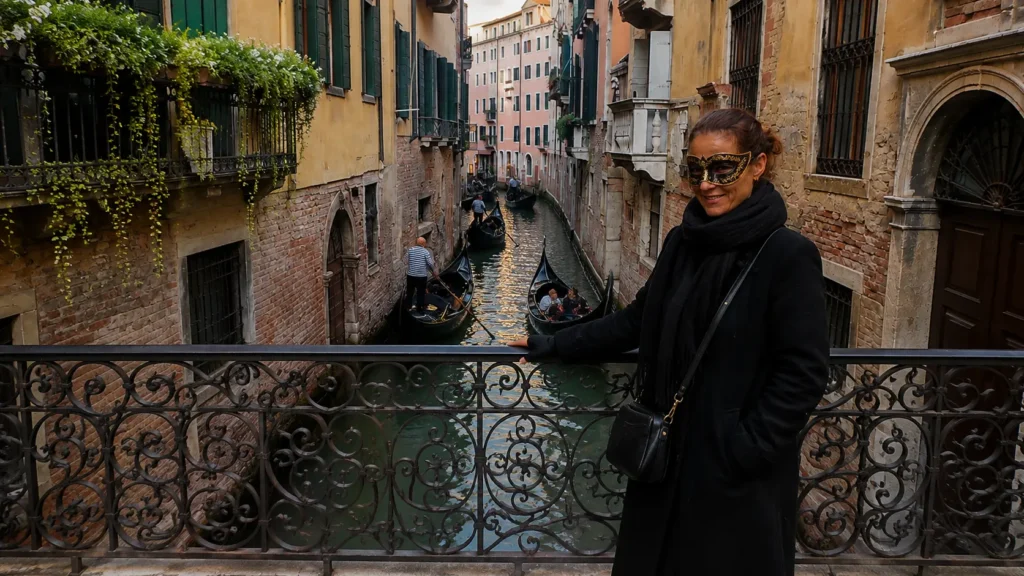
That’s Venice during Carnival, and it’s the reason this Venice travel guide exists: nowhere else turns an entire city into a stage the way Venice does every February. I arrived without knowing my trip would land squarely inside the festival dates, and it reshaped every single day I spent there. Every campo, every bridge, every quiet side canal had someone in a beaked mask or an 18th-century gown drifting through it.
Venice rewards a slightly nervous first-time visitor, too. Between the maze of alleys with no logical street numbering, a water-bus system with its own quirks (more on the ticket mistake I made further down), and a lagoon that occasionally floods its own historic center, it’s a city that asks you to slow down and pay attention. Google Maps gives up more often than you’d expect in the narrower calli, and that’s oddly part of the charm. Do that, and it gives back in a way few other places can.
Quick Picks:
- 🧍 Budget: Anda Venice Hostel – affordable, good location
- 💰 Mid-Range: Hotel Flora – By Romanelli Family Venice – a 12-minute walk to Rialto, family-run with a garden
- 🛎️ Luxury: Londra Palace Venezia – facing the San Marco basin, historic
🧭 Practical Info: When & How to Go
Venice Travel Guide Quick Facts
- Visa & entry: Italy is part of the Schengen Area — many nationalities can enter visa-free for up to 90 days, others need a Schengen visa in advance (see callout).
- Language: Italian, with Venetian dialect still spoken locally; English is widely understood in tourist areas.
- Currency: Euro (€).
- Plugs: Type C/F, 230V.
- Mobile & Internet: An eSIM lets you land with data already active — I’d set one up through Airalo’s Italy eSIM before flying rather than hunting for a SIM shop in the alleys.
- Transport tickets: ACTV vaporetto tickets and passes must be validated at the machine on the dock before every single boarding (see callout below).
🛂 Visa note: If you need a Schengen visa, apply through the official Italian visa portal or your nearest Italian consulate well ahead of travel — processing can take a few weeks during peak season.
⚠️ The mistake I made: I bought a 24-hour ACTV travel card expecting it to work like a metro pass, but it has to be tapped on the little yellow validator at the dock the moment you board — not just carried in your bag. A conductor stopped me for an unvalidated ticket, and only the timestamp on my card payment (showing exactly when I’d bought it) saved me from a fine. Tap it, every single time, even if you already validated it once that day on a different line.
Getting There & Around
Venice Marco Polo Airport (VCE) is the main gateway; I compared fares on Skyscanner before booking, since prices swing a lot depending on the week. From the airport, you have three realistic options: the ATVO or ACTV bus to Piazzale Roma (around €6-10, roughly 20 minutes, cheapest option and the last stop before the historic center’s car-free streets begin), the Alilaguna water bus straight into the historic center (around €18, up to 90 minutes but a proper lagoon arrival), or a private/shared water taxi (€100+ for a private one, faster and door-to-door). You can compare and book routes in advance through 12Go.
Once inside Venice, there are no cars, scooters, or bikes — you walk everywhere or take the vaporetto (water bus). A single 75-minute ticket costs around €9.50; multi-day passes (24h/48h/72h/7-day, roughly €25/€35/€45/€65) make much more sense if you’re island-hopping. Fares and route maps are kept current on the official ACTV transport site.
Best Time to Visit & Trip Length
February brings Venice Carnival, and the 2027 edition runs January 30 to February 9, with the biggest crowds and costumes concentrated around the final two weekends. It’s cold and can be foggy or rainy, but it’s also one of the only times you’ll see the city this theatrical, and hotel prices outside the festival’s peak weekend are noticeably lower than in summer. Three to four days is enough to cover the main sights plus a day trip to the islands without rushing.
💶 Good to know: Venice also charges a day-tripper access fee (Contributo di Accesso) on roughly 60 peak days between April and July — it doesn’t apply in February, and it never applies to overnight guests or to the islands of Murano, Burano, or Torcello. Check current dates on the official portal if you’re visiting in spring or summer.
🗓️ Day-by-Day Itinerary
Day 1: Arrival & San Marco First Impressions
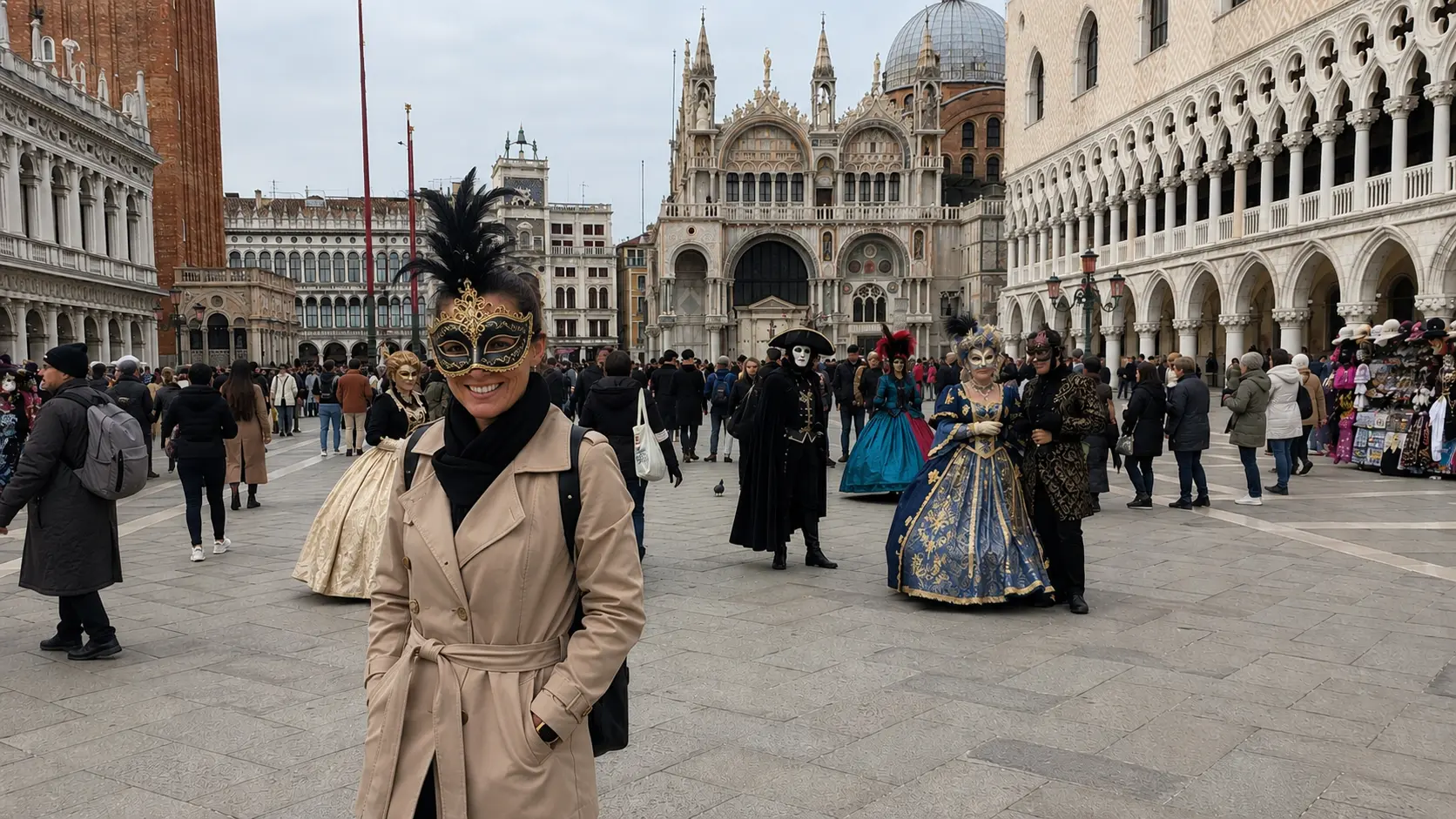
Check in, drop your bags, and walk straight toward Piazza San Marco rather than saving it for later — during Carnival, the square fills with costumed performers as the afternoon goes on, and you don’t want to miss golden hour there. Wander the surrounding calli without a map for an hour; getting mildly lost is basically the point in Venice.
Day 2: Murano & Burano
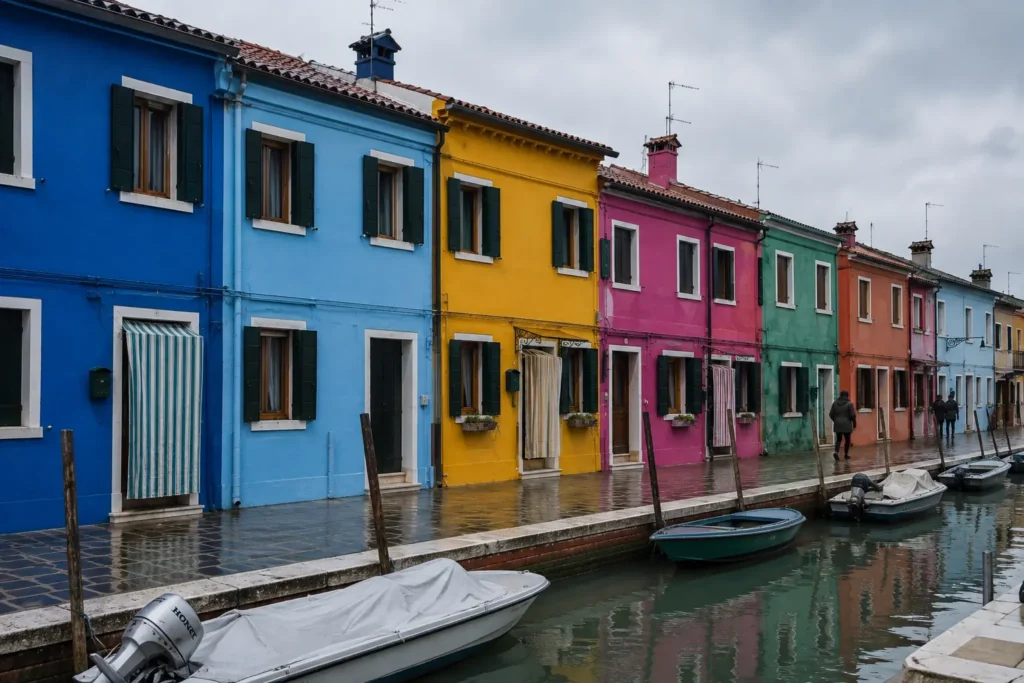
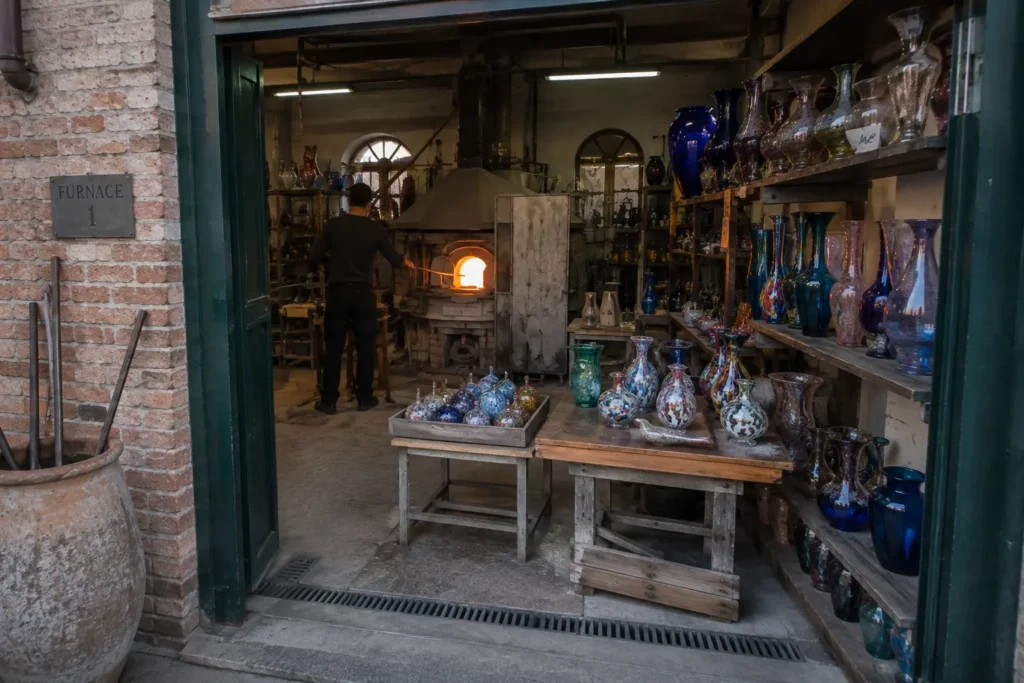
This is a full day out on the water. Catch the vaporetto to Murano first, home of Venice’s centuries-old glassblowing tradition, then continue on to Burano, famous for its rainbow-colored houses and lace-making. The color contrast between the two islands is sharper in person than in any photo. Murano feels workshop-quiet. Burano feels like walking through a painting.
🕒 Check the return vaporetto times before you head out — the last boats back from Burano run earlier than you’d expect, and you don’t want to be stuck waiting on the dock in the evening chill.
Day 3: Carnival Immersion & The Grand Canal
Spend the morning near the Rialto Bridge and the fish market, then ride the vaporetto down the length of the Grand Canal to see the palazzos from the water. In the afternoon and evening, follow the sound of music toward whichever campo has a Carnival event that day; the pre-carnival program features free street theatre and music in several squares in the run-up to the main weekend.
Day 4 (optional): Slow Morning & Departure
Use a last morning for anything you missed — a quiet church, a final espresso standing at a bar counter, one more aimless walk through Cannaregio before heading back to the airport.
🏛️ Top Experiences & Best Places to Visit
- Piazza San Marco during Carnival — the single best place to see elaborate costumes up close, especially in late afternoon light.
- Murano’s glass workshops — watching a furnace demonstration explains why this craft still commands such respect.
- Burano’s lace district and colored houses — go early before the day-trip crowds arrive on the later boats.
- St Mark’s Basilica and the Doge’s Palace — book a timed-entry slot in advance during Carnival, when queues around the square run longest.
- Getting deliberately lost in Cannaregio or Dorsoduro — the quietest, least touristy sestieri, and where you’ll bump into locals rather than other visitors.
🛏️ Where to Stay & Eat
Where to Stay
🧍 Budget: Generator Venice, a design hostel-hotel on Giudecca island, just one vaporetto stop from San Marco — dorms and private rooms, plus a bar terrace with skyline views. Browse more budget picks on Hostelworld if you want to compare dorm prices before booking.
💰 Mid-Range: This is where I stayed — Locanda Antico Fiore, an 18th-century guesthouse near the Sant’Angelo vaporetto stop, a few minutes’ walk from Piazza San Marco. It’s exactly the kind of small, character-filled Venetian building you picture before you arrive, and being close to the square meant I could duck back for an evening Carnival stroll without a long walk home.
🛎️ Luxury: Hotel Danieli, a 14th-century palazzo right on the lagoon near San Marco, with a rooftop restaurant looking out over the water — the kind of splurge that makes sense for one special night even on a tighter trip.
Where to Eat
🧍 Budget: Head to Cannaregio for cicchetti (Venetian tapas) at a standing bar — Bacareto da Lele and Trattoria da’a Marisa are local institutions serving honest, cheap plates of pasta and fish.
💰 Mid-Range: Vini da Gigio, also in Cannaregio, does excellent lagoon seafood and razor clams at fair prices, with a wine list worth lingering over.
🛎️ Luxury: Da Fiore, tucked off Campo San Polo, holds a Michelin star and is considered by many locals the benchmark for elevated Venetian cuisine — book ahead, it’s a small room.
💰 Budget: Cost & Money-Saving Tips
Cost of Traveling
- Budget travelers can expect to spend around €70-100 a day covering a hostel dorm bed, cicchetti-style meals, and vaporetto passes.
- Mid-range travelers should budget €150-220 a day for a guesthouse like Locanda Antico Fiore, sit-down trattoria meals, and the odd paid attraction.
- Luxury travelers staying somewhere like Hotel Danieli, where rooms alone commonly run €600-4,000+ a night, plus fine dining and private water taxis, should plan for well over €1,000 a day — Venice has very little middle ground between simple and spectacular once you’re at the top end.
Money-Saving Tips
- Buy a multi-day ACTV pass the moment you land if you’re staying 2+ days — the per-ride math on singles adds up fast.
- Eat your main meal standing at a cicchetti bar rather than sitting down at a tourist-menu restaurant near San Marco.
- Skip the gondola and ride the Grand Canal by vaporetto instead for a fraction of the price.
- Book Carnival-season accommodation as early as possible; rooms near San Marco sell out and prices spike closer to the final weekend.
- Bring a refillable water bottle — Venice has public drinking fountains (vera da pozzo areas and modern taps) all over the city.
- If you’re continuing on to Milan, Verona, or elsewhere in Italy afterward, compare train and bus fares on 12Go rather than buying at the station.
🎒 What to Pack & Good to Know
What to Pack
- Comfortable, waterproof walking shoes — Venice’s stone bridges and uneven pavements are hard on sneakers, and February can bring acqua alta (high water) in low-lying squares.
- A warm, layered coat if you’re visiting for Carnival — the lagoon wind cuts through anything light.
- A portable charger for photographing more masks than you’ll expect to see.
- Travel insurance — I’d check a plan like SafetyWing’s Nomad Insurance before any trip involving canal-side steps and crowded festival nights.
Safety, Accessibility & Etiquette
Venice is a genuinely safe city to walk around, day or night, though pickpocketing does happen in the densest crowds around San Marco and Rialto during Carnival, so keep bags zipped and in front of you. Cobblestones and countless small bridges make it a tough city for wheelchairs and strollers, though some routes are step-free — check ahead if mobility is a concern. Emergency number in Italy: 112. A quiet local etiquette note: keep your voice down in the narrow alleys after dark — sound carries a long way over water, and Venetians actually live here.
❓ FAQ
Why does Google Maps struggle so much in Venice?
Street numbering follows an old citywide system rather than a per-street logic, and many calli are too narrow for GPS to pin down accurately. Locals mostly navigate by landmark and the yellow directional signs pointing to San Marco, Rialto, and the train station, not by app.
Do I need to validate my vaporetto ticket every time I board?
Yes, every single time, even with a multi-day pass — tap it at the dock validator before boarding, not just once per day.
How many days do I need in Venice?
Three to four days covers the historic center comfortably plus a full day for Murano and Burano.
Is Murano or Burano better for a day trip?
They’re different, not competing — Murano for glassblowing history, Burano for color and lace; most visitors do both in one day since they’re on the same vaporetto route.
Does the Venice access fee apply in winter?
No — it currently only runs on around 60 peak days between April and July, and never applies to overnight guests or the outer islands.
📝 Quick Summary & Final Words
- Best time to visit: Carnival season (late January–early February) for atmosphere; September–October for lower crowds without the April–July access fee
- Average daily budget: €70 (budget) to €220+ (mid-range)
- Ideal trip length: 3-4 days
- Good for: first-time Italy visitors, couples, festival-season travelers, island day-trippers
Venice has a way of making you feel like you’ve wandered onto someone else’s stage set, mask or no mask. I came for the canals and left thinking mostly about that one violin note echoing off stone, and a ticket inspector who, thankfully, believed my receipt. If you time it right, the city will hand you a similar story of your own.
Have you been to Venice during Carnival, or are you planning a first trip? I’d love to hear which island — Murano or Burano — you’d visit first.
More travel guides at gotravelica.com.