Luang Prabang Travel Guide 2026: Slow Boats & Monks at Dawn
Introduction & Why Go
I stepped off the slow boat in Luang Prabang just as the light turned gold over the Mekong, legs stiff from two days of sitting, skin sticky with river humidity. I was tired in that particular way you only get after a long overland crossing, yet somehow still wide awake with the buzz of having actually made it here. Luang Prabang had been building up in my head for months: temple bells, saffron robes, French shutters against tropical green. The town delivered on all of it within the first hour, but it also came with quieter surprises — mopeds humming past monasteries, the smell of grilled river fish drifting from food stalls, and, as I’d soon learn, a mosquito population that takes its job seriously. I chose Luang Prabang because it sits at the end of one of the most rewarding overland routes in Southeast Asia, and because a UNESCO-listed town wrapped around two rivers sounded like exactly the kind of slow, atmospheric stop I needed after Northern Thailand.This Luang Prabang travel guide walks through everything from that border crossing to the waterfall day trip, so you can plan your own version of the same route.
Quick Picks:
- 🧍 Budget: Thongbay Guesthouse – riverside, a warm family-run spot
- 💰 Mid-Range: Villa Maly Boutique Hotel – in the old town, colonial architecture
- 🛎️ Luxury: Rosewood Luang Prabang – set in a canyon, full resort experience
📋 Quick Facts Before You Go
Visa Callout: Most nationalities can get a 30-day visa on arrival at Laos land borders and airports, generally costing between $30 and $50 depending on nationality, payable in US dollars. Bring a passport photo, or expect a small extra charge for one taken on the spot. Since September 2025, most foreign travelers also need to complete the free Lao Digital Immigration Form (LDIF) online within three days of arrival at immigration.gov.la — the rollout is expanding border by border through 2026, so check whether your specific crossing is included before you travel.
- Language: Lao, with English widely used in tourism-facing businesses.
- Currency: Lao Kip (LAK), though US dollars and Thai Baht are frequently accepted in tourist areas. Laos runs largely on cash — credit cards are accepted only at bigger hotels and some restaurants, and even then usually with a surcharge of a few percent, so budget for withdrawing kip or dollars rather than relying on plastic.
- Plugs: Type A/C/E/F sockets, 230V — a universal adapter is a safe bet.
- Mobile & Internet:Mobile & Internet: Local SIMs work fine, but for zero-hassle connectivity from the moment you land, an eSIM through Airalo activates before you even leave home.
- VPN: NordVPN protects your security when connecting to free Wi-Fi networks. You can also use it for seamless access to websites in your home country while traveling.
- Transport tickets: Slow boat, bus, and train tickets between Lao cities are easiest to lock in ahead of time through 12Go rather than negotiating in person.
Drone Callout: Laos regulates drone flights, and Luang Prabang enforces this closely given its UNESCO status. Tourists generally need to register the drone and secure a location-specific permit before flying, and the old quarter, temples, and the alms-giving route are effectively no-fly zones. Check current rules with Laos’ Department of Civil Aviation before you pack one.
✈️ Getting There & Getting Around
Most travelers reach Luang Prabang by air or by the Mekong. Lao Airlines and Bangkok Airways run direct flights from Bangkok, and Lao Airlines connects Chiang Mai to Luang Prabang in about an hour and five minutes — check current fares on Skyscanner. Vientiane is an even shorter hop, around 45 minutes, and the Laos-China Railway now links Vientiane to Luang Prabang by train in a couple of hours, a fast, comfortable alternative to the old overnight buses. Luang Prabang International Airport sits about 5km from the old quarter, roughly a 15-minute tuk-tuk or taxi ride.
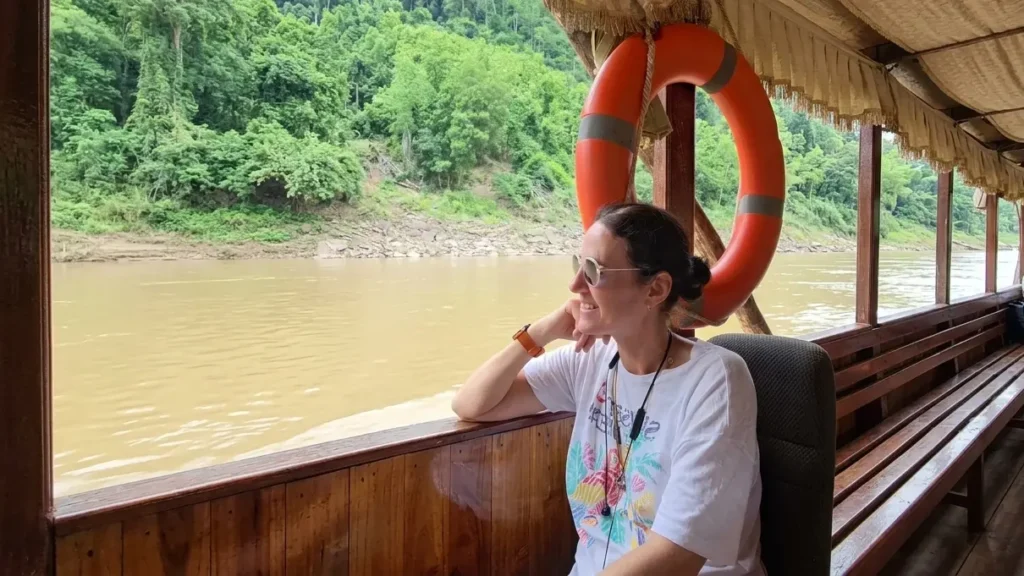
I did it the slower way. I bought a two-day, one-night slow boat package from Chiang Mai, the kind that bundles a van transfer to the border with the boat tickets themselves — variations of this tour run under names like “Chiang Rai: Luang Prabang 2-Day Slow Boat Tour,” bookable through GetYourGuide. The van dropped us at the Thai-Lao Friendship Bridge near Huay Xai, where Thai immigration formalities came first, followed by a short shuttle across the river into Laos. Since I hadn’t arranged an e-visa in advance, I picked up my visa on arrival at the border: a passport photo taken on the spot, a $40 fee, and about twenty minutes of waiting.
Border Crossing Callout: I hadn’t budgeted enough US dollars for the visa fee and worried I’d be stuck, but the immigration window also accepted Thai Baht — at a noticeably worse rate than USD, though still workable in a pinch. I paid with the last of my baht right there at the counter, which felt like a fitting way to close out the Thailand leg before Laos officially began.
From Huay Xai, the boat pushed off toward Pakbeng for an overnight stop, then continued to Luang Prabang the next afternoon — six to nine hours on the water each day, depending on the season and the current. Once in town, getting around is simple: tuk-tuks and songthaews cover most trips, bicycles are cheap and popular for the flat old quarter, and renting a motorbike (with an International Driving Permit in hand) opens up day trips to places like Kuang Si Falls that public transport won’t easily reach. If you’d rather sort a rental car or scooter before you land, Discover Cars lets you compare local operators and lock in a rate in advance.
🌦️ Best Time to Visit & Trip Length
The dry season, from November through March, is Luang Prabang at its most cooperative: clear skies, comfortable daytime temperatures, and reliable conditions for river cruises and waterfall visits. April brings Pi Mai, the Lao New Year water festival, which livens up the whole town but also fills hotels fast, so book ahead if you’re visiting then. April and May otherwise turn hot and hazy from agricultural burning, while June through September bring the rains — heavier afternoon downpours, lusher landscapes, and noticeably fewer tourists. I visited in late July, right in the middle of the wet season, and while the humidity was real, the rain mostly arrived in short, predictable bursts rather than ruining entire days. Three to four days is enough to cover the old quarter, the alms ceremony, and a waterfall day trip without rushing.
🗓️ Day-by-Day Itinerary
Day 1: Arrival and First Impressions
After disembarking from the slow boat, exhausted but wired, we checked into our guesthouse and forced ourselves to stay up just long enough for a slow dinner by the Nam Khan River. Sleep came fast and hard that night.
Day 2: Alms-Giving Ceremony and Old Quarter
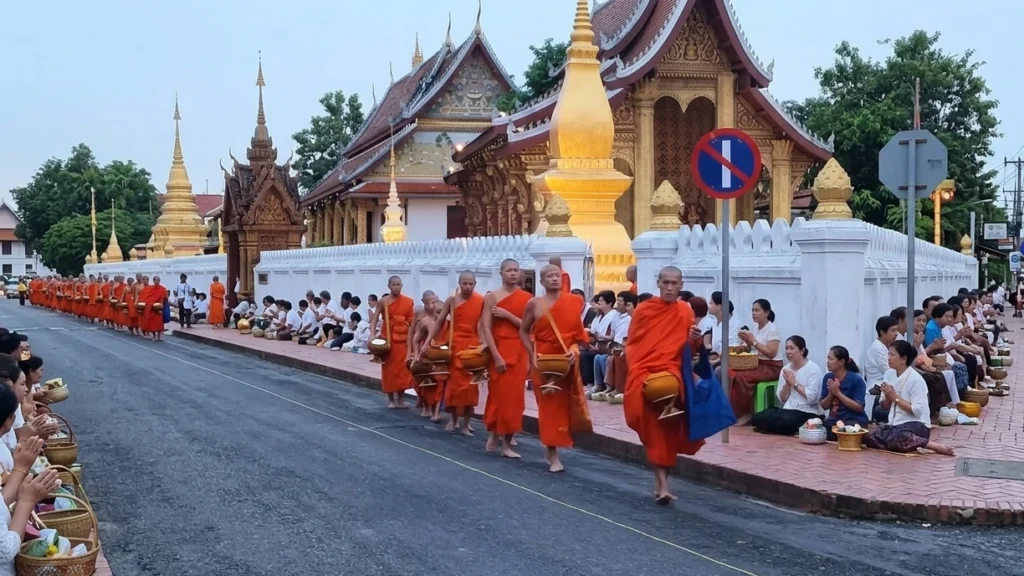
The alarm went off at 5am, which felt brutal after two days of travel, but skipping the Tak Bat alms-giving ceremony wasn’t an option. We found a quiet spot along Sisavangvong Road as the first monks appeared, walking barefoot in near silence to collect rice from kneeling locals. Afterward, we wandered the morning market, spent the early afternoon at Wat Xieng Thong, then climbed Mount Phousi in time for sunset over the rooftops and the Mekong, before the evening night market took over the main street.
Etiquette Callout: If you choose to give alms, buy sticky rice from the morning market rather than vendors hawking pre-packaged rice to tourists along the main route — much of that rice has been sitting out and can genuinely make the monks sick. Dress modestly, keep your distance, and stay silent as they pass.
Day 3: Kuang Si Falls
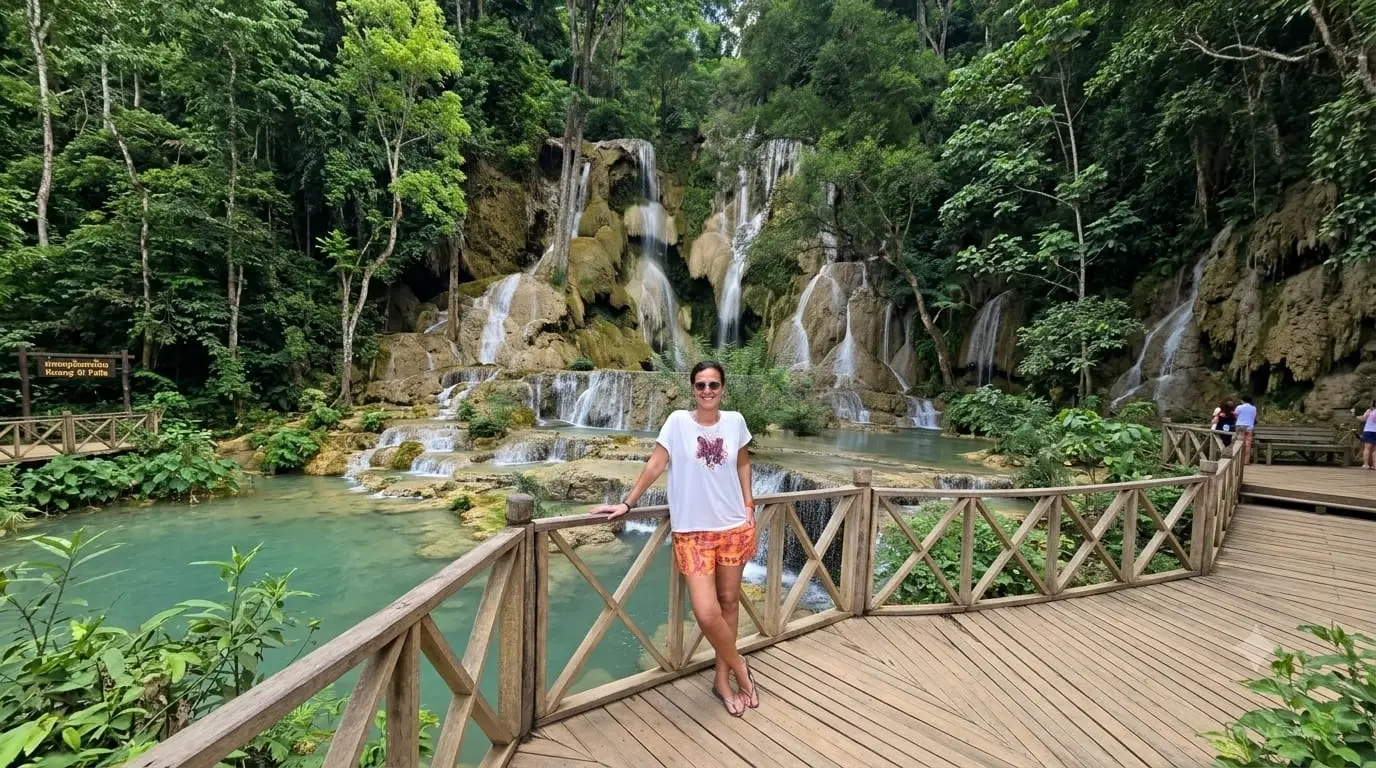
We rented a motorbike and made the roughly hour-long ride south to Kuang Si Falls, the multi-tiered waterfall everyone seems to have on their must-see list before they even land in Laos. Entry runs about 60,000 LAK (roughly $3), and the ticket includes a stop at the Tat Kuang Si Bear Rescue Centre on the walk in. We swam in the lower pools, which stay open for swimming (the uppermost tiers are now off-limits), and lingered long enough to dry off before the ride back. The waterfall was every bit as striking as promised — the mosquitoes on the trail less so, and I didn’t put my repellent down once.
🏞️ Top Experiences & Best Places to Visit
1. The Tak Bat Alms-Giving Ceremony — A daily, centuries-old procession of monks collecting food at dawn. Watching in respectful silence is one of the most memorable things I’ve done on any trip.
2. Kuang Si Falls — The postcard shot of Luang Prabang: milky turquoise water cascading down several tiers through dense jungle. Arrive right at the 8am opening if you want the pools to yourself before the tour buses roll in. For a splurge: we stuck to swimming, but travelers wanting more can add a treetop zipline and lunch package over the falls, bookable through GetYourGuide for around $170.
3. The Mekong Slow Boat — Less a transfer than a two-day disconnection ritual: no real wifi, just riverside villages, fishing boats, and long conversations with strangers who’ll likely turn up at the same guesthouse in Luang Prabang.
4. Mount Phousi — A short, steep climb for one of the best sunset views in town, looking down over the temples and the confluence of the Mekong and Nam Khan rivers.
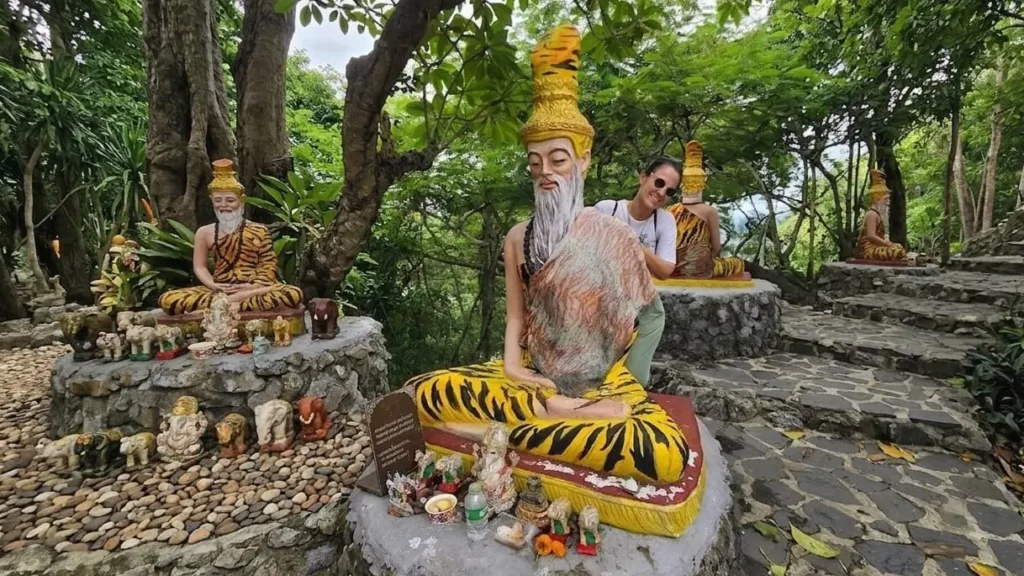
5. Wat Xieng Thong — The town’s most elegant temple, with mosaic-covered walls and a “tree of life” glass mural that photographs beautifully in late afternoon light.
6. Pak Ou Caves — A half-day Mekong boat trip upriver to a pair of limestone caves crammed with thousands of Buddha statues, often paired with Kuang Si Falls or a sunset cruise for a fuller day out.
If you’re traveling solo: the old quarter is compact and easy to explore on foot or bicycle, and the guesthouse scene makes it simple to fall in with other travelers for a Kuang Si day trip.
🛏️ Where to Stay
Luang Prabang’s accommodation is spread across a few walkable peninsulas, from riverside guesthouses to restored French-era villas.
- Budget travelers can find Merry Riverside Hotel from around $18/night.
- Mid-range travelers might prefer Maison Dalabua at roughly $100/night,
- while luxury travelers can book the Sofitel Luang Prabang from about $300+ a night.
Namkhan Riverside Hotel and similar guesthouses near the old quarter put you within walking distance of the morning market and the alms route — handy on a 5am wake-up call. Maison Dalabua earns its reputation with a spa-and-garden setup that suits travelers who want comfort without the five-star price tag, while the Sofitel delivers full resort polish if you’re after a splurge night to recover from river travel. You can compare current rates and availability for these and other properties on Booking.com.
We stayed at the Namkhan Riverside Hotel, on Mekong Riverside Road right on the water, for around $80-95 a night, and the breakfast spread there turned out to be one of the trip’s small highlights — plenty of fresh fruit and Lao dishes alongside the usual Western options. When the wet-season rain rolled in for an afternoon, we didn’t mind at all; we just switched plans and swam in the hotel pool instead, which sits across a small bamboo bridge over the Nam Khan.
Budget tip: hostel dorms in Luang Prabang start well under $10 a night — worth checking Hostelworld if you’re traveling light and flexible.
🍜 Where to Eat
Lao food in Luang Prabang leans on Mekong river fish, fresh herbs, and sticky rice, and the town’s French colonial history means excellent bakeries and fusion menus sit right alongside it.
- Tamarind ($$) – approachable Lao dishes, including mok pa (steamed fish).
- Dyen Sabai ($$) – interactive Lao barbecue on a riverside deck.
- Manda de Laos ($$$) – elevated Lao cuisine in a lotus-pond setting.
- Cafe Toui ($) – casual, family-run local dishes.
Tamarind is the long-running favorite on the Nam Khan riverside, while Dyen Sabai turns dinner into a fun, hands-on grill session over the water — a good pick for groups. Manda de Laos is where to go for a special-occasion meal, and Cafe Toui is the unfussy, family-run option we’d point budget travelers toward first. You can browse current reviews and menus for these and other options on Tripadvisor.
💰 Cost of Travelling
| Daily Budget | What It Covers |
|---|---|
| Budget (~$20-30) | Hostel dorm, street food, bicycle rental, free/cheap sights |
| Mid-range (~$50-75) | Private guesthouse room, sit-down restaurants, tuk-tuks, one paid activity |
| Luxury (~$250-400+) | 5-star resort hotel, fine dining, private transport and tours |
One thing every Luang Prabang travel guide agrees on:Laos remains one of the cheapest countries in Southeast Asia to travel, and Luang Prabang’s costs sit roughly in line with the national average despite its popularity. A Kuang Si Falls day out — motorbike rental, entry fee, and lunch — can easily come in under $15 per person if you skip an organized tour and do it yourself.
💸 Money-Saving Tips
- Rent your own motorbike or bicycle for Kuang Si Falls instead of booking a group tour; it’s typically far cheaper.
- Split a tuk-tuk or motorbike taxi with other travelers from your guesthouse — most rides are priced per vehicle, not per person.
- Eat where locals eat — the noodle stalls near the morning market are excellent and a fraction of restaurant prices.
- Book slow boat and train tickets a few days ahead through 12Go rather than through your hotel, which often marks them up.
- Carry small kip notes; large hotels and some restaurants prefer dollars, but markets and tuk-tuks run on kip.
🎒 What to Pack
- Lightweight, quick-dry clothing plus something to cover shoulders and knees for temples
- A strong insect repellent — mosquitoes near the river and at Kuang Si Falls are persistent
- A reusable water bottle, since tap water isn’t drinkable
- Sandals for the falls, sturdier shoes for Mount Phousi’s steps
- A packable rain layer if you’re visiting in the wet season
For repellent, sun protection, or a proper daypack, it’s worth sorting these out before you fly rather than hunting for them in town.
🛡️ Good to Know: Safety, Accessibility & Etiquette
Luang Prabang feels calm and welcoming, and violent crime against tourists is rare. The bigger everyday risks are traffic-related — motorbike accidents are common among visitors, so wear a helmet and carry an International Driving Permit alongside your home license, since checkpoints do stop tourists. Mosquitoes are genuinely persistent around the rivers and at the waterfalls; keep repellent on you at all times, cover up around dawn and dusk, and be aware that mosquito-borne illnesses like dengue are present in the region, so treat it as a daily habit rather than an afterthought.
Emergency Numbers: Police 191, Fire 190, Ambulance 195. English-speaking operators can be limited, so it often helps to have your hotel staff place the call on your behalf.
Travel insurance with medical evacuation coverage is worth having, since serious cases are often referred to better-equipped hospitals in Thailand — SafetyWing is a straightforward option for trip-length coverage.
Accessibility is limited: sidewalks are uneven, temple steps are steep, and there’s little in the way of formal provision for wheelchair users or mobility aids. On etiquette, dress modestly at temples and during the alms ceremony, remove shoes when entering religious buildings, and avoid touching monks or their robes. Laos also carries unexploded ordnance from past conflicts in rural areas — it’s not a concern in Luang Prabang’s old quarter, but it’s the reason guides everywhere insist on sticking to marked paths and trails once you’re out in the countryside. Luang Prabang’s UNESCO status also comes with a strong emphasis on preservation — don’t remove anything from temple grounds, and support local guesthouses and family restaurants where you can.
❓ FAQ
Do I need a visa to visit Luang Prabang?
Most nationalities can get a 30-day visa on arrival at the airport or land borders, generally $30-50 depending on nationality, plus the free LDIF registration completed online in advance.
How many days should I spend in Luang Prabang?
Three to four days covers the highlights comfortably, including a full day for Kuang Si Falls.
Is the slow boat from Thailand worth it?
If you have the time and don’t mind a long, slow travel day, it’s a genuinely memorable way to arrive — though flying is faster if you’re short on days.
Is Luang Prabang safe for solo travelers?
Yes, it’s considered one of the more relaxed towns in the region, though standard precautions around traffic and motorbike rentals apply.
What should I wear to the alms-giving ceremony?
Modest clothing covering shoulders and legs, and closed or easily removable shoes if you plan to kneel.
📌 Quick Summary Box
- Best time: November-March (dry season) ·
- Average daily budget: $30-75 ·
- Ideal trip length: 3-4 days ·
- Good for: culture, slow travel, river journeys, solo and couple travelers
👋 Final Words
Luang Prabang rewards exactly the kind of trip I stumbled into: tired, slightly unprepared, and willing to get up at 5am anyway. Between the alms ceremony, the waterfall swim, and the slow, river-bound arrival, it’s a town that asks you to slow down rather than tick boxes. Bring your repellent, book that early alarm, and don’t rush the boat ride if you can help it. Have you done the Mekong slow boat, or would you rather fly straight in and save the days for Luang Prabang itself?
Pack your repellent and use this Luang Prabang travel guide to help you map out your days.
Discover More Destinations
Loved this guide? Click here to explore our other travel guides and start planning your next trip!