
Cartagena Travel Guide 2026: The Walled City, Getsemaní & Playa Blanca
🌴 Introduction & Why Go
I landed in Cartagena in July, and the heat hit me before I even reached the taxi line. It’s the kind of heavy, coastal heat that makes you sweat through your shirt in ten minutes, and I mean that as a compliment, because everything about this Caribbean city rewards you for pushing through it. This Cartagena travel guide comes from four days spent wandering the old town during a longer Mexico-Colombia trip, and I still think about the flags strung across the narrow streets and the smell of fried fish drifting out of every corner shop.
Cartagena earns its nickname La Heroica, “the Heroic City,” for surviving repeated pirate sieges and the brutal 1815 Spanish blockade, a resistance Simón Bolívar later honored with the title. That history is stamped into every wall and plaza, and it’s why UNESCO added the Port, Fortresses and Group of Monuments of Cartagena to its World Heritage List in 1984. Add the beaches of Barú and nightlife that flips a switch after sunset, and you get a destination that’s equal parts open-air museum and party.
I’ll admit the daytime crowds around the main plazas can feel like a lot, especially with vendors working every corner. But the trade-off is worth it: few cities let you walk 400-year-old fortifications in the morning and dance to champeta music in a courtyard bar by midnight.
Quick Picks:
- 🧍 Budget: Casa Cielo – a clean, budget-friendly pick in Getsemaní
- 💰 Mid-Range: Casa Isabel – a quiet boutique stay on the edge of Getsemaní
- 🛎️ Luxury: Hotel Movich Cartagena de Indias – arguably the best views in the city
🛂 Practical Info: When & How to Go
Here’s the practical side of this Cartagena travel guide: what you need before you land, and how to get around once you’re there.
Quick Facts
- Visa/entry: Citizens of the US, Canada, the UK, the EU, and most of Latin America don’t need a visa for tourism and get a stamped entry permit on arrival, typically valid for up to 90 days within a 180-day annual cap.
- Language: Spanish (Caribbean coastal accent, spoken fast).
- Currency: Colombian Peso (COP). Cards work in most restaurants and hotels; carry small cash for taxis and street food.
- Plugs: Type A/B, 110V, same as the US.
- Mobile & Internet: An eSIM from Holafly or Airalo installed before landing saves you the hassle of hunting for a local SIM in the heat.
- Transport tickets: Taxis and rideshare apps cover almost everything; there’s no metro.
📋 Visa callout: Even visa-exempt travelers must complete the free Check-Mig pre-registration on the official Migración Colombia website between 72 and 1 hour before departure. Skip the unofficial sites charging a fee for this.
Getting There & Around
Rafael Núñez International Airport (CTG) sits about 15-20 minutes from the walled city. Grab an official taxi at the counter just outside arrivals, where you pay a fixed fare rather than negotiating on the curb. If you’d rather not deal with airport taxi lines after a long flight, I’d compare flight and connection options through Skyscanner before booking.
Inside the city, walking covers the old town easily, and taxis or InDriver handle everything else. For Playa Blanca, you can go by shared speedboat from Muelle de La Bodeguita or by car on the paved road via the Barú bridge; I chose the drive and preferred having a fixed schedule instead of waiting for a boat to fill up.
For day trips to Barranquilla or Santa Marta, a rented car through Discover Cars beats a shared tour for flexibility. 12Go also covers regional bus and van routes if you’d rather skip driving altogether.
Best Time to Visit & Trip Length
Cartagena is hot year-round, so “best time” really means “least rain.” December through April is dry, sunny, and the busiest and most expensive stretch of the year. I went in July, during what locals call the veranillo, a short dry spell inside the wetter season, and got plenty of sun with noticeably fewer crowds. Four days is enough to cover the old town, Getsemaní, and one beach day at Barú without rushing.
🗓️ Day-by-Day Itinerary
Day 1: Getting Oriented in the Walled City
I spent my first afternoon just walking the walls with no real plan, letting the colonial streets and flower-covered balconies set the pace. Small door-within-a-door details caught my eye everywhere: the large door was for the house’s owners, the smaller cutout let servants pass through without opening the whole thing. It’s a quiet reminder of the city’s colonial and slave-trade history that most guidebooks skip over.
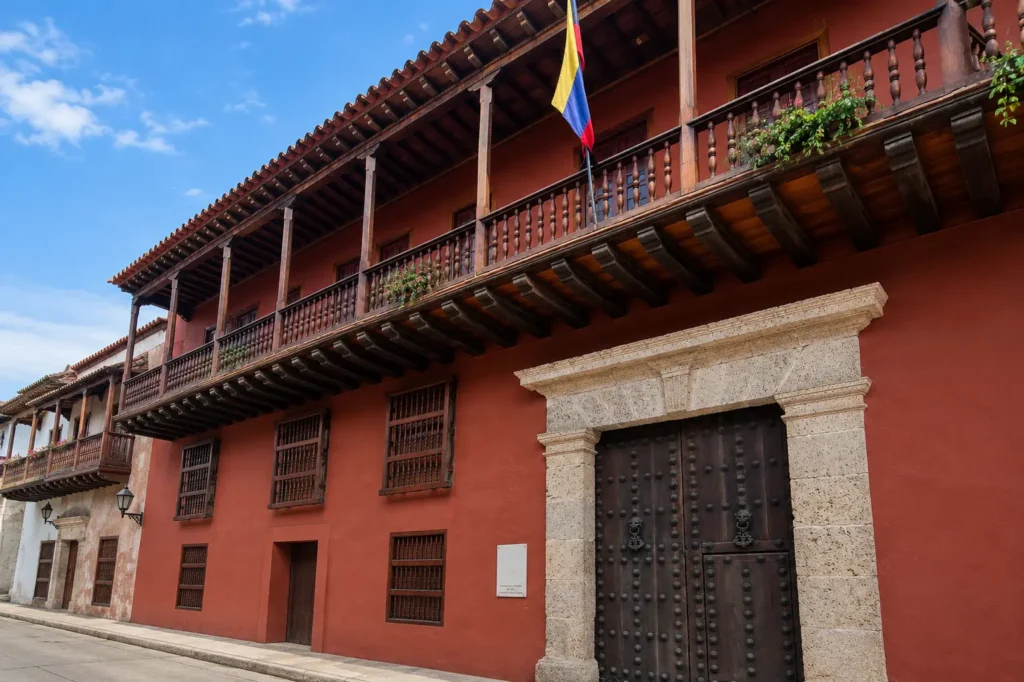
By evening, flags strung across the streets between balconies came out in full color, left over from a recent local celebration, giving the old town a festive feel even before the bars turned their music up.
Day 2: Plazas, Sculptures, and Getsemaní
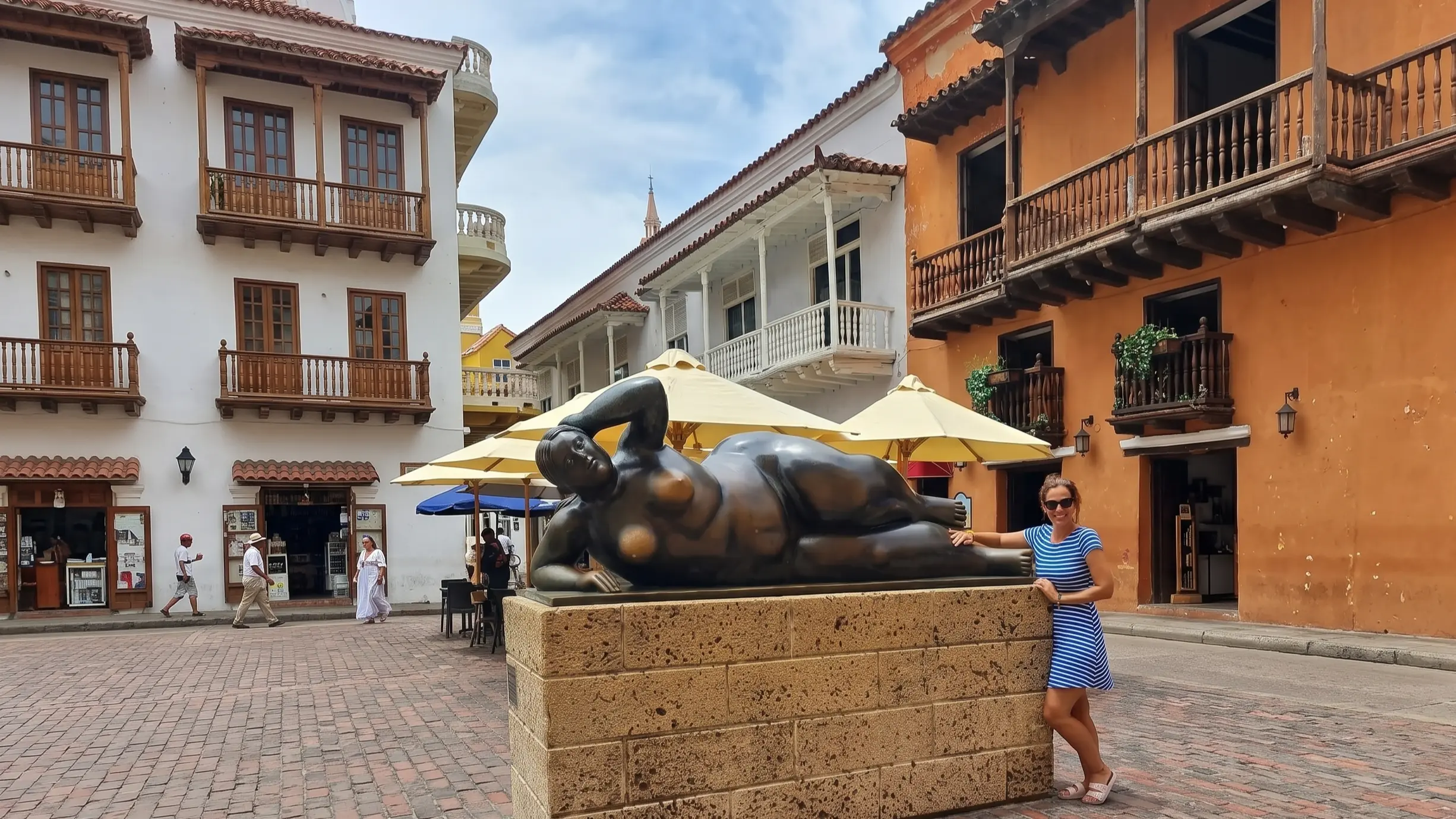
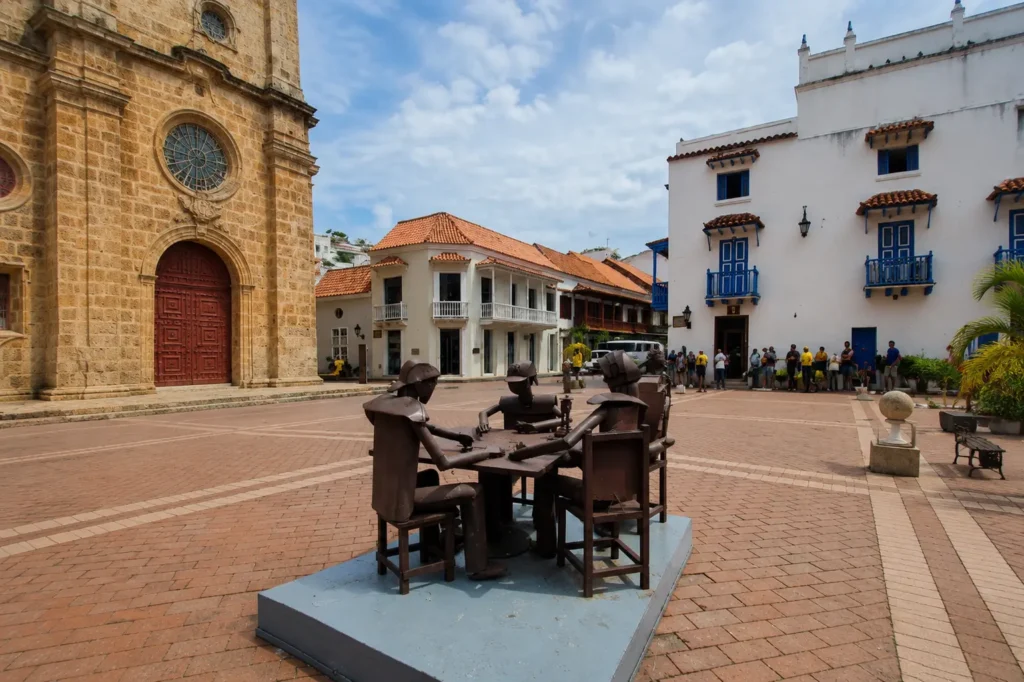
Plaza San Pedro Claver and Plaza del Pozo in Getsemaní are where Edgardo Carmona’s rusted-iron sculptures live, life-size figures of knife sharpeners, card players, and street vendors that make the city’s everyday history tangible. A short walk away in Plaza Santo Domingo, Fernando Botero’s bronze sculpture Gertrudis, better known locally as La Gorda, draws a steady stream of tourists rubbing her for luck.
Day 3: Parks, Iguanas, and a Sloth
Not everything memorable here is man-made. In the park at the center of the old town, I spotted an iguana ambling across the path and, a bit later, a sloth hanging in the branches overhead. Nobody around me seemed surprised, which says something about how normal wildlife sightings are here. I spent the rest of the day slower than planned, ducking into shaded cafés between short walks; the heat by early afternoon really does dictate the pace.
Day 4: Playa Blanca, Barú
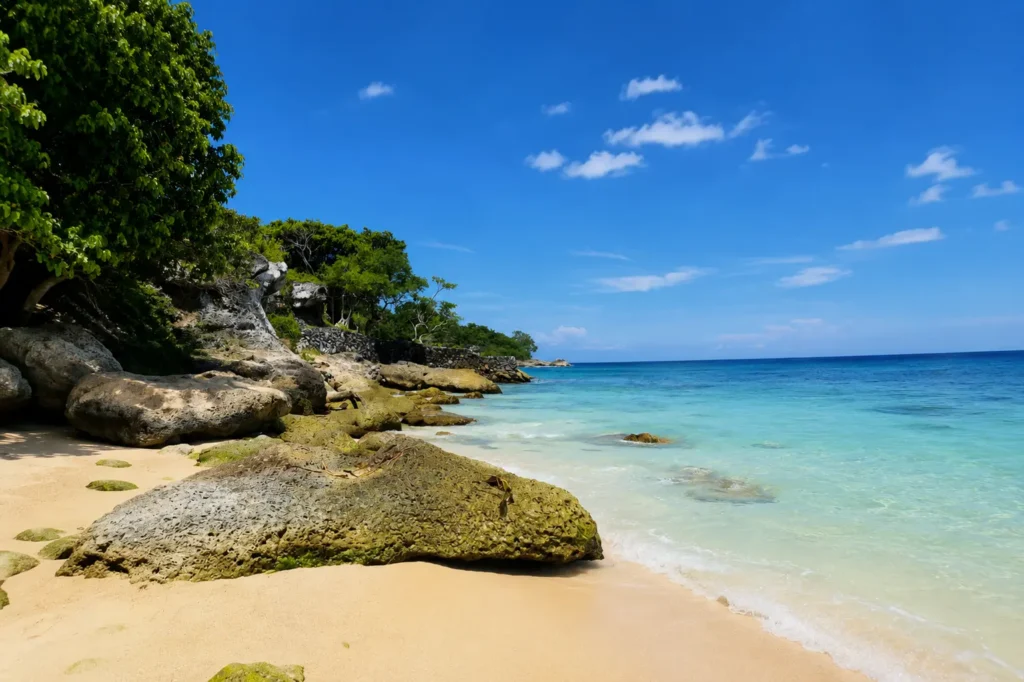
We drove out to Playa Blanca on Isla Barú for a full beach day, and the water was some of the clearest I saw on the whole trip. If snorkeling or a boat day interests you more than a straightforward beach visit, the GetYourGuide widget below covers a range of Barú and Rosario Islands options.
⚠️ Mistake to avoid: Don’t skip sun protection just because the drive feels short. The Barú sun is brutal by midday, and there’s limited natural shade on the main stretch of beach.
🏛️ Top Experiences & Best Places to Visit
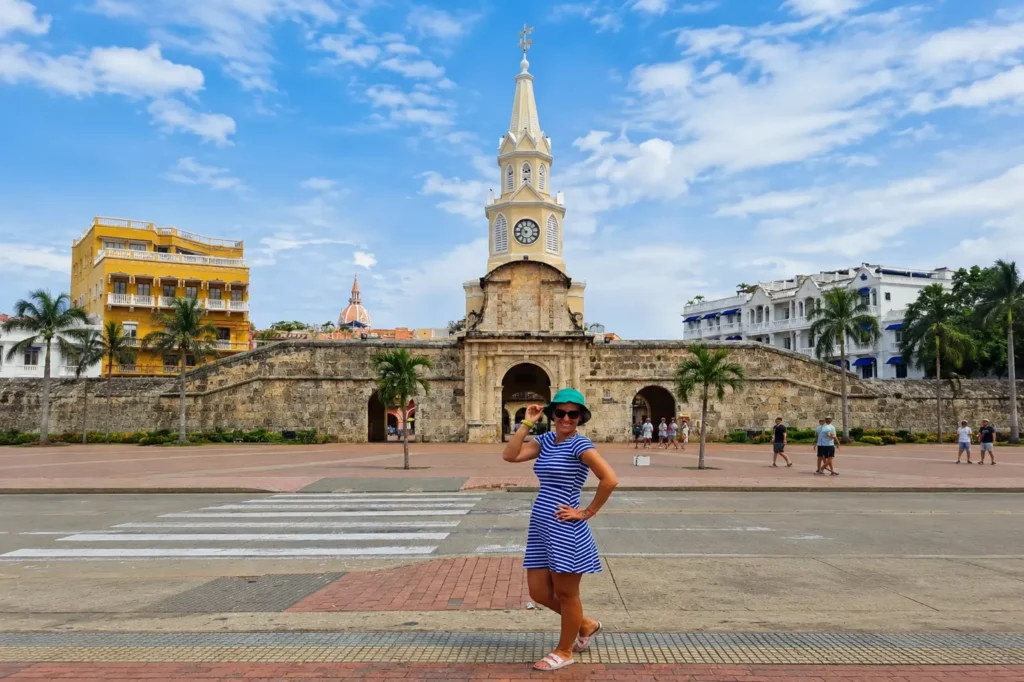
1. Walk the City Walls and Puerta del Reloj The Las Murallas ramparts circle the old town, and the Puerta del Reloj, the clock tower gate that once marked the main entrance to the walled city, is the classic first stop for most visitors.
2. Edgardo Carmona’s Sculptures Carmona is a Cartagena-born artist who spent years in construction before turning to sculpture, and it shows: his rusted-iron figures, like the men gathered around a table in Plaza San Pedro Claver, capture working-class trades most tourists never think about.
3. La Gorda Gertrudis by Botero Beyond the photo op, there’s a local superstition: touch her for good luck, and legend says you’ll return to Cartagena someday. Donated by Botero in 2000, she’s cast in bronze and weighs over 600 kilos.
4. Getsemaní’s Street Art and Nightlife Getsemaní feels completely different after dark: quiet by day, packed with music, food stalls, and dancing by night. The daytime version, murals and hand-painted shopfronts, is almost as interesting as the party it becomes once the sun goes down.
5. A Rosario Islands or Barú Boat Day If a single beach afternoon at Playa Blanca isn’t enough, the Rosario Islands further out offer calmer water and better snorkeling — worth considering as an alternative for your beach day.
🏨 Where to Stay & Eat
Where to Stay
🧍 Budget: Getsemaní has the best hostel density in the city, with easy walking access to the old town and cheaper food nearby. Santuario Getsemaní Hostel is a solid pick, with cubicle-style dorms for more privacy than a standard bunk room and a terrace bar that doesn’t feel like a party hostel. Search options through Hostelworld before you land.
💰 Mid-Range: Casa boutique hotels inside the walls put you within walking distance of everything without the luxury markup. Townhouse Boutique Hotel is a good example: a 4-star property with a pool and terrace, a short walk from Plaza Santo Domingo. Check current rates on Booking.com.
🛎️ Luxury: I stayed at the Amarla Boutique Hotel, a restored 17th-century mansion just off Plaza Santo Domingo. It’s central enough to walk to nearly every sight in this guide, and the rooftop pool is a genuine relief at the end of a hot day.
Where to Eat
Cartagena’s food centers on Caribbean seafood: ceviche, coconut rice, fried fish, and patacones. La Cevichería in Getsemaní, made famous by an Anthony Bourdain visit, is the classic first stop for ceviche, though expect a line. La Cocina de Pepina serves costeño home cooking at fair prices with more locals than tourists at the tables. For a special night, Carmen and Celele both reinvent Caribbean-Colombian cooking with tasting-menu ambition.
🍽️ Booking tip: Reserve Carmen or Celele two to three days ahead in July; both fill up despite being outside the December-March peak.
💰 Budget: Cost & Money-Saving Tips
Cost of Traveling
🧍 Budget (~$40-60/day): Hostel dorm, street food and set-menu lunches, walking or occasional taxis.
💰 Mid-Range (~$100-160/day): Boutique hotel room, a mix of casual and sit-down restaurants, a couple of paid activities like a Barú day trip.
🛎️ Luxury (~$250+/day): A property like Amarla, tasting-menu dinners, and private transfers for beach days.
Money-Saving Tips
- Eat lunch at a set-menu (menú del día) spot instead of a tourist restaurant; portions are generous and prices are a fraction of dinner menus.
- Agree on a taxi fare before getting in, or use InDriver, which shows the price upfront.
- The shared speedboat to Playa Blanca costs a fraction of a private car or tour, if you don’t mind waiting for the boat to fill up before departure.
- Shoulder months like July offer noticeably lower hotel prices than the December-March peak, without sacrificing much sunshine.
- Carry small COP bills; street vendors and small restaurants rarely break large notes.
🎒 What to Pack & Good to Know
What to Pack
Lightweight, breathable clothing is non-negotiable here; I overpacked on jeans and regretted it by day two. A reef-safe sunscreen matters both for your skin and for the reefs around Barú. A small dry bag protects your phone on boat trips, a set of packing cubes keeps humidity-prone clothes organized, and a portable charger helps on long walking days when the heat drains your battery faster than usual.
Safety, Accessibility & Etiquette
Cartagena’s main tourist zones, the walled city, Getsemaní, and Bocagrande, see heavy police presence and are considered safe by local standards, with petty theft and taxi overcharging as the most common issues rather than violent crime. Keep your phone out of sight in crowds, agree on prices before any service, and use a car rather than walking home alone late at night.
🚨 Emergency numbers: 123 for general emergencies, 155 for support specifically for women.
Travel insurance is worth arranging before you go; SafetyWing is a straightforward option for short trips. Cobblestone streets in the old town are uneven and not wheelchair-friendly in most areas, so travelers with mobility needs should plan routes carefully.
On etiquette, a friendly greeting goes a long way here. Cartageneros are generally warm and quick to chat, and a simple “buenas” before asking for directions or ordering food is noticed and appreciated. Street vendors can be persistent around the main plazas; a polite but firm “no, gracias” works better than ignoring them outright.
❓ FAQ
Is Cartagena worth visiting if I’ve already been to Cancún or Tulum?
Yes, it’s a different experience entirely. Cartagena is a living, walled colonial city with a resident population, not a resort strip, and the history is central to the visit rather than a backdrop.
Do I need to book Playa Blanca in advance or can I just show up?
You can arrange a car or a boat the same day through most hotels, but booking a day ahead in peak season avoids the scramble at the docks.
Is the tap water safe to drink in Cartagena?
Bottled or filtered water is the safer default for visitors, even though locals in the city center generally drink tap water without issue.
How many days do I actually need in Cartagena?
Three full days covers the old town and one beach day; four gives you breathing room, which is what I’d recommend given the heat.
Is Cartagena family-friendly?
Yes, especially Bocagrande for beach access and the old town for daytime sightseeing, though the nightlife-heavy streets of Getsemaní are better suited to evenings without young kids.
Will I actually see wildlife like iguanas or sloths in the city itself?
It’s not guaranteed, but it’s common enough. The park in the historic center has a resident iguana population, and sloths occasionally turn up in the trees overhead, no jungle excursion required.
✅ Wrap-Up
Quick Summary
- Best time: July (veranillo) or December-April for driest weather
- Average daily budget: $100-160 mid-range
- Ideal trip length: 4 days
- Good for: history lovers, couples, beach-and-culture combo trips
Final Words
This Cartagena travel guide barely scratches the surface, but the city stayed with me longer than I expected for a four-day stop. It’s the contrast that does it: door-within-a-door colonial homes by morning, an iguana crossing your path at noon, and a street packed with music and cocktails by midnight. Add a genuinely stunning beach an hour away, and it’s easy to see why so many travelers extend their stay once they land.
Planning your own trip? What part of Cartagena’s mix of history, beaches, and nightlife appeals to you most? 💬
For more real trip reports and destination guides, check out the rest of gotravelica.com.