Malaga Travel Guide 2026: Moorish Fortresses, Tapas Markets and Day Trips to Ronda
🌅 Introduction & Why Go
Every Malaga travel guide points you toward the Alcazaba and Calle Larios, and for good reason. What actually stays with you, though, is the rhythm of the place: castle in the morning, market at midday, a slow walk somewhere new by evening. I arrived as part of a longer Andalusia trip, already a few stops in, and Malaga still managed to feel like its own thing rather than a stopover.
The August heat hits you the second you step outside, thick and bright off the white buildings, and it shapes almost everything about how the day should go. Between the Moorish fortress on the hill, a cathedral that dominates the skyline, and a market hall that smells like fried fish and sherry vinegar, three or four days disappear fast — and that’s before you factor in Ronda and the Caminito del Rey sitting an easy drive away.
Quick Picks: Where to Stay
- 🧍 Budget: Feel Hostels City Center, with dorms and privates a five-minute walk from Parque de Málaga, breakfast included
- 💰 Mid-Range: AC Hotel Málaga Palacio by Marriott, with waterfront rooms looking straight at the port and the Alcazaba hill
- 🛎️ Luxury: Molina Lario Hotel, a well-located four-star pick just steps from the Cathedral, popular for its central position and attentive staff
🧭 Practical Info: When & How to Go
This part of the Malaga travel guide covers the basics to sort out before you land: visas, money, getting around, and timing your trip.
Quick Facts
- Visa & entry: Turkish citizens need a Schengen visa to enter Spain; passport holders from the EU, UK, US, and most of the Americas can enter visa-free for stays under 90 days.
- Language: Spanish, with a fast Andalusian accent that swallows the ends of words. English still gets by in the center, less so outside it.
- Currency: Euro (€). Cards are widely accepted, though the market stalls and smaller tapas bars often prefer cash.
- Plugs: Type C/F, 230V, the standard European two-pin socket.
- Mobile & Internet: An eSIM from Airalo or Yesim covers Spain and the rest of the Schengen zone if you’re continuing the road trip.
- Drone rules: Flying over the Alcazaba, the Cathedral, or the city center is restricted. Malaga’s historic core sits under protected airspace, so save the drone for the coastline outside downtown.
🛂 Visa note: Book your Schengen appointment well ahead of a summer trip — slots in Istanbul and Ankara fill up fast in July and August. Details on the application process are on the Spain visa application portal.
Getting There & Around
Málaga-Costa del Sol Airport (AGP) is one of Spain’s busiest, with direct routes from across Europe. Check Skyscanner for fares if you’re flying in rather than driving down from elsewhere in Andalusia. The airport sits about 8km from the center; the Cercanías C1 train runs straight into town for a couple of euros, or a private transfer through gettransfer skips the wait if you land late. If you’re using Malaga as a base for Ronda or the Caminito del Rey, a rental car from economybookings is worth booking ahead; both trips also run on Renfe trains, and local bus and transport tickets can be booked in advance through Klook if you’d rather not rely on the station ticket office.
Best Time to Visit & Trip Length
July and August are properly hot, often past 34°C by mid-afternoon, and the city slows down accordingly. Mornings and evenings are when things actually happen. April, May, and October trade a few degrees for far more comfortable walking weather. Four to five days covers the city center at an easy pace plus one day each for Ronda and the Caminito del Rey; fewer than three and you’ll be choosing between them.
🥵 Heat tip: Between July and August, plan the Alcazaba and any walking-heavy stop for before 11am or after 6pm. The stone paths and courtyards hold heat long after the sun peaks.
📅 Day-by-Day Itinerary
Day 1: Settling In
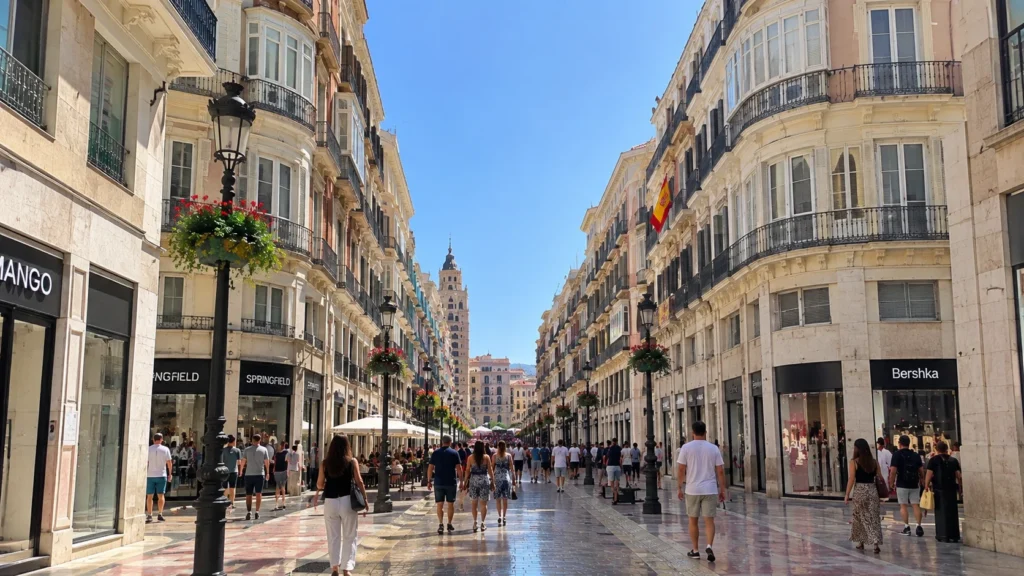
Land, check in, and spend the afternoon getting oriented around Calle Larios, Malaga’s main shopping street: marble paving, wrought-iron balconies, closed to cars and easy to get lost in on purpose. By early evening, head to Mercado Central de Atarazanas for a first round of tapas; go hungry and order more than you think you need, because everything is small and shared.
Day 2: Alcazaba and the Old Town
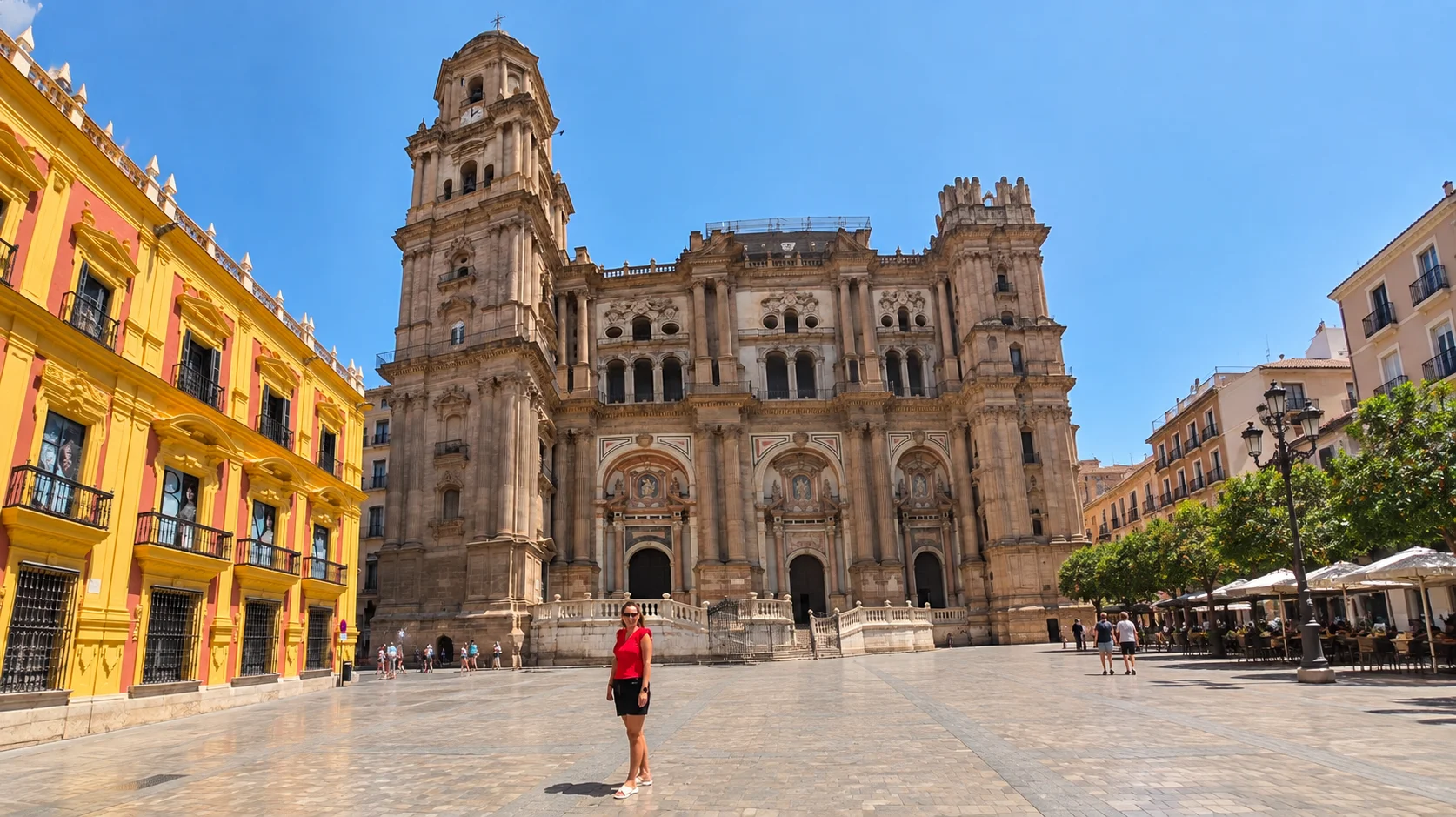
Start early at the Alcazaba before the heat sets in — the 11th-century Moorish fortress has narrow stone passages, courtyards with running water, and views over the port that improve with every set of stairs. From there it’s a short walk down to Málaga Cathedral, whose unfinished second tower earned it the nickname “La Manquita,” the one-armed lady. I’d planned on climbing up to the rooftop for a view back over the city center, but the ticket office turned me away — the tour had been closed for restoration, and nobody had mentioned it online before I went.
⚠️ Practical note: The Cathedral’s rooftop tour (Las Cubiertas) has been closed since April 2024 for restoration work expected to run for roughly three years, so it may not be open when you visit — check the official Cathedral website before planning your day around it.
Spend the rest of the afternoon around Plaza de la Merced and the Roman Theatre next to the Alcazaba entrance.
Day 3: Caminito del Rey
A day trip out to the Caminito del Rey, the boardwalk carved into the cliff face above the Guadalhorce gorge. Tickets go on sale on the official Caminito del Rey site months ahead and sell out fast for summer dates, so book early, or take a guided option through Klook if you’d rather skip the planning. Trains from Malaga to El Chorro run early and take under an hour, with a shuttle bus covering the last stretch to the entrance.
🎟️ Booking tip: Caminito del Rey tickets for each season go on sale months ahead and can sell out within hours for peak summer dates. Set a calendar reminder if you’re visiting in July or August.
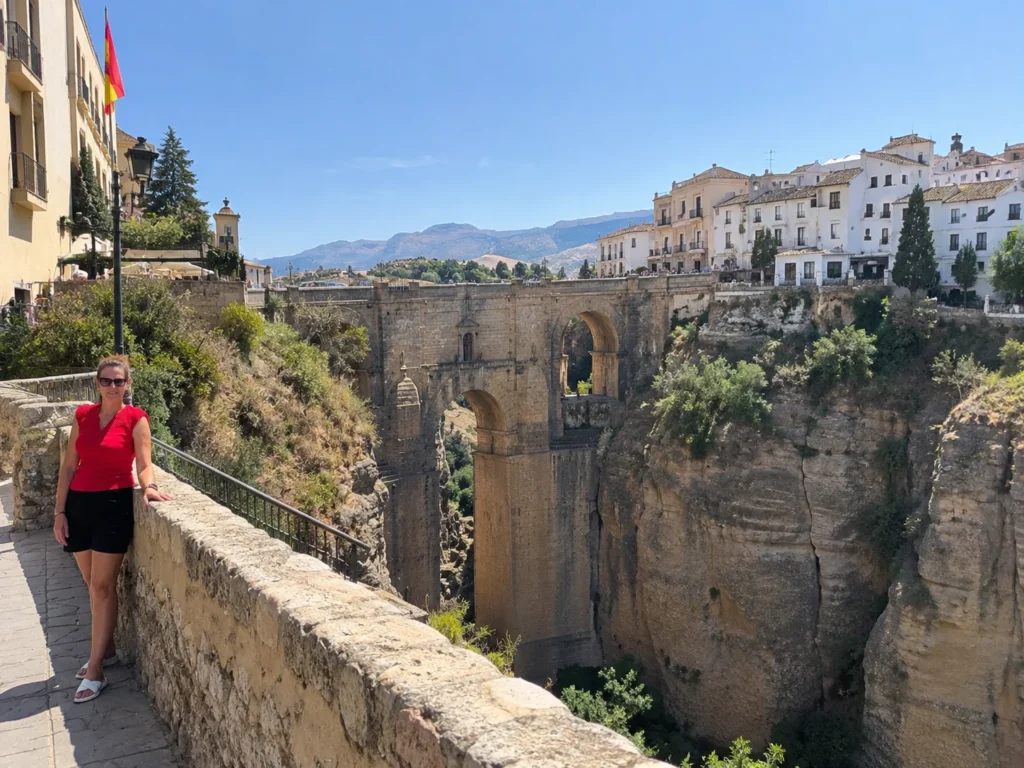
Day 4: Ronda
A second day trip, this time to Ronda, perched on either side of the dramatic El Tajo gorge. The train from Malaga María Zambrano takes around two hours through striking countryside, or it’s roughly 90 minutes by car if you’d rather drive. Ronda’s Puente Nuevo bridge and old town easily fill a full day on their own.
⭐ Top Experiences & Best Places to Visit
1. Alcazaba de Málaga
The best-preserved Moorish fortress on the Spanish mainland after the Alhambra, and worth the climb: the higher courtyards catch a breeze even in August, which counts for something.
2. Málaga Cathedral & the Old Town
The rooftop closure was a letdown, but the cathedral’s scale still holds up from inside, and the surrounding old town (narrow streets, orange trees, the odd flamenco guitar drifting out of a bar) is where Malaga’s slower pace actually shows itself.
3. Mercado Central de Atarazanas
A 19th-century iron-and-glass market hall built where a Moorish shipyard once stood, and still the city’s best spot for a long, unhurried tapas lunch among stalls selling fish, jamón, and produce.
4. Caminito del Rey
Not a Malaga city attraction technically, but close enough that skipping it would be a mistake: walkways bolted 100 meters above the gorge, with views that make the climb worth it.
5. Ronda
A distinctly different kind of Andalusian town, split by a gorge deep enough to feel dramatic from any angle; the day trip earns its reputation as one of the best out of Malaga
🏨 Where to Stay & Eat
Where to Stay
- 🧍 Budget: Larios Cool Hostel sits barely a hundred meters from Calle Larios and Málaga Cathedral, with a shared lounge and free Wi-Fi throughout.
- 💰 Mid-Range: Hotel Larios Málaga is where I stayed: a boutique Art Deco building right on Calle Larios itself, with a rooftop terrace that’s one of the better spots in the city for an evening drink.
- 🛎️ Luxury: Gran Hotel Miramar GL, a restored early-1900s building on Paseo de Reding with a pool and rooftop bar that overlooks the bay and the Alcazaba hill.
Where to Eat
- 🧍 Budget: Marisquería Casa Vicente, a small tapas bar steps from the Central Market, strong on fried fish and seafood at fair prices.
- 💰 Mid-Range: La Tranca, an unpretentious, loud, proudly local tapas bar with old posters covering every wall. Come for the wine and stay for the plates that keep arriving.
- 🛎️ Luxury: Restaurante José Carlos García, Malaga’s only Michelin-starred restaurant, set right on the Muelle Uno waterfront with views toward the port and the cathedral.
💶 Budget: Cost & Money-Saving Tips
Cost of Traveling
A mid-range day in Malaga, covering a hotel, two tapas meals, entry to the Alcazaba, and local transport, runs somewhere around €90–120 per person. Budget travelers sharing a hostel dorm and sticking to market food can get closer to €50–60 a day. Add roughly €25–70 per person for each day trip, depending on whether you go by train or book a guided tour.
Money-Saving Tips
- The Alcazaba and Gibralfaro Castle are free to enter every Sunday from 2pm, a solid saving if your schedule allows it.
- Buy Caminito del Rey and Ronda train tickets directly through official sites rather than resellers; the markup on third-party sites can be significant.
- Tapas portions at market stalls are cheaper than sit-down restaurant tapas for nearly identical food; Atarazanas is the obvious place to lean into this.
- A combined Alcazaba + Gibralfaro ticket costs less than buying the two separately if you’re planning to see both.
💡 Money-saving tip: If you’re only doing one of the two hilltop sites, the Alcazaba has the better payoff for the climb — Gibralfaro is a longer, steeper walk for a similar view.
🎒 What to Pack & Good to Know
What to Pack
- Comfortable walking shoes with real grip: both the Alcazaba’s stone paths and the Caminito del Rey’s boardwalk punish flip-flops.
- A wide-brimmed hat and reef-safe sunscreen; August sun in Malaga is no joke by 11am.
- A light scarf or cover-up for the Cathedral, which expects shoulders and knees covered.
- A refillable water bottle: public fountains around the old town help, and dehydration sneaks up fast in summer heat.
Safety, Accessibility & Etiquette
Malaga’s city center is generally safe day and night, though the usual pickpocket caution applies around Calle Larios and the market when it’s crowded. The old town’s narrow, cobbled streets are uneven in places, which is worth knowing if mobility is a concern; the newer parts of the city and the seafront promenade are considerably flatter. Emergency number across Spain is 112. Travel insurance is worth having for the day trips in particular, given the walking involved. SafetyWing is a straightforward option that covers mid-trip sign-ups, and Klook also sells short-term policies if you’d rather bundle insurance with a day-trip booking.
❓ FAQ
Is the Caminito del Rey actually dangerous?
No. Despite its old reputation as “the world’s most dangerous path,” the boardwalk was fully rebuilt in 2015 with sturdy railings and mesh flooring. It’s safe for anyone reasonably fit, though a genuine fear of heights makes it a hard day out.
Can I do Ronda and the Caminito del Rey on the same day?
Technically yes if you have a car and start early, but it’s a long, rushed day. Splitting them across two separate days, as I did, lets you actually enjoy both instead of racing between them.
Is the Málaga Cathedral rooftop open to visitors right now?
Not currently — the rooftop tour has been closed since April 2024 for restoration, with work expected to continue for roughly three years. The cathedral interior itself remains open as normal.
Do I need a car to see Malaga and its day trips?
Not for the city itself, which is very walkable, but a car does make Ronda and the Caminito del Rey easier and faster than relying on the limited train schedule to both.
What’s the best month to visit if I want to avoid the worst heat?
April, May, and October all trade the peak-summer crowds for temperatures in the comfortable low-to-mid 20s°C, which makes the Alcazaba climb a lot less punishing.
📝 Wrap-Up: Malaga Travel Guide Final Thoughts
Quick Malaga travel guide summary:
- Best time to visit: April–June or September–October for comfortable weather
- Average daily budget: €50–60 (budget) to €90–120 (mid-range)
- Ideal trip length: 4–5 days, including day trips
- Good for: history and architecture fans, tapas lovers, anyone building an Andalusia road trip itinerary
Malaga rewards a slower pace more than most Spanish cities I’ve been to. It’s easy to rush through the Alcazaba and Calle Larios in a day and call it done, but the city opens up more once you’ve let the heat set your schedule instead of fighting it. Between the fortress, the market, and two very different day trips a short drive away, it earned its spot on the route rather than just being a stop on the way to somewhere else. If you’re planning your own Andalusia trip, where does Malaga fit: the main event, or a base for Ronda and the Caminito del Rey?
If you’re building out the rest of a Spain itinerary, I’ve also written about Alicante and Barcelona.
For more real trip notes and city guides, browse the rest of the site at gotravelica.com.