Alicante Travel Guide 2026: Mushroom Streets, Market Tapas, and a City Built Around Its Beach
🍄 Introduction & Why Go
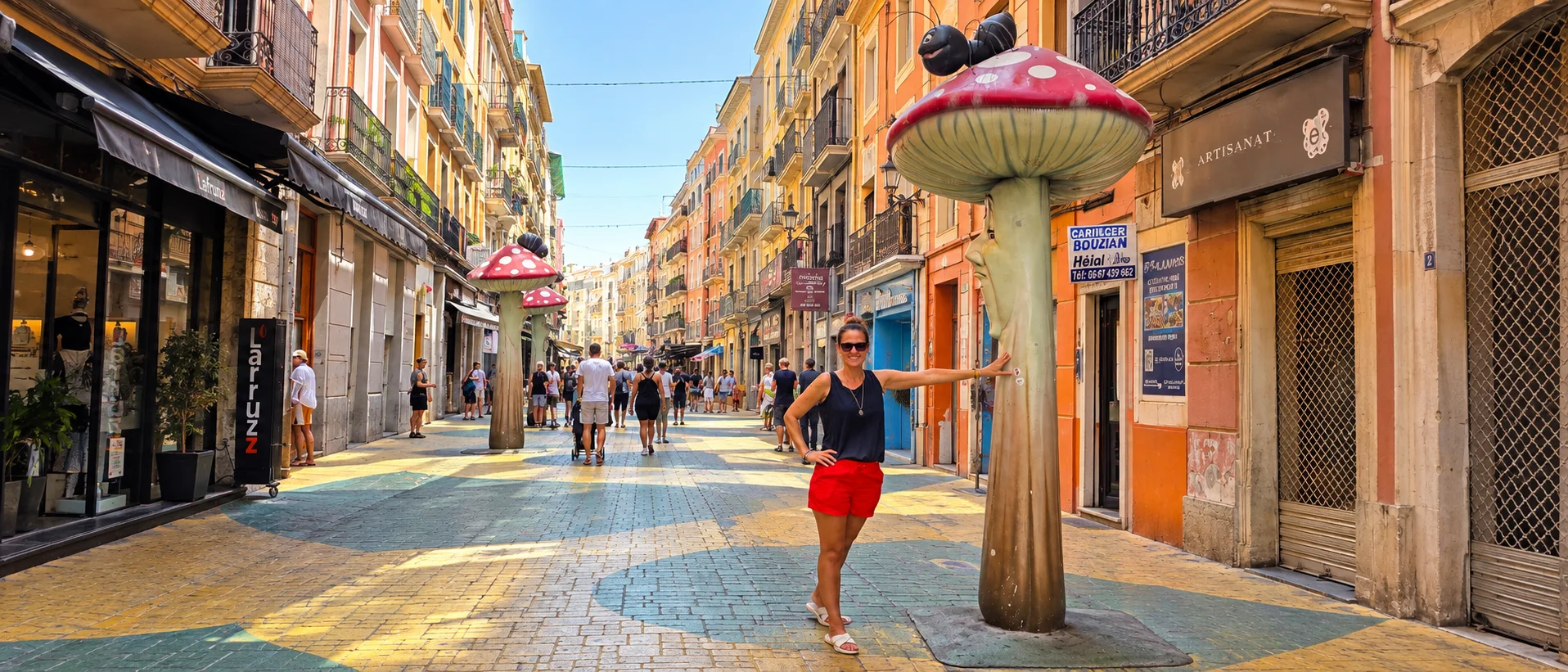
I landed in Alicante in August with no real plan beyond a market and a beach, and the city talked me out of needing anything more elaborate. The heat that month sits somewhere between beach weather and an excuse to duck into shade every twenty minutes, which is exactly how I ended up spending an unreasonable amount of time photographing giant mushroom sculptures on a narrow pedestrian street.
Three things carried the whole trip: wandering Calle de las Setas, the so-called Mushroom Street, with a camera that filled up faster than I expected; picking through stall after stall of tapas at the Mercado Central de Alicante until I’d basically had lunch three times over; and coming back each evening to a small, no-frills hotel two minutes from the action. Alicante travel guide searches tend to lump this city in with the wider Costa Blanca resorts nearby, but the old town and the market have a rhythm of their own that’s worth a dedicated stop.
Quick Picks: Where to Stay
- 🧍 The Market Hostel Alicante: steps from the Mercado Central, well-reviewed for its location and cleanliness
- 🛎️ Eurostars Lucentum: reliable 4-star option right in the city centre, an easy walk to everything
- 💎 Casa Alberola Curio Collection by Hilton: a restored historic building opposite the marina, roughly 800m from the old town
🧭 Practical Info: When & How to Go
Quick Facts
- Visa/entry: Alicante is in Spain’s Schengen Area; most Western visitors need only a valid passport for stays under 90 days.
Check entry requirements for your nationality before booking, as Schengen rules can change.
- Language: Spanish (Castilian) and Valencian are both official; English is common in the tourist zones but less so once you’re a few streets back from the centre.
- Currency: Euro (€).
- Plugs: Type C/F, 230V.
- Mobile & Internet: An eSIM from Airalo or Yesim is the easiest way to land with data already working.
- Transport tickets: The TRAM Metropolitano and city buses use a rechargeable card system; single tickets are also sold on board.
Getting There & Around
Alicante-Elche Miguel Hernández Airport (ALC) is the main gateway, and it’s well connected across Europe, so it’s worth comparing routes on Skyscanner before booking. From the airport, the C6 bus runs to the city centre roughly every 20 minutes, stopping at the Renfe train station and connecting with several TRAM lines along the way, with the ride taking about 25 minutes. A taxi covers the same distance in roughly 15 minutes.
For getting around once you’re there, the old town and seafront are entirely walkable. Renting a car makes more sense if you’re planning day trips along the Costa Blanca; economybookings is worth checking for rates, and a private transfer from the airport can be arranged through gettransfer if you’d rather skip the bus with luggage.
Best Time to Visit & Trip Length
August delivers the fullest version of Alicante’s beach-city identity — hot, bright, and busy — but it also means peak prices and crowded sand at Postiguet. Late spring and September trade a few degrees for noticeably thinner crowds and are worth considering if flexibility allows. Two to three days is enough to cover the old town, the market, and the beach without rushing, and most of this Alicante travel guide’s itinerary fits into that window. Add a day if you want to climb up to the castle or take a boat out to Tabarca Island.
August is peak season for the whole Costa Blanca; book both flights and hotels several weeks out if that’s when you’re going, as central rooms sell out fast.
🗓️ Alicante Travel Guide: Day-by-Day Itinerary
Day 1: Old Town and the Mushroom Street
Start in the historic centre and let the streets pull you toward Barrio de Santa Cruz, where the buildings lean into pastel colours and the lanes narrow enough that shade becomes a genuine strategy against the August sun. From there, cut over to Calle de las Setas — the pedestrian street more commonly known as the Mushroom Street. It’s a short stretch, but I spent far longer there than the length of the street would suggest, working around the giant mushroom sculptures for photos before ducking into one of the small bars lining it for a break from the heat.
The street gets busy with photo-takers in the late afternoon; if you want it quieter, aim for the first hour after the shops open.
Day 2: Mercado Central and the Waterfront
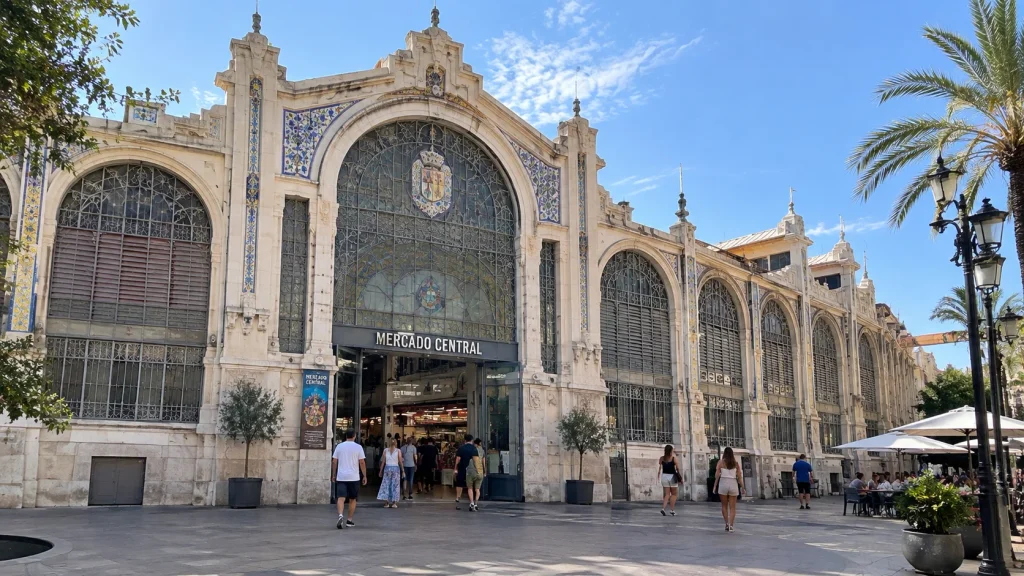
Give the Mercado Central de Alicante most of a morning. It’s a working market as much as a tourist stop, and the stalls circling the edges do a brisk trade in tapas from mid-morning onward. I moved from counter to counter rather than committing to one sit-down meal, which turned into an accidental tasting menu of everything the market had going that day.
The market runs Monday to Saturday, roughly 7:00-14:30 (a little later on Saturdays), and is closed on Sundays. Plan this day for a weekday morning if you can.
Day 3 (optional): Castillo de Santa Bárbara
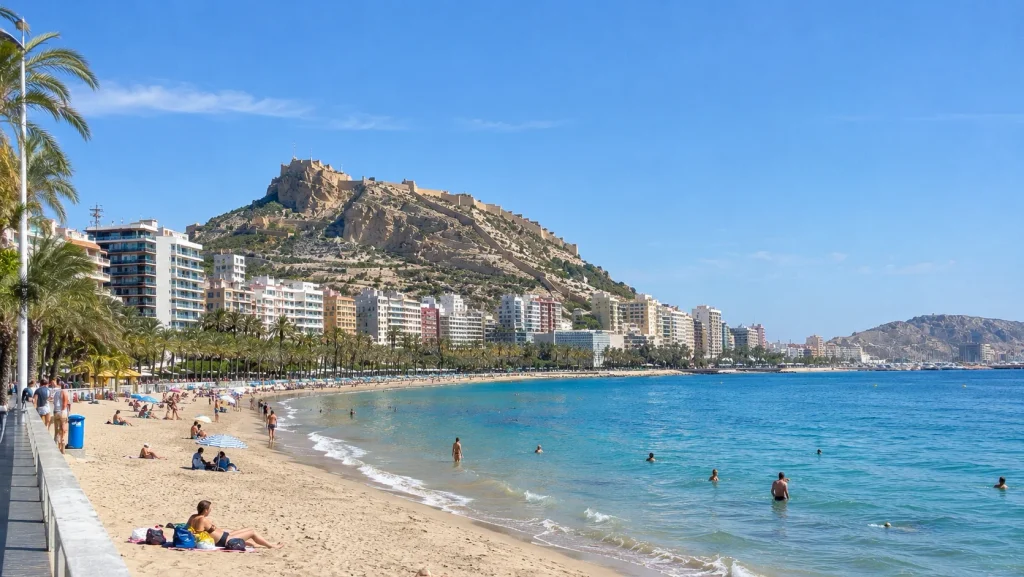
If you’re staying a third day, the hilltop Castillo de Santa Bárbara is the obvious add-on. A lift built into the rock connects Postiguet Beach directly up to the fortress, which saves the climb and delivers the same view over the city and the Mediterranean.
🏛️ Top Experiences & Best Places to Visit
1. Calle de las Setas (Mushroom Street)
This was the single thing I kept coming back to. A once-neglected backstreet was reimagined with oversized, colourful mushroom sculptures, and it’s now one of the most photographed corners of the old town — reason enough to build in extra time here rather than treating it as a five-minute stop.
2. Mercado Central de Alicante
An early-20th-century market building that’s still very much in daily use by locals, with a ring of tapas bars around its edges that turn grocery shopping into an unofficial food crawl.
3. Castillo de Santa Bárbara
One of the largest medieval fortresses in Spain, sitting on Mount Benacantil above the city, reachable on foot, by lift from the beach, or by road.
4. Explanada de España
A curving seafront promenade paved in millions of small tiles, best walked slowly in the early evening once the day’s heat starts to ease.
5. Postiguet Beach
The city’s main urban beach, a short walk from the old town, backed by the castle on the hill above it.
🛏️ Where to Stay & Eat
Where to Stay
🧍 Budget: Hotel San Remo. This is where I stayed, on Calle Navas in the city centre, and the location did most of the work: an easy walk to both the old town and the seafront, with basic but perfectly functional rooms.
🛎️ Mid-Range: Hotel Alicante Gran Sol by Meliá. The tallest building on Alicante’s skyline, with marina views and a short walk to the Co-Cathedral and the Explanada.
💎 Luxury: Hospes Amerigo. A boutique hotel with a rooftop pool and lounge, close to Postiguet Beach, for a more polished stay.
Where to Eat
🧍 Aitana’s Corner Bar, tucked into a corner of the Mercado Central itself, is the kind of small counter you sit at almost by accident and then don’t want to leave — order the octopus tapa and whatever vermouth they’re pouring that day.
🛎️ Racó de Pla, just outside the market on Calle Navas, does simple, well-executed plates built around fresh cheese, tomato, and good olive oil.
💎 La Taberna del Gourmet, a short walk away on Calle San Fernando, is the more polished option — a well-regarded tapas restaurant with its own bakery and a seafood-heavy menu worth dressing up for.
💶 Budget: Cost & Money-Saving Tips
Cost of Traveling
Alicante sits comfortably below Spain’s bigger cities on daily costs. A market tapas crawl can run €15-20 per person including drinks, while a sit-down dinner at a mid-range restaurant lands closer to €25-35 per person. Budget hotel rooms in August start around €50-60 a night, with mid-range hotels more typically €100-150 and boutique or luxury properties well above that during peak summer.
Money-Saving Tips
- Eat your main meal at the Mercado Central rather than at seafront restaurants, where prices climb for the view.
- Travel in via the C6 bus rather than a taxi if you’re not weighed down with luggage — it’s a fraction of the cost.
- Visit Calle de las Setas and the Explanada in the early morning or evening; they cost nothing and are far more pleasant outside peak sun.
- Look at shoulder-season dates (May-June or September) if your schedule allows — hotel rates in August are close to their yearly peak.
🎒 What to Pack & Good to Know
What to Pack
- Light, breathable clothing — August humidity makes the heat feel heavier than the temperature alone suggests
- A reusable water bottle for the market and the walk up to the castle
- Comfortable walking shoes for the old town’s uneven, occasionally cobbled streets
- Sun protection: hat, sunglasses, and a high-SPF sunscreen
Safety, Accessibility & Etiquette
Alicante is generally a safe, walkable city, though standard city precautions around bags and belongings apply in busy market and beach areas. The emergency number across Spain is 112. Consider travel insurance through SafetyWing before you go, and if you’re planning excursions beyond the city, Klook has both tours and travel insurance options worth comparing.
❓ FAQ
Is Calle de las Setas worth visiting if I’ve already seen “Instagram street” spots elsewhere in Spain?
It’s smaller and quieter than the big-city equivalents, which is part of the appeal — it’s a genuine neighbourhood street that happens to have mushroom sculptures, not a purpose-built tourist installation.
Can I do the Mercado Central as a full meal, or is it just for snacking?
Both work. Moving between two or three stalls easily adds up to a full lunch, and it’s a more interesting way to eat than sitting down at one restaurant for the whole meal.
How central is Hotel San Remo, realistically?
Central enough to walk to both the old town and the seafront in under fifteen minutes, which made it a convenient base for a short stay.
Do I need a car to see Alicante itself, separate from Costa Blanca day trips?
No — the old town, market, and beach are all walkable from a central hotel. A car only becomes useful if you’re heading out to nearby towns or beaches along the coast.
Is August too hot to enjoy walking around the old town?
It’s hot, but manageable if you time the walking for morning or evening and use the market and its bars as an air-conditioned (or at least shaded) break in the middle of the day.
✅ Wrap-Up
This Alicante travel guide comes down to a few numbers if you’re short on time:
Quick Summary
- Best time to visit: Late spring or September for lighter crowds; August for full beach-city energy
- Average daily budget: €60-100 for a mid-range trip covering food, a budget-to-mid hotel, and local transport
- Ideal trip length: 2-3 days
- Good for: Short beach-city breaks, market and food lovers, old-town wandering
Final Words
Alicante doesn’t ask for a long, packed itinerary — it rewards slowing down enough to work through a market stall by stall and to actually look at a street full of oversized mushrooms instead of just photographing it and moving on. If you’re mapping out a longer Costa Blanca or wider Spain route, my guides to Valencia and Barcelona cover two other stops worth weighing in. Where does Alicante fit for you: a base for the whole stay, or a stopover on the way somewhere else?
For more real trip notes and city guides, browse the rest of the site at gotravelica.com.