
Montpellier Travel Guide 2026: Sun, Squares, and a Slower Side of the French South
🌤️ Introduction & Why Go
I rolled into Montpellier in August, on the leg of a longer southern France route that would eventually carry me on to Toulouse. I’d picked it mostly because it sat conveniently between the coast and the road west, and I left having underrated it badly beforehand. Montpellier isn’t trying to be Nice or Aix; it’s warmer in temperament than in postcard looks, a university city where the terraces stay full past midnight and nobody seems to be rushing anywhere.
Three reasons it’s worth a stop on its own merits, not just a stopover: the pedestrian Old Town is built for aimless wandering, the Mediterranean is a short tram-and-bus ride away at Carnon-Plage, and it’s one of the easiest French cities to see without a car.
Quick Picks: Where to Stay
- 🧍 Budget: ibis Styles Montpellier Centre Comédie, bright, modern rooms a short walk from the tram, breakfast included.
- 🛎️ Mid-Range: Privilège Hôtel & Apparts Eurociel Centre Comédie, apartment-style rooms right by the main square, good for longer stays.
- 💎 Luxury: Pullman La Pléiade Montpellier Centre, rooftop pool and terrace views over the historic centre.
🧭 Practical Info: When & How to Go
Quick Facts
- Visa/entry: France is part of the Schengen Area; most non-EU visitors (US, UK, Canada, Australia) can stay visa-free for up to 90 days within any 180-day period. Full rules on France-Visas, the official government portal.
- Language: French. English is spoken in most central hotels and restaurants, less so once you’re away from the tourist core.
- Currency: Euro (€).
- Plugs: Type C/E, 230V; bring an adapter if you’re coming from outside continental Europe.
- Mobile & Internet: A prepaid eSIM from Airalo or Holafly is the easiest way to land with data already working.
- Transport tickets: TaM single tram/bus ticket is €1.60, valid for 1.5 hours including connections; a day pass runs around €4.
🛂 Visa note: As of this update, the EU’s new ETIAS pre-travel authorisation still hasn’t launched. It’s been pushed back repeatedly and is now expected sometime in 2027. Standard Schengen rules apply for now, but check the official ETIAS site before you fly in case that changes.
Getting There & Around
Montpellier–Méditerranée Airport (MPL) is 8 km from the centre, with regular flights from Paris and other European hubs; compare options on Skyscanner. The airport shuttle bus into town costs around €2–3 and takes 15–20 minutes to Place de l’Europe, where you can pick up the tram. A metered taxi runs roughly €12–21 by day; a private transfer through gettransfer is worth booking ahead if you land late.
If you’re arriving by train, Montpellier Saint-Roch station sits right at the edge of the Old Town, an easy walk to most central hotels. The Montpellier Tourist Office on Place de la Comédie is worth a stop for maps and up-to-date opening hours. If your route continues on by road, as mine did toward Toulouse, economybookings is a straightforward way to compare rental cars, and 12Go is useful for booking onward train or bus tickets across the south of France without juggling multiple sites.
🚧 Good to know: Summer 2026 brought track renovation works to several TaM tram lines between June and August, with rolling service changes. Check the official TaM site before you travel if you’re visiting in summer, since similar works tend to recur.
Best Time to Visit & Trip Length
August is hot: expect low-to-mid 30s°C, which makes the shaded Old Town streets and beach afternoons a practical necessity rather than optional. Spring (April–June) and September–October are milder and arguably better for long days of walking. Two to three days is enough to see the centre properly and fit in one beach day.
🗺️ Day-by-Day Itinerary
Day 1: Old Town and Place de la Comédie
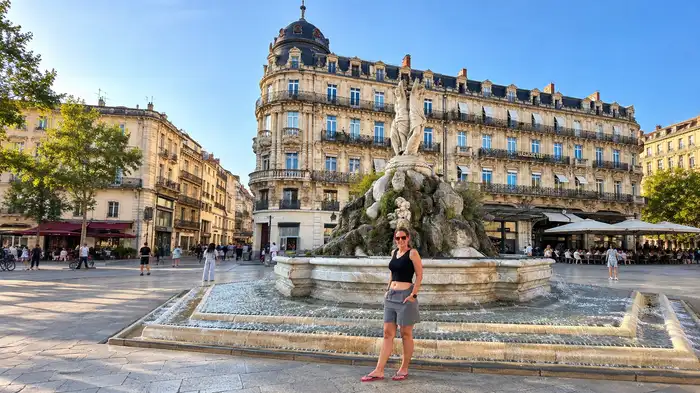
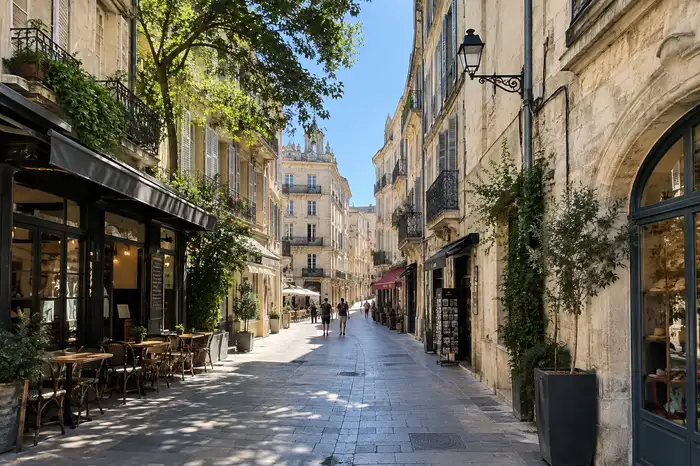
I started, like most visitors do, at Place de la Comédie — the huge pedestrian square with the opera house at one end that functions as the city’s living room. From there it’s a short walk into L’Écusson, the medieval Old Town, where I spent most of the afternoon without any real plan: narrow lanes, small boutiques, and a lot of café terraces that made it very easy to sit down more often than I’d intended.
The heat by early afternoon in August makes that kind of unhurried pace less a choice than a necessity. I finished the day up at the Promenade du Peyrou, where the Saint-Clément Aqueduct catches the last light, a good spot to end an afternoon that started at the fountain in Place de la Comédie.
☀️ August heat tip: Plan the Old Town wandering for morning or early evening. Midday sun between roughly 1–4pm is the time to be at a café terrace, not on your feet.
Day 2: Beach Day at Carnon-Plage
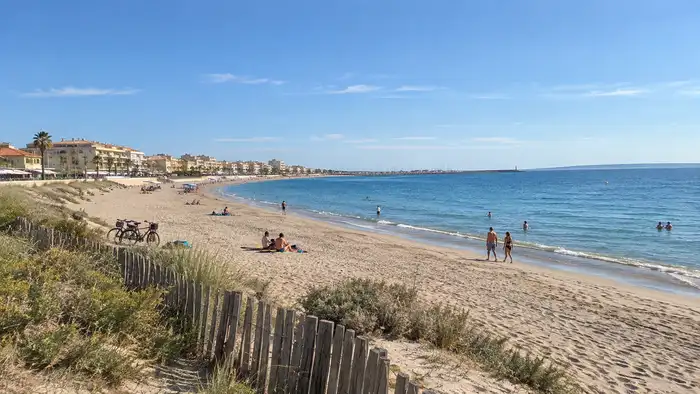
Carnon-Plage is the closest proper beach to Montpellier, about 13 km southeast, with fine sand stretching toward La Grande-Motte. I took the tram out and switched to a connecting bus; it’s a longer trip than it looks on the map, closer to 45 minutes door to door, so I built in a full afternoon rather than a quick dip. The water was calm and the beachfront had enough restaurants and shade to make a lazy day of it.
If a road trip continues afterward, as mine did toward Toulouse, Carnon or Palavas-les-Flots make a good final half-day before getting back in the car, since both are close enough not to eat into travel time.
🏛️ Top Experiences & Best Places to Visit
1. Place de la Comédie
The unavoidable starting point, and worth returning to more than once: it looks different at midday, at aperitif hour, and lit up at night.
2. L’Écusson (Old Town)
This is where the city actually reveals itself. Skip the streets directly off the main square and follow whichever narrow lane looks quietest; that’s usually where the better cafés are.
3. Montpellier Cathedral and the Peyrou area
The Cathédrale Saint-Pierre has an unusual, fortress-like façade that’s worth a look even from the outside, and the nearby Promenade du Peyrou gardens are free and shaded, a good place to cool off between sights. The Saint-Clément Aqueduct stretches out from the edge of the Peyrou toward the horizon; aim for late afternoon if you want the arches lit up at sunset.
4. Carnon-Plage
Covered above, but it earns its own spot on any shortlist: the closest genuine Mediterranean beach day Montpellier offers without a car of your own.
5. Les Halles Castellane
The city’s main covered food market, useful for picking up lunch supplies or simply seeing what local daily life looks like away from the tourist terraces.
Prefer to book ahead? Klook also lists tours and activities around Montpellier and the Hérault coast.
🛏️ Where to Stay & Eat
Budget: Best Western Plus Hotel Comedie Saint-Roch sits close to both the train station and Place de la Comédie, with straightforward, comfortable rooms, a reliable pick if you just want a clean base for walking everywhere.
Mid-Range: I stayed at Hôtel du Palais, a small 26-room hotel tucked beside Place de la Canourgue in the heart of the Old Town, inside a 200-year-old building. It’s properly central — a short walk from the cathedral and the Peyrou gardens — and the location alone made it easy to duck back for a break during the hottest part of the day.
Luxury: Hôtel Oceania Le Métropole Montpellier offers a proper garden courtyard and pool a few minutes from the main square, a nice contrast to the Old Town’s tighter streets.
🛎️ Booking tip: August is peak season and the centrally located hotels near Place de la Comédie and L’Écusson fill up fast. Book a few weeks ahead if your dates are fixed.
For eating, three that cover the range:
- Budget: Green Lab, tucked into the Old Town, does excellent falafel and is popular with students and vegetarians alike.
- Mid-Range: Casa Cubana, on one of the Old Town’s liveliest squares, is a relaxed spot for tapas and cocktails in the evening.
- Higher-End: Le Petit Jardin, near the cathedral, is a fine-dining bistro built around a truly lovely shaded garden; book ahead if you want a table outside.
💶 Budget: Cost & Money-Saving Tips
Cost of Traveling
A budget traveller can expect roughly €60–80 a day covering a hostel or budget hotel, tram tickets, market lunches, and one modest dinner out. A mid-range budget of around €110–150 a day comfortably covers a place like Hôtel du Palais, sit-down meals, and one paid activity. Luxury travel in Montpellier — a 4-star hotel, fine dining, private transfers — runs from about €250 a day upward, still noticeably cheaper than equivalent stays on the Côte d’Azur.
Money-Saving Tips
💡 Local tip: Montpellier residents get free public transport under a metropolitan pass scheme, but that doesn’t extend to visitors. Don’t expect to ride free just because a local mentions it, you’ll still need to buy a ticket.
- Order the formule du midi (fixed lunch menu) at sit-down restaurants; it’s often half the price of the same food at dinner.
- Promenade du Peyrou, the Old Town streets, and Place de la Comédie itself cost nothing to enjoy for a full day.
- A TaM day pass is worth it if you’re combining the Old Town with a Carnon beach trip in the same day.
- Buy market produce or a sandwich at Les Halles Castellane instead of a sit-down lunch on your busiest sightseeing day.
🎒 What to Pack & Good to Know
What to Pack
- Light, breathable clothing if visiting in summer: August heat is real and lingers into the evening.
- Comfortable, closed walking shoes for the Old Town’s uneven cobblestones.
- A reusable water bottle; refill points are common around the centre.
- Swimwear and a light towel if a Carnon-Plage day is on the itinerary.
- A hat and reef-safe sunscreen for both the city streets and the beach.
Safety, Accessibility & Etiquette
Montpellier is a relaxed, safe city to walk around, day or night, in the central areas. The usual city-centre caution applies around Place de la Comédie and the train station, so keep bags zipped and in sight in crowds. Emergency numbers: 112 (general EU emergency), 15 (medical), 17 (police). Travel insurance through SafetyWing is worth having for any trip through multiple countries.
❓ FAQ
Do I need a car to see Montpellier?
No. The Old Town is entirely walkable, and the tram network covers the airport, train station, and Carnon-Plage without much fuss. A car only becomes useful if you’re continuing on to somewhere like Toulouse or the Camargue afterward.
Is Carnon-Plage or Palavas-les-Flots the better beach day from Montpellier?
Carnon has a quieter, more spread-out sandy stretch; Palavas is livelier and slightly closer to the tram. Neither takes more than 30–45 minutes door to door, so it mostly comes down to whether you want lively or laid-back.
Is the Old Town walkable in August heat?
Yes, but plan around it: mornings and early evenings for walking, midday for a shaded café terrace. The narrow Écusson streets do offer more shade than the open squares.
How many days do you actually need in Montpellier?
Two full days covers the Old Town, Place de la Comédie, and a beach afternoon comfortably. A third day only makes sense if you want a slower pace or a day trip further along the coast.
✨ Wrap-Up: Montpellier Travel Guide Recap
Quick Summary
Here’s what this Montpellier travel guide comes down to:
- Best time to visit: April–June or September–October for milder weather; August for beach season despite the heat
- Average daily budget: €60–250+ depending on travel style
- Ideal trip length: 2–3 days
- Good for: Old Town wandering, café culture, an easy beach day without a car
Final Words
Montpellier won’t dominate anyone’s France itinerary the way Paris or Nice will, and that’s part of what made it work as a stop — nothing felt like it had to be rushed. If you’re routing through the south of France by road, as I was on my way to Toulouse, it’s an easy, unstressful place to break up the drive for a day or two.
It pairs naturally with my other guides to Nice, Marseille and Narbonne if you’re covering more of the coast. If you’ve been, I’d genuinely like to know: did you make it out to Carnon, or did the Old Town’s café terraces keep you closer to the centre the whole time?
For more real trip notes and city guides, browse the rest of the site at gotravelica.com.