Toulouse Travel Guide 2026: Wandering the Streets of France’s Pink City
🌸 Introduction & Why Go
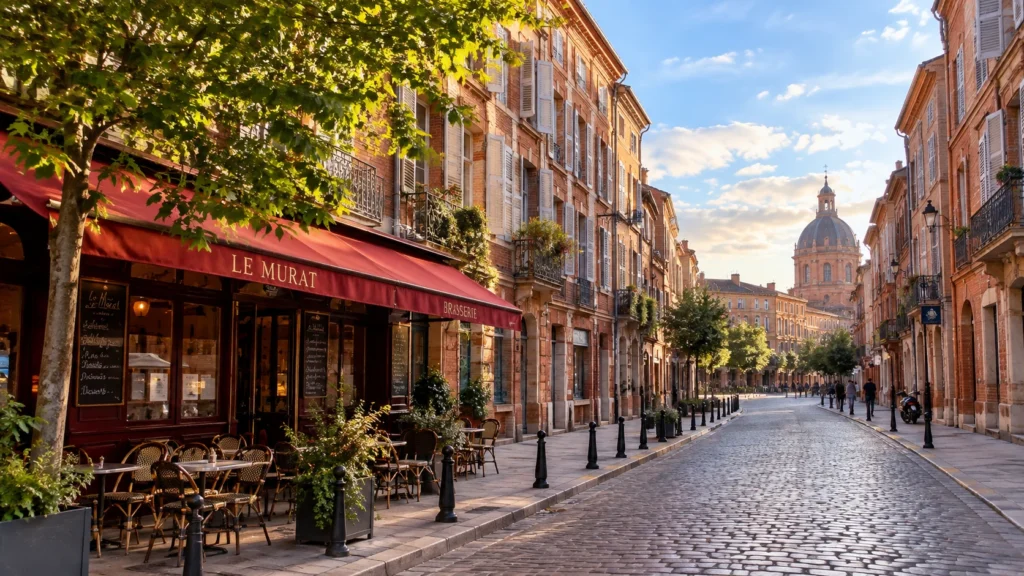
Toulouse doesn’t announce itself the way Paris or Nice does. There’s no single postcard shot that sums it up. What hits you first is the color: whole streets of soft, dusty pink brick, glowing under the August sun, which is exactly why locals call it La Ville Rose. I arrived as part of a longer southern France route, half expecting a stopover city, and left wondering why it isn’t higher on more people’s lists.
This Toulouse travel guide is built around a real August visit, so the heat was real too, and I planned around it rather than against it, with mornings and early evenings outdoors and a slower pace midday. Three things stayed with me: the brick-lined old town that rewards aimless walking more than any checklist, the quiet weight of Basilique Saint-Sernin, and an afternoon at Marché Victor Hugo that turned into a proper seafood lunch. Toulouse is compact, walkable, and unpretentious, and that combination is its own kind of charm.
Quick Picks: Where to Stay
- 🧍 Budget: ibis budget Toulouse Centre Gare: simple, clean rooms near the train station, a short tram ride from the Capitole
- 💰 Mid-Range: Novotel Toulouse Centre Compans Caffarelli: modern rooms with a pool, a 15-minute walk to the old town
- 🛎️ Luxury: La Cour des Consuls Hotel & Spa Toulouse – MGallery Collection: a converted 18th-century mansion in the city-centre shopping district, with a proper spa
🧭 Practical Info: When & How to Go
Quick Facts
- Visa/Entry: France sits in the Schengen Area; depending on your passport, you’ll either need a Schengen visa or can enter visa-free for short stays
🛂 Visa note: Check the France-Visas official portal for your specific nationality before booking anything — this isn’t the kind of detail worth guessing on.
- Language: French, with an Occitan-flavored accent specific to the region
- Currency: Euro (€)
- Plugs: Type C/E, 230V
- Mobile & Internet: An eSIM makes the most sense for a short stay, active the moment you land
- Transport tickets: Tisséo runs the metro, tram and bus network; tickets are sold at stations and through the Tisséo app
Getting There & Around
Toulouse-Blagnac Airport (TLS) is the main gateway, with connections across Europe. Skyscanner is the easiest place to compare fares if Toulouse isn’t your only stop. From the airport, Tram Line T2 reaches the city centre in about 20 to 25 minutes, and it’s cheaper than a taxi and just as fast in daytime traffic. For a fixed, pre-booked option instead, an airport transfer is worth arranging ahead of time.
Once you’re in the centre, everything worth seeing, the Capitole, the basilica, the market, the riverside, sits within easy walking distance. If your trip continues beyond the city, an economybookings rental car is worth comparing, since the surrounding Occitanie countryside gets little love from public transport.
Best Time to Visit & Trip Length
May–June and September–October bring milder days and thinner crowds. I was there in August, and while the pink brick looks stunning against a hard blue sky, the midday heat is no joke, so plan museums and markets for the morning and save the terraces for evening. Two to three days is enough to cover the highlights without rushing.
🗺️ Day-by-Day Itinerary
Day 1: Place du Capitole and the Old Town
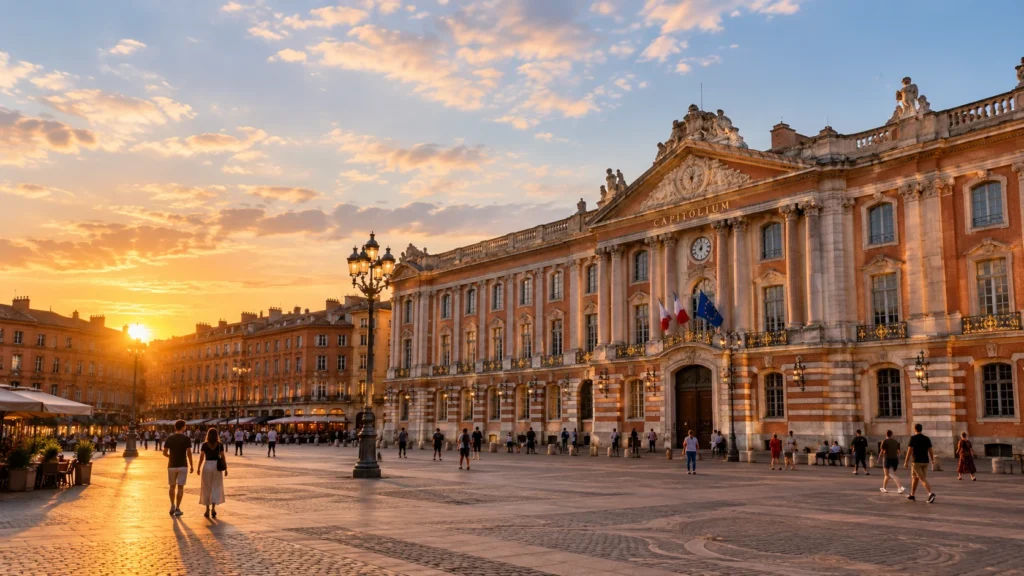
Start at Place du Capitole, the city’s grand central square and the obvious orientation point for everything else. I sat at one of the cafés lining the square with a coffee and just watched it fill up: buskers, students cutting through on bikes, the Capitole building catching the afternoon light. From there, the old town unravels in every direction, and the real fun is in not following a strict map. Half-timbered courtyards and quiet brick lanes turn up where you don’t expect them.
🌤️ Heat tip: In summer, do the walking in the morning and save the square-side café sitting for late afternoon, once the buildings start throwing shade.
Day 2: Saint-Sernin and Marché Victor Hugo
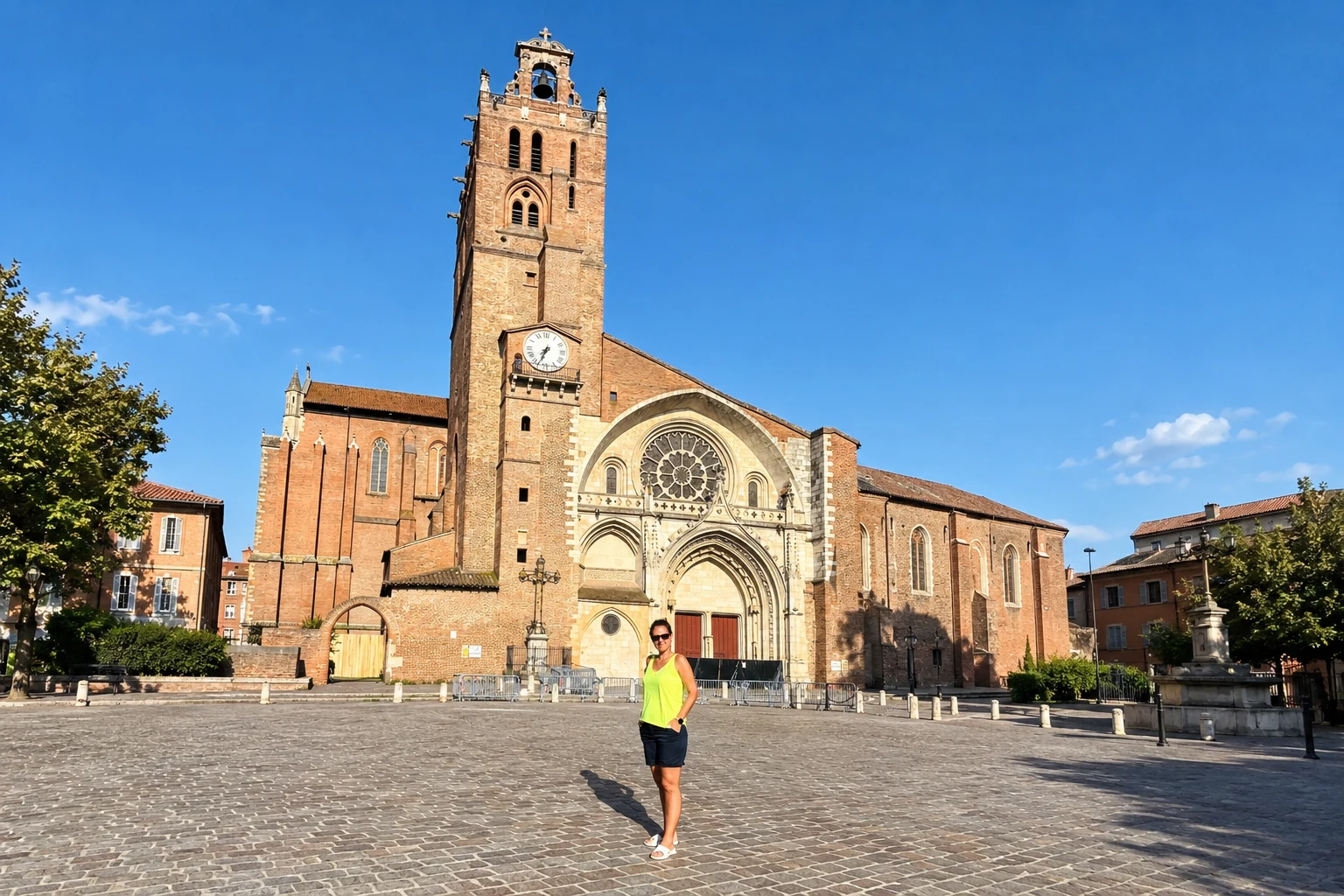
Morning is for Basilique Saint-Sernin, a UNESCO World Heritage-listed Romanesque church and one of the largest of its kind in Europe. It isn’t a flashy building from the outside, but stepping in, the scale of it, the long nave, the stone quiet after the street noise, is what stays with you.
🏛️ Good to know: Modest dress is appreciated inside the basilica (shoulders covered), and it’s quietest right after opening, before the tour groups arrive.
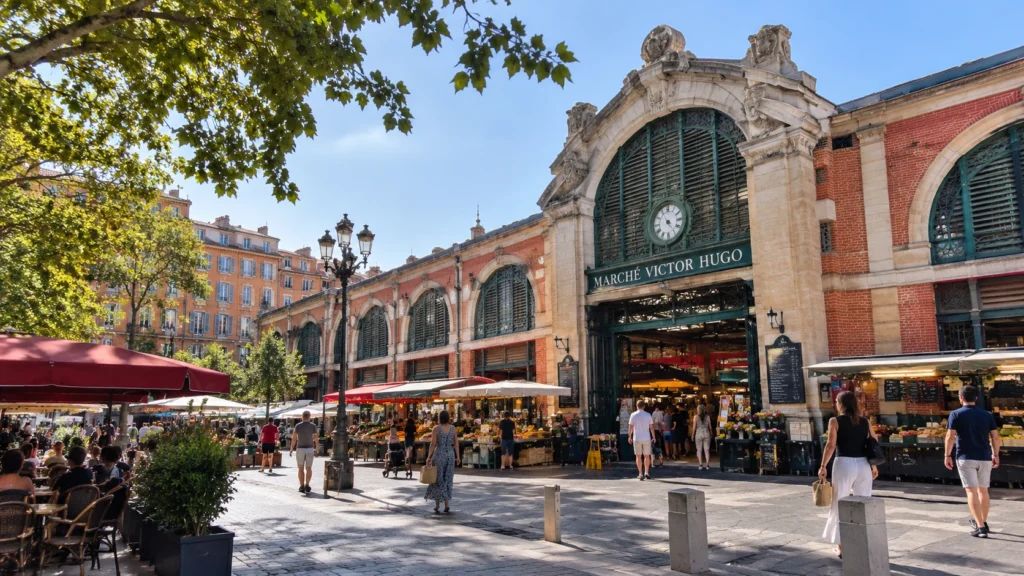
From there, head to Marché Victor Hugo, the covered market locals treat as a daily institution.
🛒 Market note: The market runs Tuesday to Sunday, closed Mondays, and the best stalls and upstairs restaurants get busy fast around lunchtime.
Ground floor is stalls, fish, cheese, charcuterie, produce, and upstairs are small restaurants built around whatever’s freshest downstairs. I ended up at one of the seafood counters, and it was easily one of the better lunches of the whole trip: simple, fresh, no fuss.
🏛️ Top Experiences & Best Places to Visit
1. Place du Capitole
The city’s living room: cafés, the Capitole building’s grand façade, and a square that’s just as good for a slow evening drink as it is for a quick coffee between sights.
2. Basilique Saint-Sernin
The UNESCO-listed centerpiece of Toulouse’s old town, and a genuinely peaceful place to sit for a few minutes once you’re inside.
3. La Ville Rose Streets
The brick itself is the attraction. Toulouse’s pink-toned facades look different at every hour, and wandering without a fixed destination is arguably the best way to spend an afternoon here.
4. Marché Victor Hugo
Come hungry. The market’s upstairs restaurants, built directly on top of the ground-floor stalls, are where locals actually eat lunch.
5. Canal du Midi
A UNESCO World Heritage waterway that cuts through the edge of the city centre, worth a stretch of walking or cycling if you want a break from the old town’s stone and brick.
More Things to Do in Toulouse
If you’d rather have a local guide handle the planning, a Klook day tour is worth a look for trips out into the Occitanie countryside.
🛏️ Where to Stay & Eat
Where to Stay
- 🧍 Budget: Ibis Styles Toulouse Capitole. Central, simple, and an easy walk to the main square.
- 💰 Mid-Range: Grand Hotel de l’Opera, BW Premier Collection. Right on Place du Capitole itself, so you’re steps from everything.
- 🛎️ Luxury: Le Grand Balcon Hotel. Where I stayed, and the location can’t be beaten. It’s got 1930s décor, a two-minute walk to the square, and a central spot that meant I never needed a taxi. If you want to splurge on location alone, this is the one.
Where to Eat
- 🧍 Budget: the upstairs stalls at Marché Victor Hugo. A proper local lunch without the sit-down-restaurant price tag, especially at the seafood counters.
- 💰 Mid-Range: Le Bibent. A grand 1861 brasserie right on Place du Capitole, good for cassoulet or a seafood platter with a square-side view.
- 🛎️ Splurge: Restaurant Emile. Widely considered the city’s benchmark cassoulet address, on the pedestrian Place Saint-Georges.
Booking a room through Hostelworld also works well if you’re traveling on a tighter budget and don’t mind a shared or simpler setup.
💶 Budget: Cost & Money-Saving Tips
Cost of Traveling
Toulouse runs noticeably cheaper than Paris or the Côte d’Azur. Budget travelers can get by on €60 to €80 a day covering a hostel or budget hotel, market lunches, and public transport. Mid-range travel, a 3-star hotel plus restaurant dinners, lands closer to €130 to €180 a day. Luxury stays with fine dining push past €250 a day.
Money-Saving Tips
- Eat lunch at Marché Victor Hugo instead of a sit-down restaurant; it’s cheaper and arguably better.
- Basilique Saint-Sernin is free to enter, so budget your museum money elsewhere.
- Walk. The old town is small enough that a metro or tram ticket is often unnecessary once you’re in the center.
- Visit in shoulder season, May–June or September–October, for both lower hotel rates and more comfortable walking weather.
- Book your eSIM before you land instead of paying for airport WiFi or roaming.
🎒 What to Pack & Good to Know
What to Pack
- Breathable, light clothing if visiting in summer; the brick city holds heat
- Comfortable walking shoes, since the old town is built for wandering, not driving
- A refillable water bottle
- Sun protection, especially if your trip lines up with the hotter summer months
Safety, Accessibility & Etiquette
Toulouse is a generally safe, walkable city, with the usual big-city caution around bags and pockets in crowded market areas. Emergency number in France: 112. Travel insurance is worth having regardless; SafetyWing is a straightforward option for trip coverage.
❓ FAQ
Is Toulouse worth visiting if I’ve already seen Paris and the south of France?
Yes. It has a completely different character, built around brick architecture and a genuinely local pace rather than a tourist-first one.
How hot does Toulouse get in August?
Hot enough to plan your day around it. Mornings and evenings outdoors, indoor or shaded activities through the early afternoon.
Is Marché Victor Hugo just for browsing, or can you actually eat there?
Both. The ground floor is stalls to buy from, and the upstairs restaurants serve full lunches made from what’s downstairs.
Do I need a car to see Toulouse itself?
No. The center is compact and walkable; a car only becomes useful if you’re heading out into the surrounding Occitanie countryside.
Is Basilique Saint-Sernin worth the visit if I’m not particularly religious?
Yes. It’s as much an architectural and historical stop as a religious one, and it’s free.
✈️ Toulouse Travel Guide Wrap-Up
Quick Summary
- Best time to visit: May–June or September–October
- Average daily budget: €60–250+ depending on style
- Ideal trip length: 2–3 days
- Good for: architecture lovers, food-focused travelers, anyone doing a wider southern France route
Toulouse never tried to sell itself to me the way some cities do, and that’s exactly what made it stick. It’s a city you walk through rather than photograph your way through: brick streets, a market worth planning a meal around, and a square that’s just as good empty in the morning as it is full at night. If you’re routing through southern France, it deserves more than a half-day stop.
What’s the one city on your route that surprised you more than you expected? 💬
For more real trip notes and city guides, browse the rest of the site at gotravelica.com.
If you’re exploring more of southern France, I’ve also written about Nice, Marseille, and Narbonne.