Narbonne Travel Guide 2026: A Quiet Roman Town With One Wild Weekend a Year
🏛️ Introduction & Why Go
Narbonne doesn’t announce itself. There’s no single postcard monument pulling you off the A9 motorway, and that’s sort of the point. I went at the end of August, and the town I found was half sleepy Roman outpost, half open-air stage: the municipality had just kicked off its summer festival, and the usually calm streets around the centre were suddenly full of music and crowds. I wouldn’t call Narbonne a must-see in the way Carcassonne or Nice is. But if you time it around that festival, it earns its place on the map for a few days.
Quick Picks: Where to Stay
- 🧍 Budget: ibis budget Narbonne Est, simple, 2-star, easy to reach by car or a short taxi ride.
- 💰 Mid-Range: Hôtel de France, small, right on the canal, steps from Les Halles.
- 🛎️ Luxury: Hôtel La Résidence, a 19th-century mansion turned boutique hotel with individually decorated rooms.
🧭 Practical Info: When & How to Go
Quick Facts
- Visa/entry: Narbonne is in mainland France (Schengen Area); check your own passport’s Schengen requirements before booking.
Visa rules change. Always confirm current entry requirements on the France-Visas official portal before you travel.
- Language: French, with a strong Occitan/southern accent in daily life.
- Currency: Euro (€).
- Plugs: Type E, 230V.
- Mobile & Internet: Coverage is solid in the town centre; grab an eSIM from Airalo or Yesim before landing so you’re online from the airport.
- Transport tickets: Local buses run on the Narbonne Agglo network; most of the historic centre is walkable on foot. For day trips to Carcassonne or Béziers, Klook is worth checking for regional transport options.
Getting There & Around
Narbonne itself has no airport. The closest is Béziers-Cap d’Agde Airport, about a 40-minute drive away, though it only serves a handful of European routes; Montpellier and Toulouse airports give you more direct options. I’d recommend comparing routes on Skyscanner before deciding which one to fly into.
Béziers-Cap d’Agde’s route list is thin outside peak summer months. Check current flight schedules before you book, since some connections only run seasonally.
By rail, Narbonne’s SNCF station has direct connections to Paris, Barcelona, Toulouse, Marseille, and several regional destinations, and the train station sits close enough to the centre to walk with luggage. For an airport transfer, book ahead with a service like gettransfer rather than negotiating a taxi at arrivals.
If you’re driving in from elsewhere in the south (Barcelona, Perpignan, Montpellier), a rental car makes the most sense; it’s also how you’ll reach Fontfroide, which sits outside town. Compare rental options on economybookings rather than booking on the spot.
Best Time to Visit & Trip Length
Two or three days is enough to cover the centre, the canal, and a half-day trip out to Fontfroide. Summer is busy but not overwhelming, since the coast nearby soaks up most of the crowd pressure, and the town itself never feels packed the way bigger Mediterranean cities do.
If you have a fourth day, Narbonne makes a workable base for a day trip further afield: Carcassonne’s fortified medieval Cité is roughly an hour away by train, and Béziers is barely a fifteen-minute ride in the other direction. Neither is essential, but both are easy add-ons if you’re not in a rush.
🗓️ Day-by-Day Itinerary
Day 1 — Settling In and the Canal
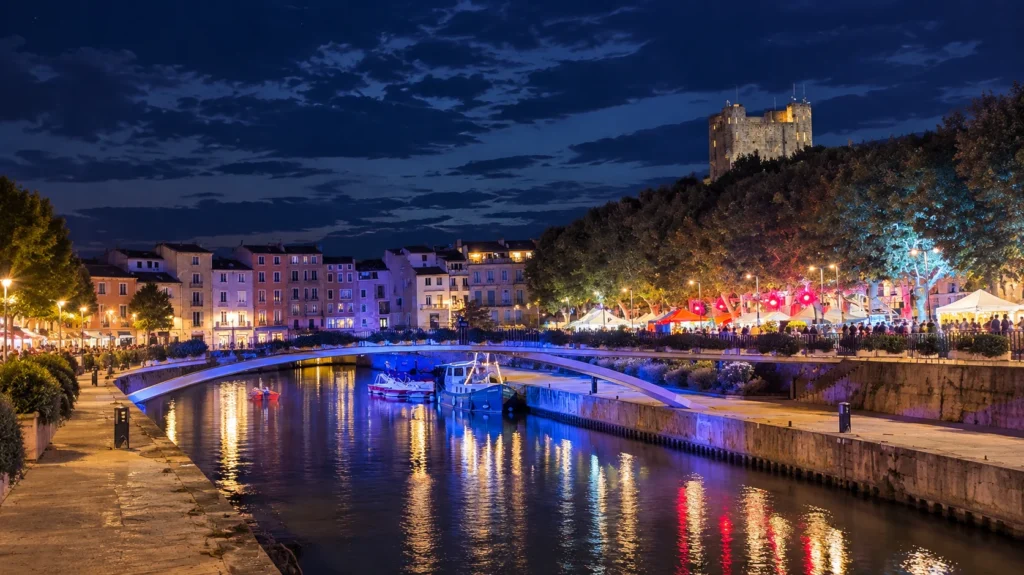
Land in the historic centre and let the Canal de la Robine set the pace. It cuts right through the middle of town, lined with plane trees and cafés, and it’s the kind of place you walk without a real destination in mind. I ended up doing several loops around it over the stay rather than a single planned route.
Day 2 — The Cathedral, the Palace, and the Market
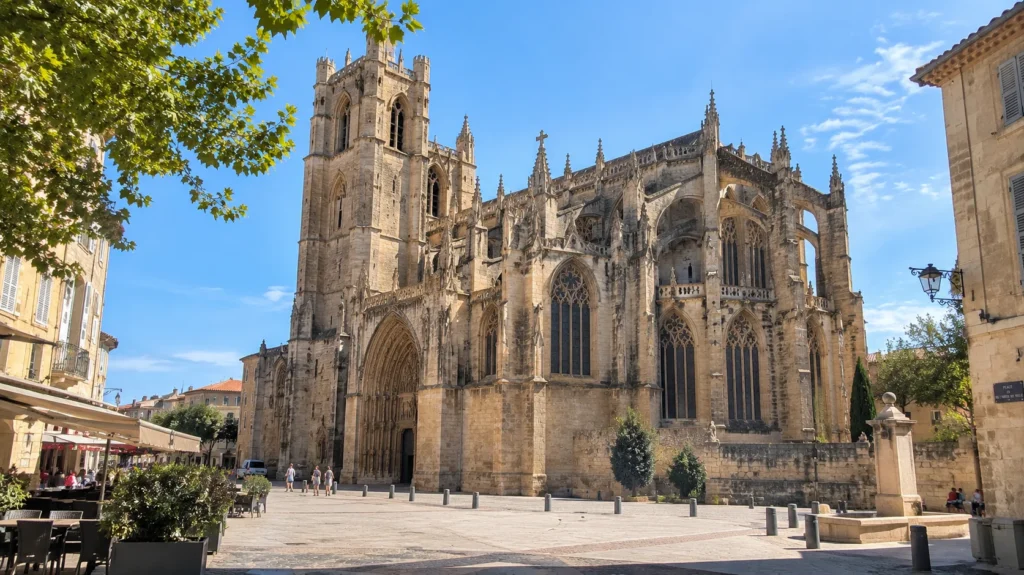
Narbonne Cathedral (Saint-Just-et-Saint-Pasteur) is the odd, striking centrepiece of the old town: construction began in 1272 as an enormously ambitious project that was never finished, so what you walk into is essentially an oversized choir with no nave, a building permanently mid-sentence. It’s worth ten minutes just standing in the courtyard trying to picture what it was supposed to look like.
Right next door, the Palais des Archevêques (Archbishops’ Palace) forms the other half of Narbonne’s medieval core, and it’s easy to combine both in a single morning. The palace now houses the town hall and a small museum, and a single ticket also gets you up the 13th-century Donjon Gilles Aycelin for a rooftop view over the old town’s terracotta roofs.
By midday, walk down to Les Halles, Narbonne’s covered market. It’s a cast-iron, Baltard-style hall from 1901 sitting right on the Canal de la Robine, and it’s less a tourist stop than the town’s actual daily rhythm: butchers, cheesemongers, and a handful of stalls where you can eat standing at a zinc counter. Chez Bébelle, tucked inside the market itself, is the kind of spot locals point you toward if you ask where to get lunch.
I happened to be there for the tail end of Barques en Scène, the free municipal festival that takes over the town centre every year at the end of August, with concerts and street performances along the Promenade des Barques and Cours Mirabeau running until 2am. If your dates allow it, this is genuinely the best reason to plan a Narbonne trip around late August rather than any other week.
If free live music and a packed town square sound like too much, visit earlier in August — the Cathedral, palace, and market are just as good without the crowds.
Day 3 — Abbaye de Fontfroide
Rent a car or book a day tour out to Abbaye de Fontfroide, a former Cistercian monastery a short drive outside the city. The road there cuts through the Corbières countryside, past cork oak groves that thin out into scrubland the closer you get. It’s a proper half-day trip: cloisters, rose gardens, and a stillness that’s a sharp contrast to the festival buzz back in town. A local guided option through GetYourGuide is worth checking if you’d rather not navigate rural roads yourself; Klook lists similar day tours out to the abbey too.
🏺 Top Experiences & Best Places to Visit
1. Canal de la Robine
The town’s real spine. Walk it at any hour, but sunset is when it earns its reputation.
2. Narbonne Cathedral
An unfinished 13th-century giant. Half the drama here is in what’s missing.
3. Abbaye de Fontfroide
A Cistercian abbey a short drive into the Corbières countryside, worth it for the drive past the cork oaks as much as the cloisters themselves.
4. Barques en Scène (late August)
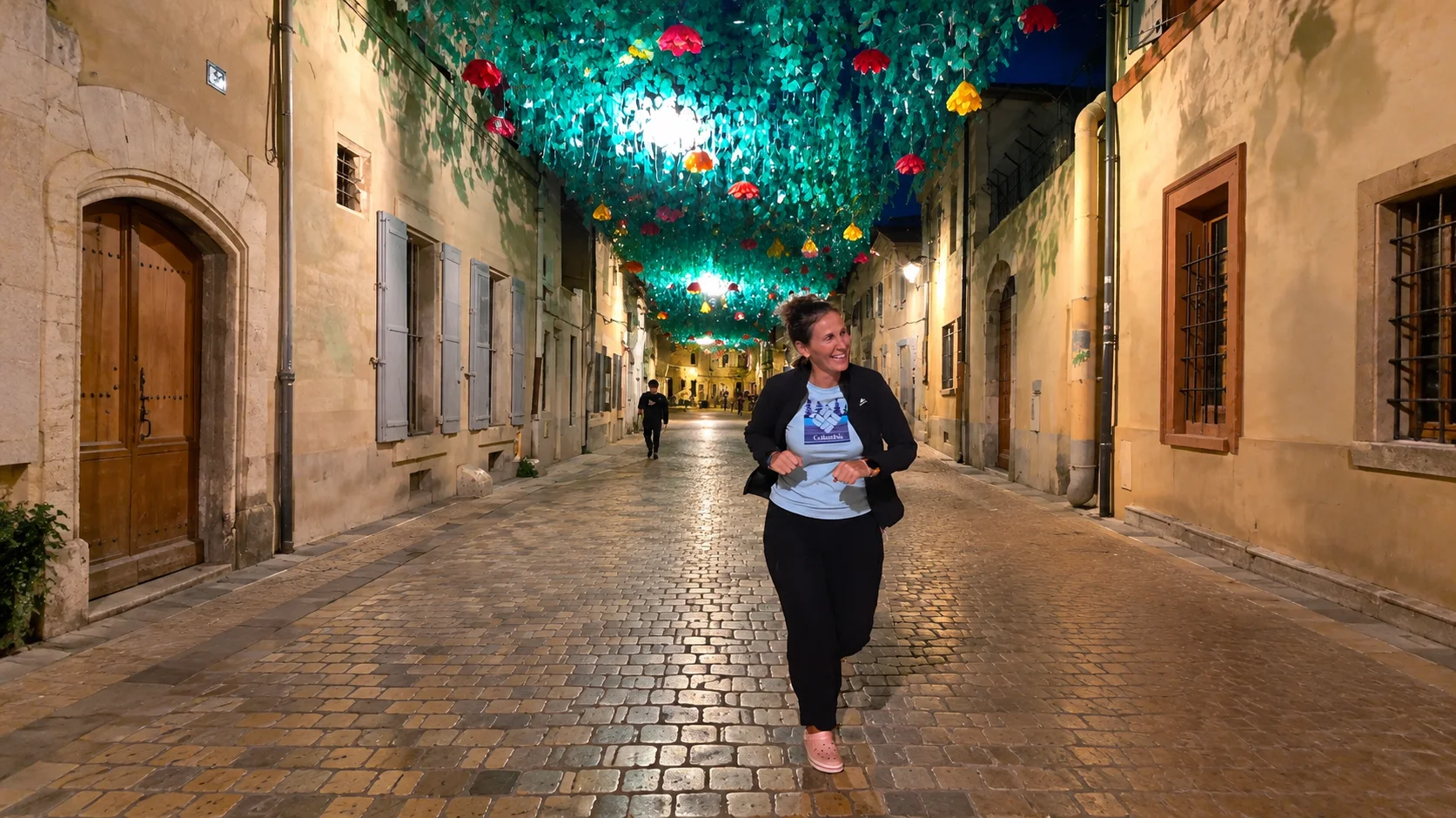
Come for this and the rest falls into place: the side streets get strung with lanterns and greenery for the week, turning an ordinary evening walk into part of the show.
5. Les Halles covered market
A century-old, cast-iron food hall right on the canal. Go hungry and leave with your hands full.
6. Palais des Archevêques & Donjon Gilles Aycelin
Right beside the Cathedral, easy to fold into the same morning, and the one paid stop in town that’s genuinely worth the ticket.
7. Via Domitia ruins
Remnants of the old Roman road running through the centre, a reminder of how old this town actually is beneath the café terraces.
🛏️ Where to Stay & Eat
I stayed at Domus Via Domitia, a renovated apartment-style stay right in the centre, close enough to the station and the canal to walk everywhere. It suited a short, festival-timed stay well.
Where to Stay
- 🧍 Budget: Campanile Narbonne, a reliable chain option a short drive from the centre, good if you’re arriving by car.
- 💰 Mid-Range: The Originals City, Hôtel Le Puech, a comfortable mid-range pick close to the station.
- 🛎️ Luxury: Le C Boutique Hôtel, ten contemporary rooms in the centre with a rooftop terrace looking out over the old town.
If you’re coming for Barques en Scène, book your room several weeks out. Late August is peak season here, and the festival crowd fills up the centre’s smaller hotels fast.
Where to Eat
For food, stick close to the canal and Les Halles market for anything seasonal and local; it’s the kind of town where the market itself is as much a sight as a place to eat.
- 🧍 Budget: Grab a stool at one of the zinc-bar counters inside Les Halles for a plate of charcuterie or seafood without sitting down for a full meal.
- 💰 Mid-Range: Chez Bébelle, inside the market, does a proper sit-down lunch built around whatever the stalls are selling that morning.
- 🛎️ Luxury: Les Grands Buffets, just outside the centre, is a Narbonne institution known for one of the largest cheese boards in the world, worth booking ahead if you want the full spread rather than a quick bite.
💶 Budget: Cost & Money-Saving Tips
Cost of Traveling
Narbonne runs cheaper than the bigger Riviera towns. A short apartment stay, a few canal-side meals, and a half-day car rental for Fontfroide will cover most of a 2-3 day trip without needing a big-city budget. Market lunches at Les Halles cost a fraction of a sit-down restaurant meal, and most of the centre’s actual sights (the canal, the Cathedral courtyard, Via Domitia) don’t charge admission at all; the Palais des Archevêques, with its museum and tower, is the main ticketed stop.
Money-Saving Tips
- Barques en Scène is completely free — plan your trip around it and you get the town’s biggest event at no cost.
- Compare flights into Béziers, Toulouse, and Montpellier before booking; prices swing a lot between the three.
- Skip a private transfer and take the train from Toulouse, Montpellier, or Barcelona directly into Narbonne’s central station.
- Eat near Les Halles rather than the more touristy canal-front terraces for better value.
🎒 What to Pack & Good to Know
What to Pack
- Comfortable walking shoes for cobblestones around Via Domitia and the Cathedral courtyard.
- A light layer for evening — canal-side breezes cool down fast after sunset.
- A portable charger if you’re out late for the festival concerts.
Safety, Accessibility & Etiquette
Narbonne is a low-key, walkable town with no particular safety concerns beyond normal city-travel sense. Consider travel insurance like SafetyWing, or compare policies through Klook, for any trip through the region, especially if you’re combining it with a longer south-of-France route.
France’s general emergency number is 112, reachable from any phone; it works the same in Narbonne as anywhere else in the country.
❓ FAQ
Is Narbonne worth visiting on its own?
It really depends on your dates. Outside of the festival window, it’s a pleasant but low-key stop rather than a destination that demands a special trip.
What’s the best food to try in Narbonne?
Head straight to Les Halles for anything local: charcuterie, cheese, and seafood are the market’s strong suits, and Chez Bébelle inside the hall is the easiest way to sample several at once over a sit-down lunch.
When is the best time to go?
Late August, specifically to catch Barques en Scène. It’s free, lively, and gives the town a different energy than the rest of the year.
Is the Cathedral actually unfinished?
Yes. Construction started in 1272 and was never completed, so what stands today is only part of the originally planned building.
Do I need a car?
Not for the town centre, but yes if you want to reach Abbaye de Fontfroide independently.
How many days should I plan?
Two to three days is enough for the centre, the canal, and a half-day trip to Fontfroide.
📝 Wrap-Up: Narbonne Travel Guide Cheat-Sheet
Here’s the short version of this Narbonne travel guide, if you’re skimming:
Quick Summary:
- Best time: Late August (for Barques en Scène)
- Average daily budget: Moderate, cheaper than the French Riviera
- Ideal trip length: 2-3 days
- Good for: Short stopovers, festival timing, Roman history fans
Narbonne isn’t a headline destination, and I won’t pretend otherwise. But arrive on the right week in August, and a fairly quiet Roman town turns into a free open-air concert for a few nights running. If your route already has you passing through the south of France, it’s worth building a couple of days around that festival calendar rather than skipping the town entirely. What’s the smallest town that ever ended up surprising your itinerary?
For more real trip notes and city guides, browse the rest of the site at gotravelica.com.