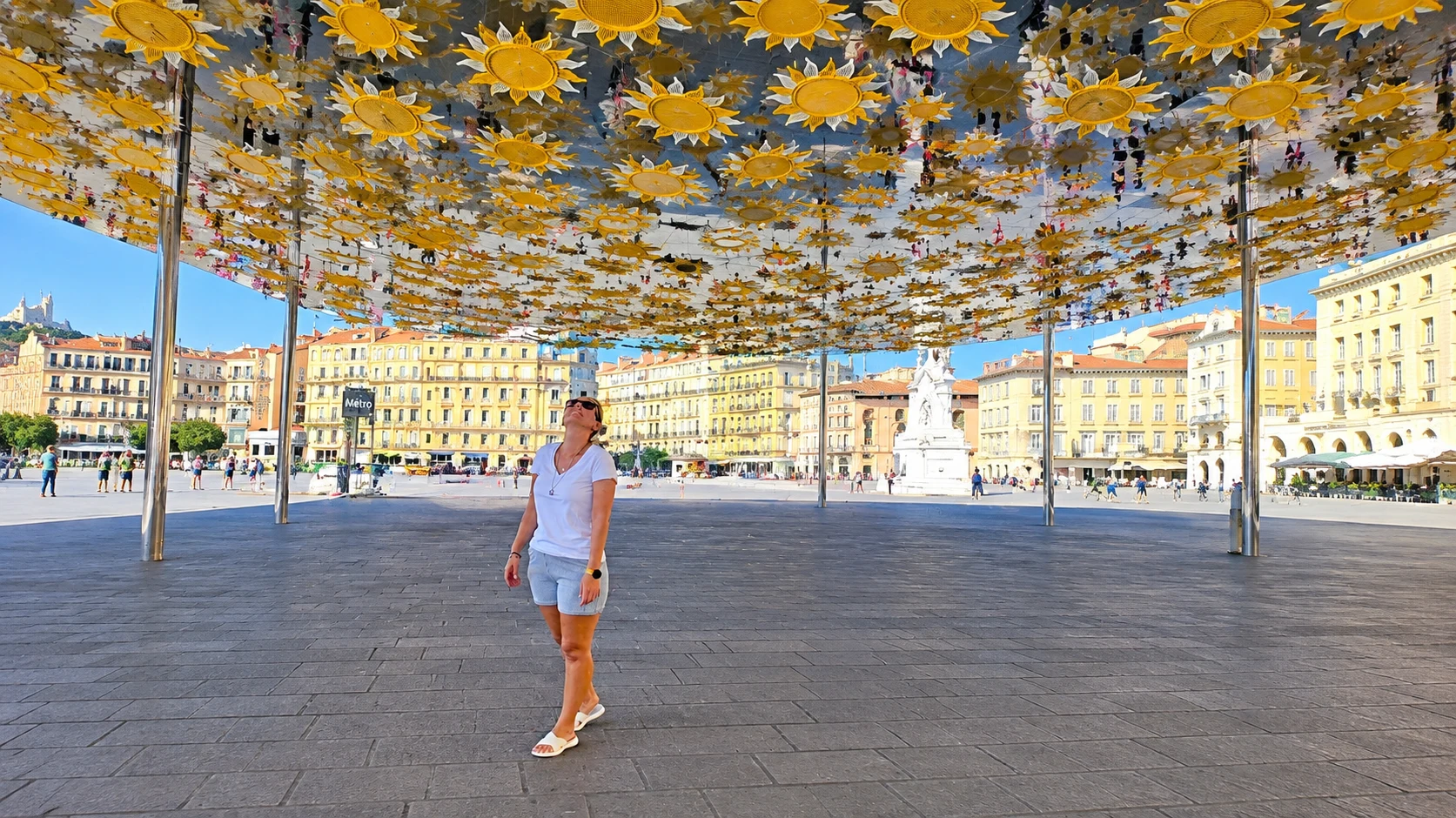
Marseille Travel Guide 2026: Notre-Dame de la Garde, Château d’If & the Real Bouillabaisse Verdict
🌊 Introduction & Why Go
This Marseille travel guide covers two visits, seven years apart, and the city didn’t try to charm either time the way Nice or Aix does. My first trip here landed in June 2019, when the evenings cooled down fast and the whole city smelled faintly of linden blossom drifting off the trees along the boulevards. My second trip, in August 2026, was the opposite: heat that sat on the Vieux Port like a lid and didn’t lift until well after dark. Both versions of the city are worth seeing, and neither is the postcard version of the French Riviera next door.
What pulls me back is the mix. A working port that still smells like fish and diesel, a hilltop basilica with a view that makes the climb worth it, and an old quarter where street art and Roman-era foundations sit a few steps apart. If you’re coming from Nice or Cannes expecting more of the same polish, recalibrate: Marseille is grittier, louder, and for my money, more interesting.
Quick Picks — Where to Stay
- 🧍 B&B HOTEL Marseille Centre Vieux Port: Budget, walking distance to the port, no-frills but clean.
- 🛎️ Hôtel Mercure Marseille Centre Vieux Port: Mid-range, reliable chain comfort right by the water.
- 💎 Sofitel Marseille Vieux-Port: Luxury, panoramic port views and a proper spa.
🧭 Practical Info: Marseille Travel Guide Essentials
Here’s the practical core of this Marseille travel guide: entry rules, getting around, and picking the right season to land.
Quick Facts
- Visa/entry: France is in the Schengen Area. EU/EEA citizens and nationals of many countries (US, UK, Canada, Australia) enter visa-free for short stays; others, including Turkish citizens, need a Schengen visa arranged in advance. Check requirements for your passport on the official France-Visas site before booking flights, since rules and processing times shift.
- Language: French; English is common around the Vieux Port, less so elsewhere.
- Currency: Euro (€).
- Plugs: Type C/E, 230V. Bring an adapter if you’re coming from outside continental Europe.
- Mobile & Internet: An Airalo or Yesim eSIM is the easiest way to land with data already working.
- Transport tickets: Single RTM (metro/tram/bus) tickets cost a couple of euros; a day pass is worth it if you’re moving around a lot.
Getting There & Around
Most travelers fly into Marseille Provence Airport (MRS), about 27 km northwest of the center. Compare routes and fares on Skyscanner before locking in dates. From the airport, the Navette shuttle bus runs to Gare Saint-Charles, the main train station, in roughly 25 minutes; fares are posted at the airport counters and ticket machines. A metered taxi into the city runs somewhere around €60 by day and more at night, so ask for an estimate before getting in, or book a fixed-price transfer through gettransfer to avoid surprises.
Once you’re in the city, walking covers most of the Vieux Port, Le Panier and Notre-Dame de la Garde area, while the metro and tram network handles longer hops. If you want a car for day trips into Provence, economybookings is a straightforward option for comparing rental rates.
Best Time to Visit & Trip Length
June is genuinely lovely: warm days, cool evenings, and that linden-blossom smell I keep thinking about. August is peak heat and peak crowds. The Mediterranean is at its warmest, but the Vieux Port can feel like an oven by mid-afternoon. Two to three full days is enough to hit the highlights; add a day if you want to fold in the Calanques or a coastal day trip.
🚶 Day-by-Day Itinerary
Day 1: Old Port and the Hill
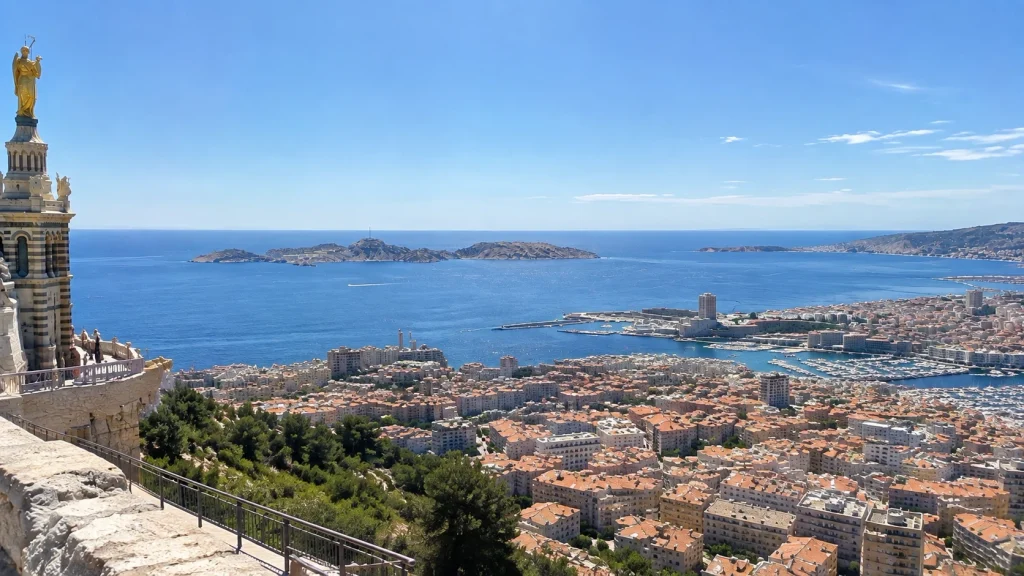
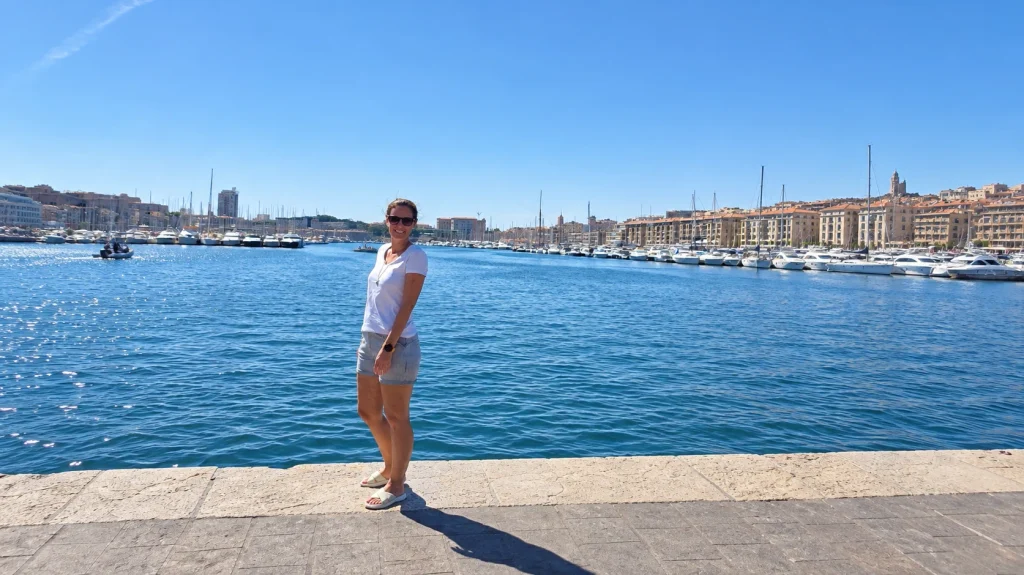
Start at the Vieux Port itself. Just walking its length, past the fishing boats and the ferry docks, sets the tone for the city. From there, make the climb up to Notre-Dame de la Garde. It’s steeper than it looks on the map, and I was regretting it about two-thirds of the way up in August heat, but the view from the top, the whole city fanning out toward the sea, makes the effort worth it every time.
If you’re visiting in summer, go early morning or late afternoon; midday sun on that climb is no joke.
Day 2: Le Panier and the Museums
Spend the morning wandering Le Panier, Marseille’s oldest neighborhood, where narrow lanes are covered in street art and nearly every corner hides a tiny independent shop. Nearby, the Marseille Cathedral (La Major) is worth a stop for its striped Byzantine-Romanesque facade alone. From there, walk or take the metro to Palais Longchamp, a grand 19th-century monument with fountains and gardens that doubles as a quiet break from the heat.
Day 3: Château d’If
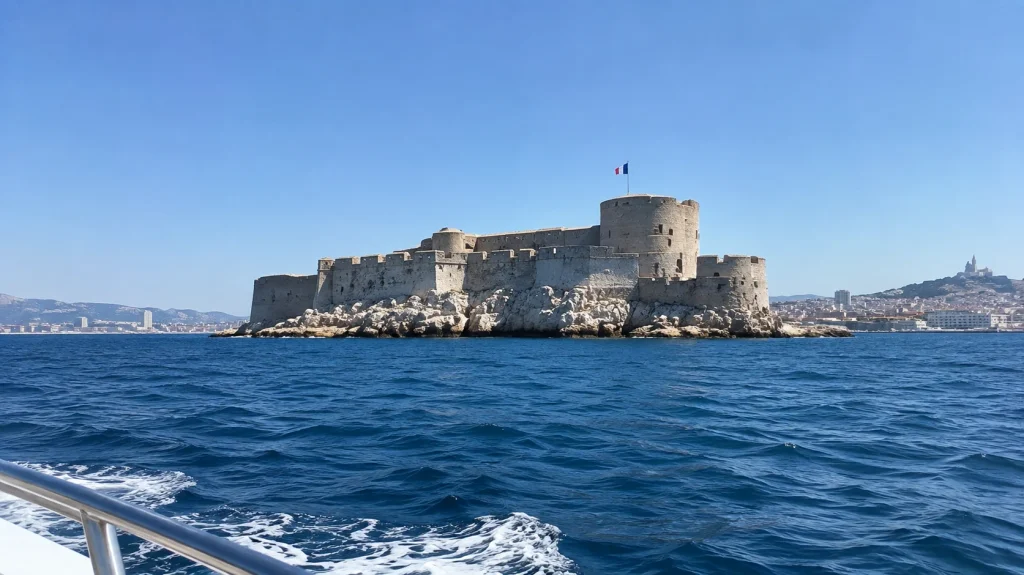
Book an early boat from the Vieux Port to Château d’If, the island fortress that inspired The Count of Monte Cristo. The crossing takes about 20-25 minutes and is a good way to see the city from the water before you’ve even landed. Give yourself an hour or two on the island; it’s small, but the cells and ramparts are worth lingering over if you know the novel.
Boats can be cancelled in rough weather, so check conditions the morning of, especially outside summer.
Back in the city, this is a good afternoon to just sit at a café by the port and watch the boats come and go.
🏛️ Top Experiences & Best Places to Visit
1. Notre-Dame de la Garde
The basilica sits at the highest point in the city, and the view from its terrace is the single best panorama Marseille has to offer. The climb is real, but so is the payoff.
2. Vieux Port
The heart of the city, still a working port with fishing boats unloading the morning catch alongside sailboats and ferries. Walking its full length, both sides, is the easiest way to get your bearings.
3. Château d’If
A short boat ride from the Old Port, this island fortress is famous for inspiring Alexandre Dumas’ The Count of Monte Cristo. Even without the literary connection, the views back toward Marseille from the ramparts are worth the trip.
4. Le Panier
Marseille’s oldest quarter is a maze of steep, narrow streets covered in murals and mosaics, with the Vieille Charité and small artisan shops tucked into nearly every corner.
5. Marseille Cathedral & Palais Longchamp
Two very different monuments worth pairing: La Major’s striped domes near the waterfront, and Palais Longchamp’s fountains and colonnades a short ride inland.
🛏️ Where to Stay & Eat
Where to Stay
- 💰 Budget: Ibis Budget Marseille Vieux-Port: Housed in a former 17th-century galley captaincy building, a few steps from the Canebière and a short walk from the port.
- 🛎️ Mid-Range: Staycity Aparthotels Marseille Centre Vieux Port: This is where I stayed on my last trip. It’s an apartment-style setup with a kitchenette, genuinely central, and close enough to the metro that getting anywhere in the city was never a hassle.
- 💎 Luxury: InterContinental Marseille – Hotel Dieu: A restored 18th-century former hospital on Panier hill, with views over the port and Notre-Dame de la Garde from many rooms.
Where to Eat
- 💰 Pizzeria La Bonne Mère: Casual, in the shadow of the basilica, reservations recommended.
- 🛎️ Le Rendez-Vous des Amis: Seasonal, locally sourced cooking in Le Panier, good for a relaxed dinner.
- 💎 Chez Fonfon: A Marseille institution for bouillabaisse, right on the water in the Vallon des Auffes. I ordered the bouillabaisse here, and it just wasn’t my thing. The saffron-and-fish broth is an acquired taste, and I didn’t acquire it. Worth trying once so you can form your own opinion; don’t build your whole trip around it.
💶 Budget: Cost & Money-Saving Tips
Cost of Traveling
Marseille runs noticeably cheaper than Nice or Paris. A simple lunch (sandwich, panisse, coffee) lands around €10-15; a sit-down bistro dinner with wine is closer to €30-45 per person. Budget accommodation starts around €70-90 a night, mid-range apartments and hotels around €110-160, and luxury properties like the Sofitel or InterContinental climb well past €250. The Château d’If round-trip boat plus entry runs somewhere around €18-20 per person all in, though it’s worth double-checking current prices before you go, since ferry and entrance fees both get revised.
Money-Saving Tips
- Skip the cafés directly on Quai du Port and walk one street back for the same food at lower prices.
- Buy a multi-ride RTM transport pass if walking everywhere gets old.
- Visit Notre-Dame de la Garde in the early morning; it’s free to enter and far less crowded before 10am.
- Look at Hostelworld if you’re traveling solo or on a tighter budget. Marseille has decent hostel options near the port.
- Eat your big meal at lunch, when many bistros run a fixed-price formule noticeably cheaper than the same menu at dinner.
🎒 What to Pack & Good to Know
What to Pack
- Comfortable walking shoes. The climb to Notre-Dame de la Garde and Le Panier’s cobbled lanes are not flip-flop territory.
- A light scarf or cover-up for visiting the basilica and cathedral, both of which expect modest dress.
- Sunscreen and a hat if you’re visiting June through August; the sun on the port has no mercy by midday.
- A light jacket for evenings in shoulder season. June nights cool down faster than the daytime heat suggests.
Safety, Accessibility & Etiquette
Marseille has a reputation that’s a little out of step with how it actually feels to walk around the main tourist areas. The Vieux Port, Le Panier and the streets around Notre-Dame de la Garde are well-trafficked and generally fine during the day. Standard city precautions apply: watch your bag around the port and train station, and stay aware of your surroundings at night away from the main strips.
- Emergency numbers: 112 (general emergency), 15 (medical), 17 (police).
- Travel insurance is worth arranging before you go. SafetyWing covers most short trips, and Klook also offers travel insurance add-ons if you’re already booking tours through them.
- Notre-Dame de la Garde involves a steep uphill walk with stairs in sections; it’s not easily wheelchair accessible on foot, though a small tourist train runs up from the port for those who’d rather skip the climb.
❓ FAQ
Is the bouillabaisse in Marseille actually worth trying?
It’s worth trying once, purely for the experience, since it’s the dish the city is famous for. But go in with realistic expectations: the saffron-forward fish broth is distinctive and not universally loved. I tried it at Chez Fonfon and landed on “glad I tried it, wouldn’t order it again.”
How steep is the walk up to Notre-Dame de la Garde?
Steep enough that you’ll feel it, especially in summer heat. It’s manageable for most fitness levels if you take it slowly and go in the morning, but there’s also a tourist train and bus options if you’d rather skip the climb entirely.
Is Château d’If worth the boat trip if I haven’t read The Count of Monte Cristo?
Yes, though it adds a layer if you have. The crossing itself gives you a great view of Marseille from the water, and the fortress and its history stand on their own.
Is June or August a better time to visit?
June, if you have the choice: cooler evenings, that linden-blossom smell in the air, and thinner crowds. August is peak season, hotter, busier, and pricier, though the sea is at its warmest for swimming.
Do I need a car in Marseille?
No, not for the city itself; walking and the metro/tram cover the main sights easily. A car only makes sense if you’re planning day trips into the Calanques or further along the coast.
📋 Wrap-Up
This Marseille travel guide comes from two very different visits, and both hold up.
Quick Summary
- Best time: June for mild weather, August for warm sea swimming
- Average daily budget: €80-150 depending on hotel tier
- Ideal trip length: 2-3 full days
- Good for: history, food debates, coastal views, first-timers and repeat visitors alike
Two trips here, seven years apart, and Marseille still surprised me the second time around. The heat was different, the smell in the air was different, and I finally settled my opinion on bouillabaisse (not for me, but I’m glad I know that now). If you’re deciding between Marseille and the more polished stops along the Riviera, here’s the takeaway: come for the port, the basilica view and Château d’If, and let the city’s rougher edges be part of the appeal rather than something to plan around. If you’re building a longer France itinerary, my Nice travel guide and Paris travel guide cover the other two stops I’d pair with it. What’s the one dish or view you’d want to judge for yourself before trusting anyone else’s opinion on it?
For more real trip notes and city guides, browse the rest of the site at gotravelica.com.