Paris Travel Guide 2026: Cobblestones, Cafés & Wrong Shoes
Introduction & Why Go
I packed the wrong shoes. Three of us — all girlfriends, no partners, no itinerary panic — flew in during the first week of September, and by day two my feet were screaming at every cobblestone. I kept walking anyway, because Paris has a way of making you forget your blisters the moment you turn a corner and the Seine is suddenly right there, glinting under a bridge.This Paris travel guide comes out of that trip.
September strikes a good balance. The worst of the summer crowds have thinned, the light turns golden by late afternoon, and cafés still keep their outdoor terraces open. If you’ve hesitated over safety, language, or how to avoid the classic tourist traps, that hesitation is normal — Paris rewards a little preparation more than most cities. Here’s what I’d tell my past self, mixed with what’s actually current for anyone planning a trip in 2026.
Quick Picks:
- 🧍 Budget: Hotel Jeanne d’Arc Le Marais – in the Marais, affordable boutique
- 💰 Mid-Range: Hotel Caron de Beaumarchais – a classic boutique hotel in the Marais
- 🛎️ Luxury: Hôtel du Louvre – right next to the Louvre, historic and iconic
🛂 Quick Facts Before You Go
Visa & entry: Most non-EU visitors still enter under the standard Schengen rules — 90 days within any 180-day period, a passport valid at least three months beyond your stay. Travelers from roughly 59 visa-exempt countries will eventually need an ETIAS travel authorization, but as of mid-2026 no confirmed launch date exists, with independent reporting pointing toward a 2027 rollout instead of the earlier Q4 2026 target. Always check the official EU ETIAS site before you book, and don’t pay a third party for an “ETIAS” that isn’t live yet.
- Language: French; English is common in central Paris, especially near major sights, but a “Bonjour” before any request goes a long way.
- Currency: Euro (€). Cards are widely accepted; keep a little cash for small bakeries and public toilets.
- Plugs: Type C/E, 230V — bring an adapter if you’re coming from outside continental Europe.
- Mobile & Internet: An eSIM (Airalo and Holafly both cover France) lets you land with data already active, which saves the scramble of finding a SIM counter after a long flight.
- Transport tickets: Paris moved to a smartphone/Navigo Easy system for most tickets; paper carnets are being phased out on several lines, so it’s worth setting up the IDF Mobilités app before you land.
- Drones: The entire city of Paris is a permanent no-fly zone, and flying near the Eiffel Tower or the Louvre will get your drone confiscated regardless of its size. Leave it at home unless you’re chasing a criminal fine.
✈️ Getting There & Getting Around
Paris is served by two main airports: Charles de Gaulle (CDG) for most long-haul flights, and Orly (ORY), which handles more domestic and short-haul European routes. Skyscanner is a solid starting point for comparing fares from either.
Here’s where I’d save you the headache I didn’t avoid. Getting from Orly into central Paris used to mean the RER B plus the Orlyval shuttle; these days Metro Line 14 runs directly from central Paris to Orly, and both options cost the same flat fare. The important part: a regular metro ticket will not get you to or from Orly — you need the specific Paris Region “Airports” ticket, and there’s no paper version left.
My group learned this the hard way. We’d bought a standard ticket, validated it going in, and were mid-journey when an inspector stopped us and wrote up a fine because the airport leg needs its own ticket. Worse, because our ticket wasn’t valid, the turnstile wouldn’t let us out at Orly either, and a staff member had to release the gate manually. It didn’t ruin the trip, but it’s the one thing I’d fix if I went back: buy the airport-specific ticket before you board, not after.
Once you’re in the city, the regular Metro network is excellent and cheap — a single ticket runs about €2.15, and multi-day Paris Visite passes make sense if you’re moving around a lot. For day trips outside the city, 12Go and SNCF Connect both handle regional trains, and Discover Cars is worth checking if you’re planning a countryside detour, though most first-time visitors won’t need a car at all.
🍂 Best Time to Visit & Trip Length
Spring (April–June) and early autumn (September–October) give you the mildest weather and manageable crowds — my September trip meant light jackets in the evening and sunny, walkable afternoons. Summer is warmer and busier, with July and August emptier of locals but fuller of tourists. Winter is quieter and atmospheric, especially around the holidays, though several attractions run shorter hours.
For a first visit, four to five days lets you cover the major landmarks without racing between them. A week gives you room for a day trip to Versailles or the champagne region without feeling rushed.
🗺️ Day-by-Day Itinerary
Day 1: Along the Seine and Into the Louvre District
Start on foot near the river, letting the Île de la Cité and Notre-Dame’s exterior anchor your morning. Cross toward the Louvre in the early afternoon, and if your dates line up with a Wednesday or Friday, plan to stay past dark — the museum runs later on those two evenings, and the light through the Pyramid changes completely once the crowds thin. I got lucky on this exact point: visiting in early September meant I could walk through the galleries free of charge after 6 p.m., a perk tied to the time of year I visited that works a little differently today (see the money-saving tip below for the current version of the rule).
Callout — book ahead: Even with a museum pass, you still need to reserve a timed-entry slot online before your visit, so don’t leave this for the day of.
Day 2: Palais Royal, Tuileries, and the Grand Boulevards
Spend the morning around the Palais Royal’s striped columns and quiet courtyard gardens — it’s a five-minute walk from the Louvre but feels like a different city, calm and half-empty even at midday. Wander into the Tuileries Garden afterward and let the afternoon slow down over a bench and a coffee. In the evening, the Grands Boulevards and Opéra Garnier area are worth an aimless walk, especially once the shopfronts light up.
Day 3: Eiffel Tower and the Left Bank
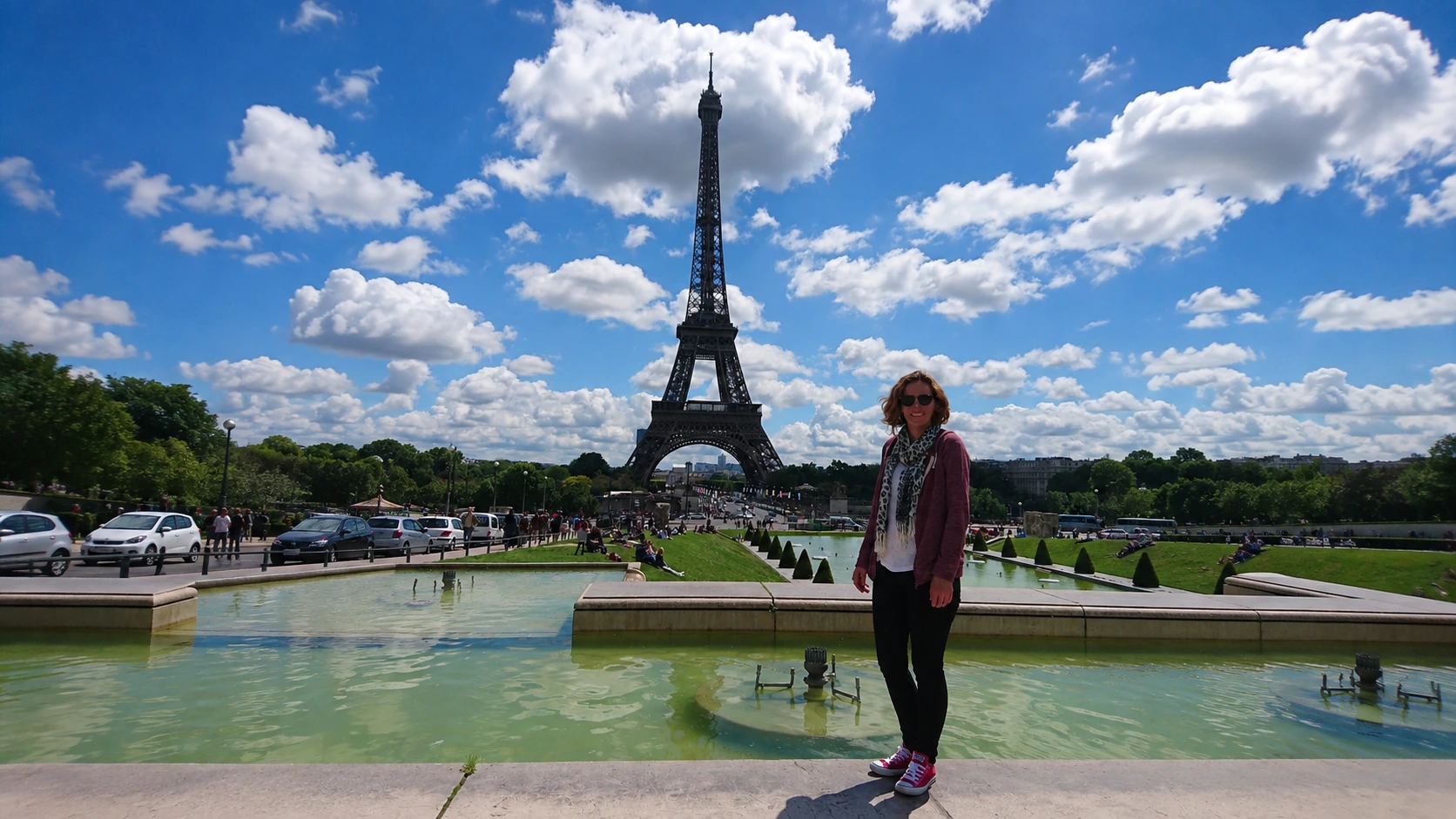
Save a slow morning for the Eiffel Tower. Rather than queuing for the summit, find a café with a direct sightline to it — this is exactly what got me. We sat with a coffee and a croissant, watching the tower do nothing in particular, and it’s still the moment I remember most clearly from the whole trip. Cross into the Left Bank afterward for the Musée d’Orsay or a slower wander through Saint-Germain-des-Prés.
Passport reminder: Even a short cross-border trip — Brussels is about 1.5 hours away by train — is worth carrying your passport for. Schengen membership doesn’t rule out an ID check, and they do happen occasionally around train stations.
🏛️ Top Experiences & Best Places to Visit
- The Louvre. Even a rushed visit rewards you if you pick two or three wings rather than trying to see everything. The Denon wing gets the crowds; the Richelieu wing often doesn’t.
- Eiffel Tower, from a café terrace. Climbing it is popular for a reason, but watching it from ground level, coffee in hand, is the version that stayed with me longest.
- Palais Royal Gardens. A pocket of calm in the 1st arrondissement, framed by arcades that once housed some of the city’s oldest shops.
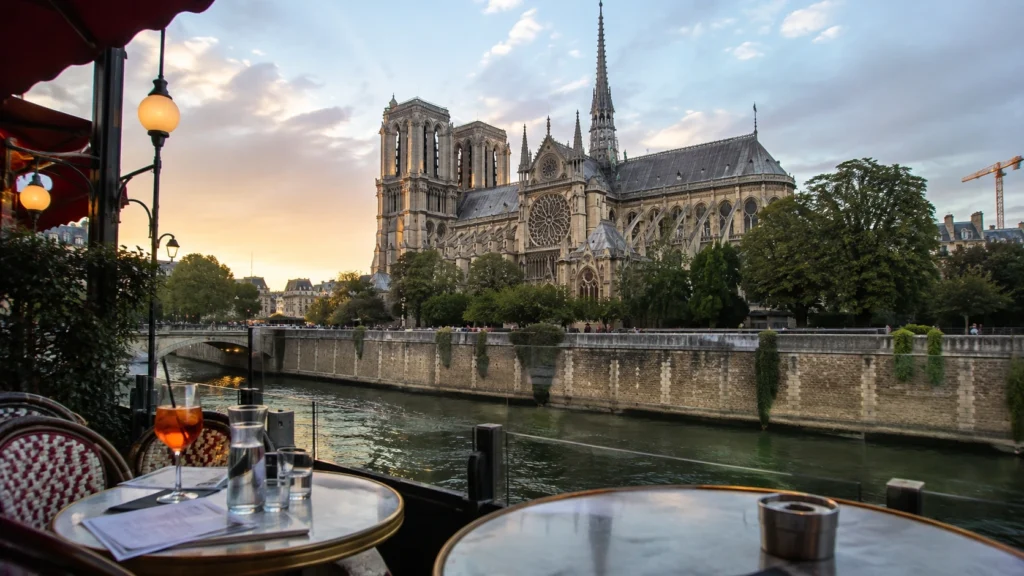
- Notre-Dame and Île de la Cité. Even from the outside, the cathedral anchors the historic core of the city, and the surrounding island is made for slow walking.
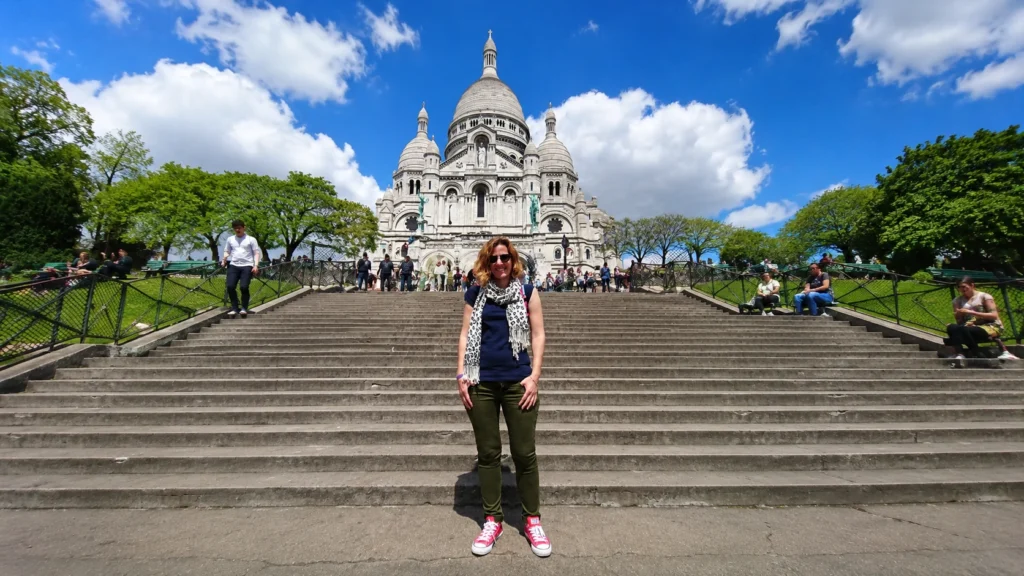
- Montmartre and Sacré-Cœur. Steep streets and a hilltop view that’s worth the climb, especially at sunset.
If you have a spare day, a Versailles day trip is one of the more popular add-ons — the RER C runs directly there, and pairing it with a small-group GetYourGuide tour of the Palace and gardens avoids the worst of the entry queues.
🛏️ Where to Stay
I chose the WS Louvre – Saint-Roch, an aparthotel in the 1st arrondissement, specifically because it put the Louvre, the Palais Royal, and the Tuileries all within a comfortable walk — after a day of sightseeing, not having to think about transport back to the hotel mattered more than I expected.
- Budget: A well-reviewed hostel bed near Gare du Nord or in the Marais, roughly €35–€55/night.
- Mid-Range: An aparthotel or 3-star property in the 1st arrondissement, like WS Louvre – Saint-Roch, roughly €140–€230/night.
- Luxury: A landmark address such as Le Meurice, facing the Tuileries Garden a few minutes from the Louvre, from around €800+/night.
Booking.com and Agoda both list all three tiers, and it’s worth checking Hostelworld separately for the hostel option, since it often carries deals the bigger platforms don’t. For a one-night splurge, Le Meurice on Rue de Rivoli is the standout luxury pick, sitting right across from the Tuileries Garden a few minutes’ walk from the Louvre.
🥖 Where to Eat
Rue Saint-Honoré and the streets around the Palais Royal cover a surprising range without needing a metro ride. For something historic, Café de la Régence near the Palais Royal has hosted chess-playing regulars since the era of Diderot and Napoleon — worth a coffee even if you don’t play. Le Fumoir, just outside the Louvre’s Cour Carrée, works well for a relaxed lunch between museum sessions. If you want to splurge once, Le Grand Véfour inside the Palais Royal gardens is about as classic a Parisian fine-dining room as exists.
- Budget: Bakery sandwich or crêpe stand, €8–€15.
- Mid-Range: Bistro lunch or dinner, like Le Fumoir, €30–€50.
- Luxury: Tasting menu at a room like Le Grand Véfour, €150+.
💶 Cost of Traveling
Budget travelers can expect to spend roughly €95–€145 a day in Paris, covering hostel beds, market meals, and metro tickets, while mid-range visitors typically land closer to €215–€330 a day, and luxury travel pushes well past that once you add fine dining and five-star stays.
- Budget: ~€35–€55 accommodation, €25–€40 food, €10–€15 local transport, €15–€30 activities per day.
- Mid-Range: ~€140–€230 accommodation, €50–€80 food, €15–€20 local transport, €40–€70 activities per day.
- Luxury: ~€800+ accommodation, €200+ food, €40+ taxis/private transfers, €100+ activities per day.
Prices shift with the season and with hotel availability, so treat these as a planning range rather than a guarantee.
💡 Money-Saving Tips
- Time a Louvre visit for a first Friday evening: general entry is free from 6 p.m. to around 9:45 p.m. on the first Friday of every month between October and March (it doesn’t run in July or August, and expect a crowd since everyone else has the same idea).
- Pick up a baguette sandwich and eat it in the Tuileries or Palais Royal gardens instead of sitting down for lunch every day.
- Buy your airport ticket before boarding the metro, not after — the fine for the wrong ticket costs far more than the correct one would have.
- A multi-day Paris Visite pass often works out cheaper than single tickets if you’re moving around several times a day.
- Visit major museums on a weekday morning right at opening, when the lines are shortest.
- Walk between nearby sights — the Louvre, Palais Royal, and Tuileries sit close enough together that a metro ride often takes longer than the walk.
🎒 What to Pack
- Comfortable, broken-in walking shoes — learn from my mistake and test them before you fly
- A light jacket or layers for cool September/October evenings
- A universal or Type C/E adapter
- A crossbody bag or anti-theft bag for crowded metro cars and tourist areas
- A portable charger for long museum days
🛡️ Good to Know: Safety, Accessibility & Etiquette
Paris is generally very safe for visitors, with pickpocketing as the most common issue, particularly around major sights, on the Métro, and near train stations. Keep bags zipped and in front of you in crowds, and be wary of anyone creating a distraction.
Emergency numbers (free from any phone, including one without an active SIM):
18 — fire brigade
112 — any emergency, connects to an English-speaking operator if needed
15 — SAMU medical services
17 — police
For accessibility, most major museums (the Louvre included) offer step-free routes and wheelchair loans, though older metro stations often lack elevators — buses and the newer Line 14 are more reliable if mobility is a concern. On etiquette, a quiet “Bonjour” when entering a shop or café is expected before any request, and tipping isn’t obligatory since service is included, though rounding up is appreciated.
Travel insurance is worth arranging before you go; a policy through a provider like SafetyWing covers most short trips at a reasonable cost and takes the pressure off if a mishap — a lost bag, a missed connection, a fine over a badly bought ticket — turns your trip upside down for an afternoon.
❓ FAQ
Is Paris expensive compared to other European capitals?
Yes, generally — Paris sits toward the higher end of Western European costs, though budget travel is still possible with hostels, bakery meals, and free or low-cost sights like church interiors and public gardens.
How many days do I need in Paris?
Four to five days covers the essentials comfortably; stretch to a week if you want to add a day trip out of the city without feeling like you’re cutting sightseeing short elsewhere.
Do I need to buy a separate ticket for the airport metro?
Yes, if you’re taking Metro Line 14 or the RER B/Orlyval combination to either CDG or Orly, you need the specific Paris Region Airports ticket — a standard metro ticket isn’t valid and can result in a fine.
Is the Louvre worth visiting if I only have a few hours?
Yes — pick two or three sections in advance rather than trying to see it all, and book your entry slot online ahead of time.
What’s the best area to stay for first-time visitors?
The 1st arrondissement, around the Louvre and Palais Royal, keeps you within walking distance of several major sights, though Le Marais and Saint-Germain-des-Prés are both strong alternatives with their own character.
📊 Paris Travel Guide: Quick Summary
- Best time to visit: April–June or September–October
- Average daily budget: €95–€145 (budget) to €215–€330 (mid-range)
- Ideal trip length: 4–7 days
- Good for: First-time visitors, art and history lovers, walkable city breaks
💬 Final Words
Paris didn’t need my feet to cooperate to win me over, and it probably won’t need yours either. Between the wrong shoes, the metro fine on the way out, and everything in between, the trip still ends the same way it always does in my memory: a coffee, a croissant, and the Eiffel Tower doing absolutely nothing except standing there, looking exactly the way it’s supposed to. Where would you spend your one splurge meal in Paris — classic bistro or a proper tasting menu?
Tell me in the comments, and check out more real, experience-based city guides at gotravelica.com.